The programme encourages primary and lower secondary students nationwide to collect used pens and school supplies and contribute them to the “Măng Non Project”.
“Towards a Green School Environment” is a programme organised by Thien Long Group in collaboration with the Central Council of Ho Chi Minh Communist Youth Union with the “dual” purpose of raising awareness among young people about sorting recyclable plastic waste and educating students about the spirit of mutual support.
Accordingly, the programme encourages primary and lower secondary students nationwide to collect used pens and school supplies and contribute them to the “Măng Non Project” (“Young Bamboo Shoot (or Youngsters) Project”). From used products, the Organising Committee will “regenerate” plastic waste into educationally meaningful models/projects and convert them into a scholarship fund for disadvantaged students with a strong desire to learn.
According to a report by the World Bank, Vietnam produces approximately 3.1 million tonnes of plastic waste on land each year, and at least 10% of this enters the ocean. Vietnam ranks 15th in the world in terms of population size but fourth in the world in the amount of plastic waste entering the ocean. The World Bank assesses that most plastics polluting Vietnam’s water sources are single-use, low-value plastics such as plastic bags, food containers and straws.
In response to this situation, Thien Long believes that today's generation has a responsibility to hand over a legacy to future generations by choosing a path of sustainable development, minimising negative impacts on the environment, and protecting ecosystems and community health.
In 2019, Thien Long began planning a social programme to collect used pens and school supplies to create meaningful models and raise funds for scholarships. In 2023, to elevate the programme's scale and quality, Thien Long partnered with the Central Council of Ho Chi Minh Communist Youth Union to continue launching the “Towards a Green School Environment” programme. Through practical actions, Thien Long aims to positively influence the awareness of the current and future generations about environmental protection.
Within the scope of “Towards a Green School Environment”, to create the habit of collecting plastic waste among primary and lower secondary students, Thien Long and its accompanying organisations created the “Măng Non Project” model.
From a distance, the model looks like a lively small house, with details and colours suitable for school-aged children. All of these elements will positively influence the children's visual perception. The project consists of two separate compartments, including one compartment for recyclable plastic waste (plastic bags, plastic containers, milk cartons, etc.) and one compartment for used Thien Long products.
At the same time, at each school site, the Organising Committee also distributes a guide to waste sorting at source to help students understand and practise waste sorting. The knowledge in the guide is presented in a visual and lively way, helping students develop a correct understanding and thereby form positive behaviours not only for themselves but also with an influence on their peers and the wider community.
Objective
“Towards a Green School Environment” is the final piece completing Thien Long's sustainable development strategy. Previously, Thien Long had encouraged children's interest and raised awareness of environmental issues in Vietnam through the Colour Festival programme with the theme “For a Green Vietnam”. The drawing competition attracted more than 1 million artworks from young people across 63 provinces and cities nationwide.
Thus, in addition to practising sustainable development solutions in production and business, Thien Long also joins hands in communicating this message to social groups, especially the younger generation – those who will shape the future. Educating primary and lower secondary students about regenerating plastic waste into educationally valuable models, environmental protection awareness, and the seriousness of plastic waste pollution, and above all, fostering the spirit of mutual support among the younger generation.
Vision
Economic growth goes hand in hand with environmental protection towards a circular economy and sustainable development” is the philosophy that Thien Long Group has pursued for many decades. This is a journey of comprehensive development, from production activities and product development to business. Specifically:
- In terms of governance, Thien Long currently operates an effective integrated management system in accordance with international standards, notably the SA 8000:2014 social accountability management system and the ICTI social accountability management system in the children's toy industry. The Group complies with environmental protection regulations through activities such as applying an environmental management system according to the international ISO 14001 standard to control and minimise environmental pollution.
- In terms of products, in realising the goal of creating environmentally friendly products, Thien Long Group has launched many products that benefit the living environment and communicate environmental protection messages to the community.
- In terms of production, Thien Long aims to protect the environment by saving raw materials, reducing plastic waste, applying green technology, and controlling wastewater and waste, etc.
Thien Long has launched the programme over two seasons, including “Towards A Green School Environment 2019” and “Towards A Green School Environment 2021-2022”. The project targets nationwide implementation. The objective of the project is to contribute to educating primary and lower secondary students nationwide about environmental protection. Therefore, the project collaborates with the Central Council of Ho Chi Minh Communist Youth Union – a state organisation responsible for guiding Youth Union Councils at all levels in Youth Union activities and children's movements, and for carrying out the protection, care and education of children and adolescents.
- Season 1, “Towards A Green School Environment 2019” was organised at 10 school sites in Hanoi
- Season 2, “Towards A Green School Environment 2021-2022” was expanded to 30 primary and lower secondary schools, spreading across all three regions of the North, Central and South of the country
At the school sites, students collect used pens and stationery and place them in the “Măng Non Project”, which are then converted into scholarships to be awarded to disadvantaged primary school students.
Through this programme, students understand that a pen or any used item, if collected and recycled properly, can be an essential action to protect the living environment in their daily lives. On the other hand, the programme also helps students develop the spirit of mutual support, practising lessons about solidarity and helping one another stay in school.
Budget
Building on the unexpected success of its inaugural season in 2019, the program’s second season (2021–2022) expanded to 30 primary and secondary schools, reaching the Northern, Central, and Southern regions of the country. Compared to the first season, the program tripled in scale during its second year, moving beyond its initial scope of just 10 schools in Hanoi.
It is evident that the "Towards A Green School Environment" program is receiving increasing investment in terms of personnel, facilities, content, presentation, and outreach duration. As the program continues to grow in scale, it promises to provide even more scholarships to studious students who overcome adversity in future seasons.
The programme has achieved significant results nationwide. Specifically, the activity was implemented at more than 30 school sites, attracting 20,000 students to participate. Through collection and reuse drives, the programme collected 100,000 used notebooks, pens and school supplies.
At the same time, the total value of scholarships awarded to disadvantaged students reached VND 300 million, contributing to supporting learning conditions and motivating many students to continue attending school.
After two seasons, through the “Măng Non Project” model, the “Towards a Green School Environment” programme has received widespread support from students, attracting 20,000 participants and awarding VND 300 million to disadvantaged students.
As a result, after Season 2 of the programme, “Towards a Green School Environment” had expanded its scale threefold to more than 30 school sites, and this growth potential will be even greater in subsequent seasons. With the support of the Central Council of Ho Chi Minh Communist Youth Union – an organisation that closely follows movement activities at primary and secondary schools, the vision of scaling up the model nationwide is entirely feasible.
In the short term, specifically in 2023, the Group will continue to support Towards a Green School Environment. Accordingly, the programme is expected to begin implementation in September 2023, with a significant increase in the number of schools nationwide. At the same time, Thien Long will collect writing instruments and school supplies at the company's points of sale so that customers can also join hands in developing the campaign.
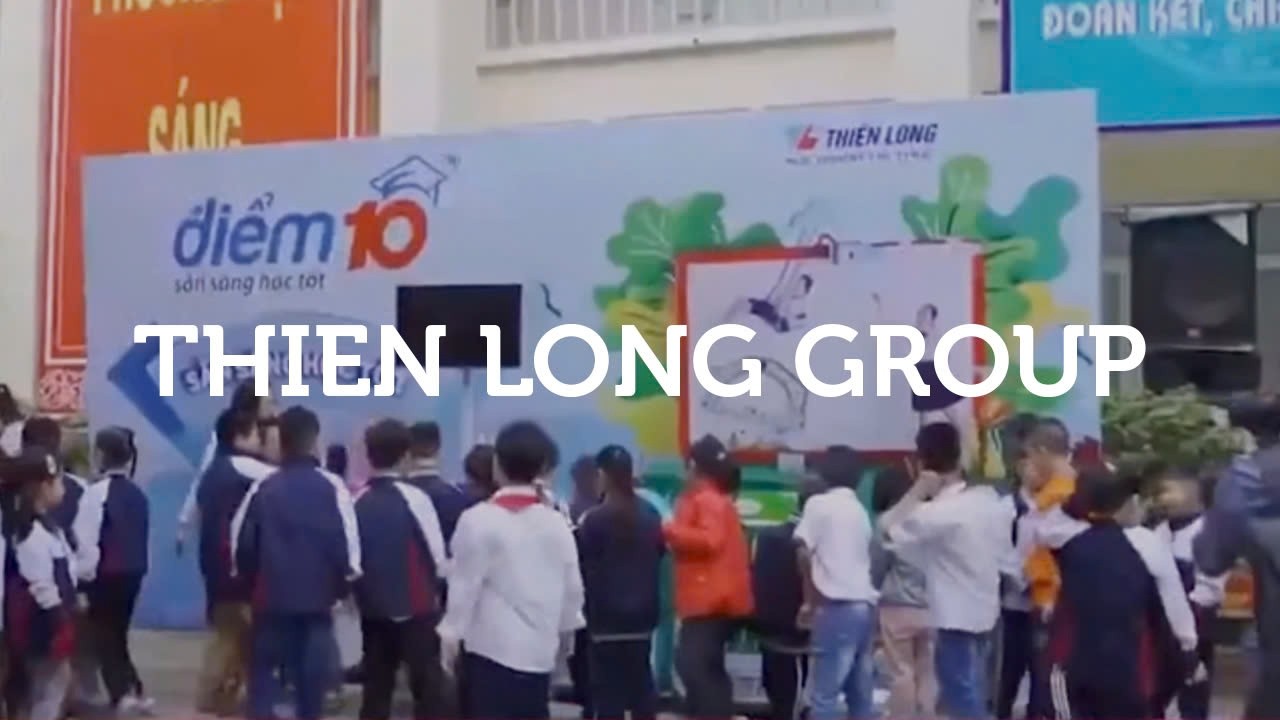
For a Green School Environment
Case Ownership
Hosting Organization: Thien Long Group Corporation
Collaborating Partners:
- Central Council of Ho Chi Minh Communist Youth Union
- Participating primary and secondary schools nationwide
- Organisations and schools coordinating the implementation of “Măng Non Projects”
- Primary and secondary students participating in waste collection and sorting
- Disadvantaged students with a strong desire to learn who receive scholarships
- Schools and education communities at implementation sites
- Parents and local communities who are made aware of waste sorting, recycling and environmental protection
- The natural environment through reduced plastic waste and the regeneration of used materials
Source: Human Act Prize (external link, content in Vietnamese)
The copyright and legality of all images, videos, information, and data regarding the project published on this landing page are provided by and are the sole responsibility of the individuals/organizations registering for the Human Act Prize. The republished content on this landing page has been verified and authorised by VCCorp Corporation (the co-organiser of the Human Act Prize).
Specific SDG targets
SDG 12.5
Substantially reduce waste generation through prevention, recycling and reuse
SDG 12.8
Ensure that people everywhere have the relevant information and awareness for sustainable development
SDG 4.7
Ensure that all learners acquire the knowledge and skills needed to promote sustainable development
SDG 4.5
Eliminate disparities in education and ensure equal access for vulnerable group
SDG 4.7
Ensure that all learners acquire the knowledge and skills needed to promote sustainable development
SDG 17.17
Encourage and promote effective partnerships among the public, public-private and civil society sectors