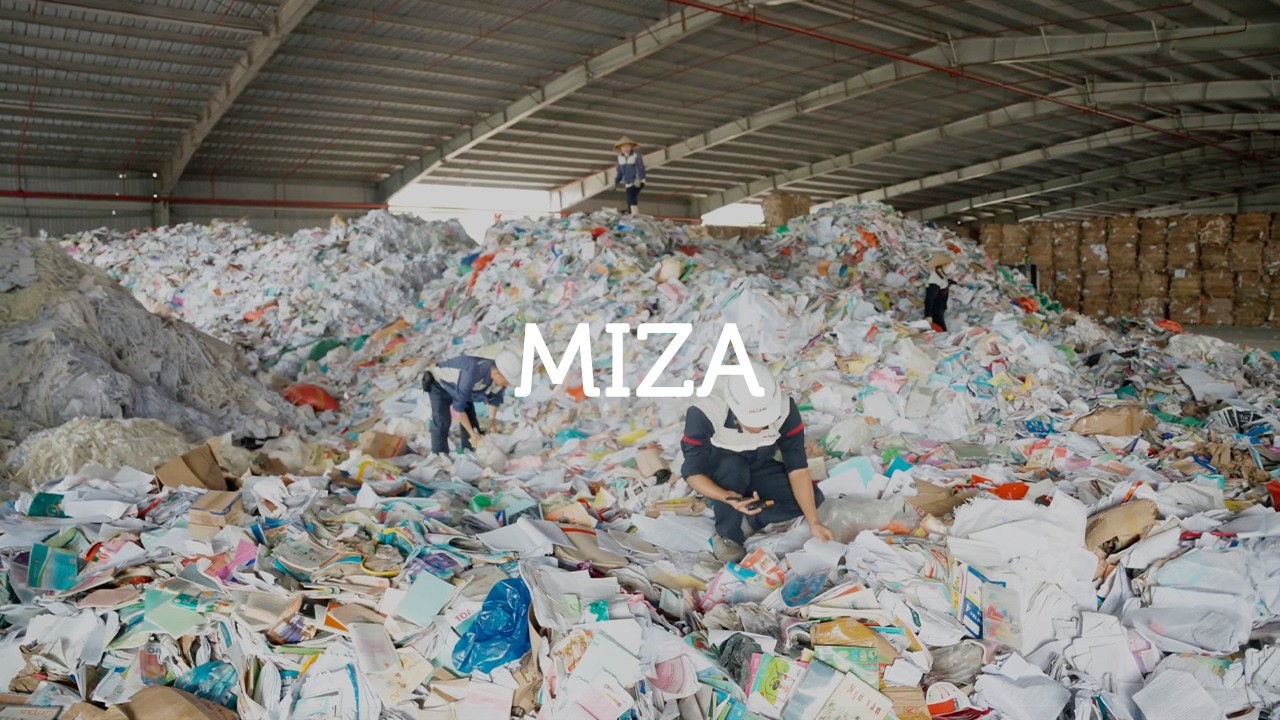
In Vietnam, millions of tons of paper are discharged into the environment every year, putting great pressure on the waste treatment system and wasting reusable resources.
Therefore, Miza Joint Stock Company has led the development of a circular economy model in the paper industry, aiming to turn waste into new raw materials. From collected paper sources, Miza produces Kraftliner, Testliner, and Medium paper to serve printing and packaging needs such as carton boxes, paper bags, or paper boxes. The model brings sustainable value in three aspects: economic, social, and environmental.
Since 2010, Miza has developed a network of hundreds of collection points, creating livelihoods for thousands of scavengers, while investing in advanced modern technology to recycle waste into high-tech paper for packaging and wrapping. To date, Miza has recycled approximately 925,000 tons of paper. According to the US Environmental Protection Agency, for every ton of recycled paper, an average of 17 trees can be saved, and more than 26,500 litres of water can be conserved. This means the amount of paper Miza has recycled can contribute to saving 15.73 million trees, enough to form a forest nearly 2.5 times the size of Manhattan Island (New York), and save 24.05 billion litres of water, equivalent to about 2.4 times the estimated volume of West Lake.
Furthermore, Miza also builds a circular ecosystem in society through educational programs for students and local people, and local waste collection services for the company's business. With the earned profits, Miza has reinvested billions of VND into the community through social projects and has recently supported 3 billion VND for the program "Remove makeshift and dilapidated houses" in Thanh Hoa.
Towards 2030, Miza aims to recycle 1 million tons of paper, create tens of thousands of sustainable jobs, raise community awareness, and contribute to promoting regional economic development, heading towards a comprehensive sustainable development model in terms of economy, society, and environment.
Vietnam is currently facing serious waste challenges, especially in large urban areas. According to Vietnam Economy (2025), approximately 70,000 tons of solid waste are generated nationwide every day, of which paper waste accounts for a significant proportion. The Vietnam Pulp and Paper Association (VPPA) stated that Vietnam produces about 6.8 million tons of paper each year, but more than 4 million tons are landfilled, with only about 40% of used paper being recycled. This recycling rate is currently 60–85% lower than that of other neighbours such as Thailand, Malaysia, or Japan. While millions of tons of scrap paper are wasted, factories paradoxically depend heavily on imported raw materials. This puts businesses in a passive position for global price fluctuations, logistics costs, and policy risks, reducing competitiveness and causing foreign currency drainage. In addition, landfill treatment also causes soil, water and air pollution.
The virgin paper manufacturing industry requires the vast exploitation of natural wood, which consumes significant energy and water and releases toxic chemicals. Evidently, it takes 5 cubic meters of wood (equivalent to 17 trees), thousands of liters of water to create 1 ton of water, also decreasing nature's CO2 absorption capacity.
In the above context, promoting paper recycling models is becoming a necessary direction to reduce waste pressure and utilise secondary resources. Therefore, Miza's project is implemented as a solution contributing to closing the circular loop of the paper industry, from collection and classification to re-production. This approach helps reduce the amount of landfilled waste, limits natural wood exploitation, and creates more stable livelihoods for the scrap collection workforce—a labour group playing an increasingly clear role in the process of transitioning to a circular economy. Re.Uniqlo was initiated in 2021 to give another lifecycle for clothing products, through collecting used UNIQLO products from customers, then cleaning, sorting, and handing them to people in difficult circumstances, highland students, or communities affected by natural disasters. The project serves not only as a solution to minimise environmental impact but also as a path to serve, optimising the product lifecycle to turn products that seem to have lost their utility into warmth and hope for those truly in need.
To align SDGs goals with the paper industry, Miza orients its activities on a circular economy model, where all resources are optimised and reused:
Innovation in model and technology: Apart from a recycling factory, Miza is also an entity that creates and operates a comprehensive circular ecosystem, integrated from collection, logistics, treatment, production, and community education.
Miza self-developed 2 baling stations and its own collection stations in Bac Ninh and Vinh Phuc to optimise costs and ensure the maintenance of strict Environmental, Social, and Governance standards throughout the supply chain.
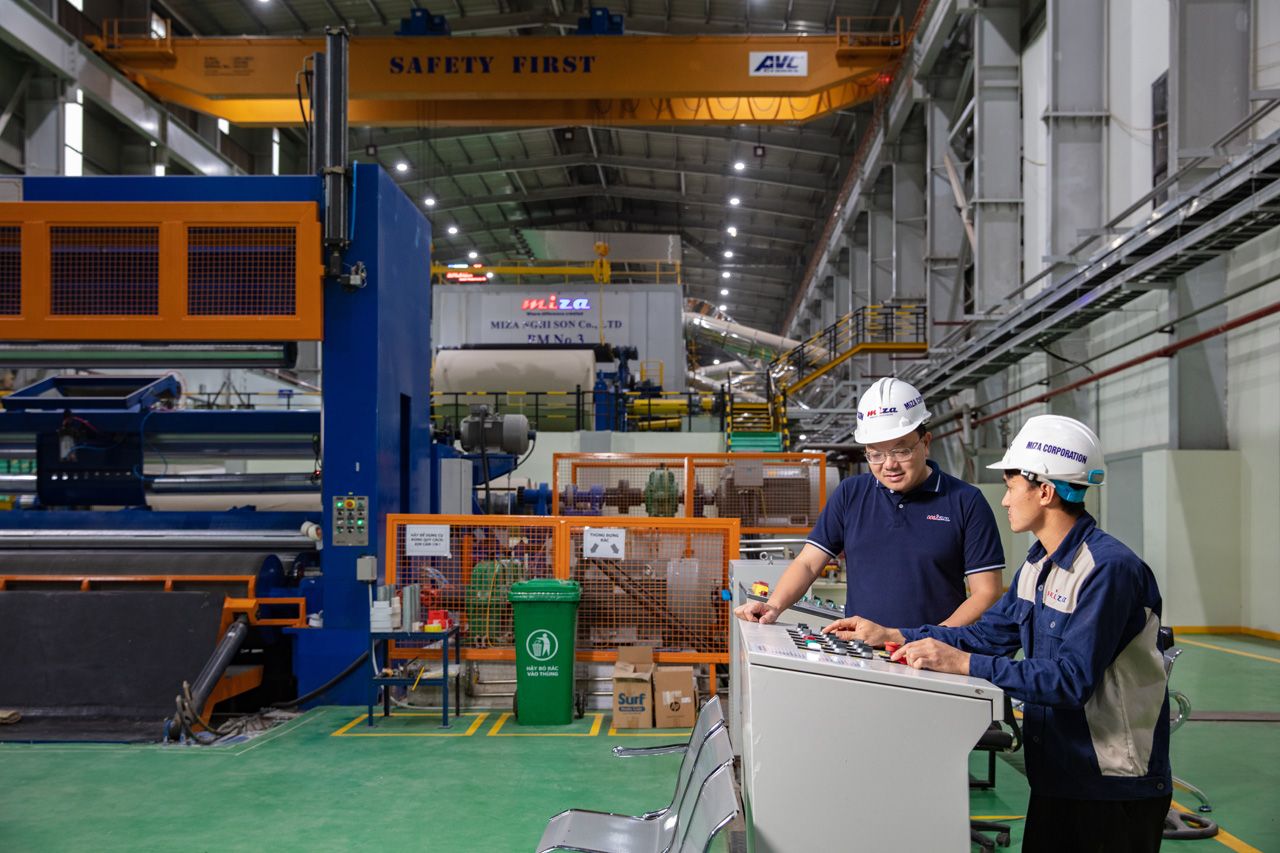
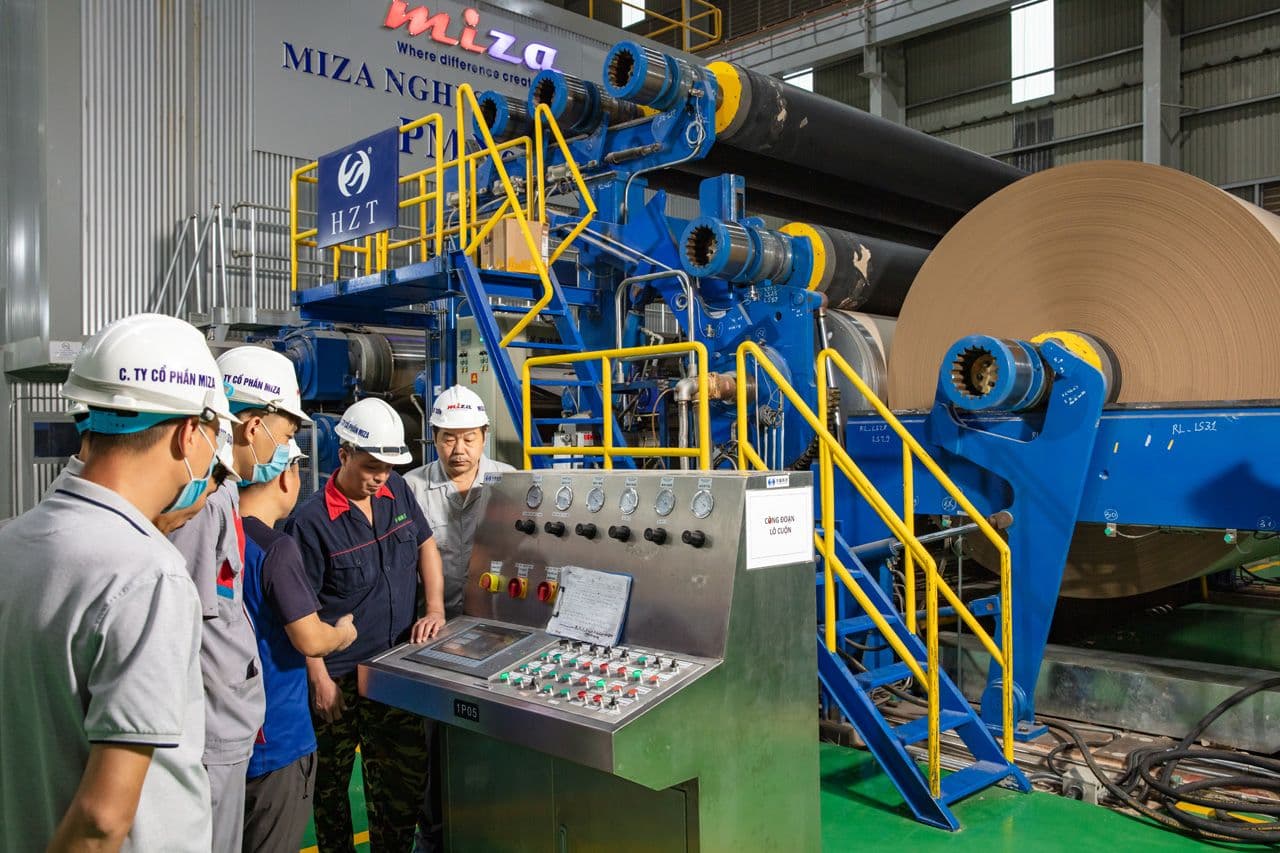
From the collected paper, Miza uses its internal logistics network to optimise distances, transporting it to 2 factories in Dong Anh and Nghi Son. All collected paper is put into a closed treatment process to create Kraftliner, Testliner, and Medium roll paper products. Waste from the production process, such as solid waste and water, is optimised, and appropriate recycling options are researched.
During production, Miza applies advanced flotation and de-inking technology, allowing the treatment of many complex types of scrap paper that small-scale facilities cannot handle, creating superior output quality.
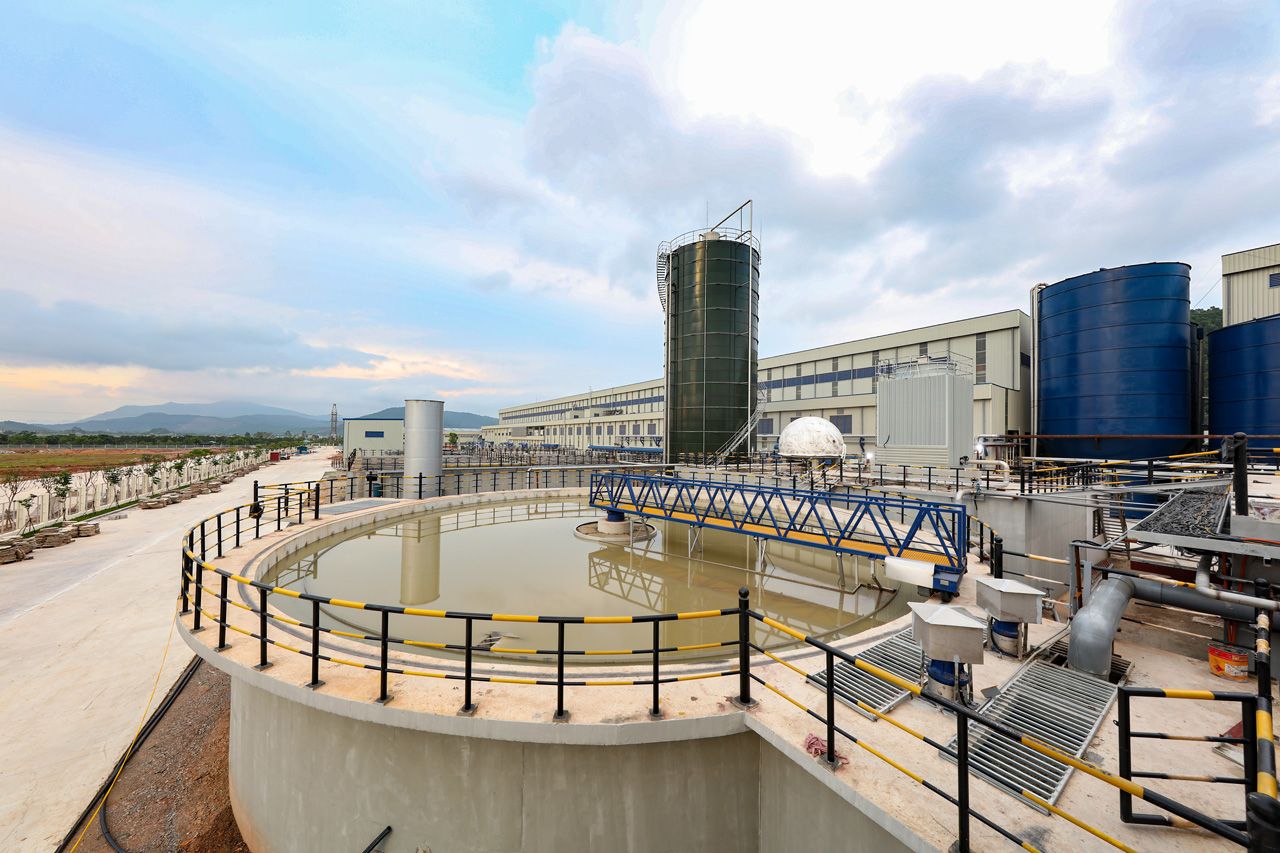
Miza also applies an advanced wastewater treatment system with a total volume of 12,000 m³, combining the most advanced anaerobic treatment technology, IC Anaerobic Tower, and redox treatment using Fenton reactors. In addition, the DCS operational control system—100% automated—is also utilised to remove colour and odour from wastewater. As a result, the discharged wastewater exceeds average standards in most wastewater permits (from QCVN12-MT:2015/BTNMT and QCVN40:2011/BTNMT).
Regarding waste, currently 95% of Miza's solid waste reaches recyclable quality and is utilized to be transformed into products serving other industries. Along with those results, Miza has implemented many technological solutions to treat and recycle waste. Notably, the cooperation with research partners to transform ash, slag, and sludge into non-fired bricks contributes to utilising waste and reducing CO₂ emissions. For nylon waste generated during the production process, Miza applies heat recovery incineration technology to generate steam for reuse in the operational line. This boiler system has been certified by the Department of Natural Resources and Environment to meet national technical standards for industrial waste incinerators according to QCVN 30:2012/BTNMT, demonstrating technological capacity and commitment to complying with sustainable environmental standards.
Innovation in community approach: Instead of raising awareness in the community, Miza creates practical "touchpoints" such as the "Exchange paper for gifts" program and creative competitions using recycled materials to make environmental protection actions feel familiar and interesting. Miza goes directly to schools to spread and educate more than 7,000 children and local people about the circular cycle of paper, encouraging them not to discard this valuable waste.
After more than a decade of operation, Miza is entering an acceleration phase with goals for the 2025–2030 period, aiming to expand scale, improve production efficiency, and develop sustainably.
Increase recycling capacity: As the unit with the largest capacity in the North, Miza aims for the 1,000,000 tons/year mark, enhancing production capacity and leading the country in the paper recycling industry.
Apply advanced, modern technology: Invest in and apply modern solutions to reduce the energy consumption rate per ton of paper by 15%, optimising efficiency and protecting the environment.
Strengthen the use of renewable energy:
+Completely eliminate coal in production, replacing it with biomass fuel. This is a clean energy source generated from agricultural byproducts and organic materials, contributing to promoting the circular economy model.
+ Increase biogas recovery to 60% from the wastewater treatment process to serve the purpose of generating heat and steam, in parallel with the use of biomass fuel.
+ Install additional rooftop solar energy: meeting 15% of electricity consumption at the factory (by 2028), reducing the electricity pressure on the National power grid.
+ Cooperate with 2 social enterprises in the recyclable waste collection industry:
Educate 10,000 students and local people on classification and the circular cycle of paper.
Strengthen the collection of new potential waste that is being heavily wasted (milk cartons) with the goal of reaching 3,000 tons/year by 2027.
Create jobs for informal workers by ensuring transactions with certified documents and supporting safe labour equipment.
- Afforestation: Besides limiting forest exploitation, Miza aims to plant forests and urban trees to green the environment with 20,000 trees by 2028.
From the early days until now, Miza has constantly innovated technology and expanded production capacity, gradually shaping its position as a pioneer enterprise in the recycled paper industry.
2010: Miza was born with an initial capacity of 7,500 tons of products/year (Line 1) with an area of 1.6 ha.
2012: Miza received attention from the Hanoi Environmental Protection Fund (Hanoi Development Investment Fund) as this was an encouraged industry. However, with technological difficulties, Mize had not yet realised its full potential. The company received a loan worth 10.179 billion VND, helping them to upgrade technology and expand production lines.
2015: Thanks to the capital supported by the City, leading to positive business results, Miza invested in Line 2 with a capacity of 25,000 tons of products/year featuring automatic paper quality control technology. This helps to attract and create jobs for more than 50 workers in the region.
Thanks to the advanced technology invested in, Miza achieved ISO 9001:2015 certification for its Quality Management System, proving the quality of Miza's products.
2017: Completed Line 2, raising the total capacity to 32,500 tons/year.
2018: Achieved ISO 14001:2015 certification for its environmental management system thanks to efforts in controlling waste and wastewater to meet City standards.
Achieved FSC certification for Forest Protection as the entire production process is strictly controlled, ensuring that the raw material sources used come from recycled and recovered materials with a high recycled wood ratio, according to sustainable forest management principles.
Miza expanded its production vision to Facility 2 in Nghi Son, Thanh Hoa, with a vision of reaching more than 200,000 tons/year on a campus of nearly 10 ha.
- 2021: Miza invested in Line 3 with a capacity of 120,000 tons/year, along with a high-standard wastewater treatment system.
- 2022: Line 3 was officially completed with synchronous and professionally invested technology, meeting standards from international customers. This milestone created the premise for Miza to focus on the aspect of Sustainable Development with contributions to Society, Environment, and Governance. Miza began preparing ESG Reports.
- 2022-2023: Miza installed a solar power system with a capacity of 4MWp, helping Miza contribute to reducing an additional 1,250 tons of CO2 emissions annually, equivalent to planting 19,000 trees. The system has met about 5% of energy consumption at the factory, helping Miza save costs and confirming Miza's goal of greening energy.
- 2024: Miza invested in the PM5 line with a capacity of 100,000 tons/year. Set a goal to raise the rooftop solar system to 20 MWp.
- 2025: Miza focused on helping the local community. Notably, Miza donated 3 billion VND in response to the movement "Everyone joins hands to remove makeshift and dilapidated houses" in Thanh Hoa.
Qualitative Results
Environmental impact:
Output: Successfully recycled nearly 200,000 tons of scrap paper each year. It became the largest paper recycling unit in the Northern region.
- Forest resource protection: Contributed to saving more than 15.73 million mature trees annually since its establishment.
- Water resource protection: Saved approximately 24.05 billion litres of water since its establishment.
- Emission reduction: Cut tens of thousands of tons of CO2 and other toxic emissions into the environment.
- Landfill waste reduction: Reduced nearly 1 million tons of solid waste, contributing to significantly reducing the load on landfills that are currently overloaded in large cities.
- Modern technology: Invested in a circular wastewater treatment system, reusing up to 50% of the water used in the production process.
- Clean energy: Installed rooftop solar power systems, reducing dependence on fossil energy; using biomass fuel instead of coal in the steam generation combustion process.
Social impact:
- Creating sustainable livelihoods: Built a liaison network with more than 500 scrap yards and thousands of independent collectors, ensuring stable output with reasonable purchase prices, improving income and quality of life for vulnerable workers.
- Changing community awareness: Organised talks at schools and residential areas about the importance of sorting waste at the source, attracting 7,000 participants to listen.
- "Win-Win" policy: Built long-term, fair partnerships with the collection network, ensuring they are an integral part of the value chain.
- Corporate culture: Building a safe, professional working environment with responsibility to the community.
Economic impact:
- Promote circular economy: As one of the leading enterprises, proving the effectiveness of the circular economy model in Vietnam.
- Provide sustainable products: Providing a high-quality source of recycled paper raw materials for the domestic market, helping other businesses practice green supply chains.
- Miza's business model is financially autonomous and profitable, ensuring the ability to reinvest, expand scale, and maintain long-term operations without depending on funding sources.
Quantitative Results
- 200,000 tons of scrap paper are successfully recycled each year.
- Save about 5.2 billion litres of water each year compared to producing paper from virgin pulp.
- Contributing to saving more than 3.4 million mature trees annually.
- Reusing up to 50% of the water used in the production process.
- More than 7,000 people participated in the waste classification communication program.
The initiative has created a clear environmental impact through specific quantitative indicators. Each year, 200,000 tons of scrap paper are successfully recycled, contributing to reducing pressure on forest resources. As a result, approximately 5.2 billion litres of water are saved annually compared to the method of producing paper from virgin pulp, while more than 3.4 million mature trees are “saved” and maintained for growth
Within the production process, 50% of water is reused, showing a significant level of resource optimisation. Simultaneously, more than 7,000 people have participated in the communication and waste classification program, expanding the impact from the corporate level to the community.
As the circular economy is an inevitable development direction, Miza's implementation model shows clear expansion potential in both production scale and social value.
- Industry pioneer model:
Miza's success shows that the circular economy model is entirely feasible when implemented on a large scale, while becoming a typical example for enterprises inside and outside the industry towards sustainable production. In Vietnam, nearly 6.8 million tons of paper are consumed each year, but only about 40% is recycled, significantly lower than the level of over 80% in Thailand and Japan.
In particular, Vietnam is promoting the development of a circular economy through many support policies and strict regulations on Extended Producer Responsibility (EPR). In a context where most large-scale paper recycling enterprises are currently concentrated in the Southern region, Miza's model shows high suitability for replication in the North. This arrangement not only helps utilise available raw material sources but also minimises waste in logistics due to the transport of scrap paper from North to South.
- Replication Potential:
Miza's model of linking with local collection networks can be replicated in many provinces and cities, solving waste problems and creating jobs nationwide.
Miza not only uses paper from collection stations but also builds waste collection facilities to ensure the enterprise's sustainable spirit and philosophy throughout the value chain. Vietnam currently has about 3 million workers in scrap collection activities. Therefore, building a formal collection network for recycling enterprises like Miza is extremely necessary for stable job guarantees and full recognition of the labour force for this initial value chain.
In short, Miza's circular economy model confirms its feasibility and economic efficiency, while opening a sustainable development direction for the entire Vietnamese paper industry. Through the combination of modern technology, local collection networks, and a commitment to social responsibility, Miza proves that recycling can become a driver for economic growth and improve community quality of life. In the future, as support policies and social awareness of the circular economy are increasingly strengthened, the Miza model promises to become the foundation for a sustainable production ecosystem in Vietnam.
Miza - a circular economy model in the paper industry
Case Ownership
Hosting Organisation: Miza Joint Stock Company
Collaborating Partners:
- Collection point networks/scrap yards and local scrap collection forces (collection – classification chain)
- Hanoi Environmental Protection Fund / Hanoi Development Investment Fund (initial loan support for technology expansion)
- Research/implementation partners for transforming ash, slag, and sludge into non-fired bricks (waste treatment – recycling cooperation)
- Local schools/residential areas (educational activities – community collection)
- Social enterprises in the recyclable waste collection industry (according to the 2025–2030 cooperation orientation)
- Corporate customers in the packaging – wrapping – printing chain (consuming Kraftliner/Testliner/Medium paper)
Stakeholders and beneficiaries:
- Scrap collectors and scrap yard networks (livelihoods, working conditions, stable output)
- Local communities and students during education – collection programs (raising awareness of classification and recycling)
- Packaging – printing – logistics enterprises (accessing stable recycled paper raw materials, supporting green supply chains)
- Localities benefiting from social reinvestment activities (e.g., the program "Remove makeshift and dilapidated houses" in Thanh Hoa)
- Natural environment (reduce paper landfilling, forest exploitation, emissions and production waste, save water)
Source: Human Act Prize
The copyright and legality of all images, videos, information, and data regarding the project published on this landing page are provided by and are the sole responsibility of the individuals/organisations registering for the Human Act Prize. The republished content on this landing page has been verified and authorised by VCCorp Corporation (the co-organiser of the Human Act Prize).
Specific SDG targets
SDG 12.2
Sustainable management and use of natural resources
SDG 12.4
Responsible management of chemicals and waste
SDG 12.5
Substantially reduce waste generation
SDG 12.6
Encourage companies to adopt sustainable practices and sustainability reporting
SDG 12.8
Promote universal understanding of sustainable lifestyles
SDG 9.4
Upgrade all industries and infrastructure for sustainability
SDG 9.5
Enhance research and upgrade industrial technologies
SDG 8.3
Promote policies to support job creation and growing enterprises
SDG 8.5
Full employment and decent work with equal pay