From the vision of achieving Unilever Group’s Net Zero target by 2039, Unilever Vietnam made early efforts to achieve carbon neutrality in operations and build a “zero-emissions green value chain”.
Through its pioneering steps, Unilever Vietnam achieved its target of net zero emissions across all internal operations in 2021, 9 years ahead of the Group’s global commitment.
This result was achieved thanks to strong initiatives such as a comprehensive transition to clean energy, the use of renewable energy, the application of energy-saving solutions, and the promotion of recycling and reuse under a circular economy model.
Currently, Unilever Vietnam continues to spread and promote this green transition across its system of hundreds of partners throughout the entire value chain, becoming a driving force for the systematic transformation of the economy. This not only contributes to the national goal of bringing net emissions to “zero” and helping push back the risks of climate change, but also increases overall positive value for the environment, society and the business community.
Currently, global temperatures have increased by more than 1°C compared with pre-industrial levels, and the impacts of climate change are having widespread effects on the health, livelihoods and lives of millions of people around the world. Rising sea levels, increased risks of heavy rainfall and flooding, the loss of habitats for plant and animal species, and other impacts are clear consequences if timely action is not taken.
In addition, it can be seen that today’s consumers are not only looking for quality products but also expect brands to demonstrate social responsibility, particularly in relation to the environment. Investors also prioritise companies with sustainable development strategies in order to protect the long-term value of their investments. At the same time, top talent is increasingly seeking employment opportunities at businesses that are committed to the community and the environment.
In response to the above reality, Unilever, as a corporation with global influence, has demonstrated strong commitments to pursuing sustainable development goals, most notably through its efforts to take action against climate change. Since the late 1990s, Unilever has monitored and reported on the environmental footprint of its operations, from which it set its first value chain emissions reduction target in 2010.
In 2015, Unilever played an active role in advocating the Paris Agreement on Climate Change - a global treaty aimed at encouraging governments and businesses to take concrete action to mitigate climate change. Since then, the company has also announced new science-based targets for its operations and value chain. In 2020, globally, Unilever Group set specific commitments to implement emissions reduction targets, aiming for net zero emissions across its entire value chain by 2039 in order to contribute to addressing climate change.
In the context of Vietnam, climate change is also causing negative socio-economic impacts and creating many difficulties for people’s lives. To address these challenges, the National Strategy on Climate Change to 2050 has set out many important targets for reducing greenhouse gas emissions in order to achieve net zero emissions, shift to a more sustainable growth model, and improve the resilience and competitiveness of the economy.
With the responsibility of a business that has operated in Vietnam for 2 decades, and towards Unilever’s global vision of achieving Net Zero, Unilever Vietnam has taken early, comprehensive approaches that are suited to the domestic business context, including controlling activities across its operational chain, and from there moving towards optimising emissions across the entire value chain, in order to lead the green transition trend in Vietnam.
Scope 1
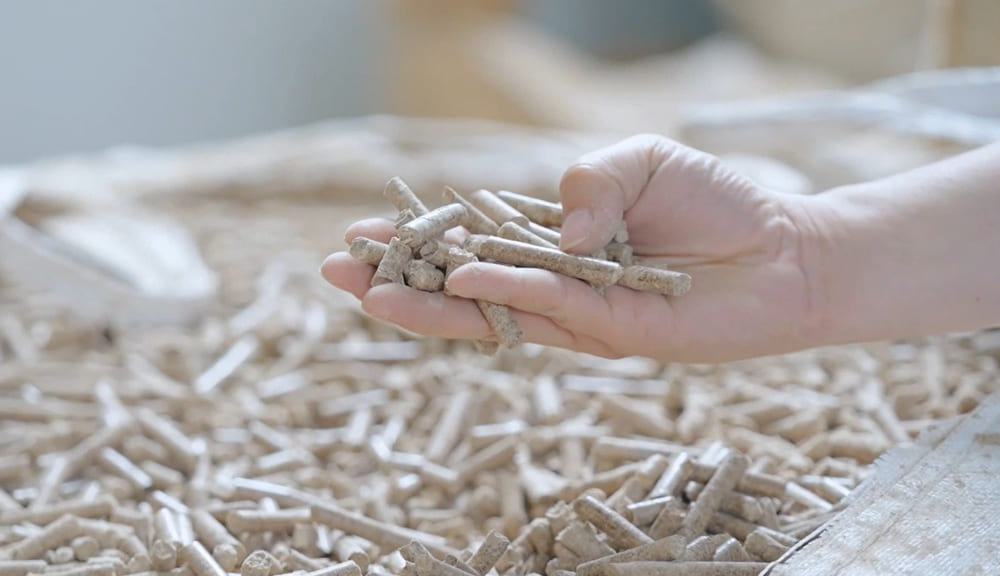
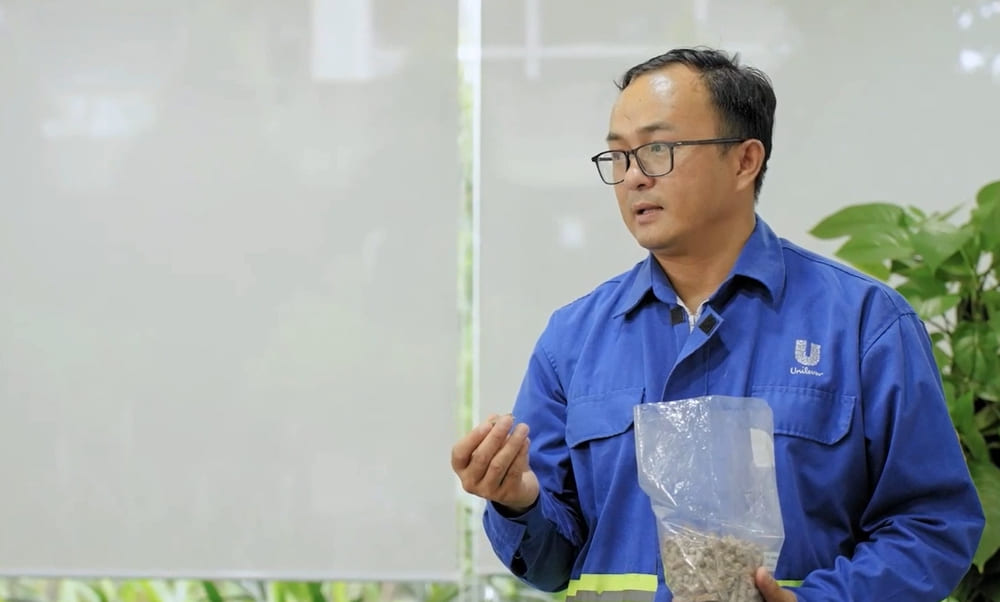
Unilever Vietnam’s Scope 1 includes direct activities in the company’s production and operations. To reduce emissions within this scope, Unilever has implemented a range of green initiatives to eliminate carbon emissions from fossil fuel sources such as diesel. One important step forward is the use of biomass fuel recycled from materials such as wood chips, damaged pallets and rice husks, helping fully replace fossil fuels in boilers. This has helped the company significantly reduce CO₂ emissions, equivalent to eliminating nearly 10,000 tonnes of CO₂ each year since 2007.
Scope 2
Unilever Vietnam’s Scope 2 focuses on reducing indirect emissions from electricity consumption. To reduce indirect emissions from electricity use and move towards the goal of using 100% renewable energy, in 2021, Unilever Vietnam added IREC renewable energy certificates for the electricity used at all of the Group’s factories, offices and distribution centres.
This certificate confirms that the electricity the company consumes comes from renewable energy sources, making an important contribution to reducing carbon emissions from electricity consumption, while also helping Unilever move closer to its goal of net zero emissions across the entire value chain.
Scope 3
Unilever’s Scope 3 relates to promoting the entire value chain to work together towards the goal of achieving net zero carbon emissions across the whole value chain. Most of Unilever’s carbon emissions arise across the entire value chain: from input raw materials and raw material transport, to factory production activities, and then the process of bringing products to consumers. Therefore, Unilever Vietnam cannot achieve the goal of net zero emissions across the entire value chain alone, but requires the cooperation and joint effort of all partners and suppliers across the value chain to co-develop and implement greenhouse gas reduction solutions.
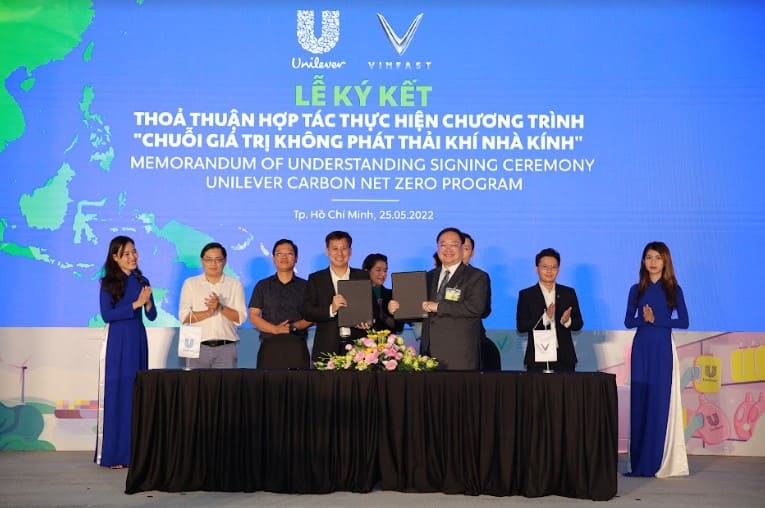
In May 2022, Unilever organised the “Net Zero Greenhouse Gas Value Chain” Conference, with the participation of more than 200 suppliers and strategic partners, aiming to call on businesses to join the journey to fight climate change and reduce emissions.
At the event, Unilever and strategic partners such as VinFast, Linfox Logistics and Green Yellow signed a Memorandum of Understanding, affirming their commitment to achieving net zero emissions across the entire value chain by 2039. This not only promotes environmental protection actions, but also inspires and creates momentum for many other businesses across the country.
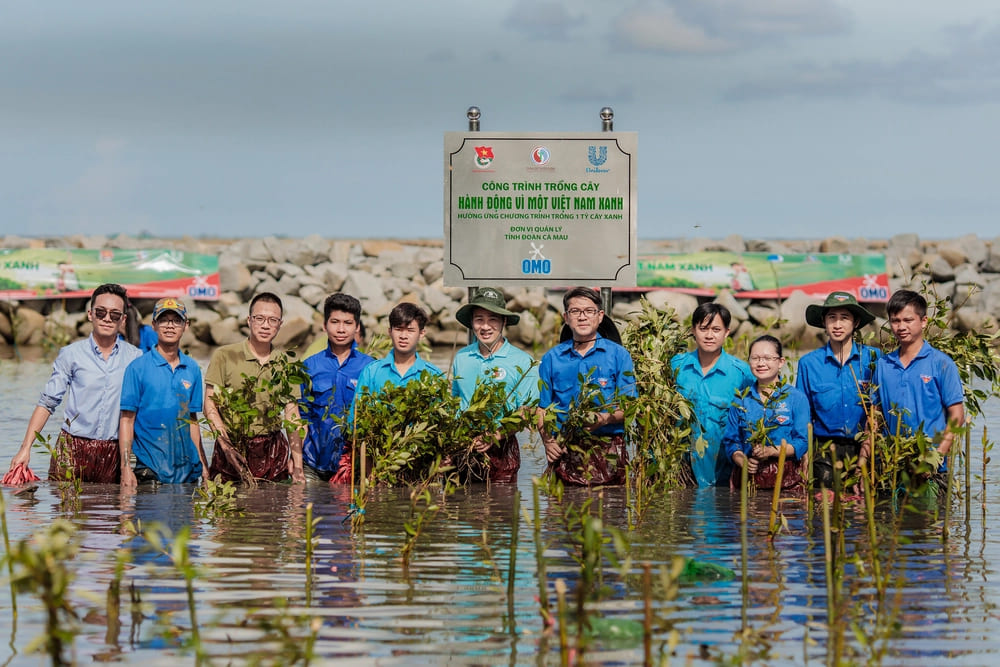
In addition, Unilever Vietnam has also actively responded to the President’s call to participate actively in protecting a green, clean and beautiful living environment, and to successfully implement the program of planting 1 billion trees by 2025. The company signed a cooperation agreement with the Ministry of Natural Resources and Environment to commit to completing the goal of planting 1 million trees “For a Green Vietnam” by 2025, focusing on protection forests, national forests, schools and urban areas. This program not only aims to protect the environment and reduce carbon emissions, but also strengthens community awareness of the importance of protecting natural resources and pursuing sustainable development.
Vision
Unilever aims to achieve net zero emissions across all production activities and the value chain by 2039. The company is committed not only to protecting the environment and contributing to global climate action goals, but also to creating positive change for society through initiatives on renewable energy, the use of biomass fuels, and improved production efficiency.
In addition, Unilever aims to build a sustainable business model, where every product and activity contributes to the development of a green, clean and safe future for the next generations.
Specific objectives
Our operations (Scopes 1 and 2)
Reduce 100% of operational emissions (Scopes 1 and 2) in absolute terms by 2030, compared with the 2015 baseline (validated by SBTi as aligned with 1.5°C).
Reduce 70% of operational emissions (Scopes 1 and 2) in absolute terms by 2025, compared with the 2015 baseline.
Our value chain (Scope 3)
Reduce 42% of absolute Scope 3 industrial and energy GHG emissions from purchased goods and services related to ingredients and packaging, upstream transport and distribution, fuel- and energy-related activities, direct emissions from the use of sold products related to HFC propellants, end-of-life treatment of sold products, and downstream leased assets related to ice cream cabinets, compared with the 2021 baseline. This target was submitted to SBTi in November 2023 for validation as aligned with 1.5°C.
Reduce 30.3% of absolute Scope 3 forest, land and agriculture (FLAG) GHG emissions from purchased goods and services related to ingredients by 2030, compared with the 2021 baseline. This target was submitted to SBTi in November 2023 for validation as aligned with 1.5°C. We have shifted from an intensity-based GHG reduction target to an absolute GHG reduction target. At the same time, we have chosen to accelerate these targets to align with the goal of limiting the average global temperature increase to 1.5°C. These targets have been separated to distinguish GHG emissions from forest, land and agriculture (FLAG) from emissions from energy and industry.
Implementation process – Scope – Cost
Emissions from Unilever’s internal operating system are under direct control, measured and assessed based on global criteria that the Group applies consistently. The Group has set a target to reduce all emissions from electricity, heat and refrigerant consumption to 0% by 2030. In Vietnam, Unilever has achieved the target of reducing emissions by 100% compared with 2015, completing its short-term targets for reducing greenhouse gas emissions (GHG) in Scopes 1 and 2, 9 years ahead of schedule. This result was achieved through the transition to renewable electricity and the implementation of energy efficiency optimisation programs.
The key actions in this journey include:
- Decarbonising thermal and electrical energy sources: Actively reducing emissions through measures to use clean energy and reduce dependence on fossil fuels.
- Increasing the use of renewable energy: Using energy supplies certified by the International Renewable Energy Certificate (IREC), ensuring sustainability and environmental safety.
- Reducing emissions from refrigeration systems: Optimising and innovating refrigeration technology to reduce greenhouse gases generated during operations.
In 2009
Unilever began using solar energy to provide water for production and daily activities. This was the first step in the journey of using renewable energy in Vietnam, helping reduce dependence on fossil fuels and contributing to carbon emissions reduction. The application of solar energy not only helped reduce energy costs, but also reduced greenhouse gas emissions from production activities, meeting the company’s sustainable development objectives.
In 2010
Unilever conducted research and trials on using wood pellets, or biomass, to replace diesel oil in boiler operations. Biomass pellets are a renewable energy source made from surplus wood materials such as damaged pallets and rice husks, helping reduce CO₂ emissions from diesel combustion while also reducing dependence on non-renewable fossil fuels.
In 2011 - 2012
After successful research and trials, Unilever completely replaced diesel oil with biomass wood pellets at its factories. This not only fully eliminated CO₂ emissions from the use of diesel oil, but also ensured that boilers operated efficiently using a clean and renewable fuel source. This was one of the important steps in Unilever Vietnam’s renewable energy strategy.
In 2016
Unilever set a target of achieving Zero CO₂ in Scope 1 at the Cu Chi factory. To achieve this target, Unilever implemented advanced technologies, optimised energy consumption and fully transitioned to biomass fuel. As a result, CO₂ emissions generated during production were reduced as much as possible, helping the Cu Chi factory achieve its carbon-free emissions target. This was also Unilever’s first facility in Vietnam to reach this important milestone, affirming the company’s commitment to sustainable development.
In 2019
Unilever Vietnam achieved an important step in its journey towards the target of Zero CO₂ in Scope 2 by switching entirely to green electricity certified by the International Renewable Energy Certificate (IREC). This transition was applied across all Unilever Vietnam facilities, including two factories, the head office and the product distribution centre. As a result, all electricity consumed at Unilever Vietnam’s factories and offices came from renewable energy sources, significantly reducing indirect CO₂ emissions from electricity use. Through this initiative, Unilever Vietnam reduced 10,415 tonnes of CO₂ per year, making an important contribution to the Group’s sustainable development commitment.
In April 2021
After completing the Zero CO₂ in Scope 2 target across all Unilever Vietnam units and Zero CO₂ in Scope 1 at the Cu Chi factory, Unilever continued to set the target of achieving Zero CO₂ in Scope 1 at the Bac Ninh factory, moving towards the goal of zero CO₂ emissions across both Scopes 1 and 2 for all of its operations. Drawing on the experience and technology successfully implemented at the Cu Chi factory, the Bac Ninh factory achieved the carbon-free emissions target after 4 years of operation, thanks to the commissioning of a boiler using biomass wood pellets. This transition marked an important step forward in Unilever’s efforts to eliminate fossil fuels at its factories, further strengthening the company’s commitment in its journey towards carbon neutrality and sustainable development.
Scopes 1 and 2
- 9,684 tonnes of CO₂ eliminated each year from 2007 to 2022, under Scope 1
- 10,415 tonnes of CO₂ eliminated each year from 2019, under Scope 2
In particular, the initiative to use biomass fuel has made Unilever Vietnam a pioneer in shifting from diesel oil to renewable biomass fuel, contributing to a reduction of 276 tonnes of CO₂ emissions and 511 kg of SOx emissions each year.
Major Unilever facilities such as the head office, distribution centre and Bac Ninh factory have all achieved LEED Green Building certification, an international standard recognising environmentally friendly and energy-efficient buildings. This affirms Unilever’s commitment to sustainable development and building a green working environment.
Scope 3
- 100% reduction in CO₂ emissions and 100% reduction in cardboard waste for packaging transport activities from Dynaplast
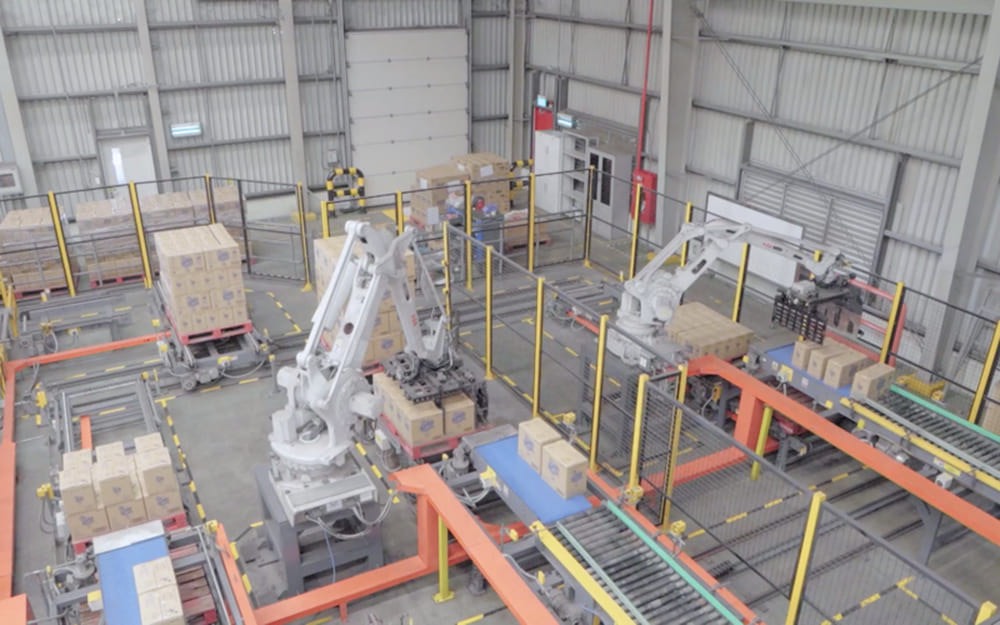
- Transition to using 100% electric forklifts, contributing to a reduction of 1,999 tonnes of CO₂ emissions across all distribution centres by the end of 2022 compared with 2020
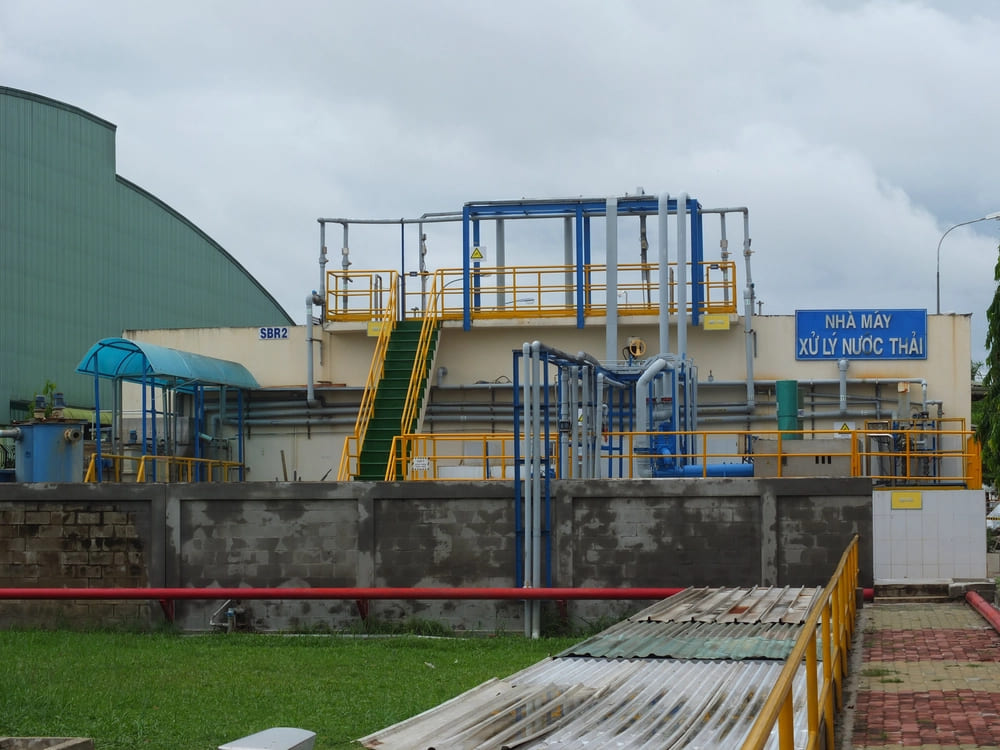
- Implementation and realisation of the circular economy model in managing plastic waste, damaged pallets, cardboard boxes and other waste; turning waste into energy and healthy fertiliser, returning it to serve production activities.
In annual production activities, the business has eliminated 9,684 - 10,415 tonnes of CO₂, demonstrating clear efforts to cut greenhouse gas emissions. The use of biomass fuel alone has helped reduce an additional 276 tonnes of CO₂ per year and 511 kg of SOx emissions, contributing to improved air quality and reduced negative environmental impacts. In addition, the business has achieved a 100% reduction in CO₂ emissions and cardboard waste, while 100% electric forklifts have been put into use, showing a comprehensive transition towards green, clean and sustainable operational solutions.
Unilever Vietnam recognises clearly that achieving the goal of net zero emissions across the entire value chain cannot be completed through its own efforts alone. Instead, the company needs the cooperation and joint efforts of all partners and suppliers in the value chain. For this reason, Unilever has been continuously working to scale its initiatives and solutions by: Sharing and scaling - Unilever Vietnam aims to connect the business community in order to share and scale the management, technical and financial solutions that have been successfully implemented within Unilever as well as with several partners.
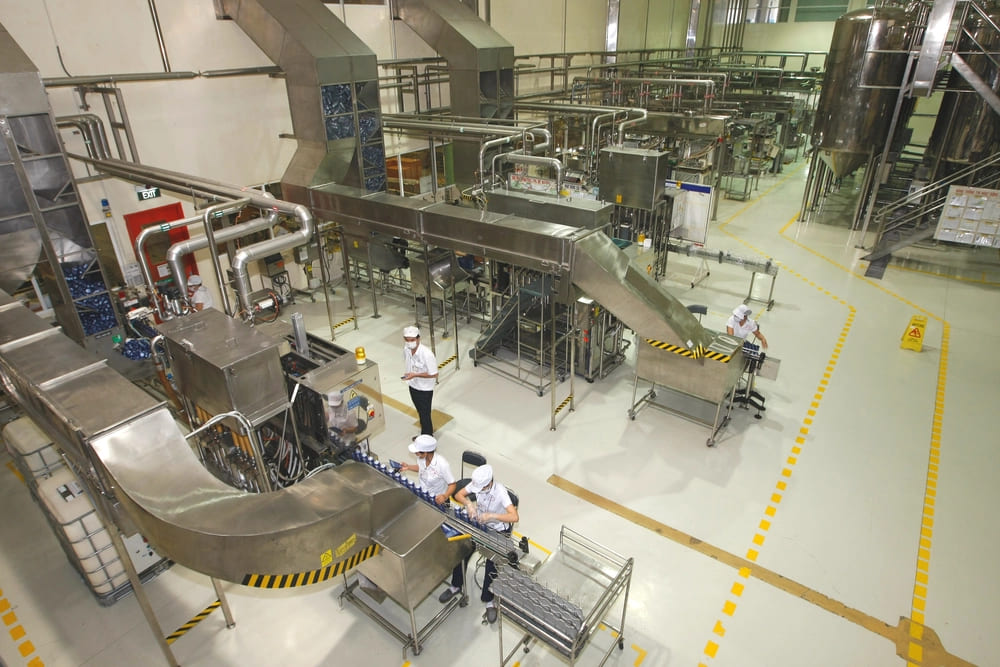
A typical example of this cooperation is at the Bac Ninh factory, where Unilever worked with its packaging supplier, Dynaplast Vietnam, to implement the following projects:
- “Hole in the Wall” Project: A direct pipe transfer system moving packaging bottles from the Dynaplast factory to Unilever helps reduce 4 tonnes of CO₂ per year, eliminate around 3,000 truck trips and reduce emissions from 120,000 cardboard boxes each year, achieving the goal of zero waste emissions.
- “Biomass Boiler Steam Supply” Project: The Unilever Bac Ninh factory supplies steam from its biomass boiler to Dynaplast, helping Dynaplast completely eliminate oil in its boiler and achieve the target of Zero CO₂ in Scope 1.
In addition, Unilever also supports and encourages logistics units to achieve sustainability targets, including:
- Zero CO₂ in Scopes 1 and 2 for warehouse operations through the use of IREC-certified green electricity and the conversion of all diesel forklifts to electric forklifts.
- Annual CO₂ emissions reduction by optimising cargo space on shuttle trucks from factories to distribution centres.
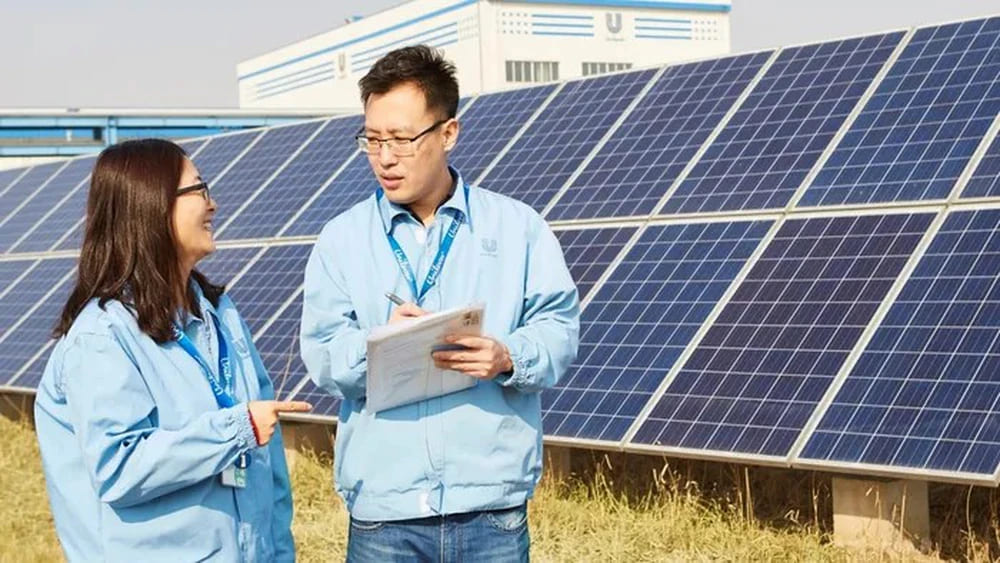
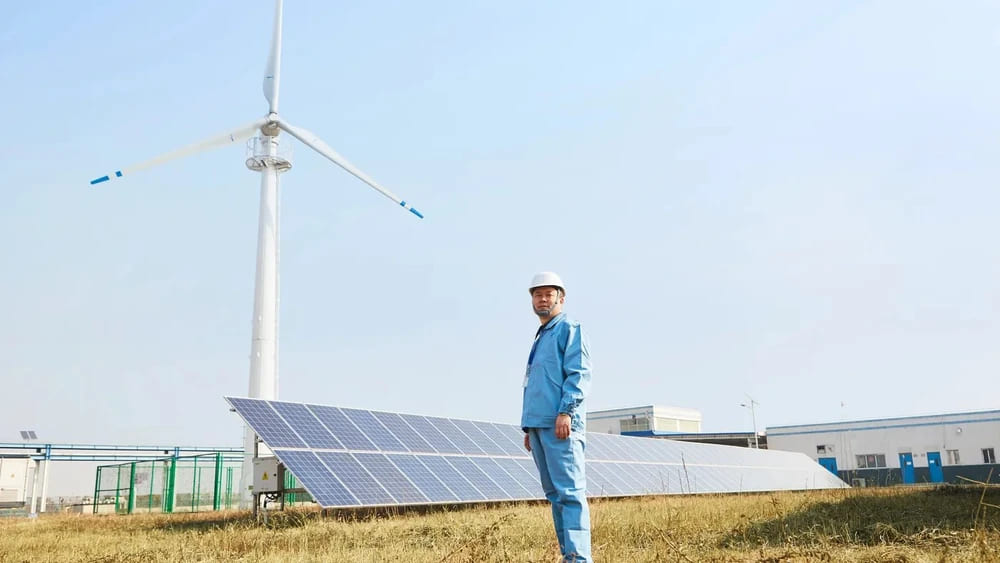
- Accessing green energy mechanisms: Unilever is cooperating with partners in the value chain to study and apply renewable energy such as solar and wind energy. The company hopes to receive support and guidance from the government to more easily access green energy sources, contributing to the goal of “zero carbon emissions”. This not only helps the company continue pursuing its sustainability goals, but also inspires other businesses to take similar action, creating positive impacts for the whole society. Government support will be a major driving force in increasing community awareness of environmental protection, while also calling for action from consumers.
- Connecting the circular economy: Unilever is playing the role of a bridge, helping partners in the supply chain recognise cooperation opportunities in the circular economy. Businesses work together to build a sustainable value chain that both protects the environment and optimises economic efficiency.
One typical example of this Unilever effort is the transfer of damaged pallets and discarded cardboard boxes from the production process to biomass pellet suppliers. These materials are recycled into clean energy and natural fertiliser, then returned to support production activities. This is a concrete demonstration of Unilever’s commitment to turning waste into resources and contributing to building a sustainable economy.
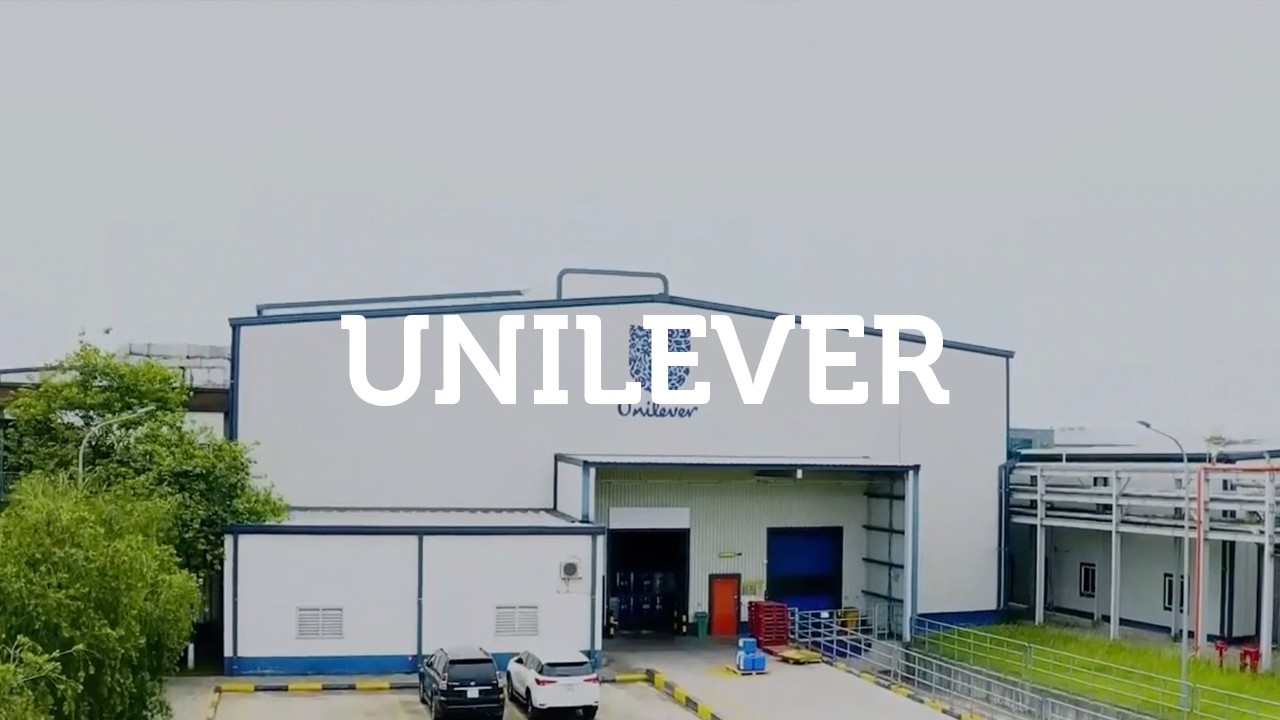
Pioneering Journey to Carbon-neutral Operations
Case Ownership
Hosting Organisation: Unilever Vietnam International Company Limited
Key Partners: Suppliers and partners across the value chain, more than 200 organisations; VinFast; Linfox Logistics; Green Yellow; Dynaplast Vietnam; Ministry of Natural Resources and Environment
Stakeholders and beneficiaries: Unilever’s ecosystem of partners and suppliers across the value chain; Employees and business communities participating in the green transition; Consumers benefiting from sustainable products and brands; State management agencies and the environmental policy system; The natural environment, through greenhouse gas emissions reduction and the promotion of the circular economy
Source: Human Act Prize
The copyright and legality of all images, videos, information, and data regarding the project published on this landing page are provided by and are the sole responsibility of the individuals/organisations registering for the Human Act Prize. The republished content on this landing page has been verified and authorised by VCCorp Corporation (the co-organiser of the Human Act Prize).
Specific SDG targets
SDG 13.2
Integrate climate change measures into policies and strategies
SDG 13.3
Improve awareness and capacity to respond to climate change
SDG 12.2
Sustainably manage and efficiently use natural resources
SDG 12.5
Significantly reduce waste through prevention, reduction, recycling and reuse
SDG 12.6
Encourage businesses to adopt sustainable practices and sustainability reporting
SDG 7.2
Increase the share of renewable energy in the global energy mix
SDG 7.3
Double the rate of improvement in energy efficiency