Forest Symphony project was established as a practical solution to restore and protect forest ecosystem.
The country’s green coverage is gradually shrinking due to deforestation and land-use conversion, with around 1 million hectares of forest lost each year due to uncontrolled exploitation and urbanisation. Forest loss also contributes negatively to climate change, and in turn, extreme climate factors make forests more vulnerable. In this context, the Forest Symphony project was started in Ninh Thuan and Soc Trang - two typical provinces facing serious challenges caused by climate change and natural disasters, making the lives of hundreds of thousands of local people unstable.
The project not only focuses on planting forests and restoring lost forest areas, but also inspires and equips communities with knowledge so they can work together to protect forests. Forest planting not only helps prevent desertification and saltwater intrusion, but also plays an important role in protecting communities from the impacts of climate change, helping regenerate ecosystems and ensuring a more stable life for future generations.
Vietnam is one of the countries most severely affected by climate change, with increasingly clear impacts. The country’s average temperature has risen by 0.5 to 1°C over the past 50 years, causing many consequences for agriculture, health and food security. At the same time, uneven rainfall, together with increasing flooding in the North and drought in the South, has created many challenges for agricultural production. In particular, sea-level rise, forecast to reach 1 to 3 metres in the next century, seriously threatens coastal areas, leading to erosion and loss of productive land.
The country’s green coverage is gradually shrinking due to deforestation and land-use conversion, with around 1 million hectares of forest lost each year due to uncontrolled exploitation and urbanisation. Forest loss also contributes negatively to climate change, and in turn, extreme climate factors make forests more vulnerable.
In this context, the Forest Symphony project was established as a practical solution to restore and protect forest ecosystems, starting in Ninh Thuan and Soc Trang - two typical provinces facing serious challenges caused by climate change and natural disasters, making the lives of hundreds of thousands of local people unstable.
Climate change is causing serious negative impacts on the lives of people in Ninh Thuan and Soc Trang. Prolonged drought in Ninh Thuan has led to severe water shortages and degraded soil, affecting agricultural production. Meanwhile, in Soc Trang, increasing saltwater intrusion is reducing cultivated land areas and threatening food security. Natural disasters such as landslides and flash floods are also becoming more frequent, causing major losses of life and property.
Given this urgent situation, forest planting projects such as Forest Symphony in Ninh Thuan and Soc Trang have become essential solutions to improve forest cover, restore water sources, protect land and support sustainable livelihoods for thousands of local people. The project not only focuses on planting forests and restoring lost forest areas, but also inspires and equips communities with knowledge so they can work together to protect forests. Forest planting not only helps prevent desertification and saltwater intrusion, but also plays an important role in protecting communities from the impacts of climate change, helping regenerate ecosystems and ensuring a more stable life for future generations.
Forest Symphony - Giao huong rung xanh (Green Forest Symphony) is an important initiative aimed at building a sustainable forest ecosystem in Ninh Thuan and Soc Trang. The project not only increases forest coverage, but also contributes to strengthening community resilience against the negative impacts of climate change and extreme weather events through the following activities:
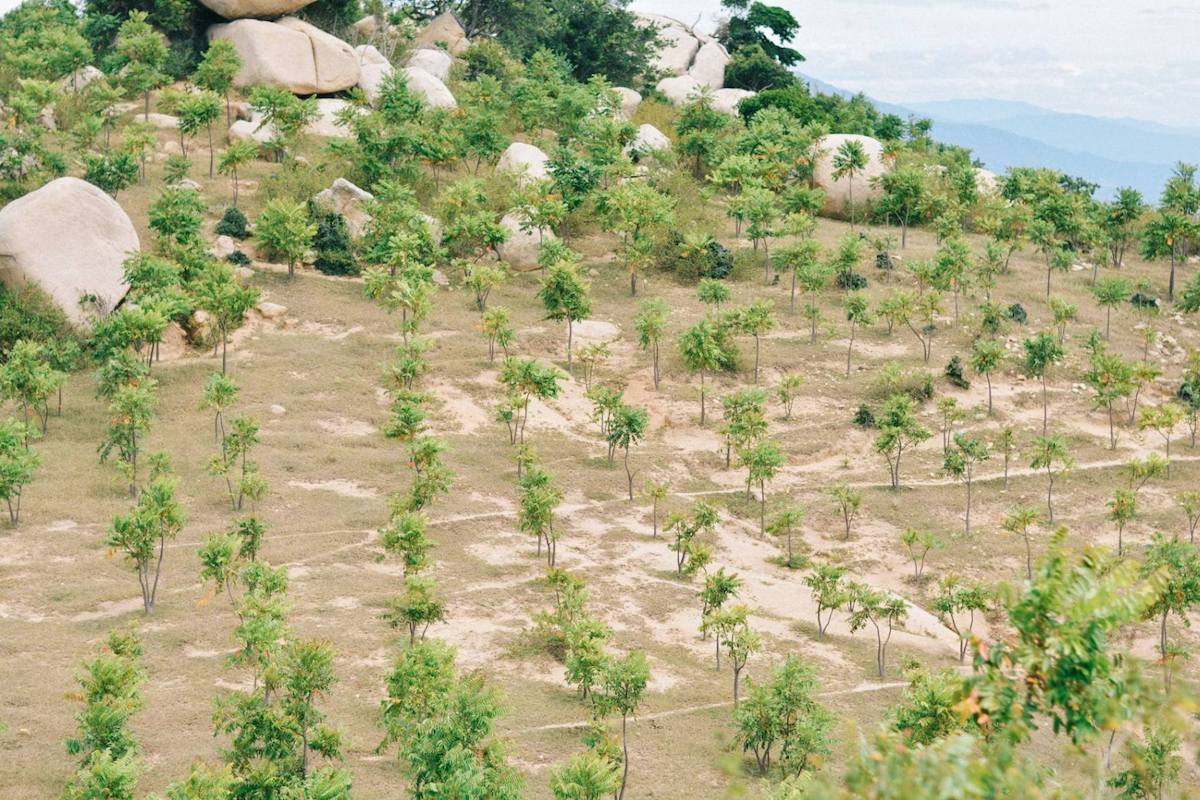
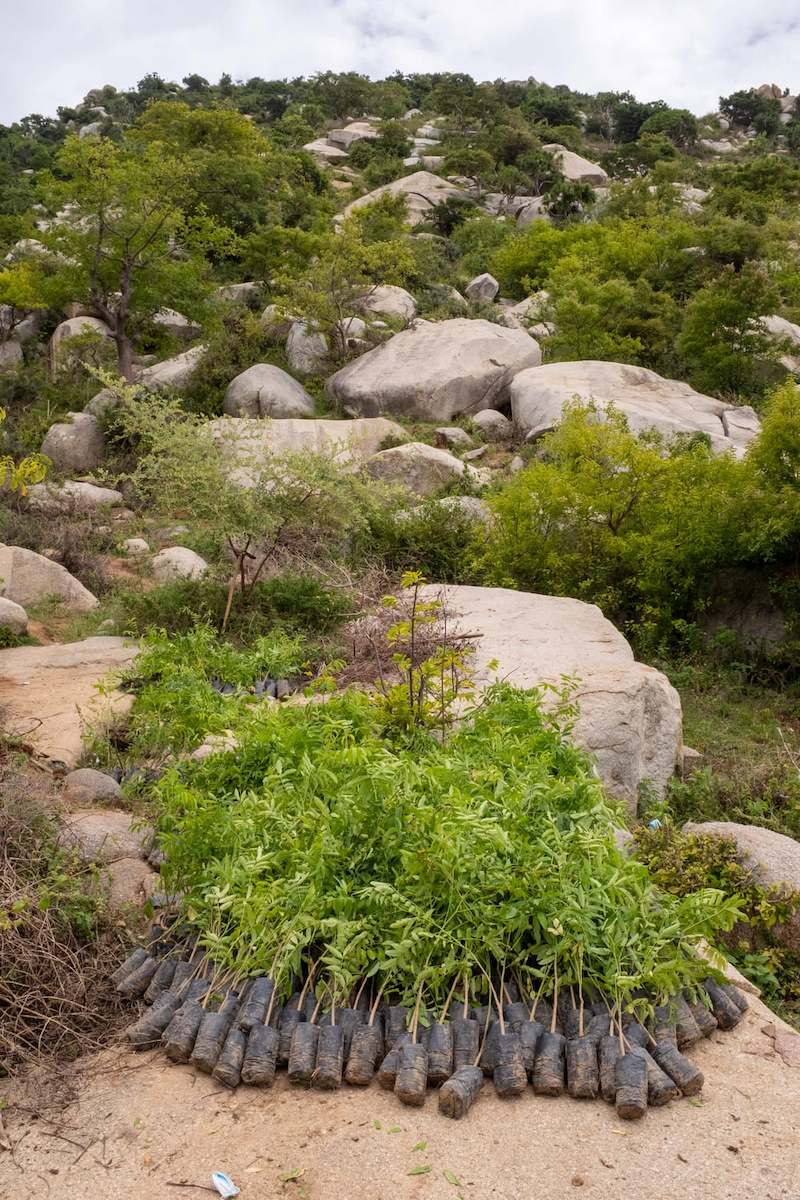
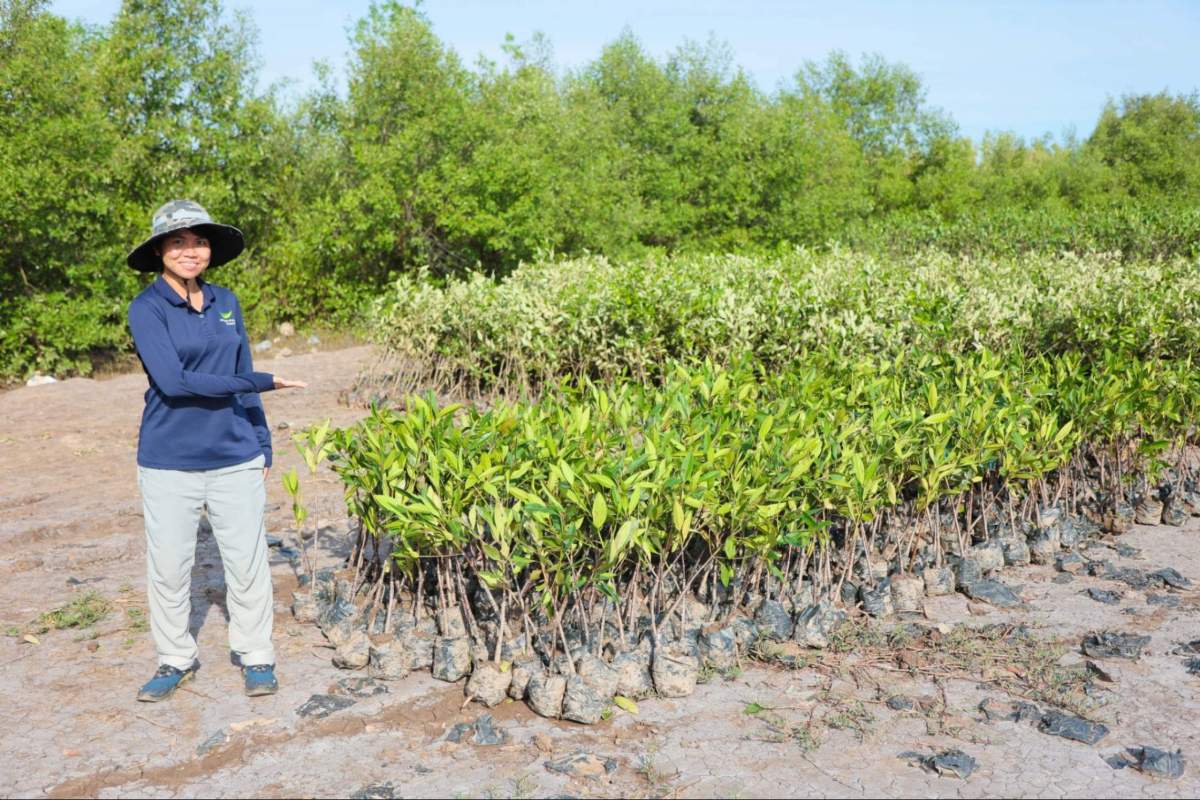
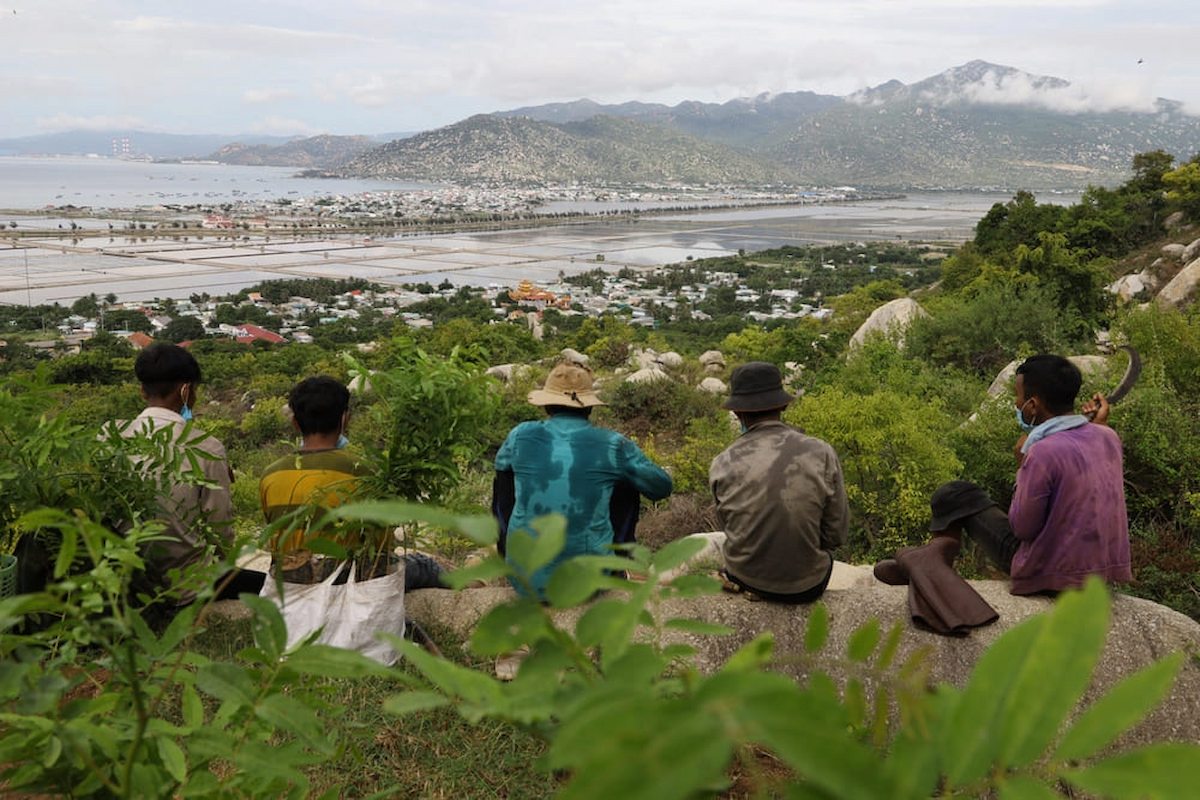
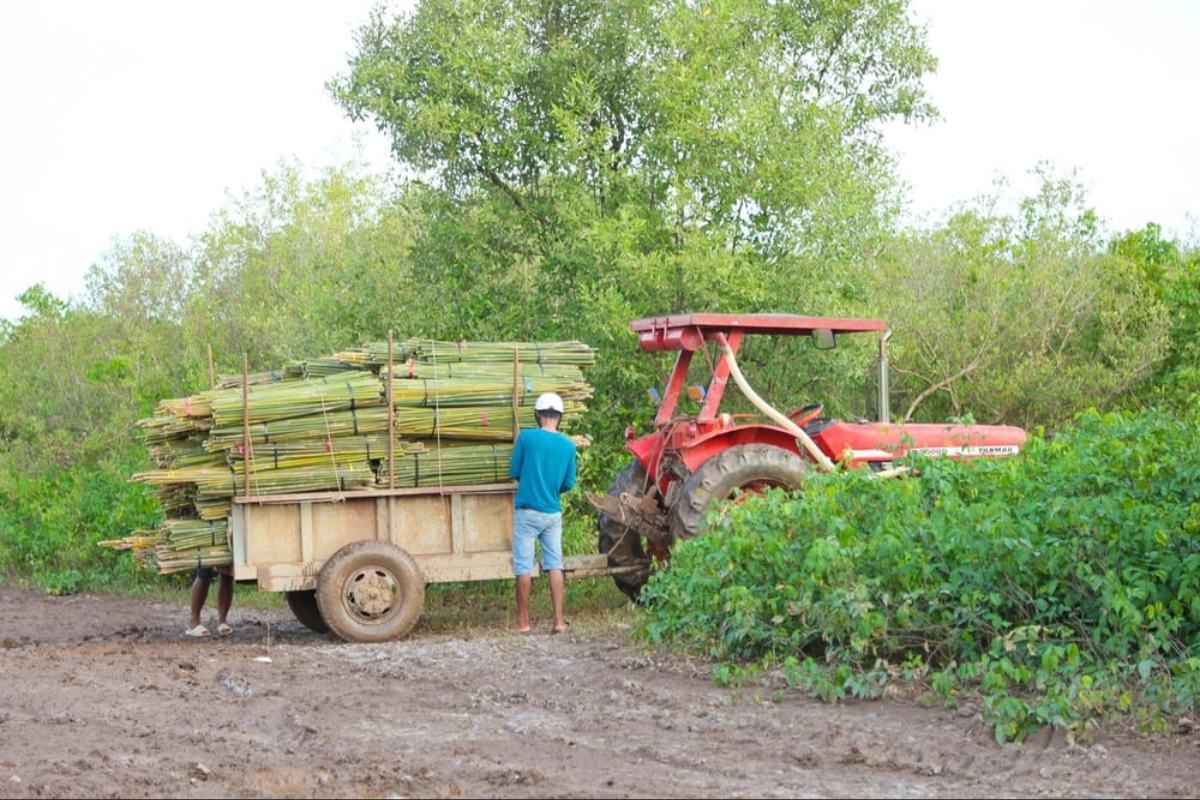
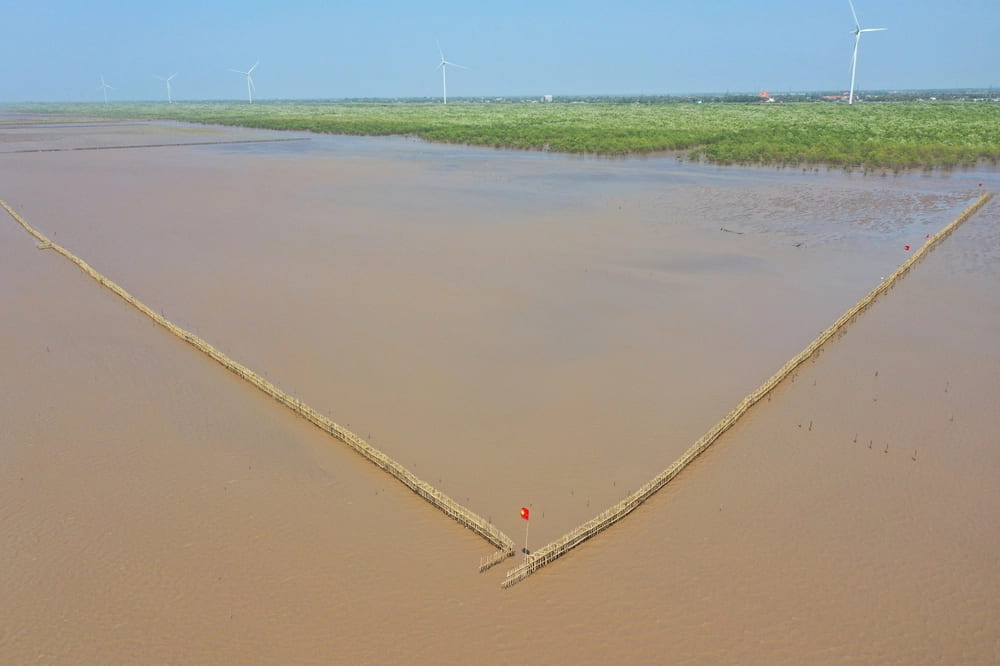
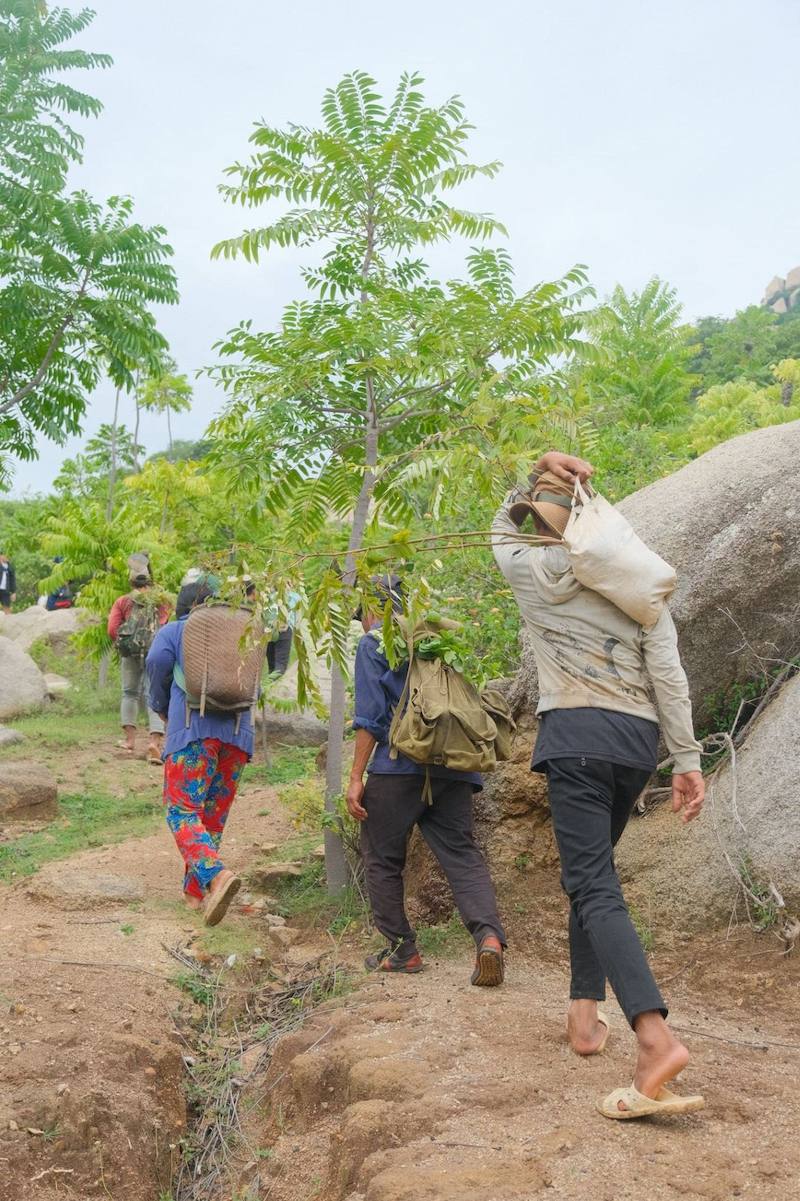
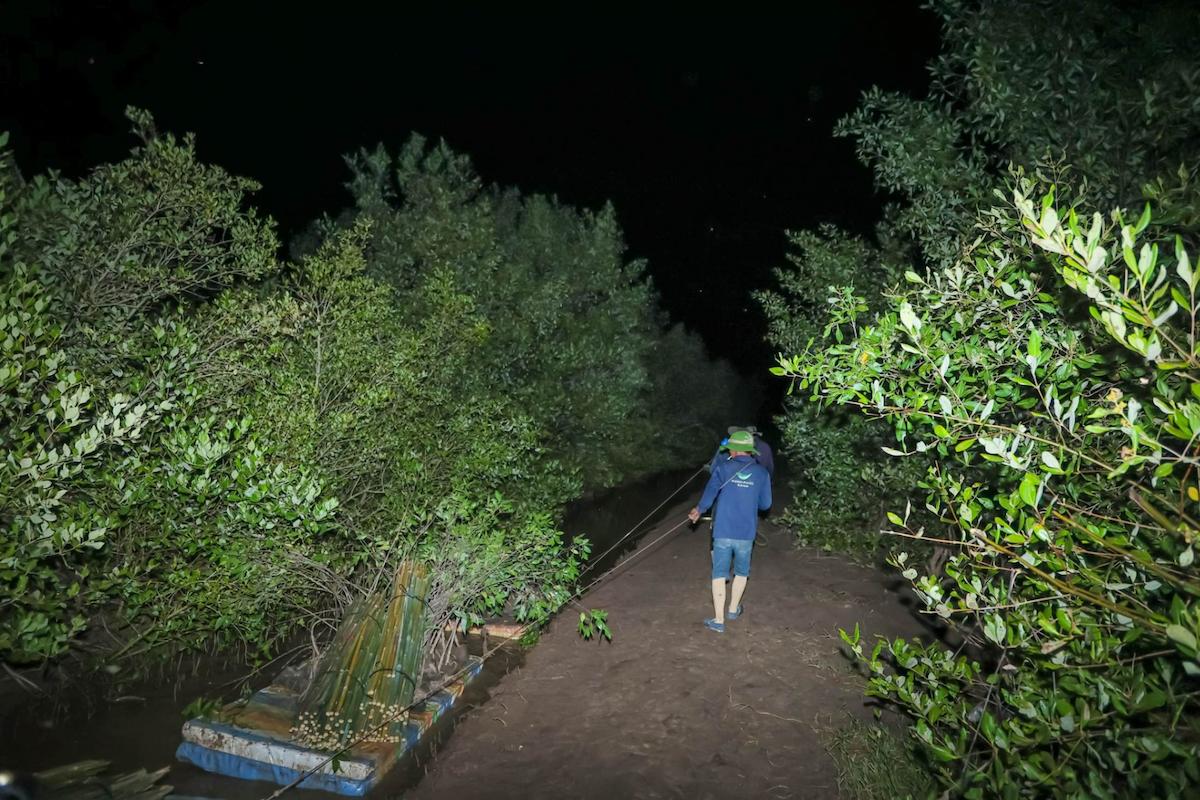
- Forest restoration: Over 5 years, from 2020 to 2025, the project plants mangrove forests in Soc Trang to help prevent erosion, protect the shoreline, increase sediment accumulation and create mudflats, block waves and form a protective belt for communities against storms and strong winds. It also plants protection forests on rocky mountains in Ninh Thuan to increase forest area and forest coverage, restore water sources, and strengthen the protective functions of forests, such as blocking wind, preventing flying sand and protecting upstream areas.
- Awareness raising: The project aims to build a community that loves nature and is conscious of environmental protection. Through diverse activities, the project has successfully connected people with nature and encouraged active community participation.
- Research and transfer of science and technology applications in forest planting, care and protection.
Objective
Through forest restoration and increasing green areas, the Forest Symphony project aims to improve the quality of the living environment, reduce pollution, strengthen biodiversity and improve adaptive capacity to climate change.
More than simply a tree-planting program, the project is also a journey of deep connection between communities and nature. Alongside restoring important ecosystems, the project also focuses on researching, testing and transferring advanced scientific technologies, helping increase effectiveness in forest planting and environmental protection.
The project sets a target of planting 250 hectares of protection forest in Ninh Thuan and 50 hectares of mangrove forest in Soc Trang over 5 years from 2020 to 2025.
At the same time, through community development education activities, Forest Symphony will also focus on raising public awareness of the importance of forests and sustainable forest development solutions by educating and developing communities on the role and value of forests, while encouraging active participation in environmental protection.
Vision
The 70-year vision of Forest Symphony is to create a sustainable forest ecosystem, where forests are restored and expanded, contributing to protecting communities against natural disasters and climate change. The project does not stop at tree planting, but also aims to develop sustainable livelihoods from forests, helping local people improve their lives while preserving valuable natural heritage for future generations.
With deep community participation and strong connections between stakeholders, Forest Symphony hopes to build a future where people live in harmony with nature, thereby creating the foundation for a sustainable and prosperous life.
The Forest Symphony project has been implemented since 2020 in Soc Trang and Ninh Thuan, areas severely affected by climate change and with a high need for forest restoration. The project addresses serious issues related to forest loss, ecosystem degradation and climate change in the implementation areas.
To achieve this, the project has applied many initiatives and methods, including:
Promoting stakeholder participation
This is the core approach of the project, applied throughout the entire implementation process, including resource mobilisation, project development, implementation and transfer. The project will operate effectively and achieve the best results when stakeholders, especially local communities, work together and participate in the whole process. This aims to build the community’s sense of responsibility and ownership in protecting and preserving forests. From there, the project’s results can be maintained and developed sustainably by the community after the project ends. Stakeholders include:
- Local people: The project has set up training sessions, workshops and direct working sessions with local people, focusing on providing knowledge about forest planting techniques, tree care and natural resource protection. To promote sustainable participation, the project has implemented livelihood support activities for local people by creating jobs during forest planting and care, developing livelihoods under the forest canopy, and sustainably using the resources provided by forests. This not only helps improve local people’s lives, but also creates a long-term connection between them and forest protection activities.
- Community: The project’s communication campaigns are creatively and professionally designed to attract strong interest from the community and followers, while strongly inspiring the community and helping raise awareness and consciousness about protecting nature.
- Embassies: During anniversaries, important events and diplomatic commemorative events between countries, embassies have worked with Hanh Phuc Xanh (Green Happiness) to plant trees and spread the message of environmental protection.
- Businesses: The project expands cooperation methods so businesses can actively participate in fundraising in many ways, such as contributing part of product revenue, placing posters and fundraising items in stores, using CSR budgets, organising internal events to raise awareness and funds, and creating a sense of connection and social responsibility among employees.
Needs- and resource-based approach
Project activities are designed based on discussions with stakeholders to understand each other’s needs and resources. When real needs are met and partners and communities can participate using their own strengths, they will be ready and proactive in jointly building and implementing the project.
Respecting local knowledge
The local knowledge of communities is a rich and valuable resource. Activities carried out locally, especially forest planting and forest care, are consulted on and implemented by local people. During implementation, they are the ones who propose initiatives and continuously optimise solutions.
Multi-dimensional approach
In forest planting campaigns, the project does not focus only on planting trees. Research, experimentation, technology application, education and community development activities are always carried out at the same time. This multi-dimensional approach not only promotes the participation of many stakeholders in the community, such as schools, local people and local authorities, but also involves many groups of different ages, such as children, women, young people and experts. With a multi-dimensional approach, issues can be addressed thoroughly, closely connected and with strong impact.
Increased forest area
The project has made a significant contribution to expanding forest area, especially mangrove forests and protection forests, contributing to biodiversity protection and improving habitats.
Improved community awareness
Through education and communication activities, the project has successfully raised community awareness of the importance of forests and environmental protection. Local people have actively participated in forest planting and protection activities, forming a nature-loving community.
Sustainable economic development
The project has created many job opportunities for local people, contributing to higher income and improved living conditions by giving local people opportunities to participate in forest-related economic activities such as planting, caring for forests, harvesting forest products, and developing livelihood models under the forest canopy. At the same time, the development of forest-based products has created a new value chain, promoting the local economy.
Biodiversity conservation
Through forest planting and the restoration of natural ecosystems, the project contributes to biodiversity conservation and strengthens the resilience of ecosystems against negative impacts from nature. This not only benefits the community, but also contributes to global environmental protection efforts.
Building a sustainable community
The project has contributed to building a united community with a strong sense of responsibility for environmental protection. The participation of different groups, from children to older people, has created a space for sharing and mutual learning, thereby encouraging social development and stronger connections among community members.
Applying modern technology
The application of science, such as testing microbial fertilisers and multiple tree species, and the use of technology such as drones and geographic information systems, including meteorological monitoring stations and forest monitoring through remote sensing, have helped improve the effectiveness of forest management and protection.
Transferring knowledge and experience
The project has successfully transferred knowledge and experience in forest planting and protection to local communities and management agencies. This transfer not only ensures the project has a long-term impact, but also creates a foundation for this model to be scaled to many other localities. It affirms the central role of the community in forest protection and development, while also enabling local agencies to strengthen their capacity in natural resource management, forest protection and climate change adaptation.
Creating strong relationships in Vietnam and internationally
During anniversaries, important events and diplomatic commemorative events between countries, embassies have worked with Hanh Phuc Xanh to plant trees and spread the message of environmental protection. These activities not only add symbolism and meaning to the campaign, but also attract international community attention to the project. The project has also received active interest and participation from embassies, especially the British Embassy and the New Zealand Embassy. In addition, the “KayOL” campaign, with the participation of celebrities and KOLs, has strongly inspired the community, helping raise awareness and consciousness of nature protection. It has built a network connecting like-minded people, thereby expanding opportunities for cooperation and development in the future.
The project has achieved many notable results, including the restoration of 28.5 ha of mangrove forest in Soc Trang and 84 ha of protection forest in Ninh Thuan. Forest planting and care activities have attracted 10,000 labour contributions, with the contribution of 15,000 individuals and sponsorship support from 40 businesses. In total, 234,000 forest trees of various species have been planted, contributing to ecosystem improvement and increased green coverage. Alongside its environmental impact, the project has also created clear social value by indirectly benefiting 54,000 local people, while directly supporting 440 households through livelihood activities under the forest canopy.
Since 2023, when the Song Fund shifted from a fund acting for the community to a fund of the community taking action, Song’s operating model has been reshaped to become a strong platform connecting resources from the community, businesses, government and experts. The objective is to optimise collective strength, ensure the project develops sustainably and create long-term value. This is a strategic direction that not only creates innovation in the way projects are managed and implemented, but also helps increase the ability to scale the model effectively.
The Forest Symphony model, with its harmonious combination of community, business, government and professional expertise, has proven effective in forest restoration and sustainable development. Therefore, the potential to scale this model is very strong and promises to bring positive impacts to many other localities.
Factors creating scaling potential:
- Flexibility: The model can be applied to many different localities with different natural and social conditions.
- Multi-sector cooperation: The participation of many different groups creates a strong support network. When communities, government and organisations work together, the Forest Symphony model can be learned from and adjusted, thereby creating long-term positive impact in forest restoration and natural resource protection.
- Resource optimisation: Resources are used effectively, delivering the highest results at the lowest cost.
- Sustainability: The model aims for sustainable development, both protecting the environment and improving community livelihoods.
Forest Symphony
Case Ownership
Hosting Organisation: Song ben vung (Sustainable Living) Community Development Support Fund
Key Partners:
- Local authorities in Ninh Thuan and Soc Trang
- Local communities and forest owners
- Corporate sponsors and CSR partners
- Embassies, particularly the British Embassy and the New Zealand Embassy
- KOLs/influential figures participating in the “KayOL” campaign
- Experts and science–technology units supporting research, monitoring, remote sensing and drones
Stakeholders and beneficiaries:
- Local people in Ninh Thuan and Soc Trang, especially households dependent on forests
- Households participating in livelihoods under the forest canopy
- Coastal communities, drought-prone areas and areas strongly affected by climate change
- Local authorities, forest rangers and community organisations
- Businesses and communities contributing to forest restoration activities
- Protection forest ecosystems, mangrove forests and native plant and animal species
- Future generations benefiting from restored ecosystems and stronger climate resilience
Source: Human Act Prize (link in Vietnamese, external link)
The copyright and legality of all images, videos, information, and data regarding the project published on this landing page are provided by and are the sole responsibility of the individuals/organisations registering for the Human Act Prize. The republished content on this landing page has been verified and authorised by VCCorp Corporation (the co-organiser of the Human Act Prize).
Specific SDG targets
SDG 13.1
Strengthen resilience and adaptive capacity to climate-related hazards and natural disasters
SDG 13.3
Improve education, awareness and capacity to respond to climate change
SDG 15.1
Conserve, restore and sustainably use terrestrial and inland freshwater ecosystems
SDG 15.2
Promote sustainable forest management, halt deforestation, restore degraded forests and increase afforestation and reforestation
SDG 15.3
Combat desertification and restore land and degraded soil
SDG 15.5
Take urgent action to reduce the degradation of natural habitats and halt biodiversity loss