The Safe House Project, under the Nha Chong Lu Program of the Song Ben Vung Fund, began implementation in 2013 to provide technical and financial support for building safe houses for disadvantaged families affected by natural disasters and climate change.
Having witnessed the losses caused by natural disasters and extreme weather events, the Safe House Project, under the Nha Chong Lu Program of the Song Ben Vung Fund, began implementation in 2013 to provide technical and financial support for building safe houses for disadvantaged families affected by natural disasters and climate change.
After 11 years, the project has supported the construction of 1,230 safe houses across 11 provinces and cities in all three regions of the country. The project has systematised its designs into a handbook with 3 groups of solutions: raised-foundation houses, houses with mezzanine floors, and floating houses, including 9 solutions designed specifically for each family to ensure suitability for responding to the natural disaster characteristics of each locality.
Vietnam is among the 5 countries most severely affected by global climate change, with extreme and abnormal weather events becoming increasingly prominent. The situation of “storms overlapping storms, floods overlapping floods” has appeared more frequently and caused serious damage. In the past 20 years alone in Vietnam, natural disasters such as storms, floods and landslides have caused more than 13,000 deaths, property damage of over USD 6.4 billion, and placed around 60% of land area and more than 70% of the population at risk of natural disasters. Many houses have collapsed or been severely damaged after being submerged in floodwaters, making post-flood livelihoods extremely difficult, especially for poor communities.
Witnessing these losses, the Nha Chong Lu Project team wanted to find an effective solution to help disadvantaged people adapt to annual flooding and move towards a more sustainable life.
In 2013, the idea of safe houses during flood seasons first emerged when the project team saw a wooden house placed on a concrete frame, nearly 100 years old, in Huong Son District, Ha Tinh, still standing firmly after surviving many flood seasons. After further research, the project found that the minimum cost the community could jointly contribute to build the foundation for a safe house was around VND 25 million, while the remaining part would require beneficiaries to make their own efforts for the living quality of their families. The first fundraising event took place afterwards and raised VND 200 million. This funding helped the Safe House Project support the construction of 5 houses in Son Thinh Commune, Huong Son District, Ha Tinh. This was also the first brick that enabled the Safe House Project, under the Nha Chong Lu Program, to continue expanding and developing over the past 10 years.
Over 11 years of establishment and development, the Safe House Project has gradually changed in a positive direction, accumulated experience, and drawn out an implementation method suited to the specific characteristics of the Project.
Developed a set of 7 criteria for selecting households to participate in the Project:
- Households located in areas affected by natural disasters and climate change
- Households with the need and motivation to build a safe house
- Households classified as poor, near-poor or facing difficult circumstances
- Households with many members and young dependants. The Project does not support households living alone or households with only elderly residents
- The construction land must be residential land, with proof of legal ownership, no disputes, and not subject to planning or relocation
- Design and construction support. Households need to participate throughout the design process so the construction plan suits their circumstances and needs
- Financial support from VND 20–35 million for renovated houses and from VND 35–50 million for newly built houses. Households need to contribute the remaining funding to complete the house
- Introduced 9 safe house models across 3 solution groups, including: low raised-foundation house; high raised-foundation house; flexible raised-foundation house; two-storey house for people only; two-storey house with space for livestock; three-room house with mezzanine; tube house with mezzanine; standalone floating house; floating house attached to a built house
- Concretised the spirit of working together in the Project through the co-design method, strengthening equal cooperation between the Project and beneficiaries
- The Project has architects and project officers closely accompanying each household throughout the construction process, providing timely direction and support tools
- Built a rigorous working process, calling for joint participation from many parties: local authorities; experts and architects; volunteers and artists; individuals and businesses fundraising and sponsoring the project
Objective
- Support the construction of safe houses that can withstand natural disasters, such as storms and floods, for disadvantaged people in areas affected by natural disasters and climate change;
- Strengthen proactive disaster risk reduction capacity, accelerate recovery and reconstruction after disasters, help people quickly stabilise their lives, and adapt to different types of disasters across regions and areas throughout the country.
Vision
The Project’s vision is to create positive changes in the lives and construction mindset of more than 1,000 households after they have safe houses, specifically:
- Improve the safety and sustainability of people affected by natural disasters and climate change.
- Positively change the mindset of households in becoming proactive in disaster risk reduction.
- Change local construction mindsets and habits, creating conditions to balance environmental protection with economic development and inclusive growth.
- From there, the Project helps people develop livelihoods and promotes community participation in proactively reducing disaster risks.
The Safe House Project is currently present in 11 provinces and cities across all three regions of the country: Quang Ninh, Ha Tinh, Quang Binh, Quang Tri, Thua Thien Hue, Quang Nam, Khanh Hoa, Soc Trang, Hau Giang, Dong Thap and An Giang.
Approach and implementation process of the Safe House Project:
- Contact local authorities and select project implementation areas based on the criteria for selecting locations
- Hold meetings with groups of households and conduct preliminary information surveys of households proposed by local authorities, based on the Project’s criteria for selecting beneficiary households
- Meet households, assess the current condition of the house, the natural conditions of the area and each household’s family circumstances
- Conduct surveys and develop preliminary designs based on actual needs, supply sources and prices of construction materials, and local construction costs
Prepare detailed designs and construction cost estimates.
Discuss and agree with households on the design and cost estimate. Households must contribute at least 50% of the construction cost.
Sign a support commitment between 3 parties: the household owner, the Project and the representative of the local authority.
Monitor and supervise the house construction process, and disburse the first round of support funding.
Conduct acceptance, disburse the second round of funding, hand over the house and put it into use.
Note: From the step of meeting households to the step of signing the support commitment and starting construction, the Project takes 1–2 months and requires at least 2–3 working sessions with each household. The average implementation time for one house is 2–4 months, depending on weather and labour availability, as most project implementation areas are located far from central areas.
Nha Chong Lu continues to commit to creating positive change through the construction of safe houses for poor, near-poor and especially disadvantaged households, such as households with people with disabilities. Above all, the criteria and methods of Nha Chong Lu continue to be improved and developed in order to fulfil its mission of promoting sustainable and equitable development for Vietnamese people through construction activities that create change.
Budget
2013–2019 period:
- For renovated houses: VND 20,000,000–35,000,000 per household, depending on each household
- For newly built houses: VND 30,000,000–45,000,000 per household, depending on each household
2020–present period:
- For renovated houses: VND 20,000,000–35,000,000 per household, depending on each household
- For newly built houses: VND 35,000,000–50,000,000 per household, depending on each household
After 12 years of implementation, the Safe House Project has effectively reduced damage to property, housing and people when natural disasters occur. At the same time, through the project, communities have become more aware and proactive in preventing natural disasters, and no longer feel anxious during storm seasons. The houses that have been built have also helped people feel more confident before and after storms, thereby creating potential for socio-economic development.
The program has brought positive and measurable changes to people’s lives. Specifically, 66.9% of households reduced housing damage and 88.69% reduced property damage, while the loss coefficient was only 1.24%, showing clear effectiveness in disaster prevention capacity. Thanks to safe housing, 57.14% of households were no longer passive when disasters occurred, 90% were no longer worried during the rainy and storm season, and 96.27% felt more confident in life. This impact also spread to socio-economic aspects, with 85.09% of households gaining more motivation for economic development and 85.09% expressing satisfaction with their lives. A total of 1,230 safe houses have been built, contributing to a stable and long-term foundation for communities facing disaster risks.
Recognising that the implementation model and activities of the Safe House Project can be spread and applied within communities, the Song Fund published the Safe House handbook, containing full information on the Project’s principles, criteria for selecting beneficiary households, project implementation methods, and especially detailed descriptions and explanations for each house model across the 3 solution groups developed by the Project.
With the goal of gradually transforming the Song Fund model from a “fund acting for the community” to a “fund of the community taking action”, the Safe House Project has initially sought cooperation opportunities with local partner groups, whose personnel have experience and expertise in architecture and social work, in order to transfer methods and directly implement the Project in local areas. During the work carried out by partner groups, the Safe House Project always provides support through experience and lessons learned from working with households and local authorities, as well as technical support in the house design stage. Project officers also regularly participate in field supervision with partner groups to provide practical and timely support.
In addition, the Project also organises weekly work reporting meetings, updates project progress, shares experiences or difficulties during implementation, and organises architect meetings to exchange technical expertise, approve drawings and beneficiary household documents in accordance with the process set out by the Project.
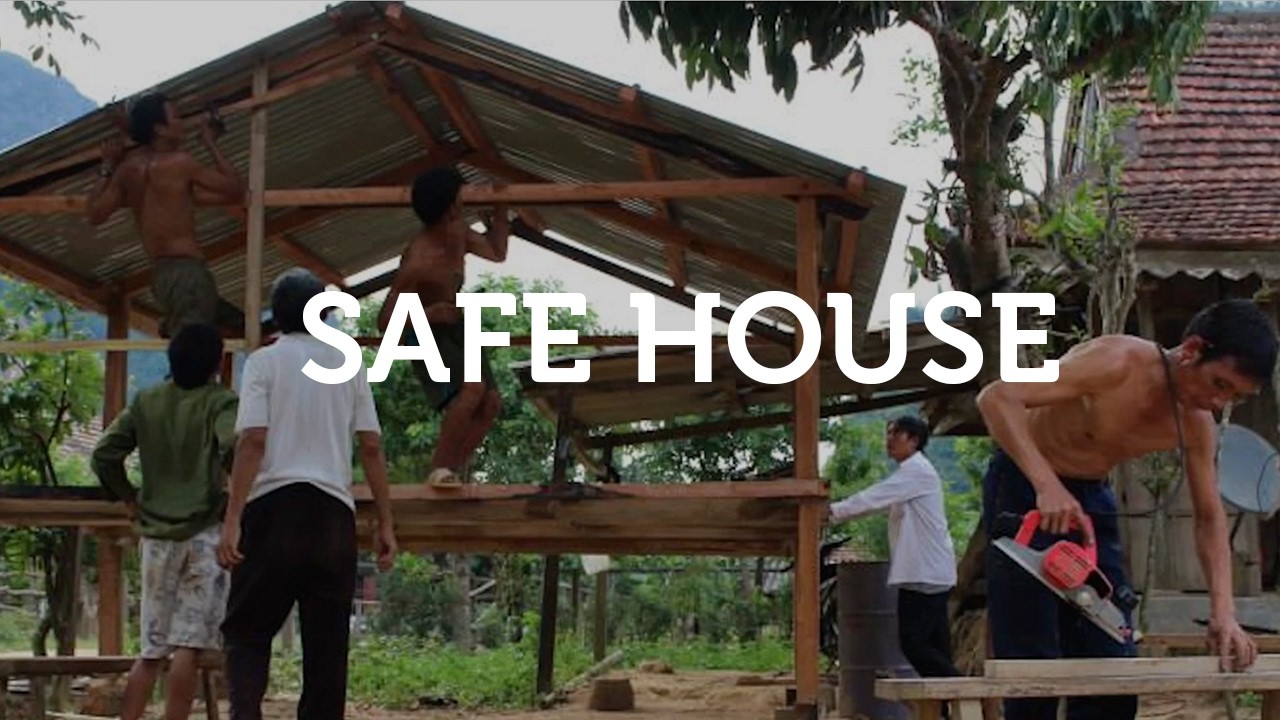
Safe Housing Project
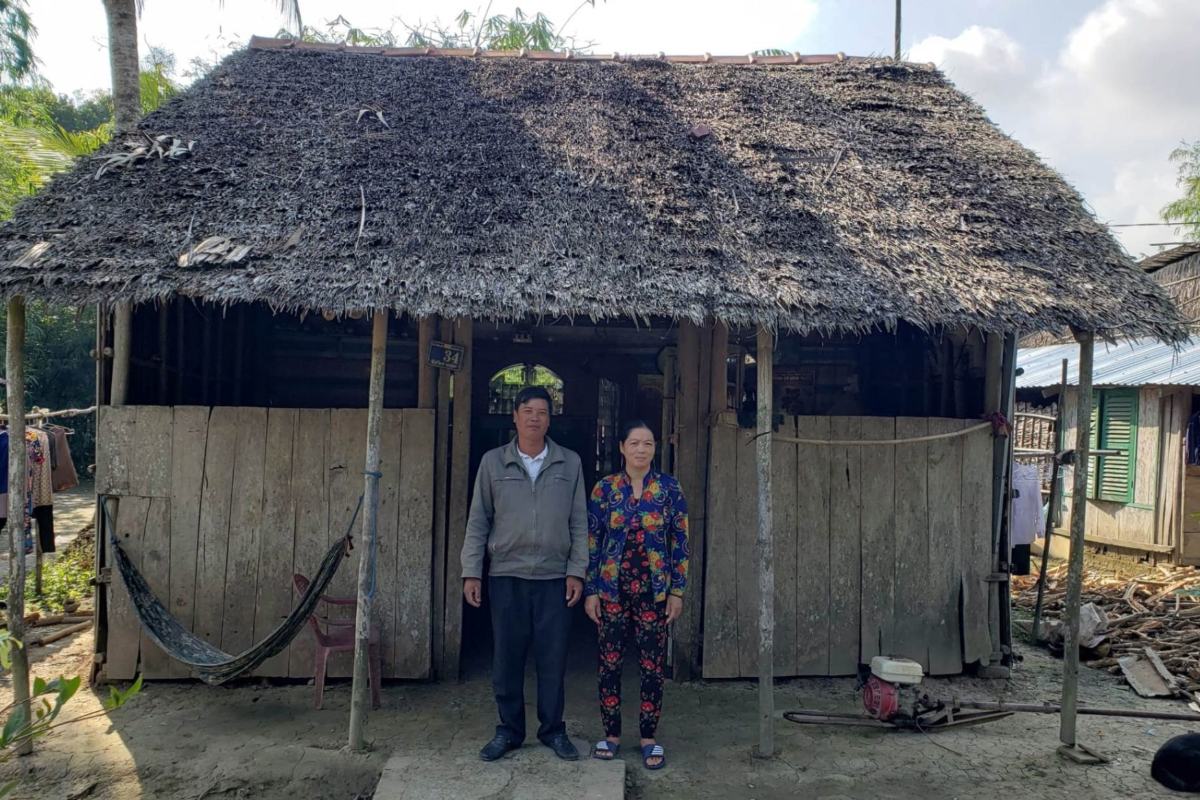
Case Ownership
Hosting Organisation: Nha Chong Lu (Flood-Resilient Housing) Social Enterprise Company Limited
Song Ben Vung (Sustainable Living) Community Development Support Fund
Key Partners:
- Local authorities in the 11 provinces and cities where the project is implemented
- Architects and technical experts
- Local partner groups in architecture and social work
- Individuals and businesses sponsoring and fundraising for the project
- Volunteers and artists accompanying the project
Stakeholders and beneficiaries:
- Poor, near-poor and disadvantaged households in areas affected by natural disasters and climate change
- Households with young children, large families, and households with people with disabilities
- Residential communities in areas frequently affected by storms, floods and inundation
- Local authorities and communities participating in disaster risk reduction
- Technical teams, architects and social partners involved in co-designing, supervising and implementing the project
- The wider community indirectly benefiting from the spread of safe and disaster-adaptive housing models
Source: Human Act Prize (link in Vietnamese, external link)
The copyright and legality of all images, videos, information, and data regarding the project published on this landing page are provided by and are the sole responsibility of the individuals/organisations registering for the Human Act Prize. The republished content on this landing page has been verified and authorised by VCCorp Corporation (the co-organiser of the Human Act Prize).
Specific SDG targets
SDG 11.1
Ensure access to adequate, safe and affordable housing
SDG 11.5
Significantly reduce the number of deaths, the number of people affected and economic losses caused by disasters
SDG 11.b
Increase the number of cities and human settlements adopting policies and plans for climate change adaptation and disaster resilience
SDG 13.1
Strengthen resilience and adaptive capacity to climate-related hazards and natural disasters
SDG 13.3
Improve education, awareness and capacity to respond to climate change
SDG 1.5
Build the resilience of the poor and vulnerable to shocks and disasters
SDG 1.4
Ensure that the poor and vulnerable have access to basic services and economic resources