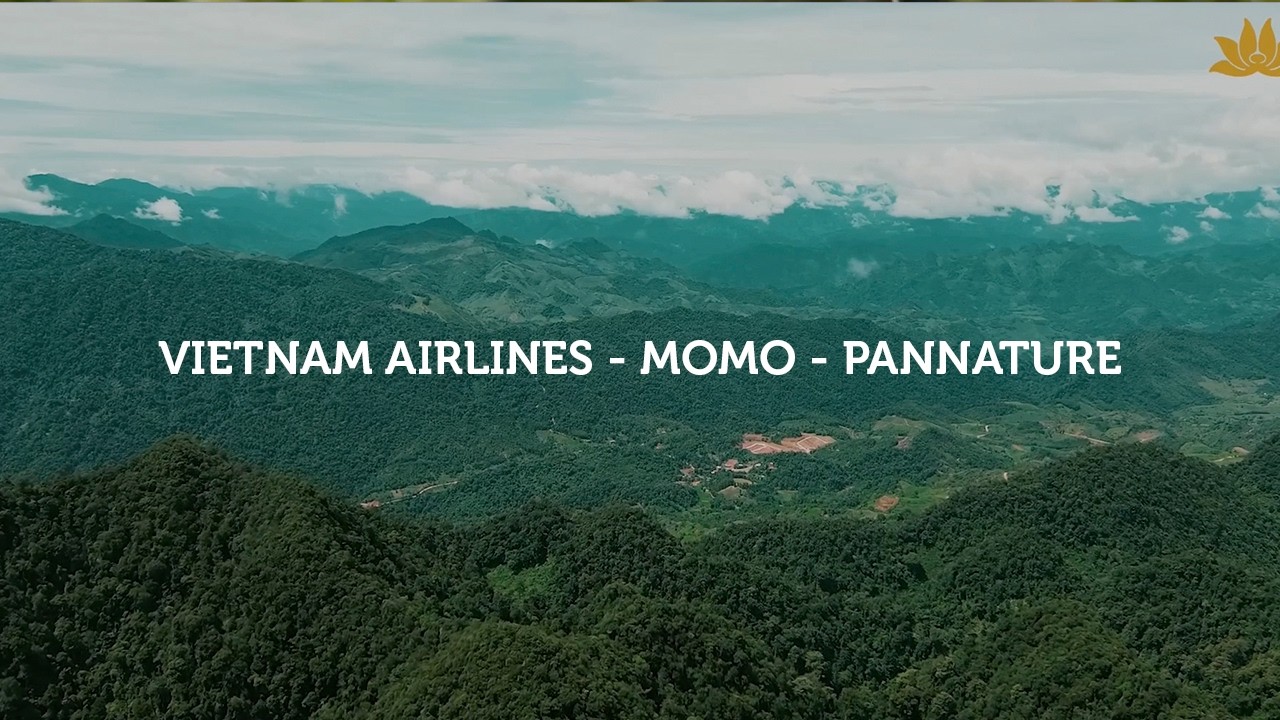
The project For a Green Vietnam and Sustainable Development aims to restore forests on the connecting corridor between Hoa Binh and Son La - one of Vietnam's vital "green lungs".
It aims to restore 500 hectares of forest in Hoa Binh and Son La before 2032. The collaboration between Vietnam Airlines, MoMo, and PanNature helps the project maximise the resources of three reputable entities. Vietnam Airlines is the national carrier with a large customer base, MoMo is Vietnam's leading e-wallet, and PanNature brings 20 years of experience in implementing conservation projects. To date, the project has restored a large area of unique forest that has been severely degraded, increasing forest quality and carbon stocks, creating habitats for many wildlife species, and contributing to improving forest-related livelihoods.
Forest protection and restoration is a shared global mission as mentioned in many climate change and biodiversity summits. The United Nations calls for the application of nature-based solutions and calls for forest restoration as one of the key measures to achieve conservation goals during the Decade on Ecosystem Restoration (2021-2030). In resposnse, Vietnam Government launched the "Planting One Billion Trees in the 2021-2025 Period" project. Since then, forest plating and restoration movement has become a priority goal for conservation organizations and sustainable development companies.
Despite prospered with biodiversity and rich forests, the Northwestern region in Vietnam are currently severely degraded and fragmented due to industrial activities, agricultural production, and deforestation. For instance, the natural forest strip on the rocky mountain corridor connecting Mai Chau (Hoa Binh) and Van Ho (Son La) headwaters of the Da River and the Red River - rivers that have nurtured generations of residents in the Northern Delta - and is the home of highland ethnic minority communities with livelihoods closely tied to the forest.
The reduction in forest area due to deforestation, illegal logging, and land-use conversion causes serious consequences for the ecosystem and strongly impacts the lives of local people whose livelihoods and culture are intertwined with the forest. Therefore, forest restoration not only helps restore the ecosystem but also creates habitat connectivity corridors and safe havens for flora and fauna, protecting the landscape, minimising erosion and landslides, and limiting flash floods and pipe floods in mountainous areas. Restored forests also help local communities develop livelihoods from ecotourism, community tourism, and conservation tourism models, increasing income from forest environmental services and non-timber forest products.
The effort to restore forests on the rocky mountain corridor connecting Mai Chau (Hoa Binh) and Van Ho (Son La) also faces many difficulties due to the specific geographical, social, and environmental characteristics of the area. Both are large, rocky mountain areas with rugged, steep terrain that makes it difficult for planted trees to grow and develop strongly. Therefore, afforestation on mountainous terrain requires special techniques, selecting suitable tree species to ensure a higher survival rate, and requires many other protection solutions. Alongside geographical and technical challenges, financial resources from the community and businesses are vital factors for effective forest restoration and conservation.
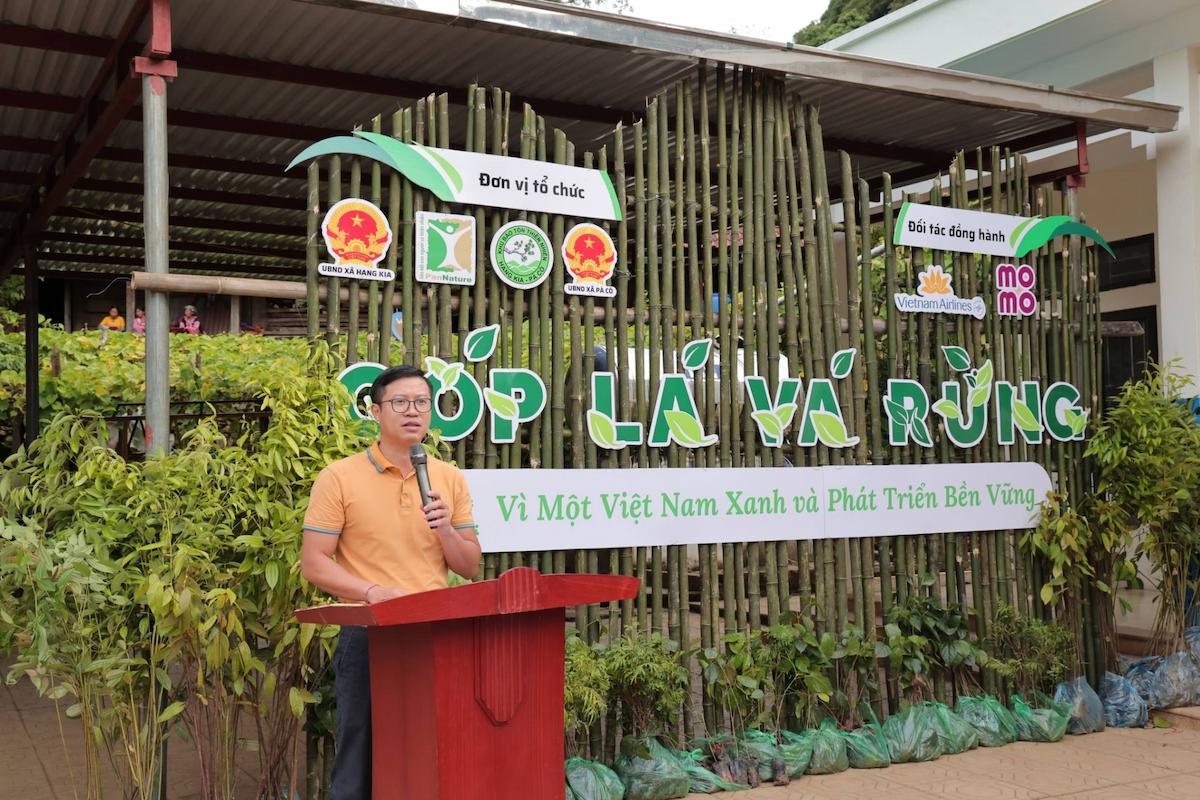
For a Green Vietnam and Sustainable Development was born to creatively combine the strength of large enterprises and modern technology to mobilize resources from the community. The cooperation between Vietnam Airlines, the MoMo App and PanNature has opened a new direction in motivating and attracting community participation in forest protection activities.
The project can be seen as a breakthrough initiative that not only helps solve financial issues but also raises public awareness about the importance of environmental protection and doing good for society.
The project For a Green Vietnam and Sustainable Development is the first initiative to combine three reputable entities: Vietnam Airlines, MoMo, and PanNature. This project leverages Vietnam Airlines' existing customer base, MoMo's optimal financial-technology platform, and PanNature's experience in implementing forest conservation and restoration projects. Specifically:
Vietnam Airlines and MoMo together deduct a revenue of 5,000 VND - equivalent to one "Leaf" - from every Vietnam Airlines ticket transaction worth over 2 million VND, contributing to the project to implement the forest restoration program in 2024. This cooperation not only makes a practical contribution to forest restoration but also attracts the attention of millions of customers from both partners, sparking a movement to "do good" online in a convenient way.
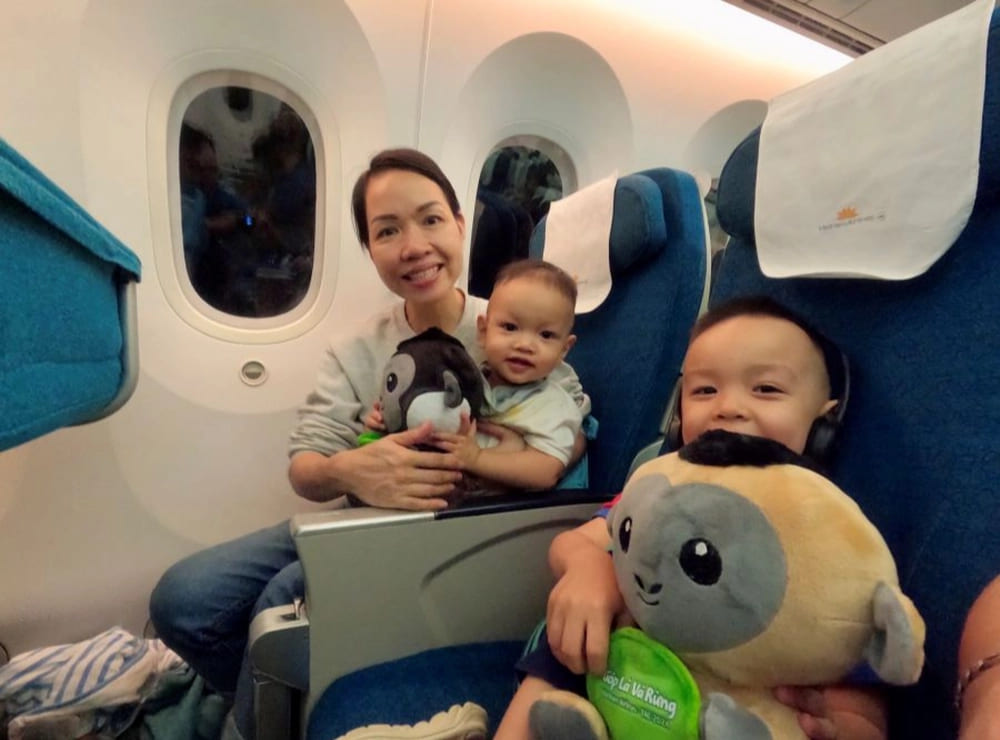
More than 30 million MoMo users nationwide can participate in For a Green Vietnam and Sustainable Development by purchasing Vietnam Airlines tickets on MoMo, or by paying for air tickets using MoMo on the Vietnam Airlines website/app, creating engagement and demonstrating the social responsibility of both the business and the customer.
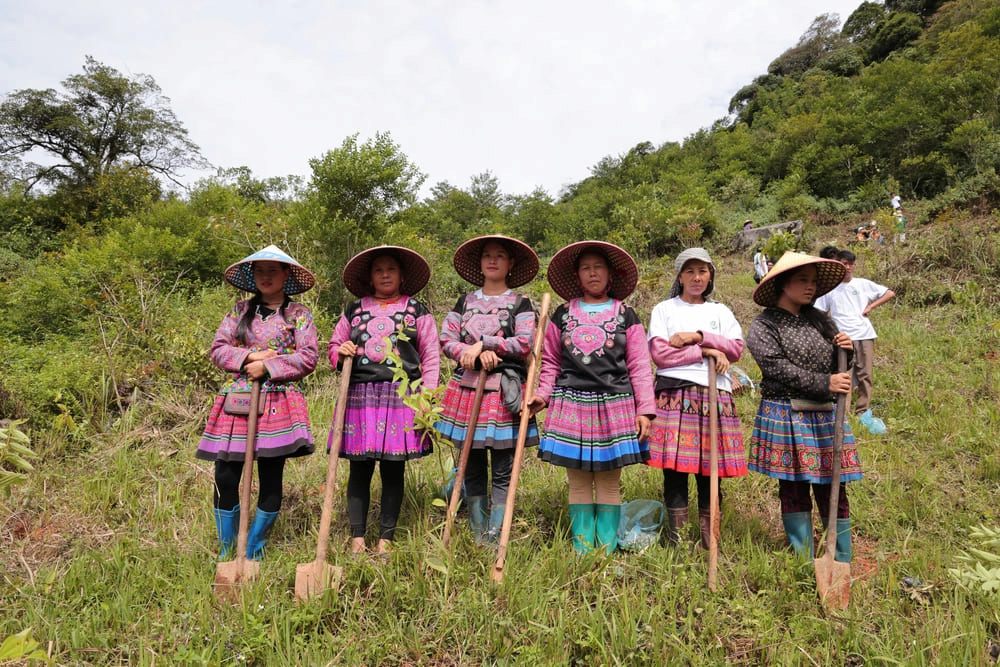
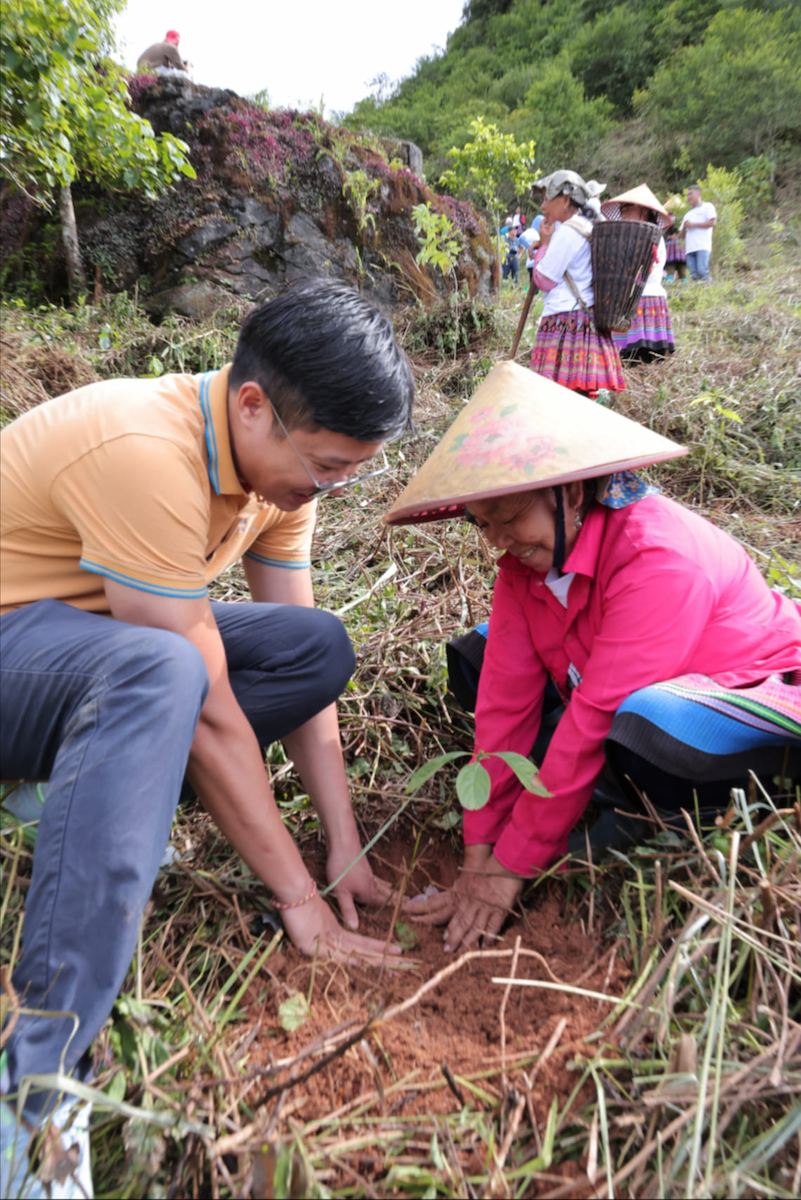
PanNature, with its expertise and experience working with authorities and local communities, design and implement forest restoration activities. The organisation chose a bottom-up approach to ensure community participation and project sustainability. From the beginning, PanNature consulted with the community and local authorities to select suitable planting areas and native forest tree species. The involvement of local people in the decision-making stages to their direct participation in afforestation activities, has prompted them to continue nurturing and protecting the forest in the future.
The project also proves that multi-stakeholder cooperation can create a new mobilisation model instead of relying solely on traditional funding sources for community projects.
Short-term objectives
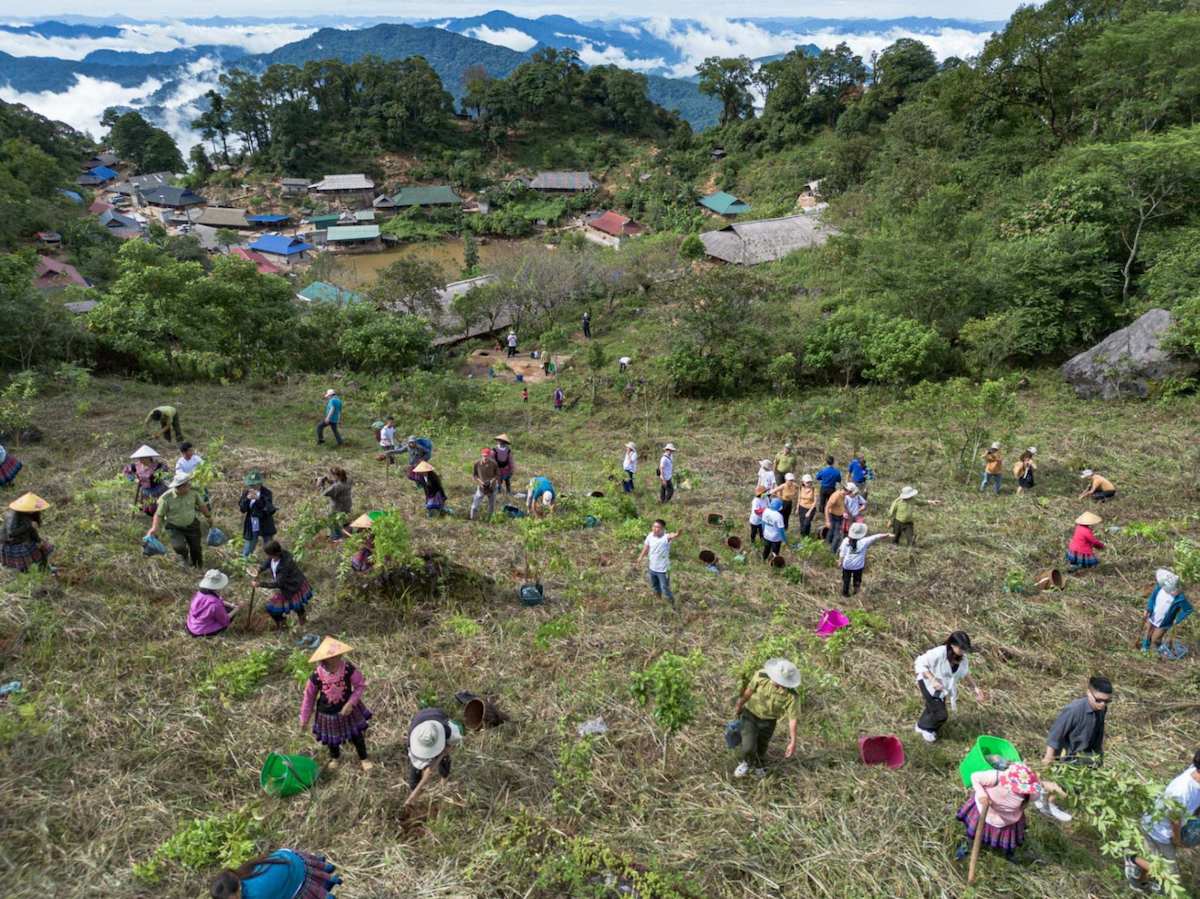
Restoring 50 hectares of forest in 2024 with more than 30,000 native trees is an important first step toward recovering degraded forest areas and restoring habitats for the natural forest corridor bordering Mai Chau and Van Ho. This is a vital natural forest ecosystem that helps connect the habitats of the rare and endangered Northern white-cheeked gibbon and many other wildlife species.
Long-term objectives
The project aims to restore 500 hectares of forest in Hoa Binh and Son La before 2032. In this plan, businesses and customers will be the financial contributors, and PanNature will be the unit in charge of technical aspects, implementation, and monitoring, while local authorities and communities will be the units planting, caring for, and protecting the forest.
One of the main objectives of the project is to increase the area of Northwest forests through restoration activities and replanting lost forest areas to restore landscapes and forest ecosystems that have been severely degraded. The biomass and biodiversity of the area are expected to improve significantly after 5 to 10 years of project implementation, and the populations of wildlife species, including the Northern white-cheeked gibbon, will increase.
The project also sets an important goal of raising community awareness about the essential role of environmental protection and the importance of forest ecosystems by encouraging contributions from customers and the participation of local communities in planting, caring for, and protecting forests.
The project also hopes to create positive changes and improve the livelihoods of communities living near the forest by promoting ecotourism, nature experience tourism, and local culture.
Vision
For a Green Vietnam and Sustainable Development is built to effectively recover, care for, and conserve degraded natural forest areas, helping to minimise deforestation while contributing to improving the livelihoods of people living dependent on the forest.
The project also expects to assess changes in forest status and biomass, as well as significant carbon stocks in the area, to become a model of best practice for many other natural forest areas across the country.
In the next 10 years, it is expected that the planted forest patches will flourish, creating a complete ecosystem from which flora and fauna will return to revive a vibrant living population. This includes the expected spectacular return of rare and endangered species such as the Northern white-cheeked gibbon.
The project desires to develop sustainable livelihood models, helping local people maintain forest-linked livelihoods such as harvesting non-timber forest products and providing ecotourism and experiential tourism services. The revived forests will open up beautiful trekking routes, majestic cloud-hunting scenes, and cultural villages rich in highland ethnic identity... All will be natural treasures for local people to develop livelihoods, escape poverty, and improve both their material and spiritual lives.
The Mai Chau - Van Ho forest corridor is also expected to become a natural shield protecting the land from natural disasters, flash floods, and landslides, ensuring safety, intertwined with raising forest protection awareness for future generations.
Implementation process – Scope – Cost
The project For a Green Vietnam and Sustainable Development is implemented through the following phases:
Phase 1: Launch and Fundraising
The project focuses on mobilising resources from the community by encouraging customers to purchase Vietnam Airlines tickets on MoMo or pay for air tickets using MoMo on the Vietnam Airlines website/app under the "Contributing Leaves to Repair the Forest" initiative.
Phase 2: Area and Seedling Preparation
PanNature coordinates closely with the People's Committees of communes, the Forest Protection Department, and Nature Reserves to conduct reviews and assessments of the current status of empty forest land areas. Based on the actual assessment of each forest land location, PanNature and the forest protection forces will compile a list of suitable native tree species for forest restoration, while also gathering input from commune People's Committees and local communities to select appropriate trees.
The tree species selected for afforestation must meet three important criteria: they must be native trees, provide supplementary income from non-timber forest products, and receive community consensus. Based on the selected list and the actual conditions of each region, PanNature and the forest protection forces will design afforestation plans for empty regions.
PanNature compiles a list and selects forestry seedling suppliers that ensure quality and technical requirements and are licensed by the State to proceed with orders. The selected seedlings are mainly native species such as Michelia, Canarium, and Baccaurea sapida, etc. These species were chosen based on the forest canopy structure and interwoven growth rates to ensure a quick coverage rate.
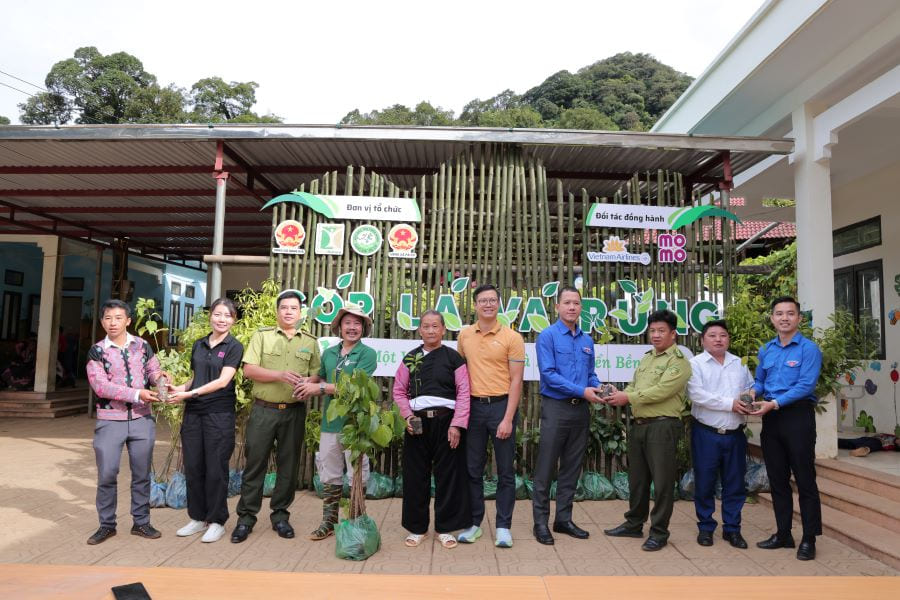
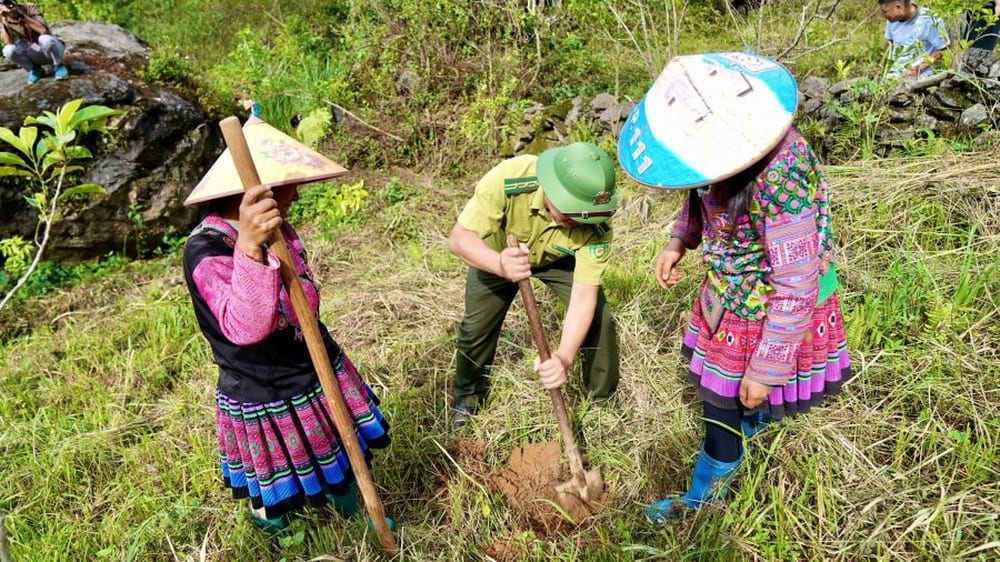
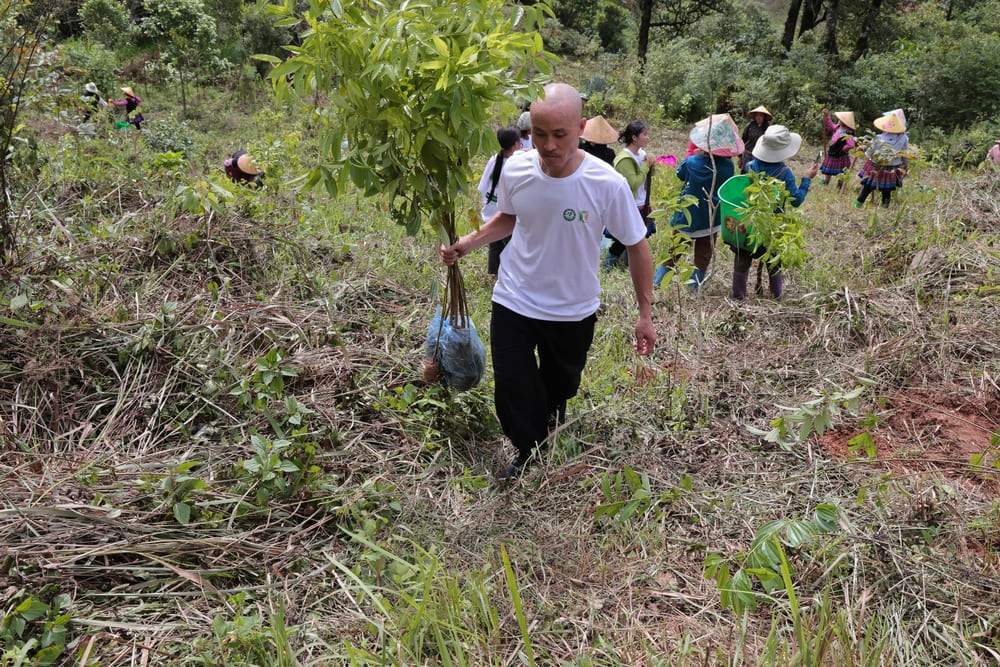
Local authorities and forest protection forces would propagate and mobilise community participation in afforestation activities, mainly forest owners, youth unions, women's unions, and commune-level civil servants and officials. At the same time, authorities and local communities will also be responsible for forest protection and care after planting.
Phase 3: Afforestation Process
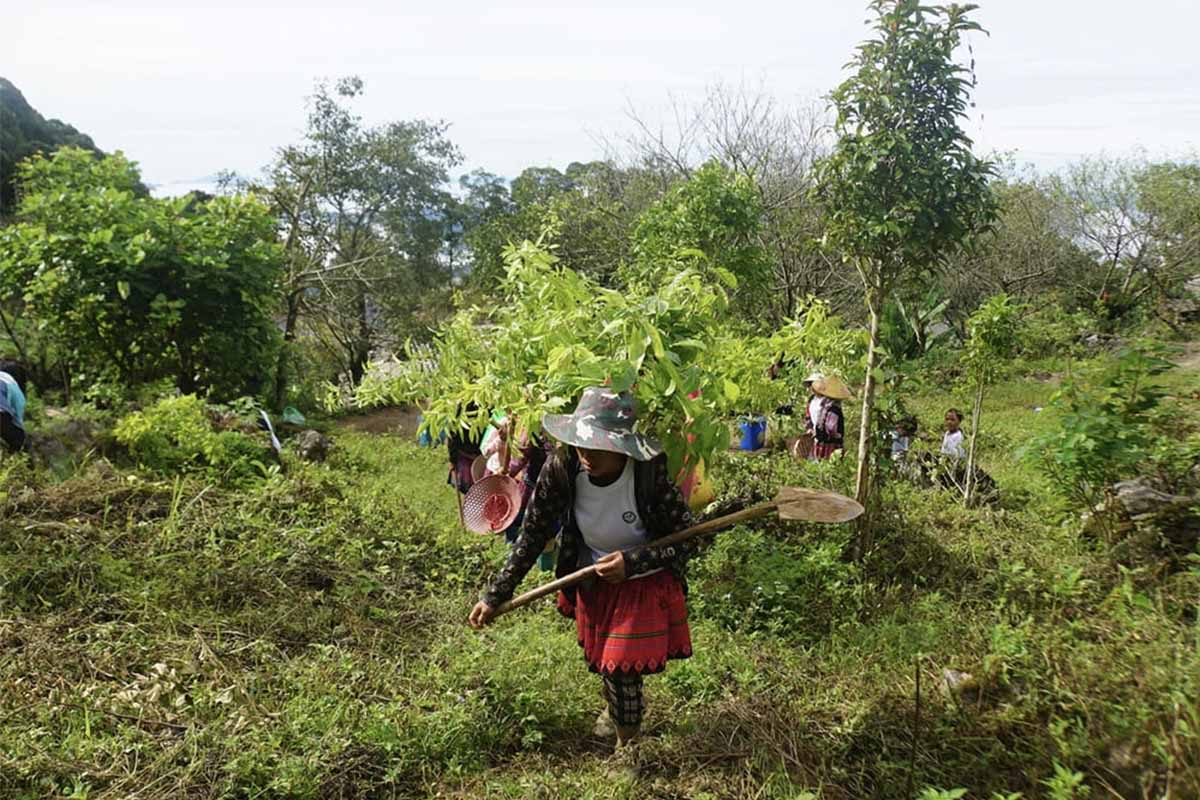
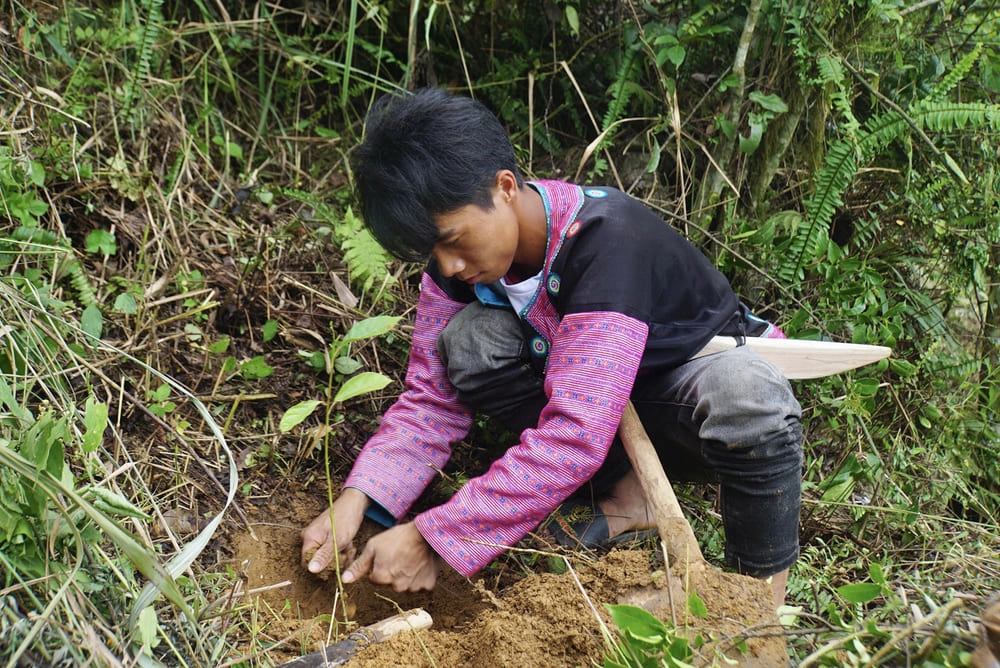
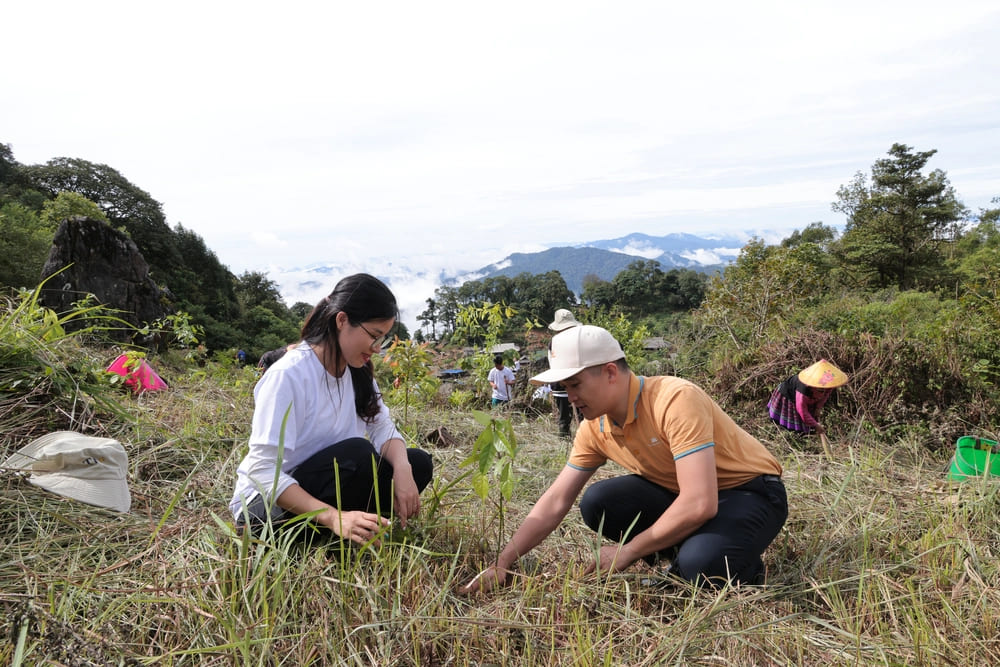
Local people would actively join in the afforestation process, take care of trees, monitor survival rates, and perform supplemental planting during the first three years to ensure that the planted area is fully restored. Community participation not only ensures the success of the forest restoration program but is also a strong commitment to sustain and push the development of these precious forest resources
The community also benefits from forest environmental service payments, forest management and protection funds, and other non-timber forest resources in the forest areas they have planted and managed.
Phase 4: Monitor and Care
With its field office in Van Ho, Son La province, PanNature monitors and promotes forest protection and care activities. The company's technical experts would work closely with forest protection forces and local communities to ensure that newly planted forest areas are managed effectively and developed sustainably.
Immediately after planting, PanNature will conduct a survival rate check after the first three months to accurately assess the status of the newly planted trees and promptly perform supplemental planting for trees that did not survive. This is an important step to ensure the success of afforestation activities, helping to minimize potential losses in the initial period after trees are put into the ground.
To ensure the continuous and sustainable development of the planted forest areas, PanNature will use monitoring tools and organise periodic patrols and continuous monitoring every 6 months. During these periods, PanNature staff, along with forest rangers and the community, would check the forest's growth status and promptly detect issues such as pests or forest land encroachment. From there, corrective measures will be introduced promptly to ensure the forest’s continuous development.
To strengthen the responsibility of forest owners, PanNature requires each forest owner to sign a commitment and have it verified before participation. This commitment includes terms regarding the care and protection of the forest area they manage, while setting clear criteria and regulations for maintaining the forest after planting. This is not just a procedural step but is also an affirmation of the responsibility of forest owners toward protecting and developing forest resources in the area. PanNature will closely monitor the actual manner of these promises to ensure that each forest area is cared for and protected according to the established standards.
The program has planted 60,000 new green forest trees, including 18 different tree species, contributing to enhancing biodiversity and balancing the ecosystem. A total of 80 hectares of forest has been planted and restored, bringing long-term value to the natural environment as well as local communities. Notably, the program also attracted 600 community participants, demonstrating the strong ripple effect when we join hands for the environment and sustainable development.
For a Green Vietnam and Sustainable Development has the potential for replication thanks to effective cooperation between pioneering enterprises, reputable conservation organisations, and local communities. The combination of modern technology and the active participation of the community and businesses has created a new method of resource mobilisation and awareness promotion. This can be a valuable experience that other businesses can easily learn from and apply, thus multiplying their positive impact and promoting sustainable development in Vietnam.
When businesses integrate social responsibility and environmental protection into their operations, they not only ensure the sustainability of environmental protection initiatives but also create a solid foundation for long-term development. This strategy not only helps businesses build sustainable economic value but also increases trust from the community, customers, and partners, helping businesses demonstrate social responsibility, strengthen brand image and reputation, and adapt better to market and environmental fluctuations.
Able to mobilise budgets and implement forest restoration in a short period of time stakeholder cooperation, the project showed that with effective implementation, it can bring positive growth for the environment and society, and devote its benefits to the local and global sustainable development.
Vietnam Airlines entered the "Contributing Leaves to Repair the Forest" project into "The Aviation Challenge," initiated by the SkyTeam airline alliance, to promote global sustainable solutions. As of October 7, 2024, the campaign has planted 35,000 trees, equivalent to 53 hectares of forest, far exceeding the original goal of 30,000 trees and 50 hectares in 2024. This is a giant leap towards development, not only in Vietnam but also in the potential for global application. The mentioned campaign was also recognised by SkyTeam by being included in the alliance event library. With strong support from partners, the initiative attracted widespread interest when published on 38 news and press sites, reaching up to 1.84 million people, and positively spread the message of environmental protection. The inclusion of the initiative in the SkyTeam event library not only contributes to elevating Vietnam Airlines' reputation but also affirms the airline's pioneering position in environmental protection and sustainable development efforts.
For a Green and Sustainable Development Vietnam
Case Ownership
Hosting Organisation: Vietnam Airlines, MoMo, PanNature
Collaborating Partners: People’s Committees of communes in the project area, Local Forest Protection Departments, Nature Reserves in the Mai Chau - Van Ho area, Local authorities and residential communities in Hoa Binh and Son La, Licensed forestry seedling suppliers
Stakeholders and beneficiaries: Local forest-dependent communities in Mai Chau and Van Ho; People participating in planting, caring for, and protecting the forest; Vietnam Airlines customers and MoMo users contributing financially; The natural forest ecosystem in the Hoa Binh - Son La area; Wildlife species, especially the Northern white-cheeked gibbon; The ecotourism industry, community-based tourism, and forest-linked local livelihoods
Source: Human Act Prize
The copyright and legality of all images, videos, information, and data regarding the project published on this landing page are provided by and are the sole responsibility of the individuals/organisations registering for the Human Act Prize. The republished content on this landing page has been verified and authorised by VCCorp Corporation (the co-organiser of the Human Act Prize).
Specific SDG targets
SDG 15.1
Conserve and restore terrestrial and freshwater ecosystems
SDG 15.2
End deforestation and restore degraded forests
SDG 15.5
Protect biodiversity and natural habitats
SDG 13.1
Strengthen resilience and adaptive capacity to climate related disasters
SDG 13.3
Build knowledge and capacity to meet climate change
SDG 17.16
Enhance the global partnership for sustainable development
SDG 17.16
Encourage effective partnerships