Binh Dien Fertiliser Company has run the "Smart, climate-adaptive rice farming in the Mekong Delta" program from 2016 to 2022.
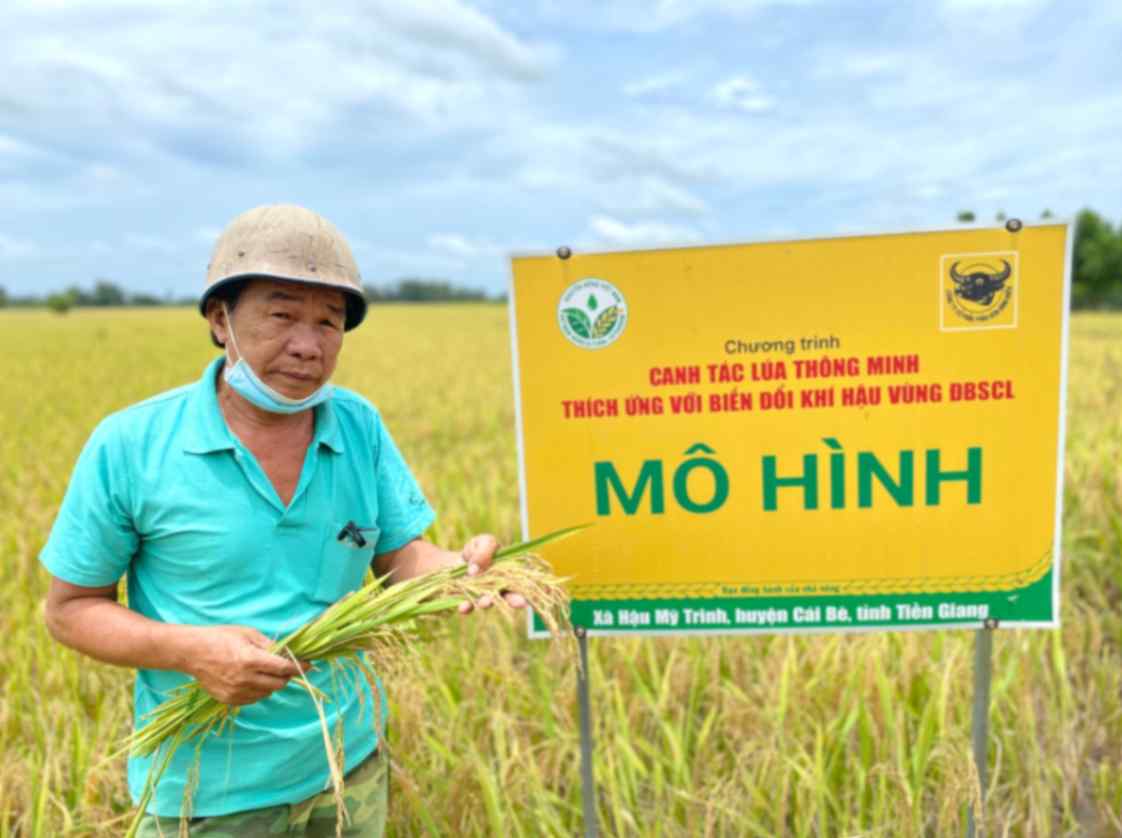
Binh Dien Fertiliser Company has run the "Smart, climate-adaptive rice farming in the Mekong Delta" program from 2016 to 2022. The project achieved significant results throughout over 7 rice crops, 496 models in key rice-growing areas across 13 provinces: farming models witnessed increased average rice yield by 400-500kg/ha, decreased average production costs by 1 – 1.5 million VND/ha, and consequently, increased average profit by 4-5 million VND/ha. Through various communication exchanges and training, the program provided cultivation techniques to thousands of farmers, and its solutions and processes have been adopted by local authorities, cooperatives, and farmers. Recognised as a technological advancement, this serves as a scientific basis to continue replicating the process across the Mekong Delta provinces and other localities nationwide.
The Mekong Delta—with a cultivation area of over 3.8 million hectares—provides over 50% of the country's annual rice production and over 90% of rice export volume. However, according to the Intergovernmental Panel on Climate Change (IPCC), the Mekong Delta is classified as one of three endangered regions due to drought, saltwater intrusion in the dry season, and storms that have caused the vast majority of land to be damaged, most strikingly in 2016, with nearly 250,000 hectares of rice damaged (according to the Institute of Agricultural Economics – Ministry of Planning and Investment).
In response to this situation, the Government, along with national and local authorities, has implemented many solutions: building structures to block saltwater and store freshwater for production. Numerous conferences, workshops, seminars, and training sessions were held to provide technical cultivation solutions under adverse conditions.
Under the desire to build and transfer appropriate, effective, and climate-adaptive rice cultivation processes, Binh Dien Fertiliser Joint Stock Company initiated and organised the "Smart, climate-adaptive rice farming in the Mekong Delta" program, firstly in the 2016 Summer-Autumn crop. The program received collaboration from both the National Agricultural Extension Centre and local ones from 13 provinces in the Mekong Delta.
Having pulled many leading scientists, company technical officers, and provincial extension centres on board, the program began the process of construction and implemented models in key rice-growing areas, areas vulnerable to saltwater intrusion, and advanced them across various ecological zones in the 13 provinces.
The program synthesised many technical advancements in rice farming cultivation, such as: soil preparation techniques tailored to soil types and seasons, "3 Reductions 3 Increases," "1 Must 5 Reductions," Alternate Wetting and Drying (AWD) water management, specialised fertilisation and basal dressing to improve the soil environment in each ecological zone, and harvest at the correct ripeness... These solutions were tailored to specific cultivation conditions, continuously adjusted and modified to continuously enhance the efficiency of the process.
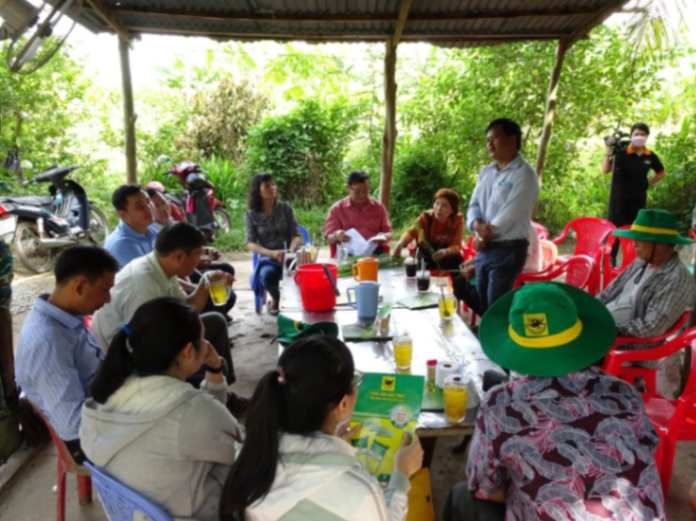
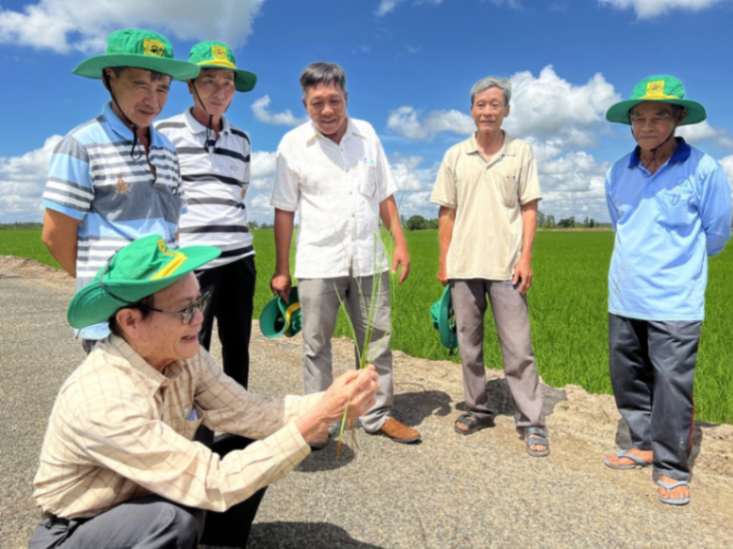
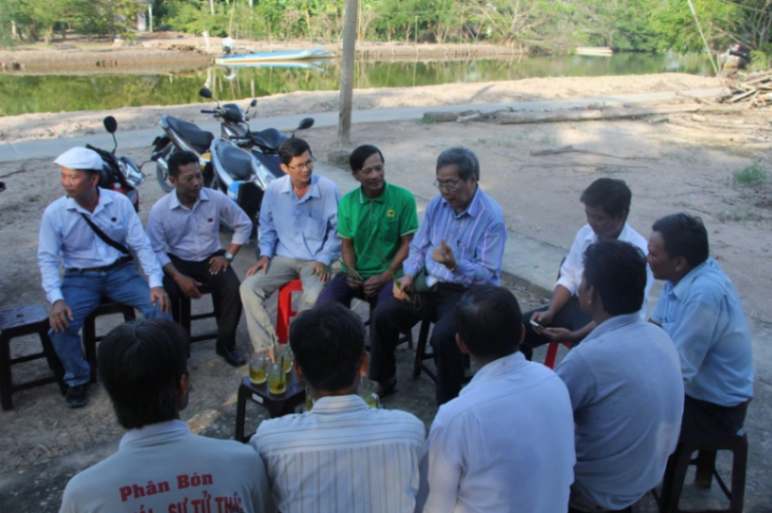
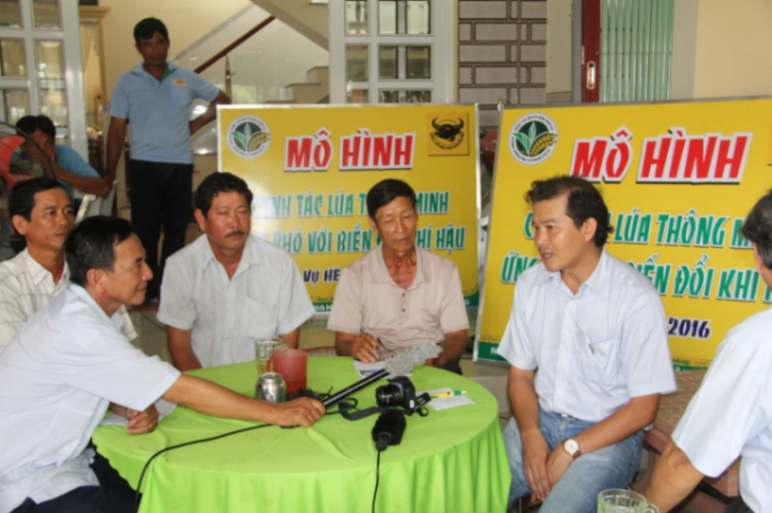
Furthermore, the program focuses on farmer training under the mission "helping farmers become experts"—meaning they can clearly understand the rice plant, weather, climate, and soil... to proactively adapt to specific cultivation conditions. Farmers under this project also act as bridges to continue transferring smart cultivation processes to many other farmers in the region. This is also the bridge for replication to production, not only in the Mekong Delta but also in many other localities nationwide.
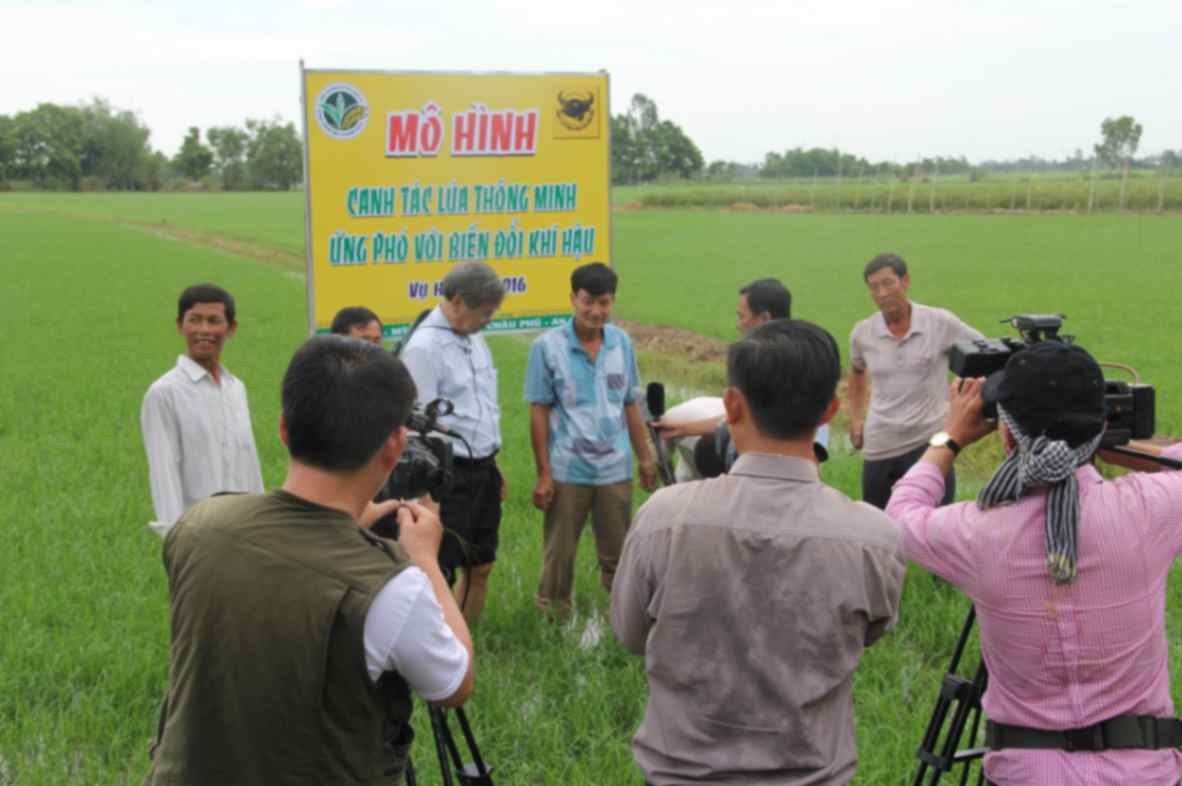
The program also implemented steps such as workshops and theoretical training linked with practice to help improve the professional level of local technical and extension officers. It also carries out many documentaries, footage, and cultivation techniques, and distributed on many social media and communication platforms for farmers' wider access.
Objective
With a wealth of knowledge and experience from previous farmer training programs and rice demonstration models, combined with advice from the company's technical scientific council and the cooperation of technical officers from provincial extension centres, Binh Dien Fertiliser Joint Stock Company believed the program would be successful. The initial step was to help farmers in rice-growing areas affected by drought, saltwater intrusion during the dry season, and erratic storms—peaking in the dry season of early 2016—achieve yield and profit from rice in the 2016 Summer-Autumn crop. Subsequently, the program received cooperation from the National Agricultural Extension Centre and the extension centres of the 13 Mekong Delta provinces.
Vision
From the initial effectiveness achieved, the program continues to develop, improve, and deploy across different ecological zones, and continues its impact in the 13 provinces. The program has established processes and implemented models in key rice cultivation areas and areas prone to saltwater intrusion. Beyond saving costs, increasing yield, and enhancing profit, the program moves toward rice quality factors and eco-friendly cultivation.
Implementation Process - Scope
The Smart, climate-adaptive rice farming in the Mekong Delta program was implemented in 13 Mekong Delta provinces on rice crops and received cooperation from the National and the 13 provincial agricultural extension centres, with main activities including:
- Compile and publish thousands of smart rice cultivation handbooks and technical instruction materials for farmers and local technical officers to read and apply.
- Purchase and installing equipment and tools for the program:
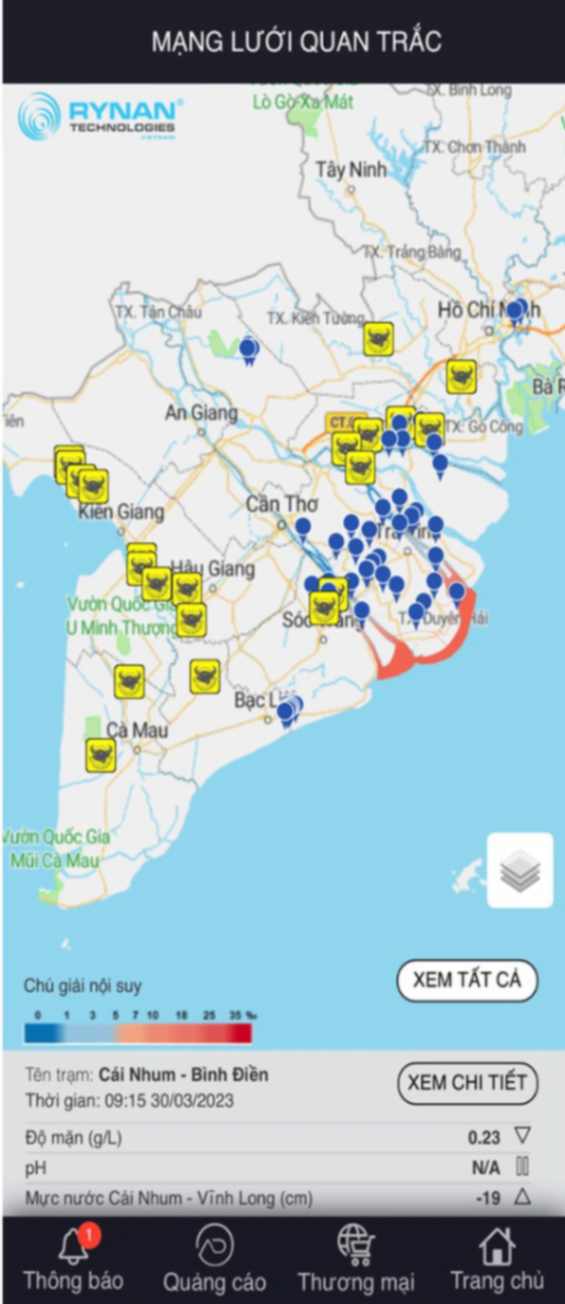
- Install 22 automatic saltwater and pH monitoring stations on rivers and coastal canals in the Mekong Delta;
- Install 1 automatic pest monitoring station;
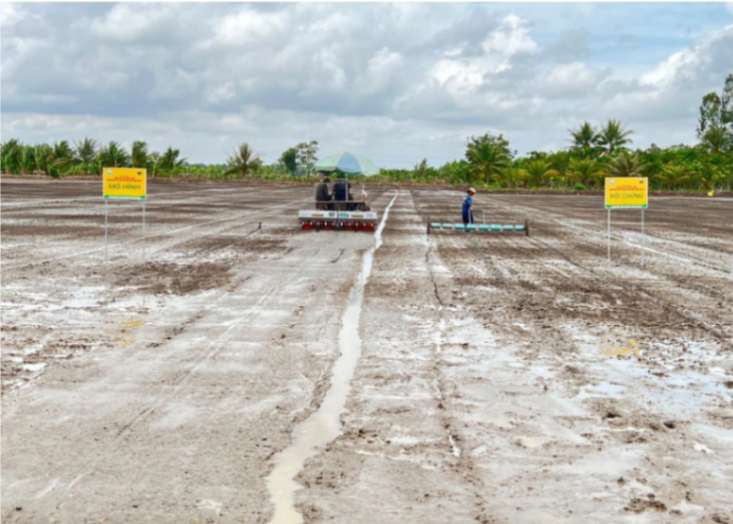
- Gifting to farmers and technical officers hundreds of salinity meters, pH measuring tools, and granule broadcasting machines for sowing and fertilising.
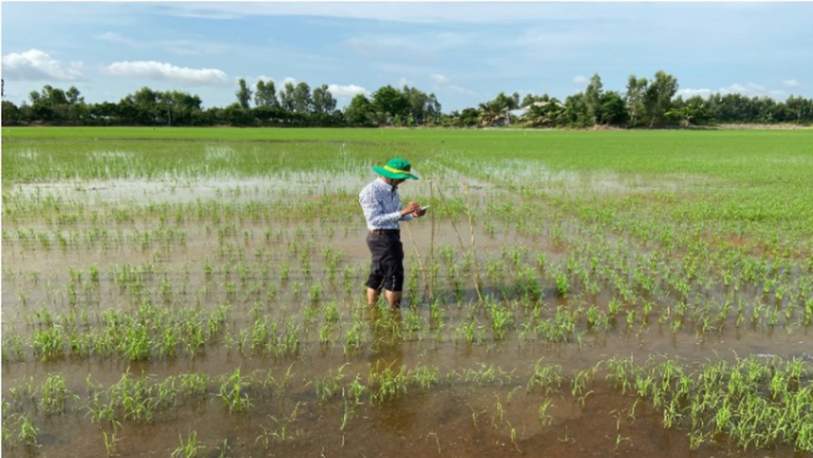
- Conduct soil and water sampling to build cultivation processes suitable for each region;
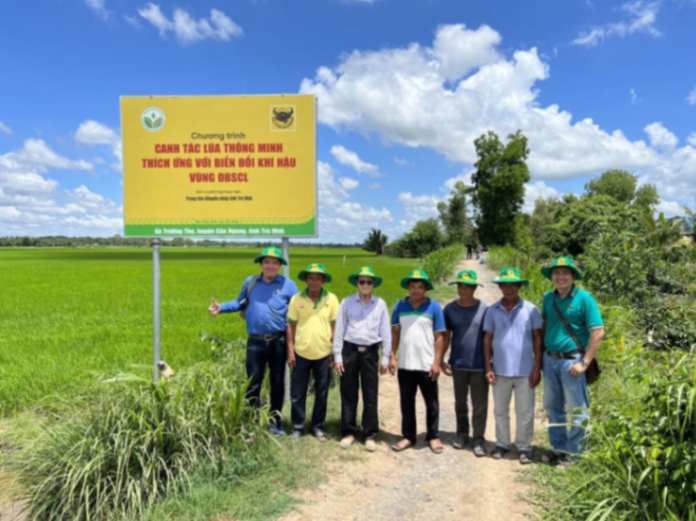
- Set up demonstration fields in key rice-growing areas;
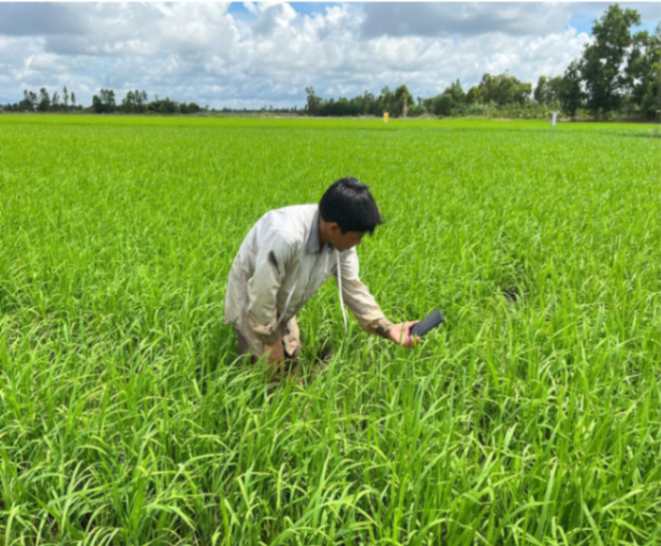
- Conduct training and regular field visits with farmers to both transfer the process and practice cultivation solutions directly in the fields;
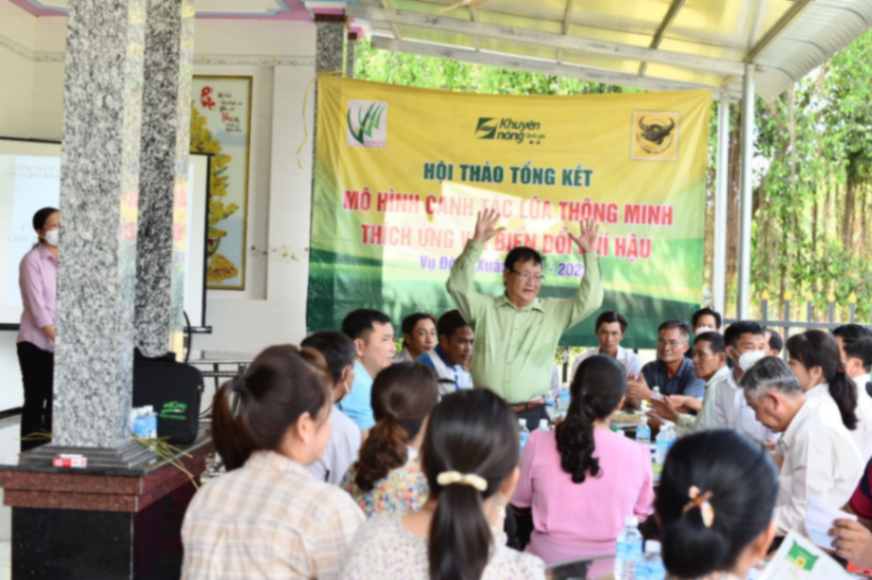
- Hold summary workshops for specific models and general regional summaries after each crop season;
- Partner with other stakeholders to help farmers reduce seed volume through cluster sowers, and apply fertiliser and pesticides through drones;
- Develop a smart farming application (app) for technical advice and farmer support, integrating features for field diaries and future growing area code development.
Budget
The program invested in installing and applying many technological and mechanisation solutions to increase efficiency:
Saltwater and pH monitoring stations (update water quality data to recommend sowing schedules, pumping times, and cultivation based on actual water quality). Automatic pest monitoring stations (count the number and types of pests and help plant protection technical officers make recommendations on sowing and pest control schedules). Handheld pH and salinity meters (used to determine water quality in internal canals and rice fields before and during the season). Cluster sowers (an effective sowing method that helps reduce seed volume from 150kg/ha in mass production to 50-60 kg/ha in the models). Drones and backpack sprayers (helping fertilise and spray evenly, increasing the efficiency of agricultural input use and reducing costs).
Additionally, the program implemented many measures to increase the efficiency of training and technical transfer for farmers: surveying households before and after implementation. An advisory board trained technical officers and farmers at the beginning of the season, visited fields during the season, combined with field-side advice, and organised year-end meetings. Technical cultivation videos—short videos with clear, easy-to-understand instructions helped address major issues in actual rice farming. Organised trips prompted farmers to visit and learn from agricultural models in the Philippines and Thailand, while also training and coaching provincial technical officers.
The total cost of the implemented program was approximately 15 billion VND, averaging about 2 billion VND per crop over 7 rice crops (from 2016 2022), and building a program in Kien Giang in 2019 cost approximately 1 billion VND.
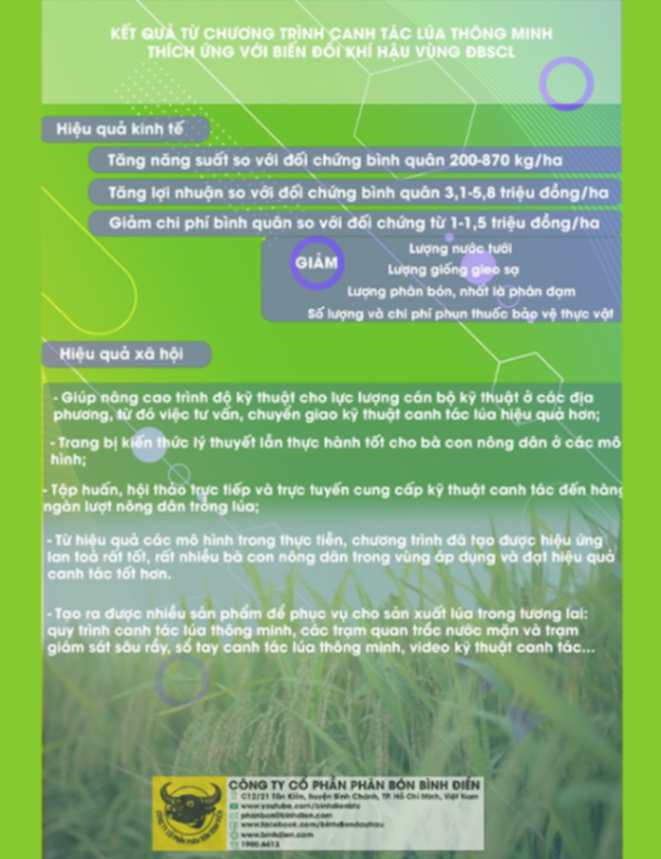
The results of the model implementation show clear economic impacts on cultivation activities. Rice yields recorded an increase of 200 to 870 kg/ha compared to the average control, reflecting improved production output. Farmer profits increased by 3.1 to 5.8 million VND/ha, showing a positive financial impact.
In parallel, production costs were optimised, decreasing on average by 1 to 1.5 million VND/ha compared to the control, contributing to overall economic efficiency. These results were recorded through 496 demonstration models in key rice-growing areas across 13 provinces, confirming the feasibility and replication potential of the solution.
200 – 870 kg/ha
increase in rice yields compared to the average control
3.1 – 5.8 million VND/ha
increase in farmer profits
1 – 1.5 million VND/ha
reduction in production costs
496
demonstration models across 13 Mekong Delta provinces
The smart rice cultivation process is an "open process," demonstrated by the constant updating of technical advances and new solutions into the process each season. It is also a "smart process," determined through specific protocols for each ecological zone and crop season. Therefore, it can be fully applied and replicated immediately across the 4 million hectares of rice in the Mekong Delta and other rice-growing areas in the Eastern region, Central Highlands, Central Vietnam, and Northern provinces. Additionally, neighbouring countries in the Mekong River system, especially Cambodia, can apply the process to improve rice yields and profits for their farmers.
Canh tác lúa thông minh thích ứng với biến đổi khí hậu vùng ĐBSCL
Case Ownership
Hosting Organisation: Binh Dien Fertiliser Joint Stock Company
Collaborating Partners:
- National Agricultural Extension Centre
- Agricultural Extension Centre of 13 provinces/cities in the Mekong Delta
- Scientists/technical advisors and the local technical officers team
Stakeholders and beneficiaries:
- Rice farmers in 13 Mekong Delta provinces (benefiting directly from increased yields, reduced costs, and higher profits)
- Cooperatives/farmer groups and local agricultural extension systems (enhanced technical capacity, model replication)
- Local agricultural management agencies (provided with a technical basis for recommendations and scaling)
- The rice value chain in the Mekong Delta (improved production efficiency and drought-salinity resilience)
- Natural environment (reduced inefficient input use, optimised water/soil resources, promotion of eco-friendly farming)
Source: Human Act Prize (link in Vietnamese, external link)
The copyright and legality of all images, videos, information, and data regarding the project published on this landing page are provided by and are the sole responsibility of the individuals/organisations registering for the Human Act Prize. The republished content on this landing page has been verified and authorised by VCCorp Corporation (the co-organiser of the Human Act Prize).
Specific SDG targets
SGD 2.3
Double the productivity and incomes of small-scale food producers
SGD 2.4
Sustainable food production and resilient agricultural practices
SDG 12.2
Sustainable management and use of natural resources
SDG 12.4
Responsible management of chemicals and waste
SDG 12.5
Substantially reduce waste generation
SDG 12.8
Promote universal understanding of sustainable lifestyles
SDG 13.1
Strengthen resilience and adaptive capacity to climate-related disasters
SDG 13.3
Build knowledge and capacity to meet climate change