The young, aspirational individuals from the “Wheel of Dreams” team have been bringing playgrounds to children in remote and rural areas, carrying joy and excitement along nationwide.
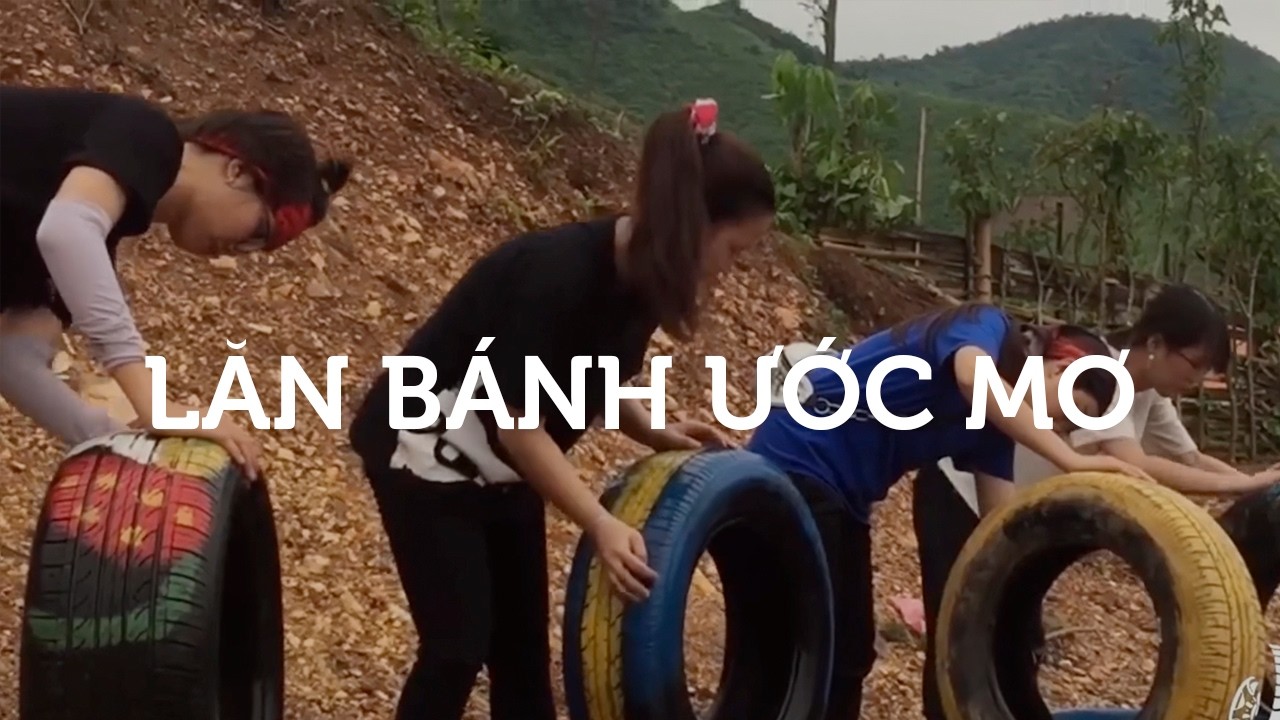
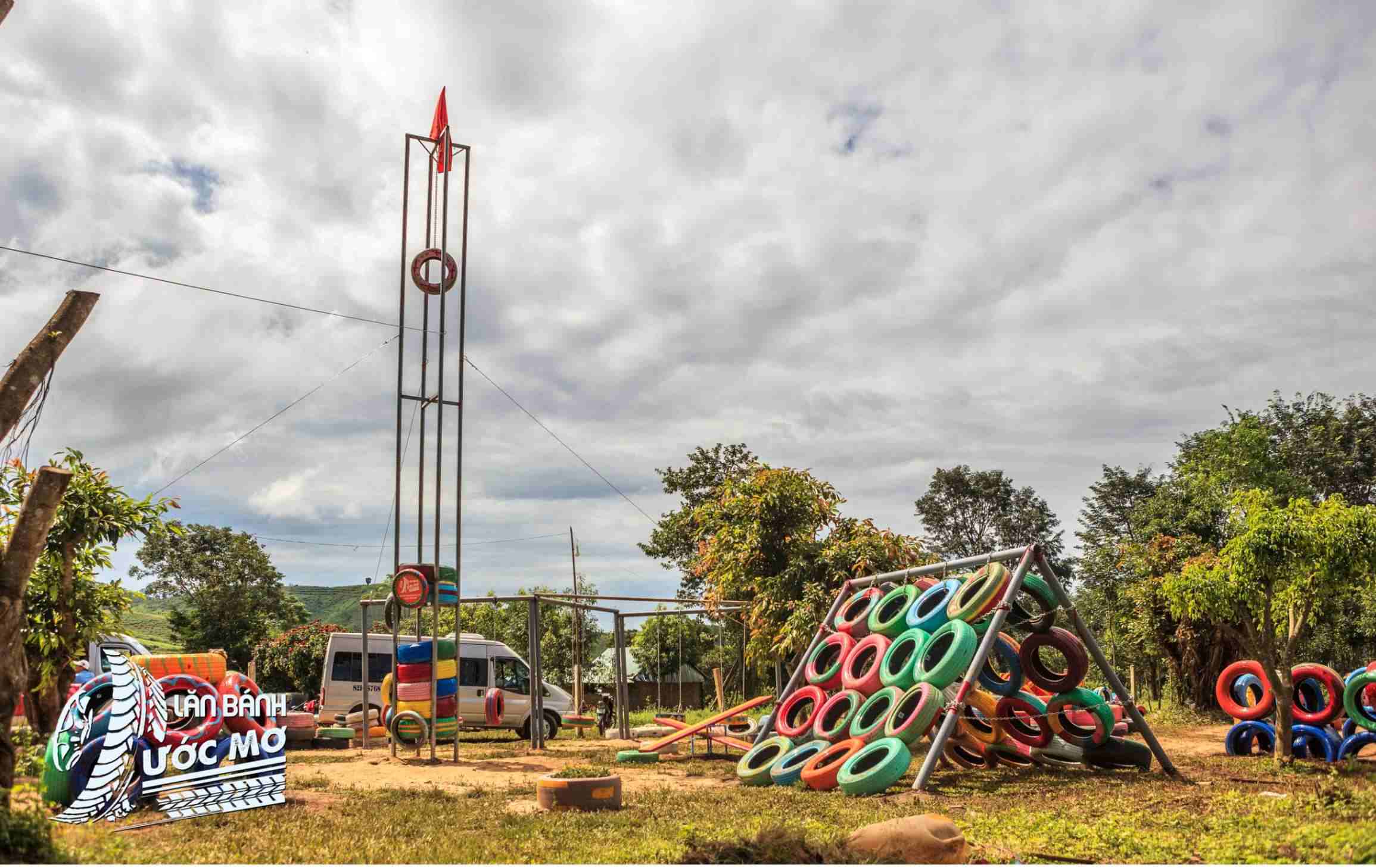
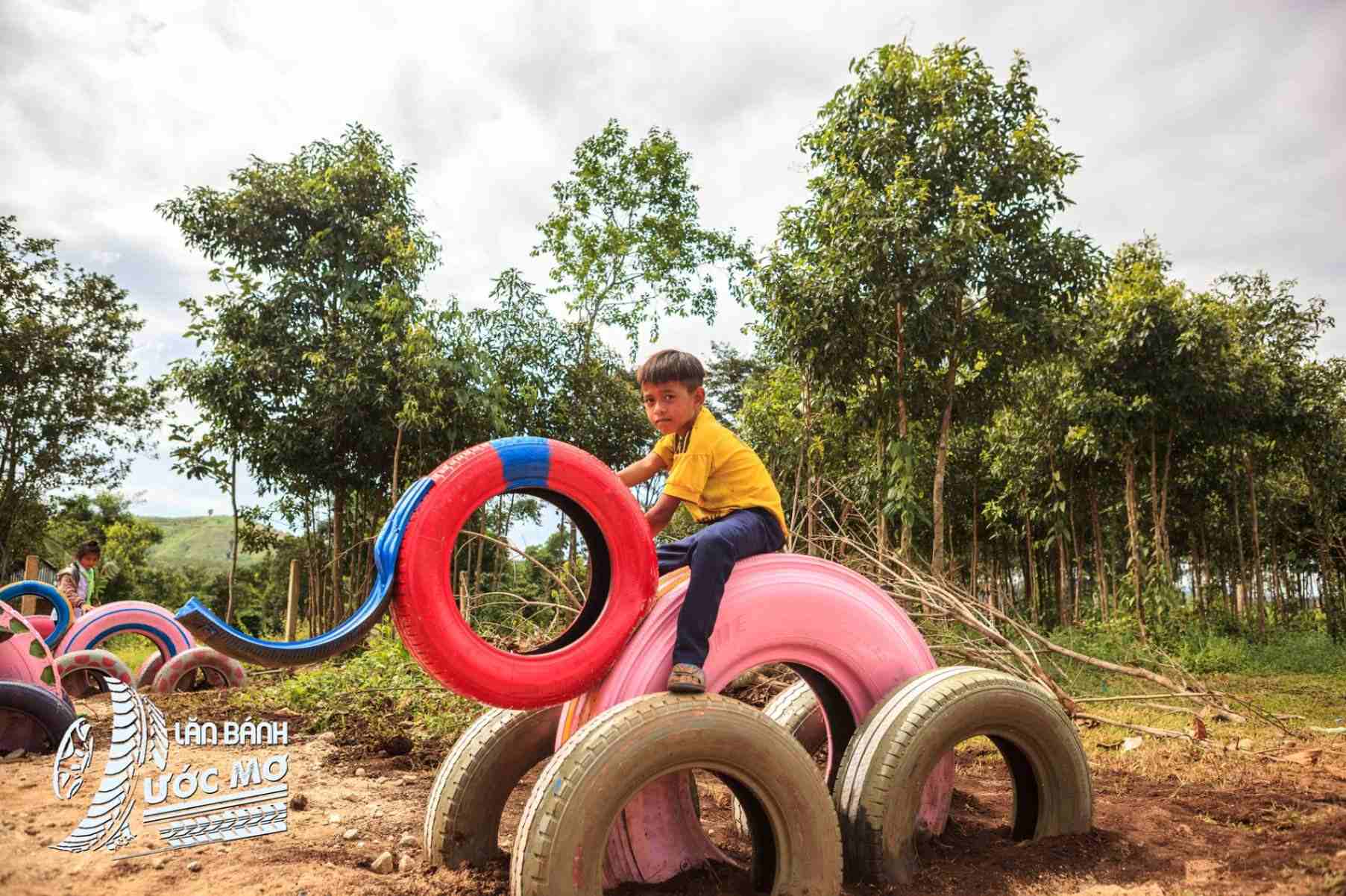
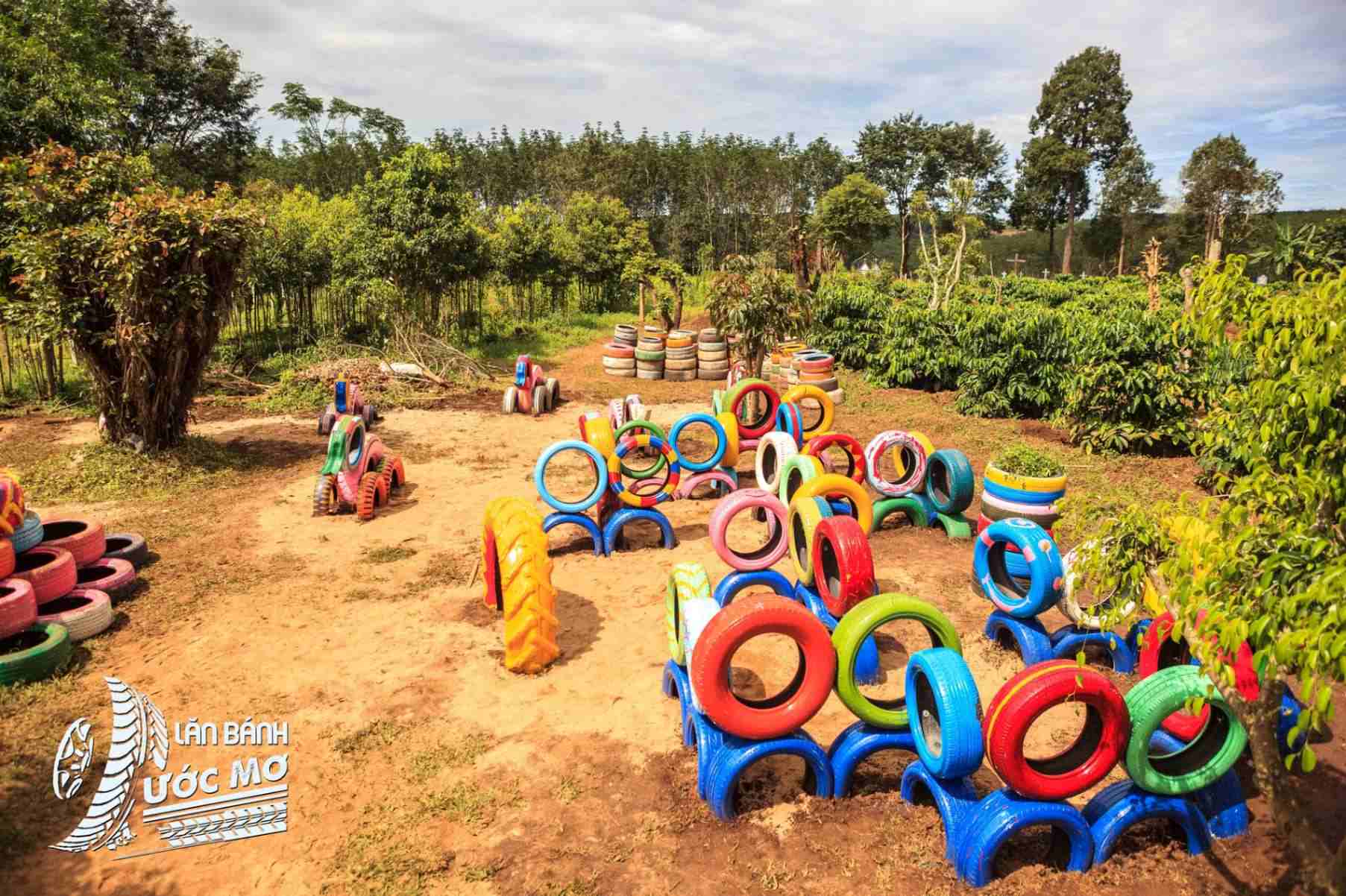
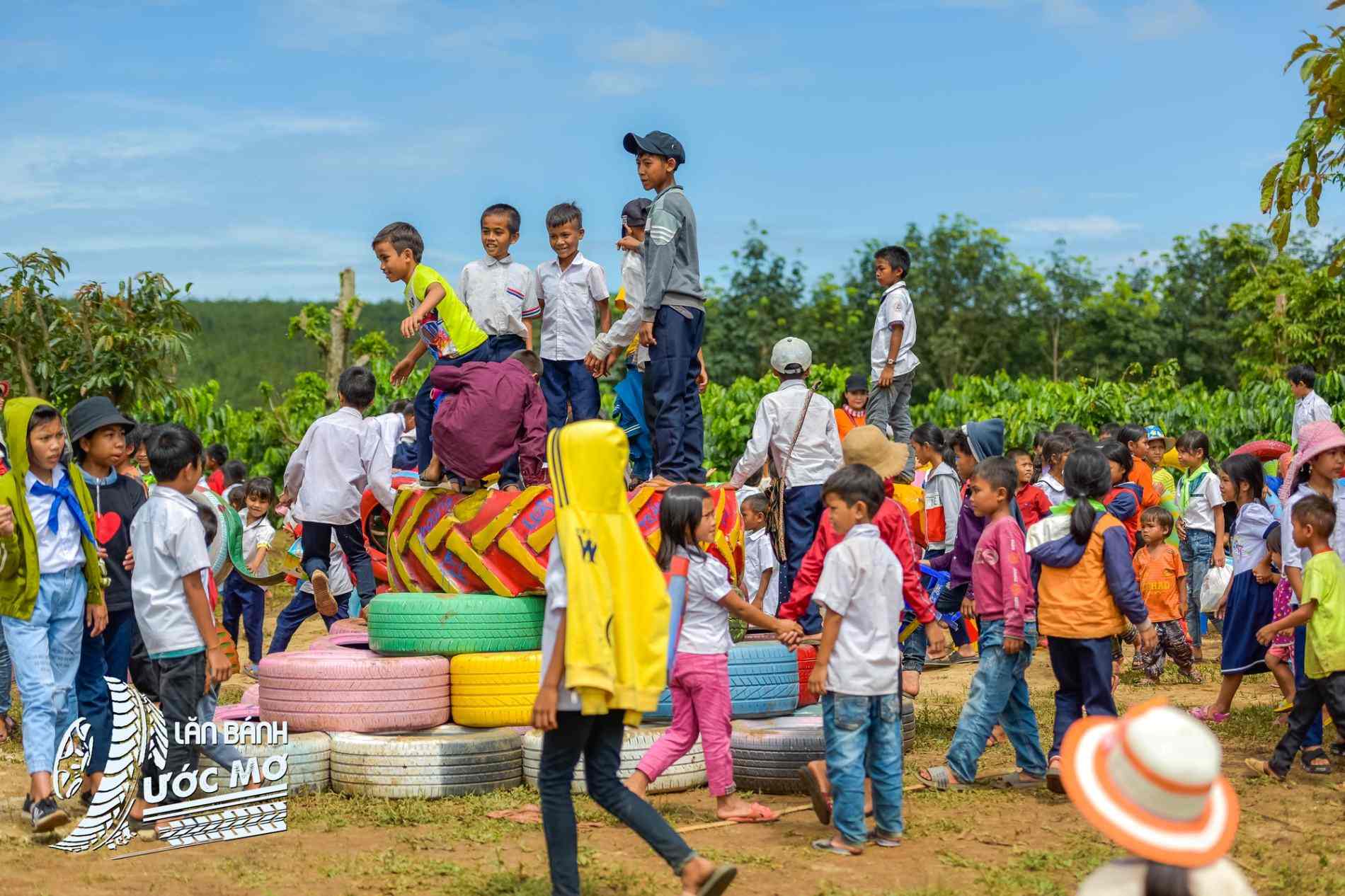
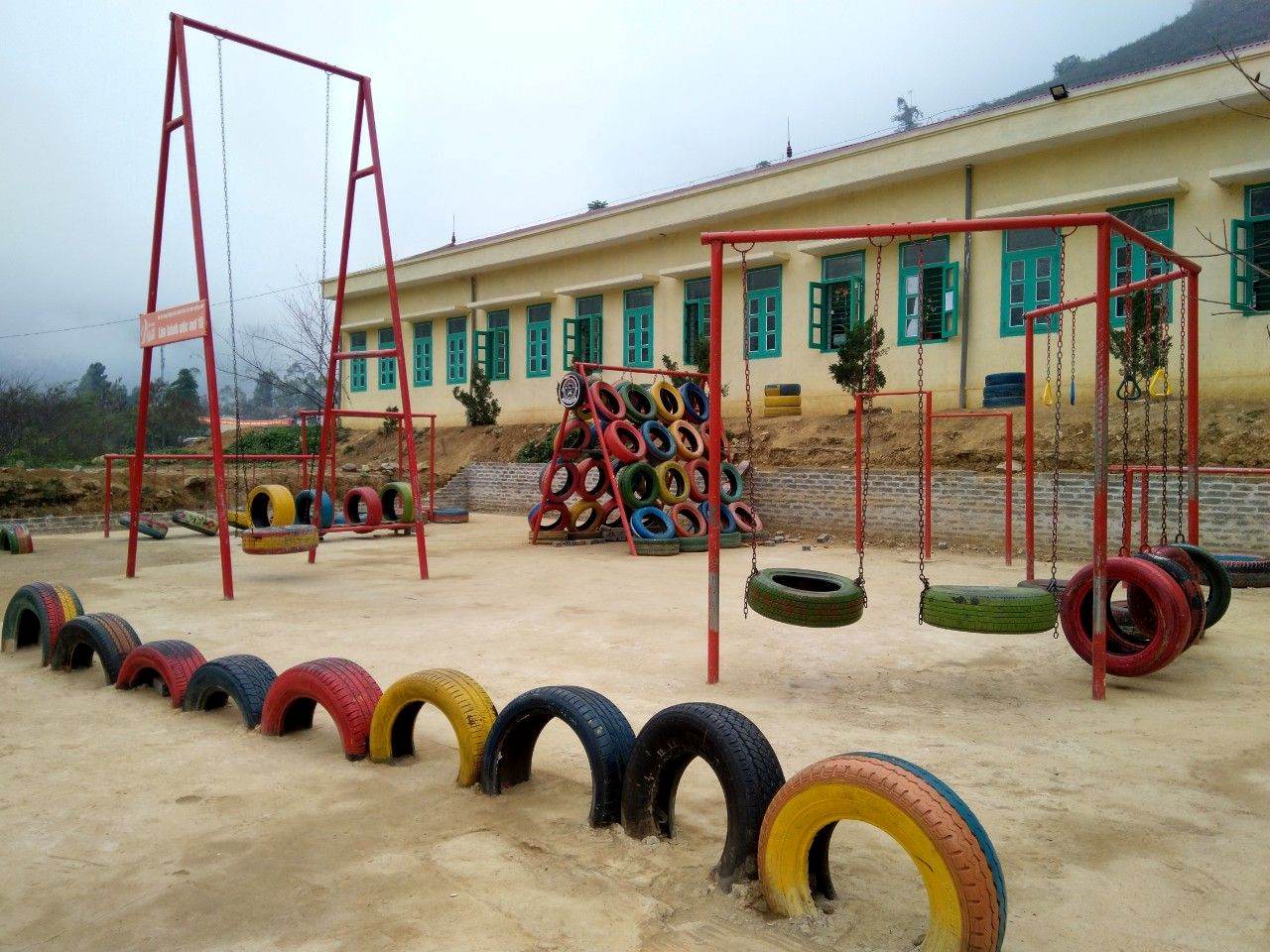
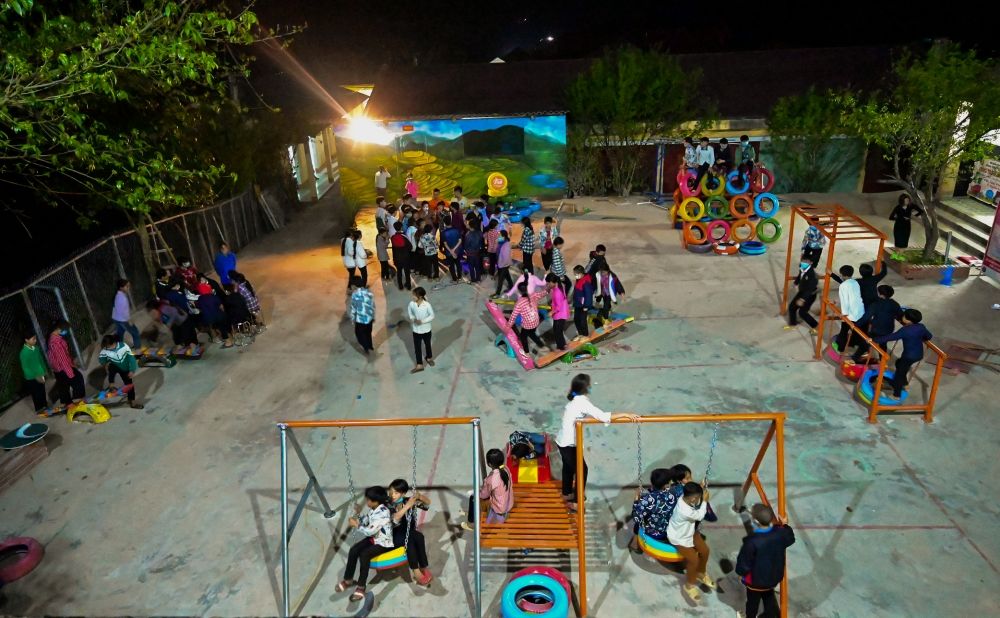
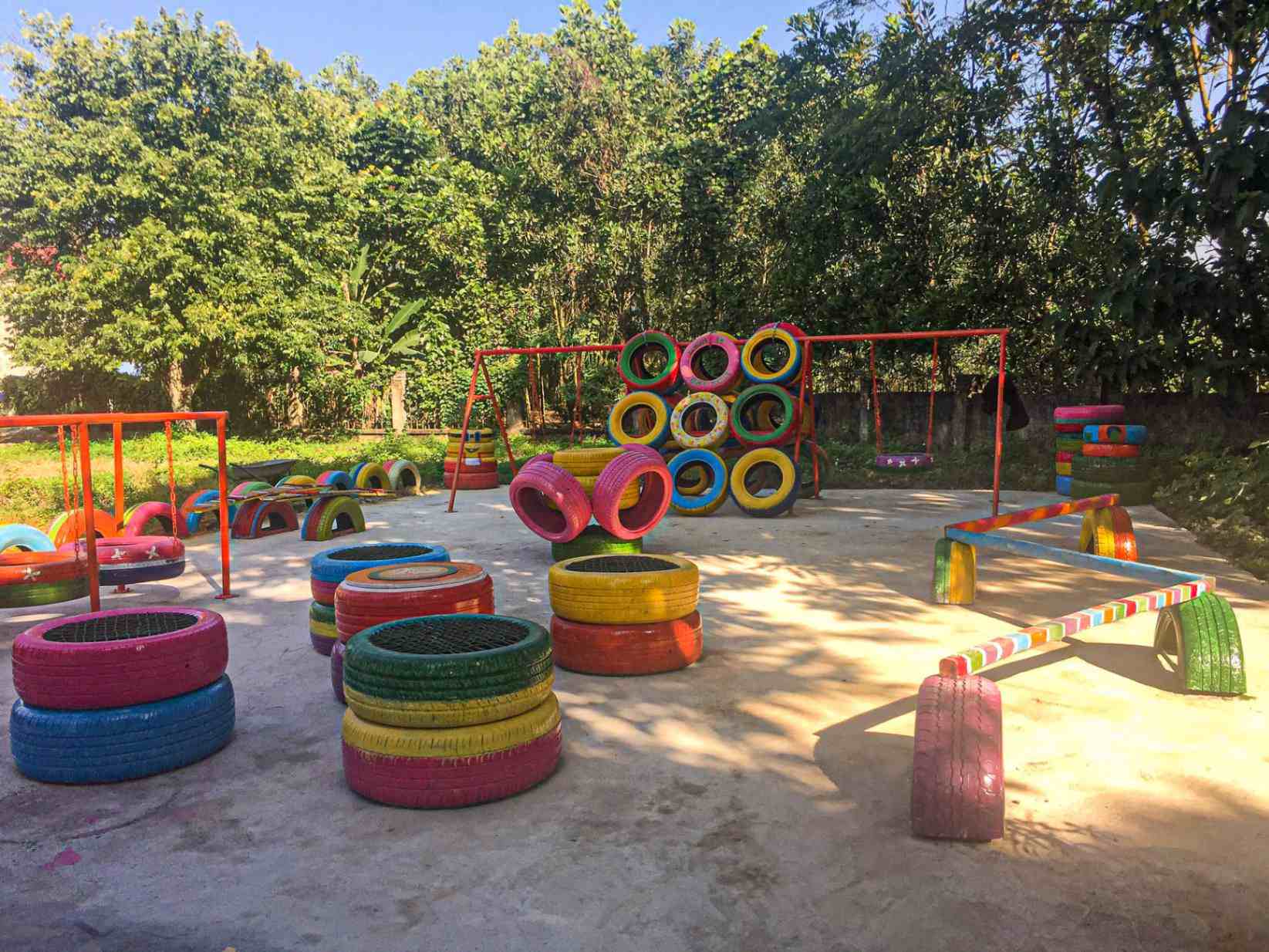
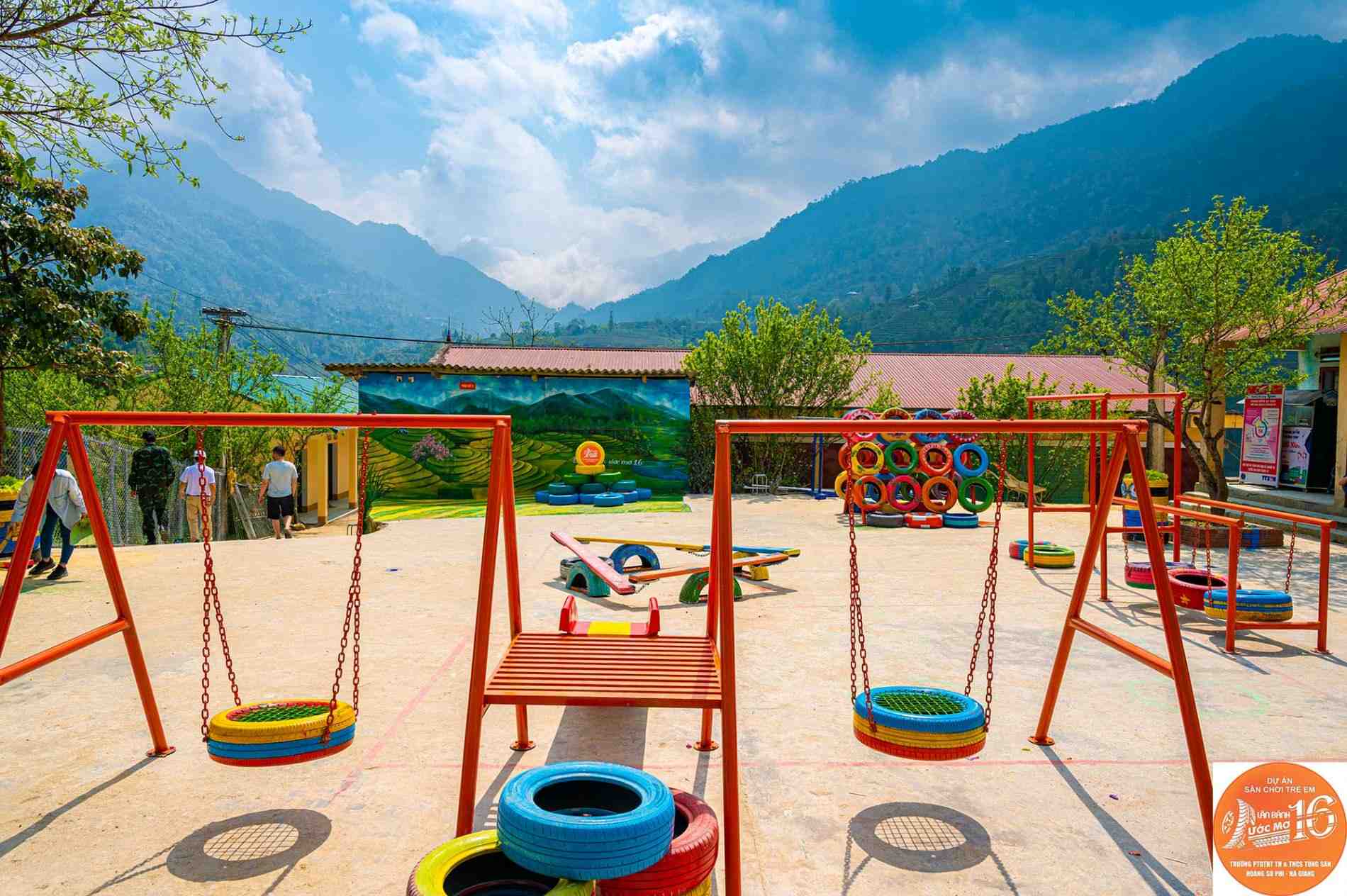
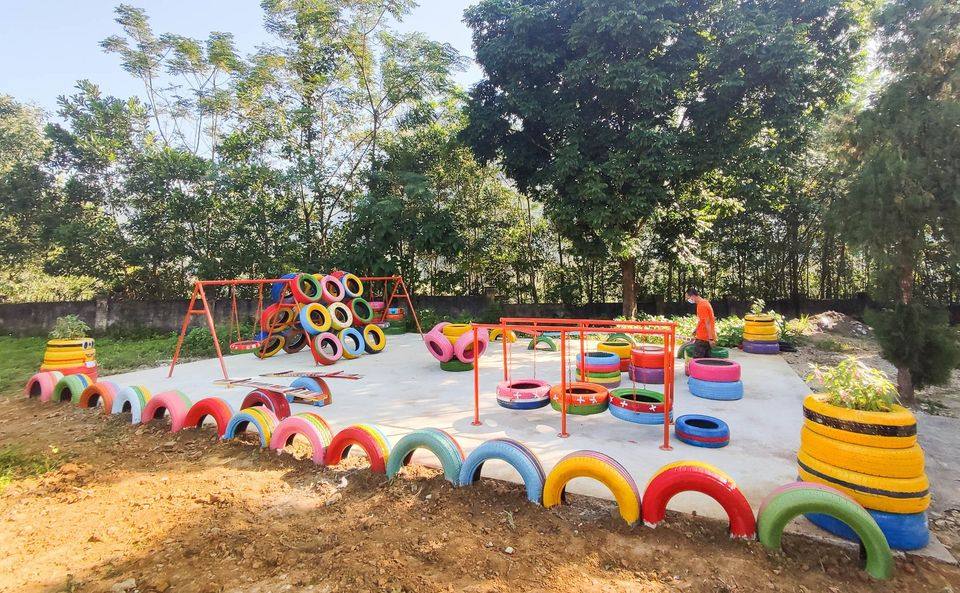
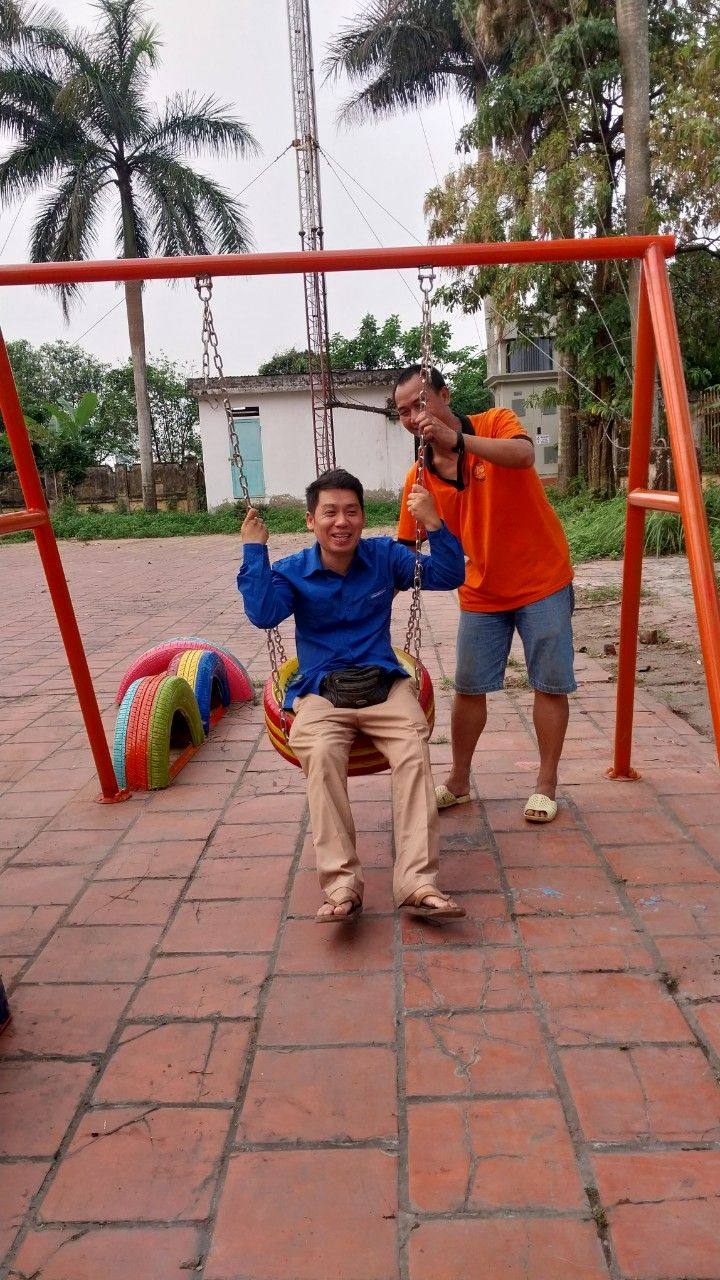
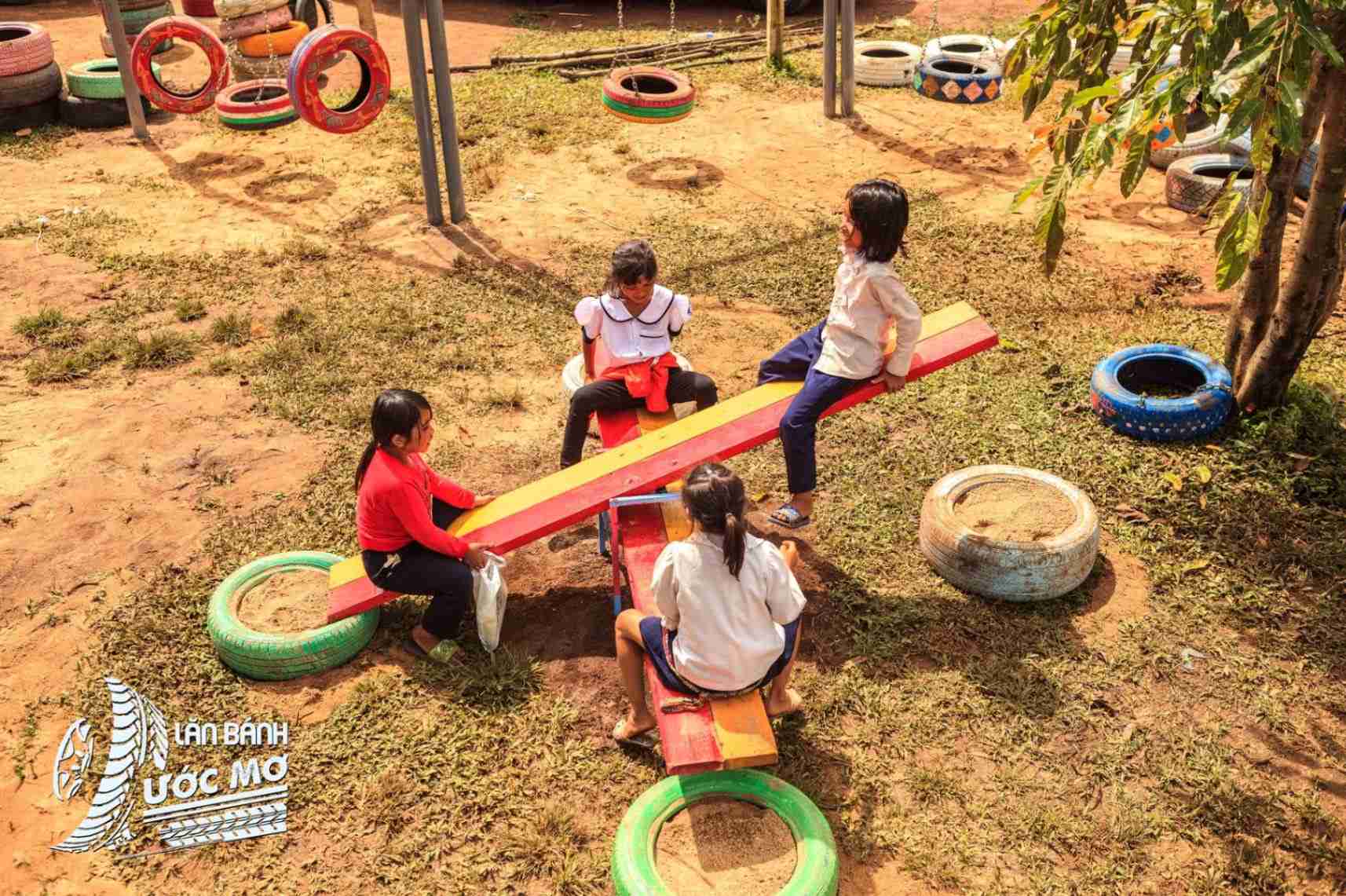
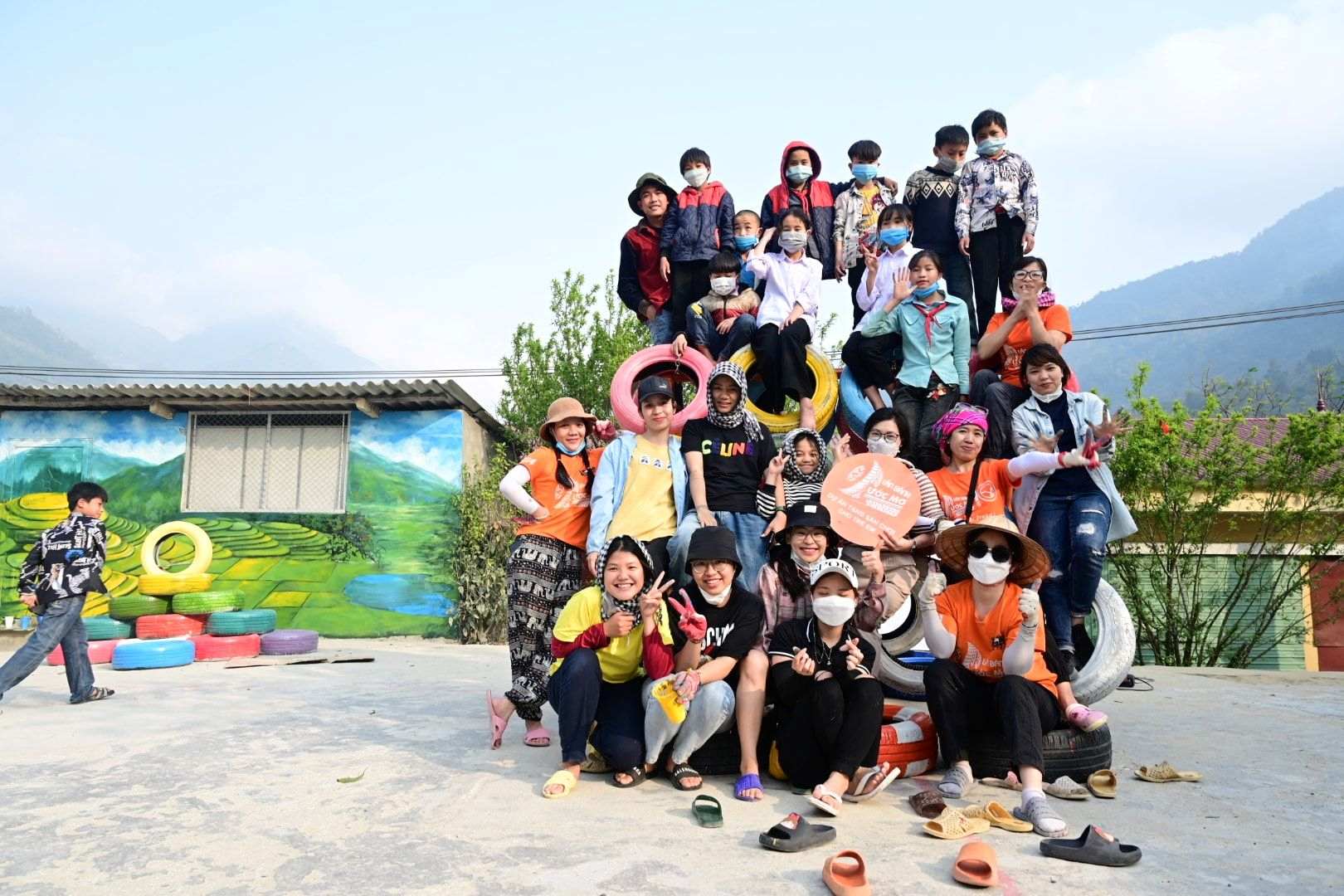
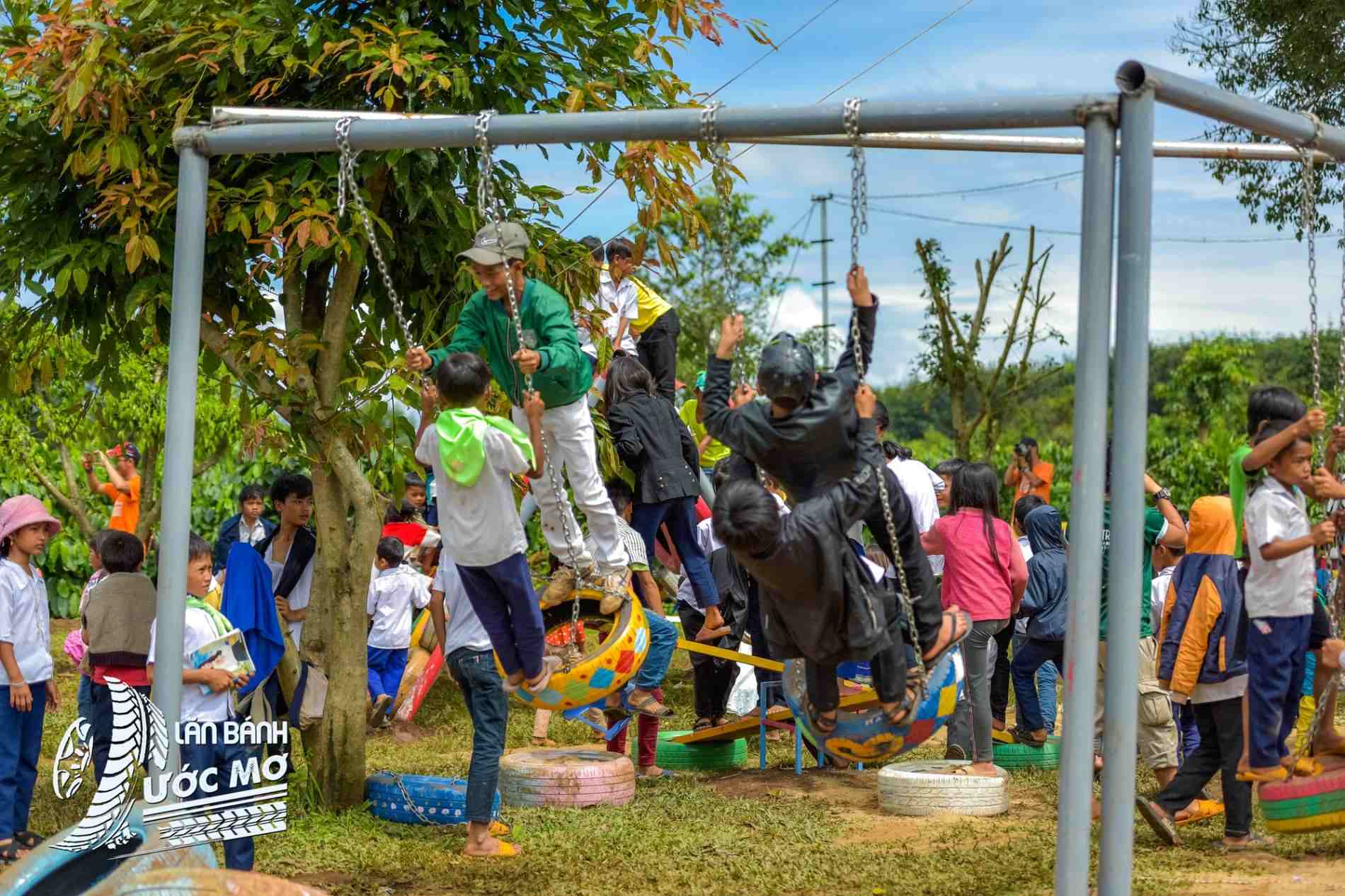
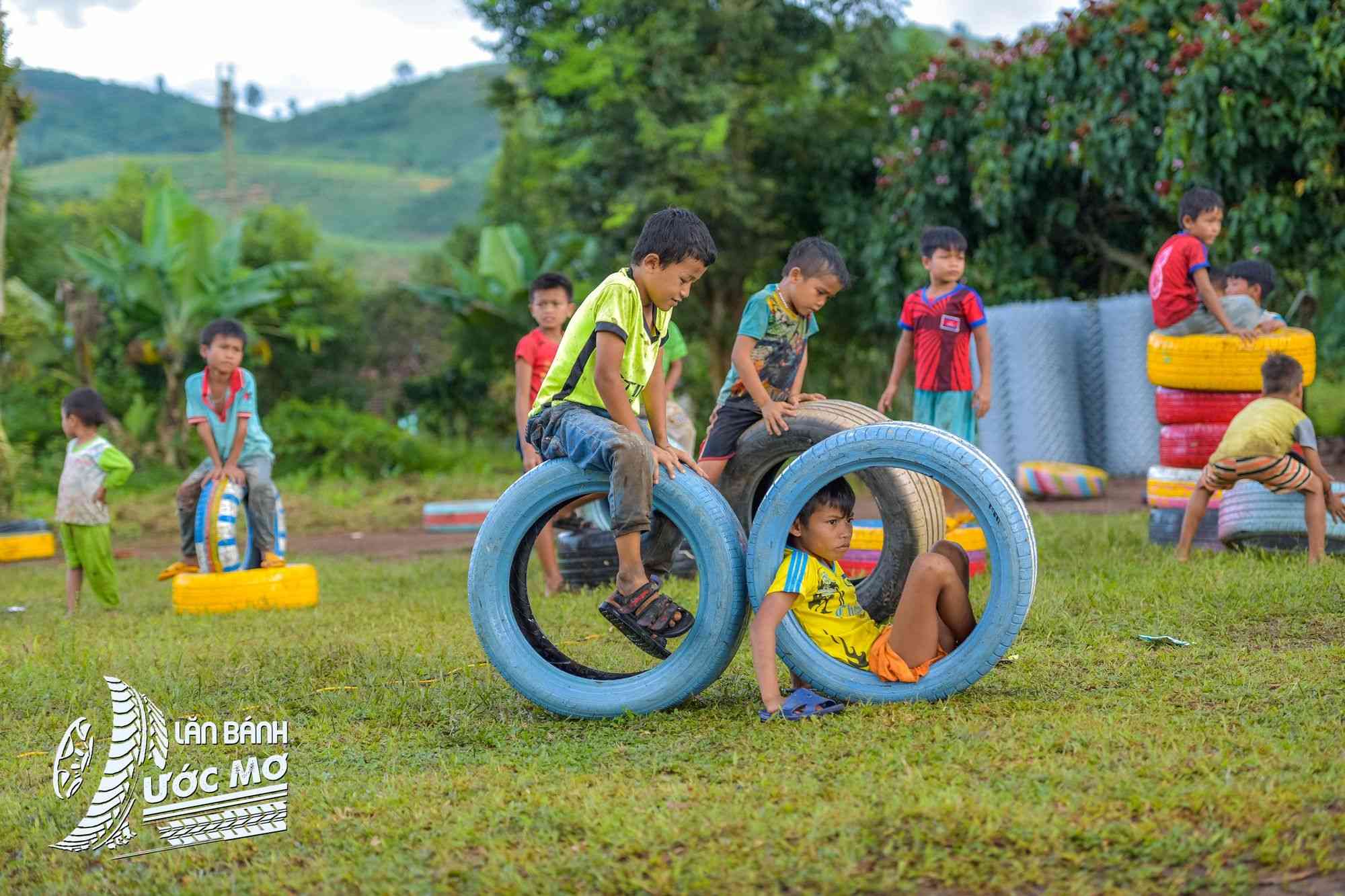
Since 2017, the “Wheel of Dreams” team (Lăn bánh ước mơ) has implemented 24 programs with more than 2,000 tyres repurposed for playgrounds in provinces such as Ha Giang, Bac Kan, Dien Bien, Thai Nguyen, Thanh Hoa, Kon Tum, Ninh Thuan, Ca Mau, etc. Old tyres are cut, drilled, tied, stacked, or assembled to create recreational equipment such as slides, swings, seesaws, climbing frames, ball houses, slides... These playgrounds are both a green, fun solution for the community and encourage children to participate in the design and construction process of the playground to develop their skills and creativity.
Tires are a problematic waste type and cause serious environmental pollution, with roughly 1.5 billion tyres produced and consumed worldwide every year. In Vietnam, this amount can be up to 100,000 tons per year. However, current treatment methods are not strictly or attentively managed, leading to many negative consequences for human health and ecology.
On the other hand, children — especially those in areas with difficult socio-economic conditions — are a crucial and vulnerable demographic in society. They often lack facilities, safe, creative, and sustainable play spaces. According to a 2019 UNICEF report, only 42% of children in rural areas have a playground near their home. This lack of play space not only affects the physical, mental, and intellectual development of children but also reduces their ability to absorb knowledge and life skills.
Under this context, the "Recycled Playgrounds from Used Tires" project was born to both protect the environment and foster joy for children. Implemented in 2017, the project sets out to build playgrounds for children in difficult areas across the country from used tyres and other recycled materials. It not only provides safe, creative, and sustainable play spaces for children but also helps minimise waste and environmental pollution.
Local Infrastructure Shortages
The project is implemented in the Northern mountainous provinces and the Central Highlands, where socio-economic conditions are difficult, and poverty rates are high. According to a 2020 report by the Ministry of Planning and Investment, these provinces bear a poverty rate from 10% to 40%, 5,23% above the national average. These provinces also have a multidimensional poverty rate from 15% to 50%, much higher than the national average of 9.88%.
Facilities for education and children's recreation in these provinces are insufficient. According to a 2019 report by the Ministry of Education and Training, only 50% to 80% of schools meet the national standard, and only 40% to 70% are in standard operation, 86.3% and 76.4% behind the national average, respectively. Many schools in remote and isolated areas still lack basic facilities such as electricity, water, toilets, tables and chairs...
Local Demand for Play in Highland Areas
Children are the target group with the highest demand and right to play in society. Play is an essential activity for the comprehensive development of children, assisting them in physical strength, health, communication skills, cooperation, sharing, creativity, and problem-solving. Play also helps children relieve stress and anxiety, enhancing self-confidence and the joy of living.
Despite having the same needs, difficult socio-economic conditions and lack of facilities have distanced highland children from accessing their own rights. Many of them do not have safe, creative, and sustainable play spaces, but have to endure polluted, dangerous, and boring play environments. They also do not have play tools and equipment suitable for their age and ability, along with beneficial and educational activities or programs for themselves.
The project's standout initiative is the transformation of old tyres—a problematic type of waste that puts burdens on the environment—into a tool to support the comprehensive development of children. This is a unique, creative, and socially impactful idea that brings special implications for:
- Environment: The project helps minimise waste and environmental pollution from old tyres, while raising community awareness and responsibility for recycling, environmental protection, and waste reduction. The project also contributes to the implementation of the UN SDGs, particularly Goal 12 on sustainable production and consumption.
- Education: The project helps create safe, creative, and sustainable play spaces for children, fostering physical strength, health, communication skills, cooperation, sharing, creativity, and problem-solving. It also boosts their engagement to learn about environmental issues and recycling through extracurricular environmental education activities, thus strengthening solidarity. The project also contributes to the implementation of the UN SDGs, particularly Goal 4 on quality education.
- Society: The project helps bring joy and happiness to children in difficult areas across the country, especially children in remote and rural areas with difficult socio-economic conditions. The project also facilitates cooperation between stakeholders such as the Wheel of Dreams group, the Ho Chi Minh Communist Youth Union, local agencies, social organisations, and individuals participating in the project. The project aligns its goal with the UN SDGs, particularly Goal 3 on health and well-being, Goal 10 on reducing inequality, and Goal 17 on partnerships for the goals.
Distinct features of recycled playgrounds
- Safety: Every playground built by Wheel of Dreams puts safety criteria first. Therefore, all products undergo full quality testing before being put into use.
- Creativity: Each creation on the playground, in addition to increasing the attractiveness of the items, also serves as an element that stimulates children's creativity in how they play and learn.
- Environmental Friendliness: Wheel of Dreams playgrounds are built mainly from old car tyres and recycled materials. Through games made from recycled materials, Wheel of Dreams playgrounds want children to learn more about how to recycle items and protect the environment.
- Cultural identity: Wheel of Dreams playgrounds aim to uphold national identity. Each playground integrates local identity into the playground model, such as folk games or local patterns.
- Inclusivity: Wheel of Dreams playgrounds desire that safe and sustainable playgrounds will be popularised widely to all children, regardless of wealth or poverty, highland or urban areas.
Objective
The project aims to contribute to environmental protection and bring joy to children in difficult areas across the country. To achieve this overarching goal, the project sets the following specific objectives:
Provide extracurricular environmental activities and strengthen solidarity when building playgrounds for children in difficult areas from old tyres and other recycled materials. Minimise waste and environmental pollution from old tyres, while raising community awareness and responsibility for recycling, environmental protection, and waste reduction. Create safe, creative, and sustainable play spaces for children, and help them improve physical strength, health, communication, cooperation, sharing, creativity, and problem-solving skills. Replicate the recycled playground model in local and neighbouring regions and provide material support. The project has short-term and long-term goals. The short-term goal is to build at least 10 playgrounds for children in the Northern mountainous and Central Highland provinces in 2023. The long-term goal is to build at least 100 playgrounds for children in other provinces across the country over the next 5 years.
Vision
The strongest motivation driving the project's birth and growth is love and concern for children and the environment. Wheel of Dreams is a social enterprise operating with the motto "Children's Playgrounds, Adults’ Dreams."
By building recycled playgrounds from old tyres, the group hopes to be a part of making these dreams come true. Wheel of Dream also wishes to bring dreams to children in disadvantaged areas, fostering a vivid and interesting learning environment and a better life. Moreover, they also wish to realise our planet's dream, heading to a more sustainable environment.
Implementation Process
The project includes the following main activities:
Collect old tyres and other recycled materials from various sources, such as vehicle repair shops, garbage dumps, and households...
Paint and manufacture play equipment from old tyres and other recycled materials, such as swings, seesaws, slides, tables and chairs...
Transport and install play equipment at schools in difficult areas across the country.
Organise extracurricular environmental education activities and strengthen the spirit of solidarity for children at the playgrounds. - Manage, maintain, and evaluate the effectiveness of the playgrounds.
Propagate, disseminate, and replicate the recycled playground model for localities and neighbouring regions.
Scope:
The project is implemented in the Northern mountainous provinces and the Central Highlands, where socio-economic conditions are difficult, and poverty rates are high. These provinces include Ha Giang, Cao Bang, Lao Cai, Yen Bai, Son La, Lai Chau, Dien Bien, Hoa Binh, Kon Tum, Gia Lai, Dak Lak, and Dak Nong. From 2017 to 2023, the project successfully built 24 playgrounds across the country. The project aims to build at least 10 playgrounds for children in these provinces in 2023.
Impact
The project brings positive impacts to the beneficiaries, who are children in difficult areas across the country. These impacts include:
Minimise waste and environmental pollution caused by old tyres, while raising community awareness and responsibility for recycling, environmental protection, and waste reduction.
Create safe, creative, and sustainable play spaces for children, helping children practice physical strength, health, communication skills, cooperation, sharing, creativity, and problem-solving.
Expand the recycled playground model in localities and neighbouring regions, supporting localities in need of building playgrounds for children from old tyres and other recycled materials.
Budget
Beyond a playground, the project hopes to inspire children to make use of their waste and enjoy a healthier play environment. Alongside the colourful wheels, the playgrounds are supplemented with beneficial activities such as recycling plastic bottles, planting trees, and providing guidance on plastic waste and environmental knowledge.
As devoted people who “wish for smiles on children's faces”, the Wheel of Dream team dares to bring more innovative and best ways to upgrade the playgrounds. Leveraging the achieved results, the enterprise strives for higher goals when creating playgrounds that help children's comprehensive achievement and raise local citizens' awareness in recycled items and achieve meaningful impacts for the environment.
Each Wheel of Dreams playground is a point for exchange, play, cultural and sports activities that are beneficial, healthy, and safe for children and youth. More than just a play area, children can understand more about recycling and gradually take on a green, environmentally friendly lifestyle.
The playground design and installation are tailored to each school area and student capacity:
Basic playground model
- Balance bridge module combined with a ladder: 10,000,000 VND
- Tire wall module combined with a swing: 10,000,000 VND
- 4-way seesaw module: 8,000,000 VND
- Single seesaw module (2 modules): 7,000,000 VND
- Decorative animal module for the playground (2 figures): 4,000,000 VND
- Tire seat and table set module: 5,000,000 VND
- Individual modules representing local culture and characteristic images such as images + patterns + simulation: 4,000,000 VND
- Transport + travel expenses: 10,000,000 VND
- Labour costs: 20,000,000 VND
Budget description for the 2023 Wheel of Dreams Recycled Playground project:
- Total expected budget per playground (VND): 78,000,000 VND
* Detailed budget estimates are built specifically for each playground depending on the locality, method of travel, and the material situation at the time of implementation.
Through 24 playgrounds, Wheel of Dreams has created more than 1,000+ children's smiles, attracting 1,200+ participants nationwide. Meanwhile, more than 2,000+ old tyres have been recycled, contributing to waste minimisation and promoting a sustainable development model. These are not merely numbers but are a testament to the social and environmental impacts of the project.
24
playgrounds
1,000+
children's smiles
1,200+
participants nationwide
2,000+
old tyres have been recycled
This recycled playground project has high potential for model replication with the following advantages:
The project has high feasibility and efficiency, as it has been successfully implemented in many localities across the country, bringing positive impacts on children and the environment.
The project has high creativity and uniqueness, as it has transformed old tyres - a hard-to-decompose waste that may cause harm to the environment - into children's play equipment, a tool to support the comprehensive development of children.
The project has high cost-effectiveness and sustainability, as it uses recycled materials to make toys, reduces production costs, and protects the environment. The playgrounds can easily be maintained and operated for a long time.
The project has high spreading power, with collaborations from the Wheel of Dreams group, the Central Committee of the Ho Chi Minh Communist Youth Union, local agencies, social organisations, and individuals joining their efforts in the project. Wheel of Dreams also communicates and replicates the recycled playground model for localities and neighbouring regions.
The enterprise calls for joint efforts in this major program with the desire to bring more playgrounds to highland ethnic schools and even more difficult areas. Your collective accompaniment will contribute to bringing more joy to many children across the country. The program also marked the transition of Wheel of Dreams, from a volunteer group to a social enterprise with more effective activities and operation scale, elevated to bring the best values to children.
Recycled Playgrounds – Wheel of Dreams
Case Ownership
Hosting Organisation: Dream Rollers Social Enterprise
Collaborating Partners:
- Central and Local Committees of the Ho Chi Minh Communist Youth Union
- Schools and local authorities at playground construction sites (reception, operation, maintenance)
- National network of volunteers/project members (construction, activity organisation)
- Vehicle repair shops, collection units/scrap dealers, and in-kind donors (source of tyres and recycled materials)
- Businesses/benefactors for and transportation (depending on each playground)
Stakeholders and beneficiaries:
- Children in remote and rural areas (access to safe playgrounds and environmental education activities)
- Schools and local communities (additional space for activities, play, and community bonding)
- Volunteers/Youth Union members (take part in community activities, spread sustainability awareness)
- Natural environment (reduce tyre waste, promote recycling and sustainable consumption)
Source: Human Act Prize (link in Vietnamese, external link)
The copyright and legality of all images, videos, information, and data regarding the project published on this landing page are provided by and are the sole responsibility of the individuals/organisations registering for the Human Act Prize. The republished content on this landing page has been verified and authorised by VCCorp Corporation (the co-organiser of the Human Act Prize).
Specific SDG targets
SDG 4.A
Build and upgrade inclusive and safe, non-violent, inclusive and effective schools
SDG 4.7
Education for sustainable development and global citizenship
SDG 10.2
Promote universal social, economic and political inclusion
SDG 10.3
Ensure equal opportunities and end discrimination
SDG 12.5
Substantially reduce waste generation
SDG 12.8
Promote universal understanding of sustainable lifestyles