HEINEKEN Vietnam's “Water Conservation” project is a core part of its comprehensive sustainable development strategy, "Brewing a Better Vietnam."
Apart from responsible water usage during production, the company also prioritises river basins' health and clean water for the community, setting out to replenish 100% of the water used in production in water-scarce areas by 2030.
Since 2012, the “One minute less for millions of smiles” program has encouraged the community to act together to save water. Every 100,000 good actions corresponds to one clean water project for the community.
In addition, the public-private partnership model with the Ministry of Agriculture and Environment and WWF Vietnam also proved its impacts. Thanks to a comprehensive approach and persistent progress, HEINEKEN reached the water balancing milestone in the Tien River basin 5 years ahead of the 2030 target, returning more than 690 million litres of water to nature every year.
HEINEKEN Vietnam's Water Conservation project was born not only as a response to the global sustainable development strategy but also as a devoted service during the severe water resource crisis in Vietnam – a crisis directly affecting economic security and community lives.
Challenges regarding water resources and national security
Water scarcity, pollution, and lack of access to safe drinking water are urgent challenges worldwide. Global water extraction has tripled over the past 50 years, with demand expected to increase by 55% from 2000 to 2050. The status of water resource scarcity in Vietnam is a high risk to national security. Only 37% of available water is generated within Vietnam's territory; nearly 60% of the remaining surface water depends on sources from outside the territory. This heavy dependence makes Vietnam particularly vulnerable to transboundary impacts and issues caused by climate change.
Dual challenges for manufacturing business and the community
For production
Water is an essential ingredient for manufacturing businesses, especially for the beer industry, since it accounts for up to 95% of the ingredients. Therefore, water resource conservation is the top priority in HEINEKEN Vietnam's sustainable development strategy.
To assess water risks, every year, HEINEKEN breweries perform a Water Security Assessment to determine if there are local water risks. For high-risk areas, a Source Vulnerability Assessment (SVA) is performed every 10 years to confirm the water scarcity situation. In Vietnam, HEINEKEN Vietnam's Tien Giang brewery, located in the Tien River basin, has been identified as a water-scarce area.
For the community
The issue of water scarcity has been a grave concern for millions of people, especially in water-scarce areas where clean domestic water becomes a precious resource for money, sweat and effort "exchange". The lack of infrastructure and uneven rainfall distribution further worsen this situation. Despite many improvements, there is a stark disparity in rural and urban clean water access.
Devoted service motivation and the birth of the initiative
Deeply aware of the role of clean water in business and community survival, HEINEKEN Vietnam is committed to "devoted service" through running a comprehensive, pioneering Water Conservation strategy. This is the result of a persistent pursuit of the UN SDGs (SDG 6 on Clean Water and Sanitation). The strategy and core initiatives of the project lie in the shift of thinking. Instead of focusing on efficiency and water circulation inside the brewery, we shift to a basin scale in water management and broad integration of technical, ecological, and community solutions. This has turned challenges into motivation for water security in Vietnam.
Strategic innovation: 100% water replenishment commitment
This is the most outstanding initiative, showing the "Brewing a Better Vietnam" message, the pursuit of the “Water Replenishment” goal in water-scarce areas by 2030. As a fresh direction, it requires the company to return the entire amount of water used during the production process into nature. This strategy is comprehensive in stretching beyond the manufacturing scope and focusing on the health of local river basins.
According to HEINEKEN's global strategic framework, to ensure sustainability, replenishment projects are recommended to return 1.5 litres of water (including water in the product and production losses) for every 1 litre of product.
Initiative on cooperation models: Collective action and public-private partnership
HEINEKEN Vietnam realised that the individual action of a single company is not enough to restore the health of a river basin. Cooperation is the key factor in achieving long-term sustainability and water security.
Public-private cooperation
The initiative includes community activities and a clearly structured Public-Private Partnership Program, closely connecting with important stakeholders such as the Ministry of Agriculture and Environment and WWF-Vietnam, with a commitment to invest 30 billion VND for a 4-year program (2022–2025) aimed at conserving water resources in 3 key river basins (Red River, Dong Nai River, Tien River).
Scientific approach
The construction of the “Water Balancing” project is based on a scientific foundation, including detailed “Source Vulnerability Assessments (SVA)” to understand local challenges. “Water Conservation” projects must be implemented within the basin scope identified in the SVA and must be built based on the Volumetric Water Benefit Accounting framework of the World Resources Institute (WRI) to calculate and verify water benefits accurately and transparently.
Initiative to restore ecosystems and support the community
Water replenishment projects are not just about building works but are also solutions combining Green and Grey infrastructure to restore ecosystems and enhance livelihoods:
- Forest Restoration and Hydrological Management (Green Infrastructure): Implementing the planting and care of upstream forest ecosystems creates a dual benefit of both retaining water and protecting forests. Upstream forest and protection forest protection and development activities are identified as one of the priority activities according to the Water Security Plan approved by the Ministry of Agriculture and Environment, bringing water resource benefits such as:
- Retain water and regulate surface flow, prevent erosion, and retain moisture: contribute to groundwater replenishment, filtering, and improve water quality…
- Support strategic design consultancy for hydrological management and modification of water-regulating sluice gate systems: to restore water sources, ensure the water needs of different types of habitats, such as Melaleuca forests, grasslands, lotus ponds, and floating lakes for birds, directly improving the ecological health of the Conservation Area.
- Sustainable agricultural conversion: Cooperating with farmers to apply sustainable farming standards, minimising pollution from agriculture. A typical example is the initiative to support interest-free revolving loans for farmers in Dong Nai to invest in advanced sprinkler irrigation systems, helping to save up to 70% of irrigation water.
- Persistence with community clean water (Grey infrastructure): During large projects, the company also implements the community clean water project "One minute less for millions of smiles" (initiated since 2012). The program has sponsored a total of 25 clean water works (boreholes, filtration/desalination systems) across Vietnam, providing clean water access to the community, especially in poor rural and remote areas.
The vision, goals, and motivation driving the pursuit of HEINEKEN Vietnam's Water Conservation project are clear evidence of the spirit of "Persistent Service." The project is led by the sustainable development strategy "Brewing a Better Vietnam", aimed at creating sustainable values for the community and the environment.
Strategic Vision
Towards healthy river basins and nature
HEINEKEN Vietnam's long-term vision in water management is not limited to the brewery scope but also applies a comprehensive "Towards healthy river basins and nature" approach. This vision requires the business to go beyond the manufacturing scope and pay attention to the health of river basins. The unwavering pursuit of the project is driven by Sustainable Development, a responsibility and motivation for the business to develop long-term.
Goals to 2030
The core and most ambitious goal in HEINEKEN Vietnam's Water Conservation strategy is 100% Water Replenishment in water-scarce areas by 2030. This means the company will return the entire amount of water used in products and water evaporated during the production process at the Tien Giang brewery, a brewery located in a water-scarce area, by 2030.
To ensure sustainability in the context of a rapidly changing climate, HEINEKEN's global strategic framework requires the enterprise to replenish 1.5 litres of water for every 1 litre of product.
Going beyond the global commitment, HEINEKEN Vietnam implements a cooperation program with the Ministry of Agriculture and Environment, and WWF-Vietnam to deploy water conservation plans in all 3 key river basins of Vietnam, including the Red River, Dong Nai River, and Tien River (period 2022-2025) to conserve 3 billion litres of water/year.
In 2025, HEINEKEN Vietnam continues to perform Source Vulnerability Assessments (SVA) and is planning to expand the project to other key river basins in Vietnam by 2030 and beyond. The plan is expected to be announced in 2026.
Long-term drivers: A journey of collective action
The motivation to pursue the Water Conservation project in the long term is built on the principle "Sustainable development is a journey of collective action." The success of the project is not just about achieving figures in reports, but:
Collective action from multi-stakeholder cooperation: The enterprise realises that the replenishment activities of a single company will not be enough to restore a river basin. The collective action of many stakeholders (including businesses, government, non-governmental organisations, and the community) is key to driving water security and long-term sustainability.
Persistence in implementation and spreading: In the coming time, HEINEKEN Vietnam is committed to continuing efforts to coordinate with stakeholders to spread good initiatives, inspiring action in the business community, organisations, local departments, and the whole society. This is the way the company commits to align and grow with Vietnam in the new era, actively contributing to the Government's goals. The project is seen as a replicable model in the business community to strengthen collective action in water resource conservation.
Scope and beneficiaries
The project focuses on two key areas to bring practical benefits to the community and environment:
- Clean water for the community: providing clean water sources for the community in water-scarce areas, spanning many provinces such as Tien Giang, Quang Nam, Da Nang, Hanoi, Kon Tum, Lai Châu, and Can Tho…
- Water conservation in 3 river basins and ecosystems: Implemented in three important river basins: Red River, Dong Nai River, Tien River. The project not only contributes to improving the quality of life for people but also protects biodiversity and conserves ecosystems.
Implementation process
The project implementation process has lasted for more than a decade, a persistent journey divided into two strategic phases:
Phase 1 (from 2012 - 2021) Clean water for the community: "One Minute Less for Millions of Smiles" program
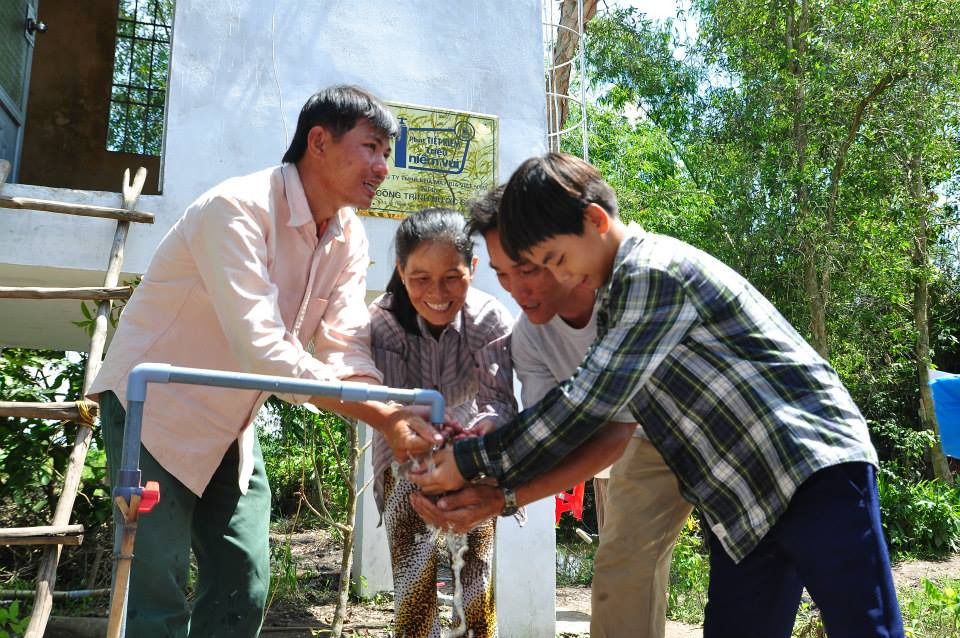
The "One Minute Less for Millions of Smiles" program was initiated in 2012 to solve domestic water scarcity and raise awareness of water resource protection. Accordingly, for every 100,000 good actions recorded on the program's digital platforms, the project will sponsor one clean water work for the community. Over a decade of persistent implementation, it has supported 25 clean water works, including boreholes, water filtration systems, desalination, and storage tanks, while implementing many communication activities to encourage people to save and protect water resources. Thanks to this initiative, a total of 15,087 people across the country have accessed safe, clean water sources, spread good habits, and improved the quality of life in the community.
Phase 2 (2022 – 2025) promoting Public-Private Partnership to conserve water resources
The cooperation program has been implemented since 2022 between HEINEKEN Vietnam, the Ministry of Agriculture and Environment, WWF-Vietnam, and local partners, committing to invest 30 billion VND to conserve water resources in 3 key river basins: Red River, Dong Nai River, and Tien River.
Implementation locations: Activities were carried out at Xuan Son National Park (Red River), Dong Nai Nature and Culture Reserve (Dong Nai River), and Dong Thap Muoi Ecological Reserve (Tien River).
Main activities
Forest Ecosystem Restoration and Protection:
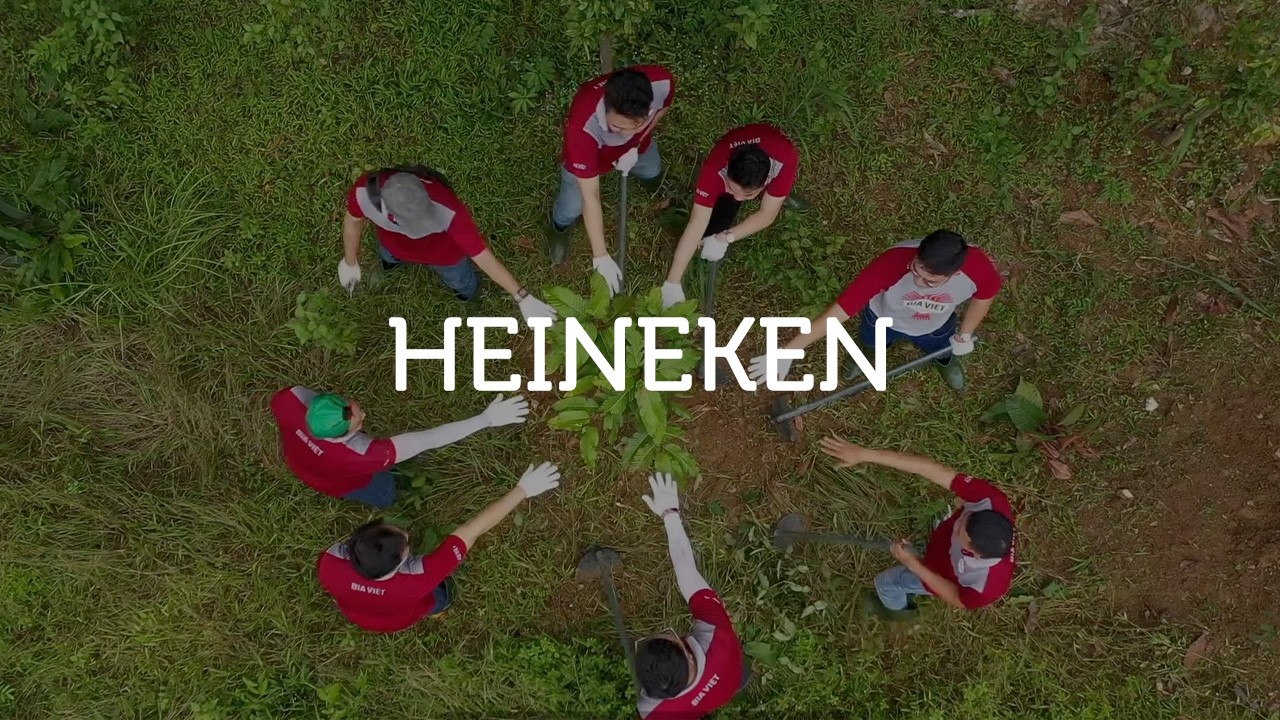
The project supports the planting and nurturing of more than 1,100 ha of forests and native trees. These interventions help strengthen root systems in high-slope areas, increase moisture retention, reduce erosion and landslides, and increase canopy cover, helping to improve forest quality and reduce evaporation.
Habitat and Biodiversity Conservation
Supporting strategic design for hydrological system management, including supporting the modification of water-regulating sluice gate systems and providing mobile boat pumps to ensure forest fire prevention. This provides the water needs for different types of habitats, such as Melaleuca forests, grasslands, lotus ponds, and floating lakes for birds, directly improving the ecological health of the Reserve.
Improving Bird Habitat: At the Dong Thap Muoi Ecological Reserve, Melaleuca forests and native trees planting and hydrological regime adjustment have improved habitat for rare bird species.
Raising community awareness and livelihoods:
Training to raise community awareness of the role of protecting water resources and the surrounding environment in the area of Xuan Son National Park in Phu Tho province and Dong Nai Nature and Culture Reserve in Dong Nai province, to guide people on how to collect and treat waste to prevent water pollution.
Support environmentally friendly agricultural solutions applying local microorganisms, such as organic fertilisers production instead of chemical fertilisers and pesticides, learning how to make banana circles to save water, increase crop yields, minimise the impact of chemical fertilisers and pesticides on the environment, and contribute to the treatment of organic waste in domestic life.
The project also organised training for Reserve Staff and Management Officers to strengthen project management capacity.
Improve clean water access for people: Build two community water storage tanks and repair and clean two old storage tanks in areas with urgent needs in Xuan Son National Park, providing clean water to serve the daily life of 50 households. At the same time, about 937 households in Dong Nai were provided with more than 2,620,000 Aquatabs (water purification tablets) to help ensure safe domestic water, and 20 large-capacity rainwater storage bags (15m³/bag) to help them store water during the rainy season for use during dry times.
Support sustainable livelihoods: The project provides water-saving solutions in cultivation and supports livelihoods, such as interest-free revolving fund support for farmers to install sprinkler irrigation systems (saving up to 70% of irrigation water).
Support Xuan Son National Park to complete registration for certification under the “One Commune, One Product” OCOP program for Shan Tuyet tea products to create a sustainable source of income for water resource and biodiversity conservation activities.
Phase 3 (2025-2030)
In 2025, the project will continue its mission of conserving 3 billion litres of water per year in 3 key river basins and is in the planning for expansion to other key river basins in Vietnam by 2030 and beyond.
Project implementation costs
The comprehensive implementation of the Water Conservation project requires significant resources, showing the company's long-term commitment and persistence in service:
- Costs for the River Basin Conservation Cooperation Program (2022-2025): HEINEKEN Vietnam has committed to investing a total of 30 billion VND for the 4-year cooperation program with the Ministry of Agriculture and Environment and WWF-Vietnam. This program aims to conserve 3 billion litres of water each year in key river basins.
- Costs for community clean water projects: Within the framework of the "One minute less millions of smiles" program, the total cost for 25 clean water works implemented nationwide is more than 14 billion VND.
Qualitative Results
Benefits for water resources and nature
- Improved water quality and reduced alum levels during the dry season thanks to water circulation and slow discharge at the Dong Thap Muoi Ecological Reserve.
- Improved habitat and nesting areas for rare bird species in Dong Thap Muoi.
- Improved forest quality strengthened root systems to help prevent erosion, and increased forest cover at Xuan Son National Park.
- Increased forest cover and improved habitat for wildlife at the Dong Nai Nature and Culture Reserve.
Benefits for the community and livelihoods
- Local people's income increased from forest activities (planting, caring, nurturing).
- Effective hydrological management and water balancing activities help agriculture in buffer zones indirectly.
- Training to improve community work skills and promote water conservation for conservation areas and national park staff.
- Support for sustainable product development, such as OCOP registration for Shan Tuyet tea products at Xuan Son National Park.
- Improved group management, communication, and cooperation skills through Community Water Resource Protection Groups.
Quantitative Results
Overall results
- HEINEKEN Vietnam reached the water replenishment ambition in the Tien River basin 5 years earlier than the 2030 target.
- Total water replenished: more than 690 million liters per year, including:
- 559.44 million litres of water/year from the water conservation cooperation program.
- 131.52 million litres of water/year from community clean water projects.
Phase 1 – “One minute less for millions of smiles” Program (since 2012)
- 25 clean water works constructed.
- More than 15,087 people accessed safe water sources across provinces nationwide.
- By 2025: The project replenishes 293.058 million litres of water/year, including 131.52 million litres of water in the Tien River basin.
Phase 2 – 4-year cooperation program (2022–2025)
Benefits for water resources and nature
- Dong Thap Muoi Ecological Reserve – Tien Giang (Tien Giang River Basin)
- Replenished 521,200 m³ of water/year thanks to effective hydrological regime management and regulation.
- Avoided 38,240 m³/year of surface flow by supplementary planting of 10 ha of native trees and 2.3 ha of Melaleuca Forest.
- Xuan Son National Park – Phu Tho (Red River Basin): Avoided surface flow estimated at 799,880 m³/year from planting 10 ha of additional forest and nurturing 400 ha of forest.
- Dong Nai Nature and Culture Reserve: Nurtured 700 ha of forest and planted 10 ha of new forest along Tri An Lake.
Benefits for the community and livelihoods
- Dong Thap Muoi Ecological Reserve – Tien Giang
- Local people's income increased by participating in supplementary planting and forest care.
- Reserve staff participated in training courses to improve community work skills.
- Xuan Son National Park – Phu Tho
- 89 households were supported with water during the dry season through connection systems and community water tanks.
- 51 households were provided with about 2,000 m³ of clean water from two newly built storage tanks with a total capacity of 36 m³, along with two old storage tanks repaired and cleaned.
- 400 households benefited directly from training activities on water saving and environmental protection
- 200 households enhanced awareness of using indigenous microorganisms (IMO/Enzyme) and saving water in agricultural production.
- 500 water conservation handbooks provided.
- 4 Community Water Resource Protection Groups were established and operated, with 281 people participating in collecting 3.5 tons of waste.
- Dong Nai Nature and Culture Reserve
- 18 households received interest-free revolving funds to repair and invest in water-saving sprinkler irrigation systems.
- 22 households trained and supported with materials to develop fish fertiliser products.
- 4 Community Water Resource Protection Groups established and operated in Ma Da commune
- 3,884 people accessed materials and guidance on water conservation.
- 200 households supported in applying indigenous microorganisms (IMO).
- 937 households were provided with more than 2,620,000 Aquatabs and 20 rainwater storage bags with a capacity of 15 m³/bag.
The program achieved remarkable results in water resource conservation and ecosystem restoration. Every year, 690 million litres of water are replenished in the Tien River basin, contributing to improving the water source balance. After 14 years of persistent implementation, 25 clean water works have been supported across many provinces, helping 15,000 people access safe water sources.
Environmental impact is clearly demonstrated as 3 river basins improved water quality and 3 conservation areas had their forest ecosystems restored. At the same time, 3,884 people accessed materials and guidance on water conservation, contributing to raising community awareness.
Regarding livelihoods and social benefits, 5,621 households benefited from community benefits, including 180 households recording direct economic and livelihood benefits. Notably, 1,359,320 m³ of water each year is returned and retained in the ground, showing long-term effectiveness in managing and regenerating water resources.
HEINEKEN Vietnam's Water Conservation project is a comprehensive, systematic strategic governance model that is easy to standardise and replicate. Its replication potential lies in the scientific nature, flexibility in cooperation, and application of specific technical solutions in many different local contexts.
This is built on the basis of Public-Private Partnership, primarily through the cooperation program with WWF, the Ministry of Agriculture and Environment, and local partners.
The project emphasises understanding the local context before taking action. This is done through a Water Risk Assessment, which helps identify water resource challenges. With varying local water source features, the Water Risk Assessment is an important first step and can be applied to build water conservation projects.
To ensure transparency and reliability, water replenishment projects are built based on the Volumetric Water Benefit Accounting method (developed by the World Resources Institute, WRI) to quantify water volume benefits accurately.
The project implementation process requires going through 5 closely monitored stages, from Planning/Feasibility Study to Monitoring. In particular, the project has Scientific Reports carried out by independent units (Bluerisk and LimnoTech), ensuring transparency and accuracy.
This model is expected to be replicated to attract more businesses to participate in water security management, contributing to the implementation of the National Water Security Strategy.
HEINEKEN water conservation
Case Ownership
Hosting Organisation: HEINEKEN Vietnam
Collaborating Partners:
- Ministry of Agriculture and Environment (Public-private partnership, water security/basin plans)
- WWF Vietnam
- Conservation areas/national parks and local partners in 3 basins (Red River, Dong Nai River, Tien River)
- Local authorities, residential communities in areas benefiting from clean water projects
Stakeholders and beneficiaries:
- Residential communities in water-scarce areas (access to clean water works, storage tanks, filtration/desalination...)
- River basin ecosystems and conservation areas (forest restoration, hydrological regulation, habitat improvement, water quality)
- Residents/households in buffer zones and farmers joining for transitions in practice (water-saving irrigation solutions, sustainable cultivation, reduction of agricultural pollution)
- Conservation area/national park officers, water resource management team (capacity building, management tools)
- HEINEKEN Vietnam and the supply chain (reduce water security risks for production; responsible water use operations)
- Consumers and the wider community (participate in “One minute less for millions of smiles”, spread water-saving habits)
Source: Human Act Prize (link in Vietnamese, external link)
The copyright and legality of all images, videos, information, and data regarding the project published on this landing page are provided by and are the sole responsibility of the individuals/organisations registering for the Human Act Prize. The republished content on this landing page has been verified and authorised by VCCorp Corporation (the co-organiser of the Human Act Prize).
Specific SDG targets
SDG 6.3
Improve quality wastewater treatment and safe reuse
SDG 6.4
Increase water-use efficiency and ensure freshwater supplies
SDG 6.5
Implement integrated water resources management
SDG 6.6
Protect and restore water-related ecosystems
SDG 6.B
Support local engagement in water sanitation management
SDG 12.2
Sustainable management and use of natural resources
SDG 12.6
Encourage companies to adopt sustainable practices and sustainability reporting
SDG 12.6
Encourage companies to adopt sustainable practices and sustainability reporting
SDG 12.8
Promote universal understanding of sustainable lifestyles
SDG 17.16
Enhance the global partnership for sustainable development
SDG 17.17
Encourage effective partnerships