

Bachelor of Engineering (Robotics and Mechatronics Engineering) (Honours)

Bachelor of Engineering (Robotics and Mechatronics Engineering) (Honours)

UNDERGRADUATE
Study load
Full time
Program code

BH123

Duration
4 years
Application deadlines

05 Feb 2027
08 Oct 2027

Intakes
Mar, Oct
Location
RMIT Saigon South
Program code
N/A
Application deadlines
N/A

Overview

  • Specialise in robotics and intelligent systems while building teamwork, project and problem-solving skills for multidisciplinary engineering environments
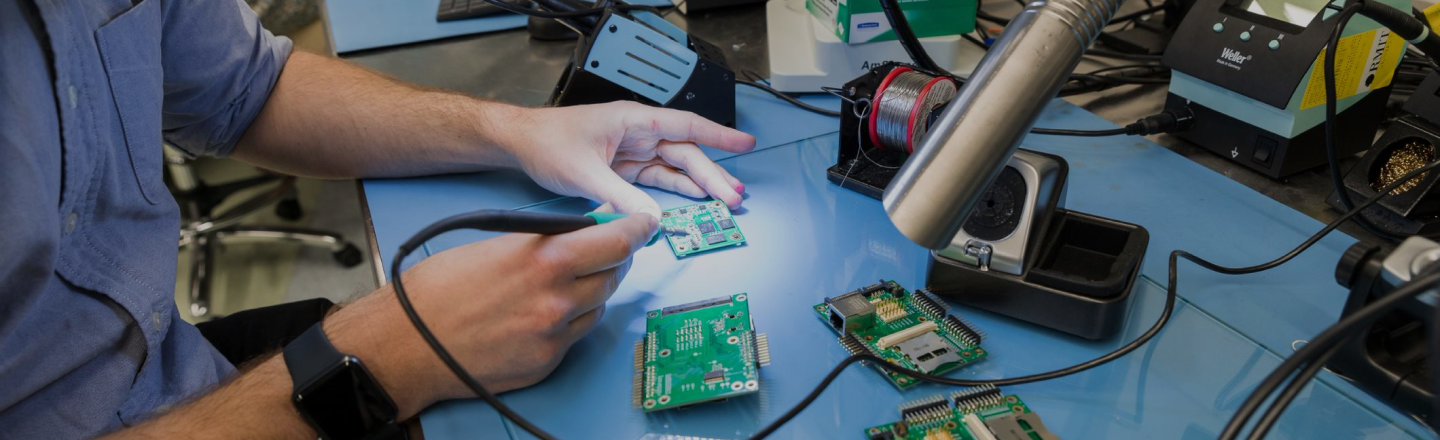
  • Design, prototype and test robotic systems from day one, using RMIT’s robotics labs, 3D printers and advanced engineering equipment
  • Graduate with a strong portfolio through industry projects and internships, specialising through minors in emerging automation and intelligent technologies

From autonomous vehicles and industrial robots to smart factories and connected devices, robotics and mechatronics are transforming the way people live and work. As industries increasingly rely on intelligent and automated systems, there is growing demand for engineers who can bring different technologies together to solve complex challenges.

In this program, students learn how software, electronics and mechanical systems work together to create innovative solutions. Through practical projects and laboratory experiences, they develop robotic and mechatronic systems while applying engineering principles to real-world problems.

Industry-partnered projects, including a two-semester Capstone Project, provide students with the opportunities to develop the teamwork, project management and problem-solving skills needed in multidisciplinary engineering environments while gaining exposure to emerging technologies shaping the future of manufacturing and automation.

Graduates leave with an Honours degree and the capabilities needed to contribute to industries ranging from robotics and advanced manufacturing to aerospace, healthcare and smart technologies.

This program has full accreditation from Engineers Australia (EA) at the level of Professional Engineer.

As a signatory to the Washington Accord, graduates of EA accredited programs are internationally recognised. For more information visit the EA website.

Program structure

The structure displayed shows the advised program structure and progression. 

Semester 7

Semester 8

Semester 9

  • University elective**
  • 01 course from your combination
  • Program option*

*Program option: Students choose from elective courses offered specifically for this program

*University elective: Students can choose from elective courses offered across the university in any program.

Semester 10

Semester 11

Semester 12

Choose your combination

  • Combination 1: Four (4) courses from one of the Program Minor lists
  • Combination 2: Four (4) courses from any of the Program Minor lists


Program minors

Students can choose four courses within one discipline to form a minor of their choice from the following list of minors.

Program guides for RMIT Saigon South.

Honours

Honours is a pathway to higher research degrees and is located at Level 8 of the Australian Qualifications Framework (AQF). An Honours degree provides a distinctive competitive advantage in the international job market.

The Bachelor of Engineering (Honours) at RMIT University Vietnam is a four-year program (full time). It incorporates a bachelor degree and additional study to develop your research, analytical and communication skills. This type of Honours study is embedded throughout the degree program.

Honours may also be available in other programs as one year of additional study which includes a thesis. This type of Honours program is designed for high-achieving students with the potential to undertake independent research. Under the general guidance of a supervisor, you will plan, develop and report on a research project aimed at producing practical and theoretical outcomes that build on existing knowledge.

Learning, teaching and assessment

  • The program is delivered through lectures, workshops, projects, group work and industry placements in various delivery modes (face-to-face, blended, and fully online)
  • Assessments will vary with each course but may include examinations, assignments, reflective journals, in-class tests, laboratory reports and group projects

The following program learning outcomes are based on Engineers Australia's 'Stage 1' competency standards.

Knowledge and Skill Base

  • Comprehensive, theory based understanding of the underpinning natural and physical sciences and the engineering fundamentals applicable to the engineering discipline
  • Conceptual understanding of mathematics, numerical analysis, statistics and computer & information sciences which underpin the engineering discipline
  • In-depth understanding of specialist bodies of knowledge within the engineering discipline
  • Discernment of knowledge development and research directions within the engineering discipline
  • Knowledge of contextual factors impacting the engineering discipline
  • Understanding of the scope, principles, norms, accountabilities and bounds of contemporary engineering practice in the specific discipline

Engineering Application Ability

  • Application of established engineering methods to complex engineering problem solving
  • Fluent application of engineering techniques, tools and resources
  • Application of systematic engineering synthesis and design processes
  • Application of systematic approaches to the conduct and management of engineering projects

Professional and Personal Attributes

  • Ethical conduct and professional accountability
  • Effective oral and written communication in professional and lay domains
  • Creative, innovative and pro-active demeanour
  • Professional use and management of information
  • Orderly management of self, and professional conduct
  • Effective team membership and team leadership

RMIT provides world-class blended learning with both face-to-face and online experiences in a global network, a supportive community, and real-world skills.

Career

Newcomers to the field typically begin their careers as engineers, competing for mid-level positions in industrial robotics or automation design, before transitioning into senior roles.

Entry-level careers

  • Robotic engineer
  • Mechatronic engineer
  • Automation engineer
  • Industrial engineer
  • Manufacturing engineer
  • Process engineer
  • Mechanical or electronic engineer
  • Product or application development engineer
  • Technology consultant

Mid-level and senior-level careers

  • Principal engineer or technical leader
  • Advanced or specialist engineer
  • Engineering manager or supervisor
  • Director of engineering
  • Director of technology
  • Chief executive officer
  • Chief technology officer

Further studies

When you successfully complete this program, you may be eligible for direct entry into an RMIT Master’s degree by Research or Doctoral (PhD) program. 

Fees

Payments can be made each semester, on a course-by-course basis.

Fee program

Annual tuition fee 

(based on full time study load - 8 courses)

Whole program fee

(32 courses - 384 credits)


15,104 USD (indicative USD fee) ~ 394,656,000 VND 60,414 USD (indicative USD fee) ~ 1,578,624,000 VND

Notes

    1. RMIT Vietnam has 3 semesters per year, in each semester you enrol into a maximum of 3 courses. The duration of programs is flexible and can be adapted on an individual basis upon enrolment. 
    2. Program fees are priced and invoiced in Vietnamese Dong (VND) by semester. Payments are made each semester, on a course-by-course basis.
    3. Payments made in foreign currencies will be converted to Vietnamese Dong (VND) based on the applicable exchange rate on the transaction date. Any currency conversion fees and related bank charges will be borne by the student.
    4. Online payment via myRMIT is the preferred payment method, as it offers secure transactions, automatic confirmation, and faster processing.
    5. Fees are indicative only and subject to change based on individual enrolment. These fees apply only to 2027. For further details and terms and conditions, refer to the 2027 Student Fees and Charges Guide (available in 2027).

    Scholarships

    Check your eligibility for a scholarship

    We have awarded more than 665 billion VND worth of scholarships to over 2,050 young people from Vietnam and around the world. These people exemplify characteristics that RMIT prides itself on.

    Entry requirements and admissions

    Academic requirements

    • Completion of Vietnamese Upper Secondary School (High School) Graduation Diploma; and
    • Achieve a minimum GPA of 7.0/10.0 for Grade 12

    For other international qualifications please review entry requirements by country​.

    Academic pathway

      A minimum score of 6.0/10.0 (or equivalent) in Grade 12 mathematics subjects.

      Successfully complete RMIT Vietnam English Advanced, or complete one of the following English proficiency tests:

      • IELTS (Academic)/ IELTS (Academic) One Skill Retake: minimum overall band of 6.5 (with no individual band below 6.0)
      • TOEFL iBT: score of 79 (with a minimum score of 13 in Reading, 12 in Listening, 18 in Speaking and 21 in Writing)
        • Please note that any tests taken on or after 21 January 2026 must be the TOEFL iBT Australia test. TOEFL iBT results reported on a 1–6 score scale are not accepted.
      • Pearson Test of English (Academic): score of 58 (with no communication band below 50)
      • Cambridge: minimum score of 176 (no less than 169 in any component), for
        • C1 Advanced, formerly known as Cambridge English: Advanced (CAE); or
        • C2 Proficiency, formerly known as Cambridge English: Proficiency (CPE)

      For other recognised English results, please review English equivalency requirements.

      Notes
      • RMIT does not accept scores from at-home or online testing.
      • Previous study and proficiency tests are recognised for two years from the completion date or test date to the program commencement date unless stated otherwise.
      • When more than one form of English language proficiency test is presented, RMIT will only consider the most relevant achievement.

      Please contact the RMIT Vietnam Student Recruitment team for more information.

      English Pathways

      Don't meet the English language test scores? Successfully complete English for University for entry into this program. 

      Credit transfer

      Come from a partner institution? RMIT has pathway arrangements with many partner institutions around the world. If your institution has a pathway arrangement with RMIT, you may be able to receive credit and reduce the time it will take to complete your preferred RMIT program. 

      Find out if your institution has a pathway arrangement with RMIT.

      If you have qualifications from an institution that is not an RMIT partner, credit into your RMIT program will be assessed on a case-by-case basis.

      Please contact the RMIT Vietnam Student Recruitment team for more information.

      This course is not available for international students intending to study on a student visa.

      Information for international students

      Sorry, this course is not available for international students intending to study on a student visa. If you hold a different visa type, you may be eligible. Please contact Study@RMIT for more information.


      Information for local students

      If you are a local student please select 'switch to local' below to view the full course information.