




How to make the best impression on your future employer

How to make the best impression on your future employer

First impressions form faster than we think; employers begin to decide how they see you, what they expect from you, and whether they want to keep the conversation going. That’s why learning how to show up with clarity, confidence, and intention can make all the difference.

1. Research speaks for you

When you understand a company, a role, or the person you’re speaking to, you’re able to ask better questions, make more relevant comments, and connect with your experiences more meaningfully. Without saying it directly, you’re showing that you’re genuinely interested, not just casually applying. 

Research also helps you feel more confident. Instead of thinking about what to say next, you can focus on the conversation itself, because you already have context to build on. It tells employers: you care, you’re prepared, and you take this opportunity seriously.

Check out the list of companies and jobs at Career Festival 2026 here: 

2. The art of effective communication

a. Watch out non-verbal cues

Dressing well is a form of non-verbal communication, as it signals professionalism, respect, and an understanding of the company’s context to potential employers, before you even speak. A neat and appropriate appearance shows that you understand expectations and can present yourself accordingly. 

Additionally, body language and eye contact are. Avoid staring for too long, as it can create awkwardness. Instead, maintain natural eye contact (2-3s) to show confidence and engagement. By demonstrating interest through your demeanor, you are more likely to leave a strong and memorable impression as a candidate. 

b. Active listening

When you listen actively, you demonstrate respect and professionalism, showing that you value what the interviewer is saying rather than just waiting for your turn to speak. It also helps you understand questions more clearly, so your answers are more relevant and thoughtful, and allows you to pick up on cues, such as what the employer values or is concerned about, so you can respond in a way that aligns better with their expectations.  

But how do you know if you’ve truly mastered listening?

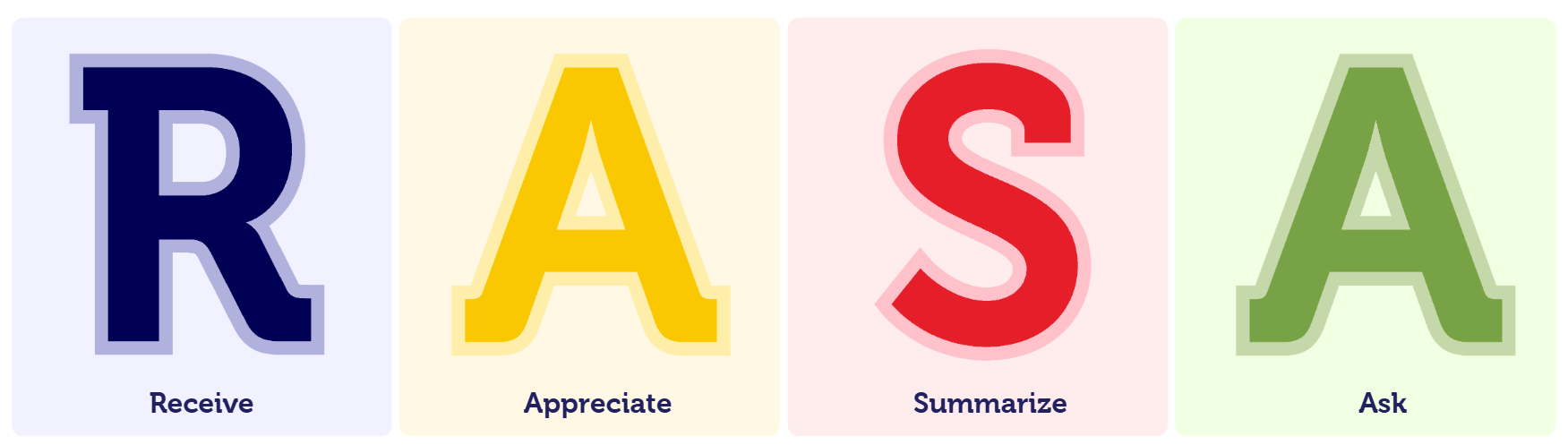
The RASA model is a framework that helps you stay fully present in conversations and listen with intention. It consists of four key actions:

  • Receive: Give your full attention to the speaker. Put away distractions, maintain eye contact, and focus on what they are saying instead of preparing your response. 
  • Appreciate: Show that you’re engaged through small verbal or non-verbal cues, such as nodding, smiling, or saying “I see” or “That makes sense.” These signals encourage the speaker to continue. 
  • Summarise: Reflect back what you’ve heard in your own words. This helps confirm your understanding and shows that you are genuinely listening. 
    Example: “So you’re saying that teamwork was the most challenging part of that project?” 
  • Ask: Follow up with thoughtful questions to deepen the conversation and clarify any points. This demonstrates curiosity and keeps the discussion meaningful.

c. Asking thoughtful questions

Avoid asking vague questions or ones that can be easily found online, such as “What does your company do?. Use clear, direct language and avoid overcomplicating your wording. To guide the conversation effectively, you can use different types of questions: 

  • Open questions encourage people to share ideas and elaborate. 
    • Example: “What do you think is the biggest challenge in your industry?”  
  • Clarifying questions help you check understanding and avoid confusion. 
    • Example: “Do you mean the full report or just the outline?”  
  • Probing questions go deeper to uncover reasoning or details. 
    • Example: “What led you to that idea?”  
  • Reflective questions explore perspectives or feelings. 
    • Example: “How would you feel about trying another method?”  

Using a mix of these question types helps move the conversation from basic understanding to deeper insight and connection. If you’re unsure what to ask a potential employer, whether at a career fair or when reaching out to professionals on LinkedIn, you can use simple, practical prompts like these: 

“I really enjoyed your talk about [topic]. What inspired you to get into that field?”  

“I noticed your company is working on [project/initiative]. Could you tell me more about it?” 

“What skills do you think are most valuable for someone starting in your industry?”  

“What do you enjoy most about your role?”  

“How did you get started in your career?” 

d. Starting the conversation (even when you’re nervous)

Approaching someone for the first time can feel like the hardest step, and it’s completely normal to feel nervous, even for experienced professionals. Instead of trying to eliminate that feeling, focus on easing into the moment. 

Start by observing the situation and waiting for a natural pause before joining a conversation. When you step in, keep it simple: smile, introduce yourself, and briefly share why you wanted to connect.  

If the nerves feel overwhelming, take a slow breath before approaching, or start small by speaking with other students or staff first. Building a bit of momentum can make approaching employers feel less intimidating. It also helps to remind yourself that they are there for a reason, to meet curious students like you.

Once the conversation begins, focus less on yourself and more on the other person. Being clear about who you are will naturally help you speak with confidence. Prepare a short introduction about yourself, what you do, what makes you different, and what you’re aiming for, but practice it until it feels natural. You can also refer to something specific about the person, their role, or their organization to show your interest.

3. Connect after events

After attending a careers event or workshop, whether you submitted your CV or not, take a moment to connect with speakers, employers, or even fellow students on LinkedIn.

This small step shows professionalism and initiative, while also reinforcing your interest. More importantly, it keeps the door open for future opportunities and allows your network to grow naturally over time. 

In the end, making a strong impression is not about being perfect, but about how you prepare, present yourself, and connect with others. When done consistently, these small actions can make a lasting difference. Even after you leave the event, what you do next still matters. 

28 April 2026

More news