From ideas to award-winning solutions: Two RMIT teams take on workplace accessibility

From ideas to award-winning solutions: Two RMIT teams take on workplace accessibility

“During the competition, I realised that our solutions should come from empathy. If we don't understand our users, how can we create solutions that meet their needs?” shared Hiep Duong from team HLN, reflecting on one of his biggest lessons from the ADC Hackathon 2026.

Organised by RMIT Vietnam under the theme AI & Employability, the ADC Hackathon 2026 aimed to encourage students to tackle real-world accessibility challenges and drive meaningful change by applying AI-powered solutions to foster inclusive workplaces. The competition attracted over 570 students from 190 teams across 39 universities nationwide, with 65 teams selected for the three-day hackathon. 

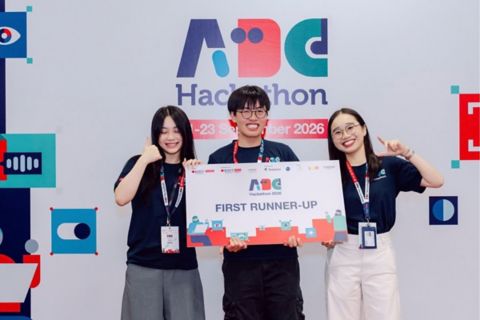
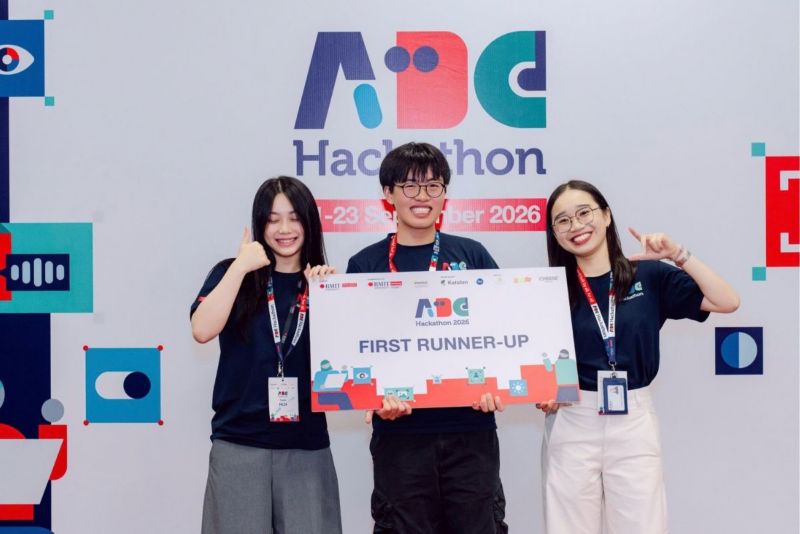
Among them, two RMIT Vietnam teams earned recognition. HLN secured first runner-up with Foti, a personalised website designed to help neurodivergent employees, particularly those with ADHD, to manage their daily workloads and maintain productivity. Meanwhile, Aura Farmers took second runner-up with Between, a system combining wearable devices and software to support two-way communication between deaf candidates and employers during job interviews. 

Beyond developing technological solutions, the competition encouraged both teams to challenge their initial assumptions about accessibility and rethink how technology could better support people with disabilities in their everyday lives. 

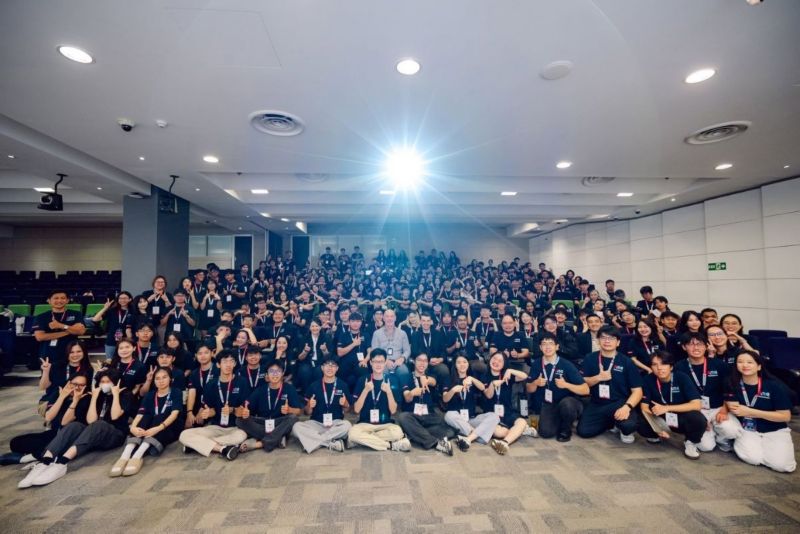
adc-hackathon-competition-student-news-rmitThe ADC Hackathon brought together 195 students from 28 universities nationwide for a three-day competition.

From challenges to solutions

When they first approached the competition, both teams had limited understanding of the barriers people with disabilities faced in the workplace. 

For HLN, their research revealed that neurodivergent employees with ADHD and autism may experience difficulties maintaining focus and managing their productivity at work. These challenges are sometimes mistaken for laziness or a lack of ability, which affects how others perceive their performance at work. 

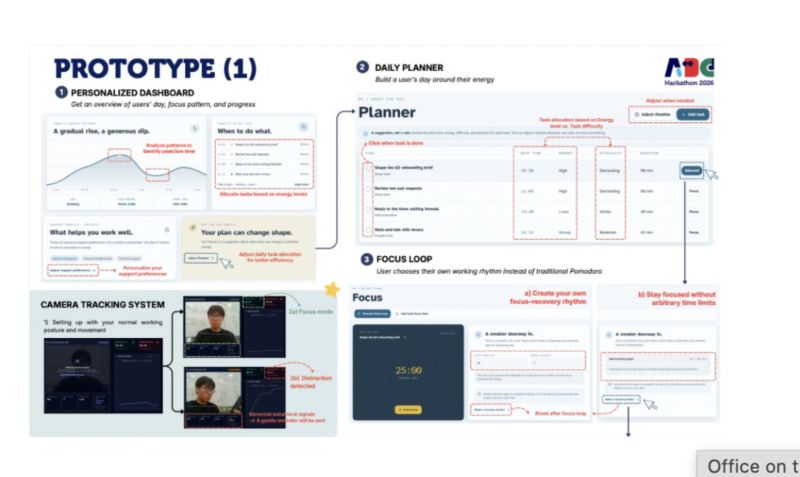
To address this, the team developed Foti, a website that creates personalised schedules based on users' routines and productivity patterns. With gentle reminders and an insights dashboard, the platform helps employees manage their tasks in ways that better suit their working habits. 

adc-hackathon-testing-focus-for-adhd-rmit-student-newsTeam HLN’s Foti prototype features a personalised dashboard and focus tools designed to support neurodivergent employees in managing their workloads.

Meanwhile, Aura Farmers focused on the communication barriers deaf candidates face during job interviews, particularly the limited availability and high cost of professional sign-language interpreters in Vietnam. 

“Honestly, we only understood it from a distance,” recalled Khoa Nguyen, reflecting on the team's initial unfamiliarity with the deaf community. 

As the team learnt more about how communication barriers prevented deaf candidates from expressing themselves and demonstrating their abilities during interviews, they developed Between, a system combining a mobile application, smartwatch and wearable sensors to facilitate two-way communication between deaf candidates and interviewers.

When assumptions meet real experiences

Beyond developing their projects, both teams began to see workplace accessibility differently, in the way they experienced it throughout the competition. 

Before joining the hackathon, Duong Hiep from HLN had associated innovation with coming up with ambitious ideas that could change the world. Working on Foti challenged that belief. He came to realise that even a simple solution could make a difference if it addressed a real problem in someone's daily life. 

For him, empathy became just as important as creativity. Through their research, HLN also learnt that people with ADHD or autism sometimes struggle to find jobs because employers underestimate their abilities. 

“ADHD or autism is not a sign of being incapable of doing the job”, Duong emphasised. 

With Foti, the team hoped to help neurodivergent employees work more comfortably and feel confident being themselves. They also wanted employers to recognise that having ADHD or autism does not determine someone's professional ability, and that a supportive workplace can help people make the most of their strengths. 

hln-team-celebrates-first-runner-up-at-the-adc-hackathon-with-their-solution-fotiTeam HLN celebrates securing first runner-up at the ADC Hackathon 2026.

For Aura Farmers, one of the most memorable moments came during a fireside chat with deaf participants. Hearing about their everyday experiences, from difficulties communicating with colleagues to feeling isolated when misunderstood, gave the team a clearer picture of challenges they had previously only understood from a distance. 

The conversation also challenged their assumptions about technology. They discovered that Vietnamese Sign Language differs from American Sign Language, meaning existing Western datasets could not simply be applied to local users. It made them realise how easily a solution could miss its purpose if the people using it were not involved in its development. 

“Communication barriers should not be mistaken for a lack of ability,” shared Vu Le Khanh Linh. 

The team recognised that deaf candidates might have exactly the skills an employer is looking for, yet struggle to demonstrate them in a traditional interview. Through Between, they wanted to encourage employers to reconsider recruitment practices that might unintentionally exclude capable candidates. As Linh explained, the goal was never to give anyone an advantage, but to give everyone a fair opportunity to show what they could do. 

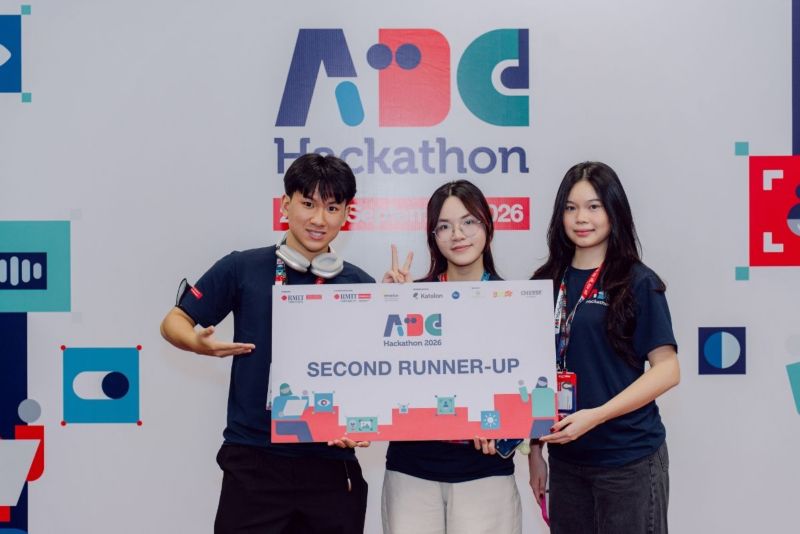
rmit-aura-farmers-team-join-adc-hackathonAura Farmer celebrates securing second runner-up at the ADC Hackathon 2026.

Although Foti and Between address different challenges, both teams left the competition with a similar lesson: meaningful innovation begins with empathy. By listening to people whose experiences differed from their own, the students learnt to see accessibility as more than a technical problem to solve. It was also about understanding people's needs, questioning assumptions and creating opportunities for them to participate on equal terms. 

More than a competition to develop AI-powered solutions, the ADC Hackathon 2026 challenged students to turn their ideas from concept into practical solutions, while building future-ready skills that they can apply throughout their studies and careers. Through hands-on problem-solving, user research and collaboration, participants learnt to approach real-world challenges from different perspectives, apply AI creatively and refine their ideas based on real feedback. The knowledge, skills and experiences gained over the three-day event will continue to shape how participants approach future challenges, which will resonate far beyond the competition. 

Story by: Nguyen Lieu Thanh, a Professional Communication student at RMIT University Vietnam. This article does not reflect the views of RMIT Vietnam as an institution.

11 November 2026

Share

More news