

Random group? No problem! A survival guide for effective teamwork

Random group? No problem! A survival guide for effective teamwork

Every semester seems to start the same way. You're assigned to a group with people you've never met before. A few weeks later, someone stops replying, another teammate takes over everything, deadlines become messy, and the project turns out to be far more stressful than it needs to be. If this sounds familiar, you're definitely not alone.

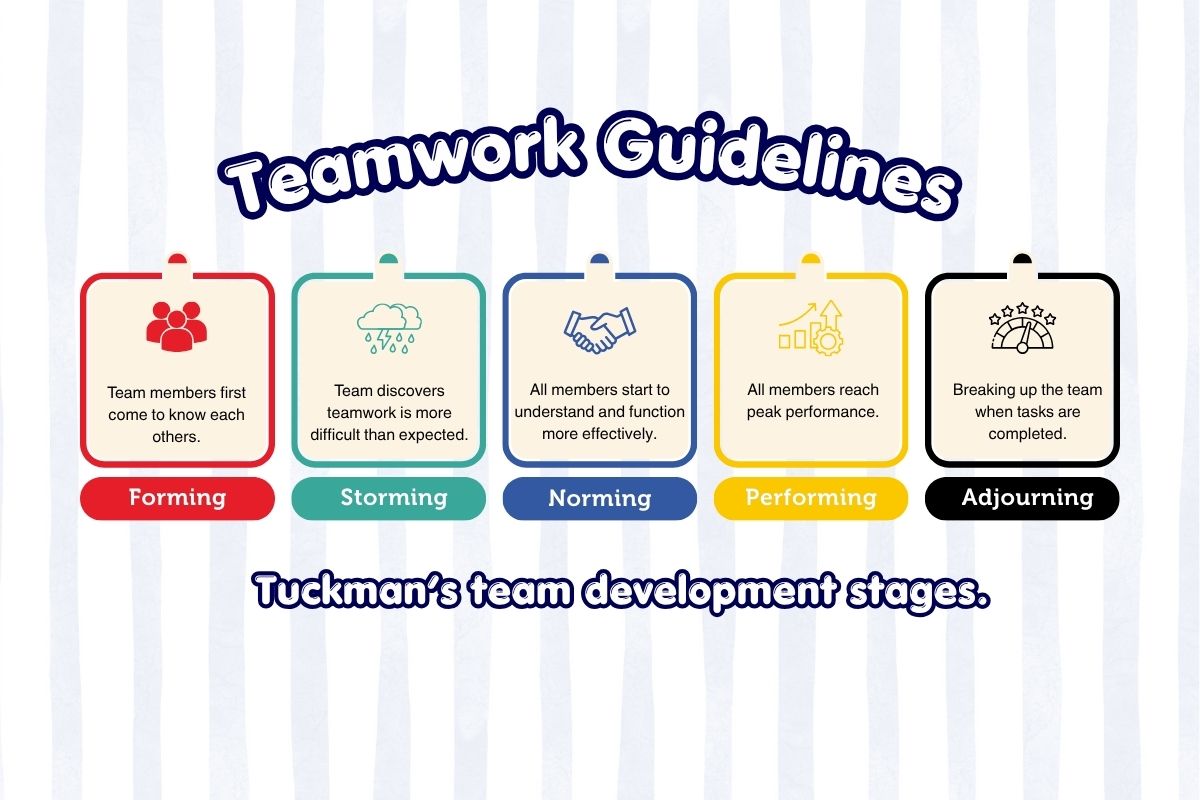
Group work is not just about completing an assignment. It is also about learning how to collaborate with people who think, communicate, and solve problems differently from you. Because of this, understanding the stages of team development can help you recognise what is happening within your team, allowing you to respond more effectively instead of getting stuck in conflict. One of the simplest frameworks is the Tuckman Model, which explains the five stages that almost every team experiences. 

rmit-teamwork-guide-tuckman-model.The five stages of team development in the Tuckman Model, from Forming to Adjourning.

Why group work isn't always easy

Every group brings together people with different personalities, expectations, and working styles. Because of these differences, misunderstandings are completely natural. 

Instead of asking, "Why is my group like this?" try asking, "What does my team need right now?" 

Sometimes the answer is clearer expectations. Sometimes it is better communication. In other situations, the team simply needs more time to understand one another. 

The Forming stage

The problem

You have just been assigned to a group. Everyone exchanges polite greetings, but no one knows what to do next. The group chat remains silent, meetings keep getting postponed, and an entire week passes before any real progress is made.

Why it happens

This is the Forming stage, during which teammates are still getting to know one another. Because trust has not been established yet, people are often hesitant to speak up or take initiative. Therefore, everyone waits for someone else to make the first move. 

What to do

Help your team build momentum from the very beginning. 

  • Organise a short kick off meeting within the first few days. 
  • Agree on communication channels and expected response times. 
  • Clarify deadlines, project goals, and individual responsibilities early. 
  • Learn about each person's strengths before assigning tasks. 

Quick tip: A 15 minute planning session at the beginning can save hours of confusion later. 

The Storming stage

The problem

One teammate disappears from the group chat. Another submits their work at the last minute. Someone disagrees with every idea, while another contributes very little. 

Why it happens

Your team has entered the Storming stage, which is when different personalities, working styles, and expectations begin to clash. Although it may seem like the team is falling apart, conflict is actually a normal part of the collaboration process. Therefore, disagreements should be viewed as opportunities to improve rather than signs of failure. 

What to do

Address issues before they become bigger problems. 

  • Raise concerns early instead of waiting until submission week. 
  • Focus on behaviours and possible solutions rather than blaming individuals. 
  • Listen to different perspectives before making decisions. 
  • Revisit task allocation if the workload becomes unbalanced. 
  • Schedule a check in meeting if the group loses momentum. 

Quick tip: Conflict is not the biggest problem. Poor communication is. 

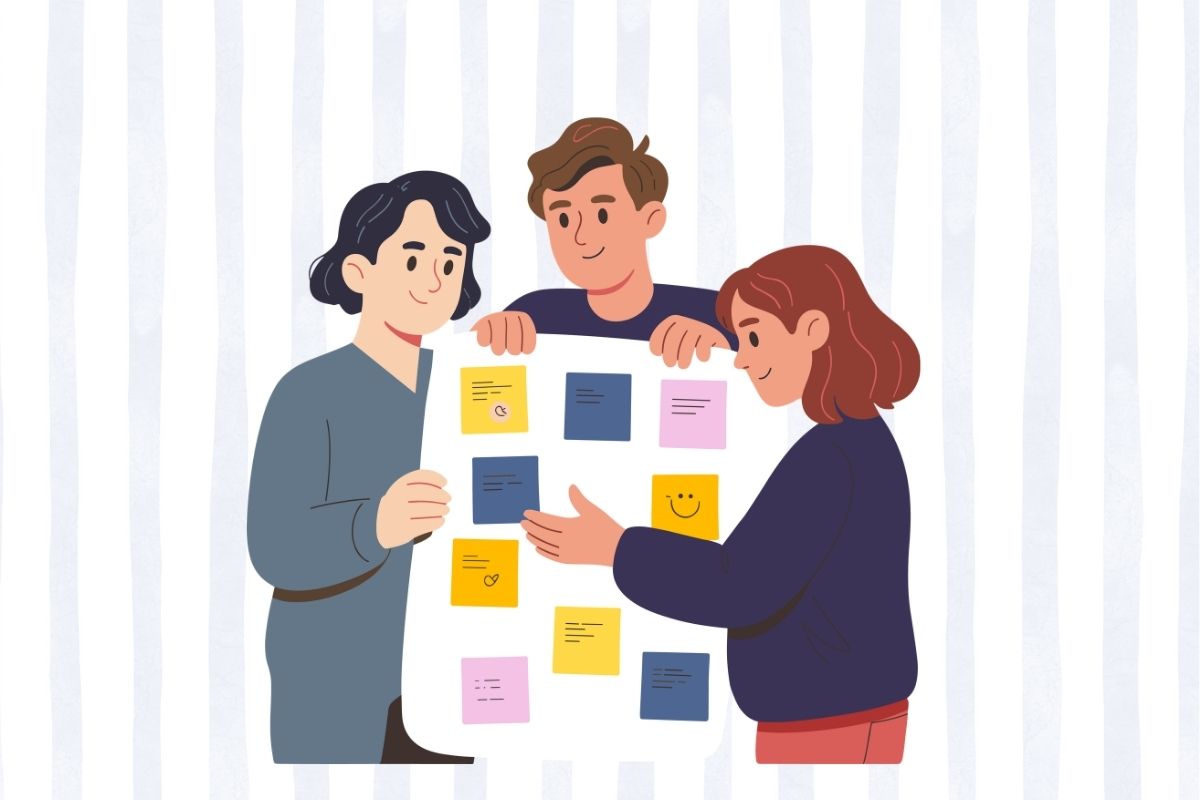
rmit-team-collaboration-stormingTeam members discuss different ideas and expectations during the Storming stage, where conflicts and differing perspectives begin to emerge.

The Norming stage

The problem

After working through the initial challenges, the team begins to function more smoothly. Discussions become productive, everyone understands their responsibilities, and the group makes steady progress. 

Why it happens

This is the Norming stage, during which teammates develop trust, establish shared expectations, and discover a working rhythm that suits everyone. Because the group has aligned around a common goal, personal differences become less significant. 

What to do

Maintain positive momentum. 

  • Check in regularly to keep everyone on track. 
  • Offer support when teammates need assistance. 
  • Give constructive feedback throughout the project. 
  • Recognise individual contributions and celebrate small achievements. 
  • Stay flexible if priorities change. 

Quick tip: Strong teams do more than divide the workload. They support one another throughout the entire project. 

The Performing stage

The problem

Meetings become shorter and more efficient. Decisions are made quickly, and everyone takes ownership of their responsibilities. As a result, the team can focus on producing high quality work instead of managing internal conflict. 

Why it happens

The team has reached the Performing stage, during which trust, communication, and accountability have become part of the group's everyday workflow. Because these foundations are already in place, the team can devote its energy to achieving the best possible outcome. 

What to do

Maintain your team's performance. 

  • Keep everyone informed about overall progress. 
  • Review one another's work before submission. 
  • Seek feedback from lecturers or classmates. 
  • Stay adaptable when unexpected changes occur. 

Quick tip: Great teamwork happens when everyone helps one another succeed. 

rmit-effective-team-leadershipStrong teams grow when teammates support one another and work towards a shared goal.

The Adjourning stage

The problem

The assignment has been submitted, the group chat suddenly becomes quiet, and everyone moves on without reflecting on the experience. 

Why it happens

This is the Adjourning stage, which marks the conclusion of the team's journey. Although the project has ended, this stage provides the best opportunity to reflect on what worked well and what could be improved for future collaborations. 

What to do

Take a few minutes to conclude the project properly. 

  • Reflect on what went well and what could be improved. 
  • Share constructive feedback with one another. 
  • Save useful templates, notes, and resources for future projects. 
  • Thank your teammates and acknowledge everyone's contributions. 

Quick tip: Every group project is more than an assignment. It is also an opportunity to develop collaboration skills that will remain valuable throughout your career. 

Great teamwork starts with great leadership

By now, you have probably noticed a common pattern. Every stage of group work is shaped by the way people interact with one another. 

When people hear the word leadership, they often think about the person who assigns tasks, organizes meetings, and reminds everyone about deadlines. However, leadership is not a title. It is a behaviour. 

Sometimes the strongest leader is not the person who speaks the loudest. Instead, it is the teammate who notices when someone has become quiet and invites them to contribute. It is the person who offers help when a teammate feels overwhelmed, or the one who resolves misunderstandings before they grow into larger conflicts. 

These small actions build trust, encourage open communication, and create an environment in which everyone feels respected and valued. Therefore, effective leadership is not about being in charge. It is about helping the entire team succeed. 

Story: Nguyen Lieu Thanh, Professional Communication student. This article does not reflect the views of RMIT Vietnam as an institution.

03 August 2026

Share

More news