
Think you can pitch? Perfect Pitch 2026 puts classroom learning to the test

Think you can pitch? Perfect Pitch 2026 puts classroom learning to the test

Delivering a presentation in class is one thing; pitching an idea that can stand up to industry scrutiny is another. At Perfect Pitch 2026, RMIT students discovered that a great pitch is built not just through confident delivery, but through strategic thinking, collaboration and the ability to defend every decision behind an idea.

Organised by the School of Communication and Design at RMIT Vietnam, Hanoi campus, Perfect Pitch brings together students from across disciplines to tackle real-world communication challenges through creative brand pitching. This year's competition introduced a collaborative team format, encouraging students to refine ideas together before presenting them to a panel of industry professionals.

More than a platform to showcase creativity, the competition was designed to bridge classroom learning with professional practice, giving students the opportunity to experience how ideas are challenged, refined and defended in an industry setting.

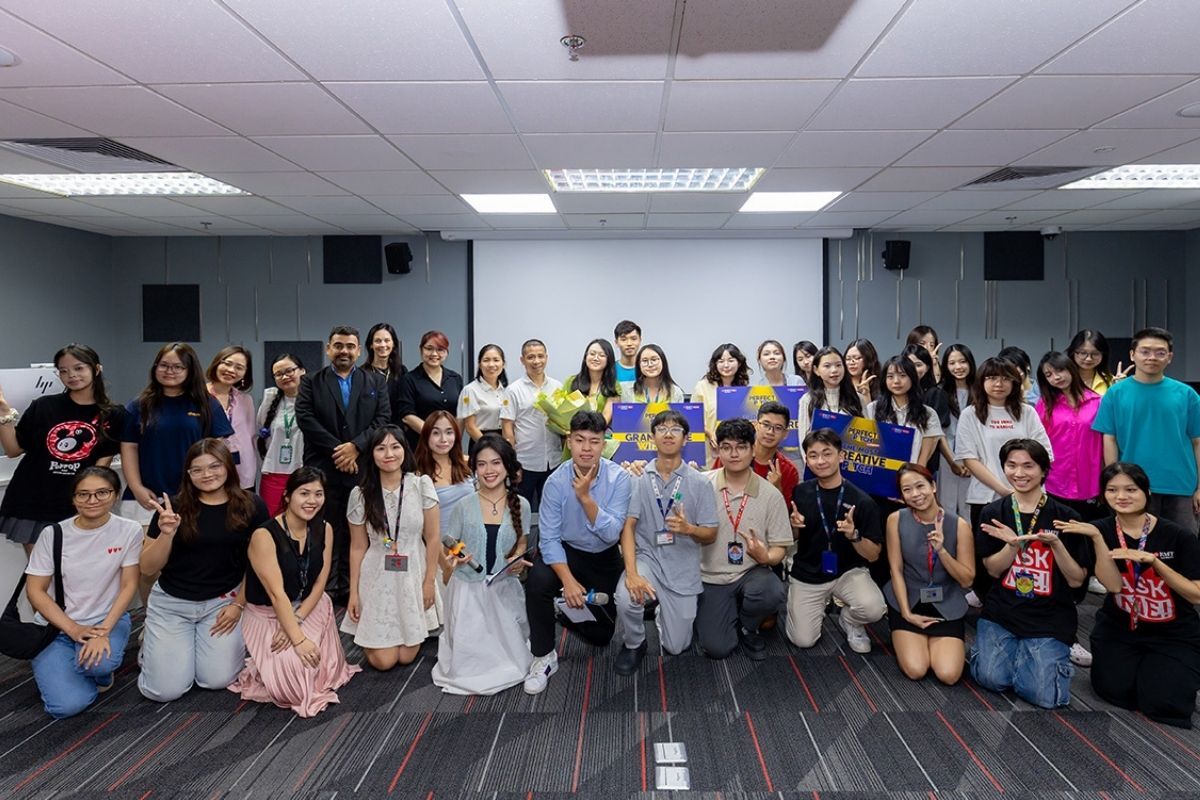
thumbnail-perfect-pitchStudents and industry judges gathered at the Perfect Pitch 2026 Grand Finale.

Beyond the classroom, into the industry

Students spend years learning research, communication strategy and presentation skills in class. Perfect Pitch asks them to apply those skills differently.

Instead of presenting an assignment for assessment, participants work through challenges that mirror professional practice: understanding a client's needs, developing solutions to real brand problems, refining ideas through feedback and defending every strategic decision before industry judges.

According to Dr. Ananya Mehta, Associate Program Manager of Professional Communication and organiser of Perfect Pitch 2026, that experience is exactly what the competition was designed to provide.

"In the classroom, students are fantastic. They have their rubrics and assessment criteria," he said. "But what supports them in their co-curricular learning is developing ideas, navigating different challenges and learning how to speak about those ideas creatively within a specific timeframe."

Throughout workshops, feedback sessions and the final pitch, students continuously refined their work instead of treating the presentation as the finish line. Each stage pushed them to question assumptions, strengthen their rationale and adapt their ideas based on professional perspectives.

"This event supports their education by giving them realistic industry experiences," Dr. Mehta explained. "Students integrate their academic learning into professional learning, and that's where they grow."

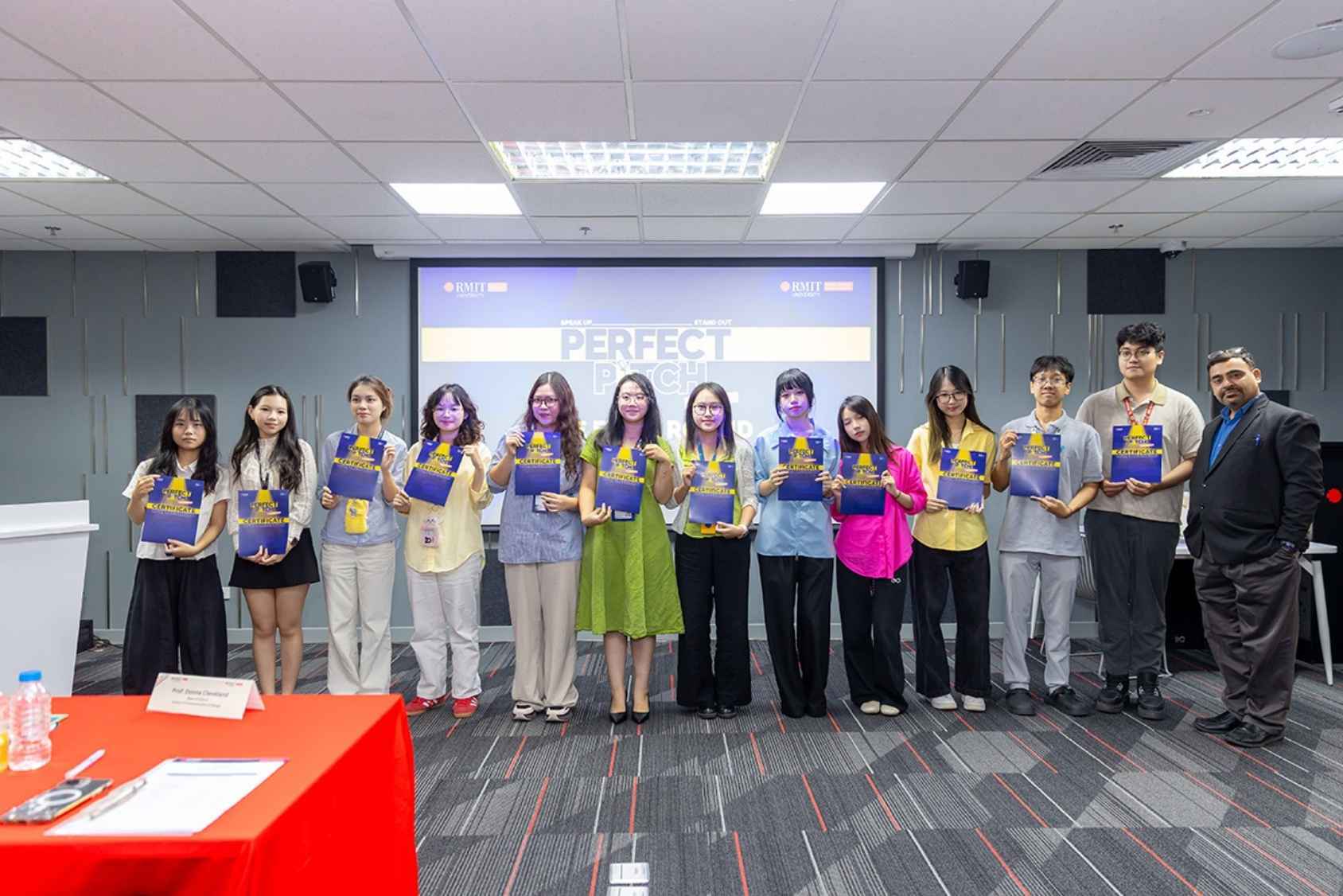
students-received-prizes-from-judging-panelsWinning teams receive awards from the judging panel at the Perfect Pitch 2026 Grand Finale.

Learning to think like a professional

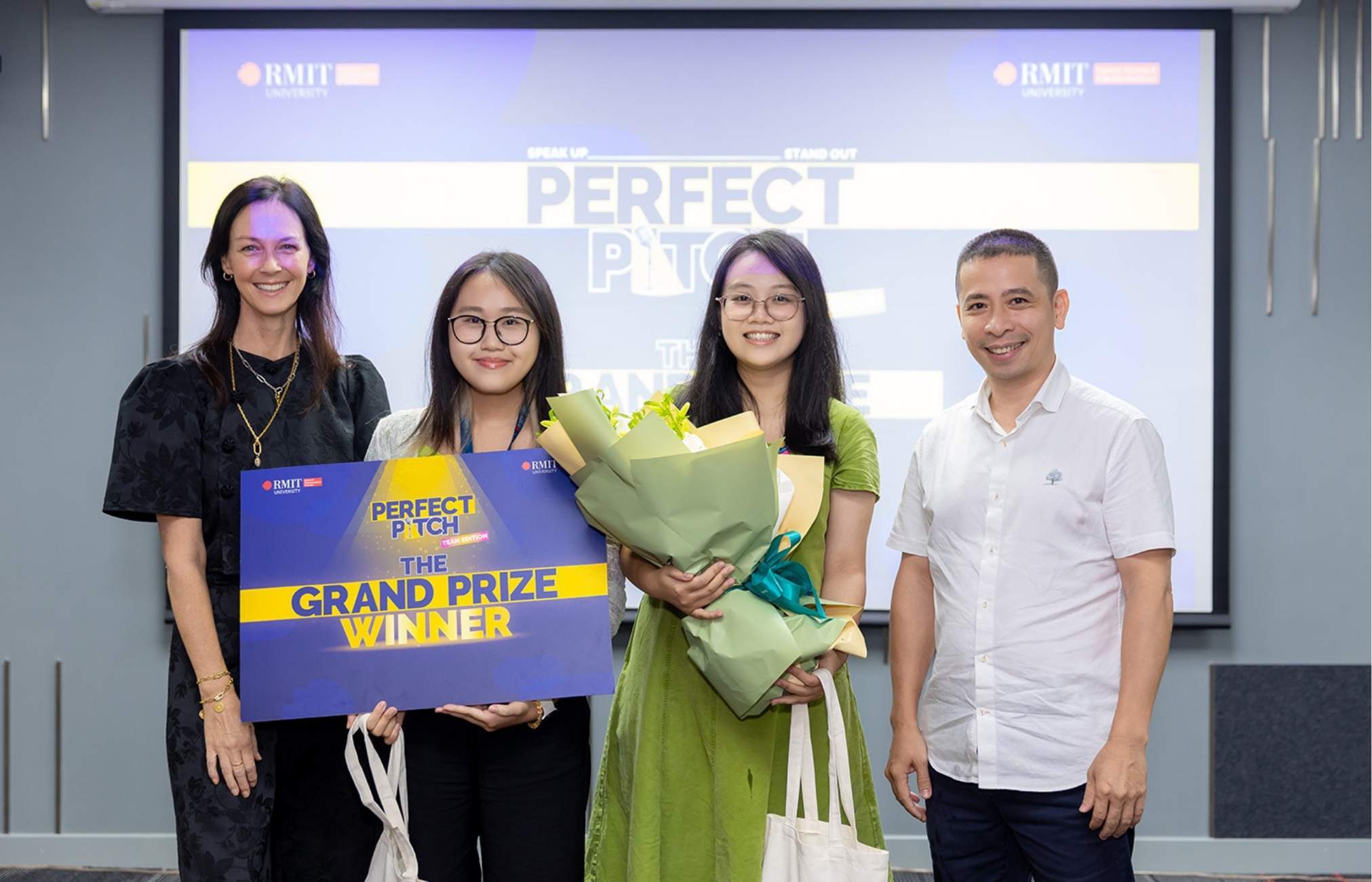
That shift became especially clear for Comrades, this year's Grand Prize-winning team of second-year Professional Communication students Minh Chau and Trang Anh.

For them, the competition changed what pitching meant. 

Rather than focusing on delivering a polished presentation, they learned to think the way industry professionals do - starting with the client's problem and building every creative decision around solving it.

"Actually, at first, our goal to join this competition was basically just to polish our CV or LinkedIn," Trang Anh shared. "But when we joined the training sessions and met the industry guests, we enjoyed the journey more. We learned a lot through making and fixing our pitch. We didn't aim to get the grand prize—we wanted to experience, enjoy and learn before we graduate." 

As they refined their campaign, the team's thinking gradually shifted. Instead of asking how to make their idea more impressive, they began asking whether it genuinely solved the brand's challenge.

That mindset became the biggest lesson they took away from the competition. 

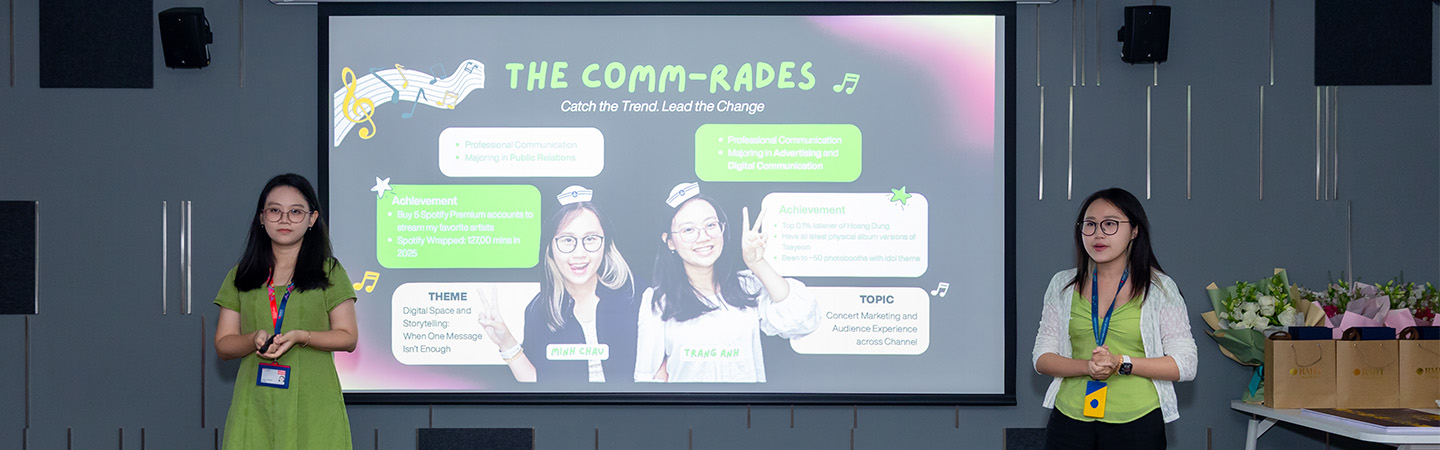
trang-anh-and-minh-chau-presented-at-final-nightTeam Comrades, Minh Chau and Trang Anh, present their campaign in the final round of Perfect Pitch 2026.

"A key thing for pitching is whether your creativity or your solutions solve the client's business problems," Minh Chau recalled after speaking with one of the industry judges. "That became the backbone for us to rethink our strategy. Instead of letting our creativity stand out by itself, we thought more about realistic solutions. I think that message will stay with me throughout my working journey."

The competition also exposed the team to a different kind of feedback than they normally receive in class.

Instead of telling students what to improve, the judges challenged their assumptions through questions, encouraging participants to explain the reasoning behind every decision.

"The judges didn't really give us feedback. They asked questions instead," Trang Anh reflected. "Later, my lecturer told me that's how the industry works. They ask questions to understand your thinking rather than giving straightforward advice. It made me realise that explaining and defending your ideas is part of the pitch." 

trang-anh-and-minh-chau-received-their-grand-pizeTrang Anh and Minh Chau receive the Grand Prize at Perfect Pitch 2026.

For Trang Anh and Minh Chau, the competition ultimately transformed pitching from a presentation skill into a way of thinking - one that values critical thinking, problem-solving and informed decision-making as much as creativity itself.

More than a competition

According to Dr. Mehta, Perfect Pitch was never intended to be just another student competition. It was designed to give students a chance to experience how ideas are developed, challenged and defended in a professional environment before they graduate.

"I'm sure they were not only looking at winning the competition," he said. "It was more about getting involved and getting evolved."

Open to students from Professional Communication, Business, Information Technology and Design, Perfect Pitch gives participants the opportunity to apply classroom knowledge to industry-like scenarios, receive professional perspectives and discover that the strongest ideas are not simply the most creative—they are the ones that solve meaningful problems.

In the end, the competition teaches something that classrooms alone cannot fully replicate: a great pitch begins long before anyone steps onto the stage. It begins with understanding the problem, challenging your own thinking and building ideas that can stand up in the professional world. 

Story: Le Thanh Van, Professional Communication student. This article does not reflect the views of RMIT Vietnam as an institution.

12 August 2026

Share

More news