
‘Chrysalis’: Exploring and understanding the attraction spectrum

‘Chrysalis’: Exploring and understanding the attraction spectrum

RMIT Queer & Alliance Club (RQAC)‘s ‘Chrysalis’ brought awareness to the asexual community, seeking to deepen understanding of attraction while challenging common misconceptions about asexuality and aromanticism.

What if attraction is not something everyone experiences in the same way, or at all? At RMIT Vietnam, where inclusion is one of the core values, a student-led ‘Chrysalis’ exhibition is opening conversations that challenge assumptions and make space for underrepresented perspectives. 

Inclusive space to self-explore for everyone

According to Tran Thuy Duong, Gen 2 President of RQAC, the event theme emerged from questions many young people face while trying to find their place in the world. “Through attraction and connection,” Duong shared, “RQAC wanted to create a space where students could reconnect with who they are in a more personal way.” 

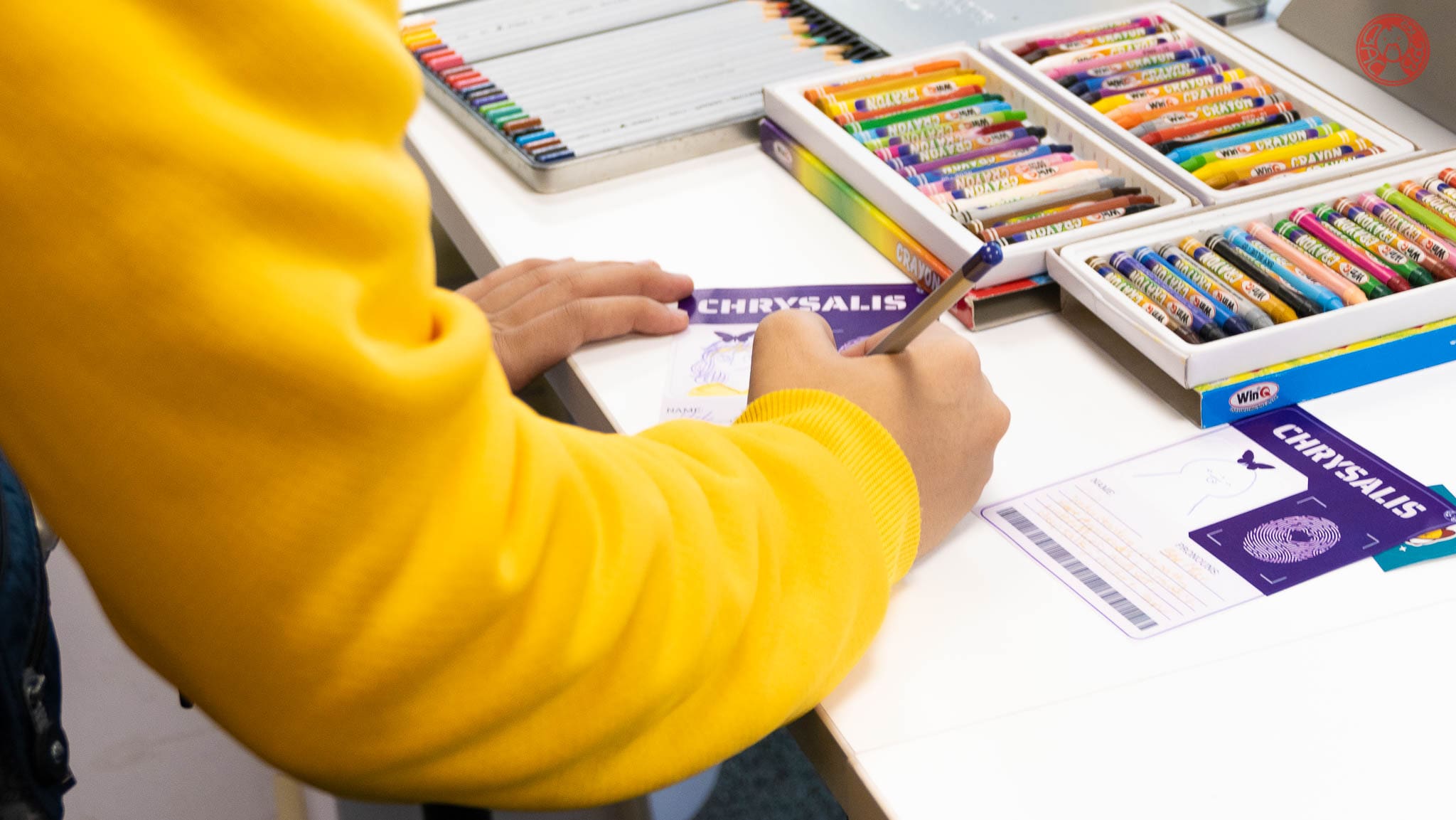
To bring this idea to life, RQAC introduced Chrysalis, an exhibition inspired by the metamorphosis of a butterfly. Just as no two butterflies emerge from their cocoons the same, Chrysalis highlighted the beauty of individuality and the diversity of human identity with a broad introduction to the six commonly recognised types of attraction. 

The event drew over 100 participants, with strong engagement across its activities The event drew over 100 participants, with strong engagement across its activities

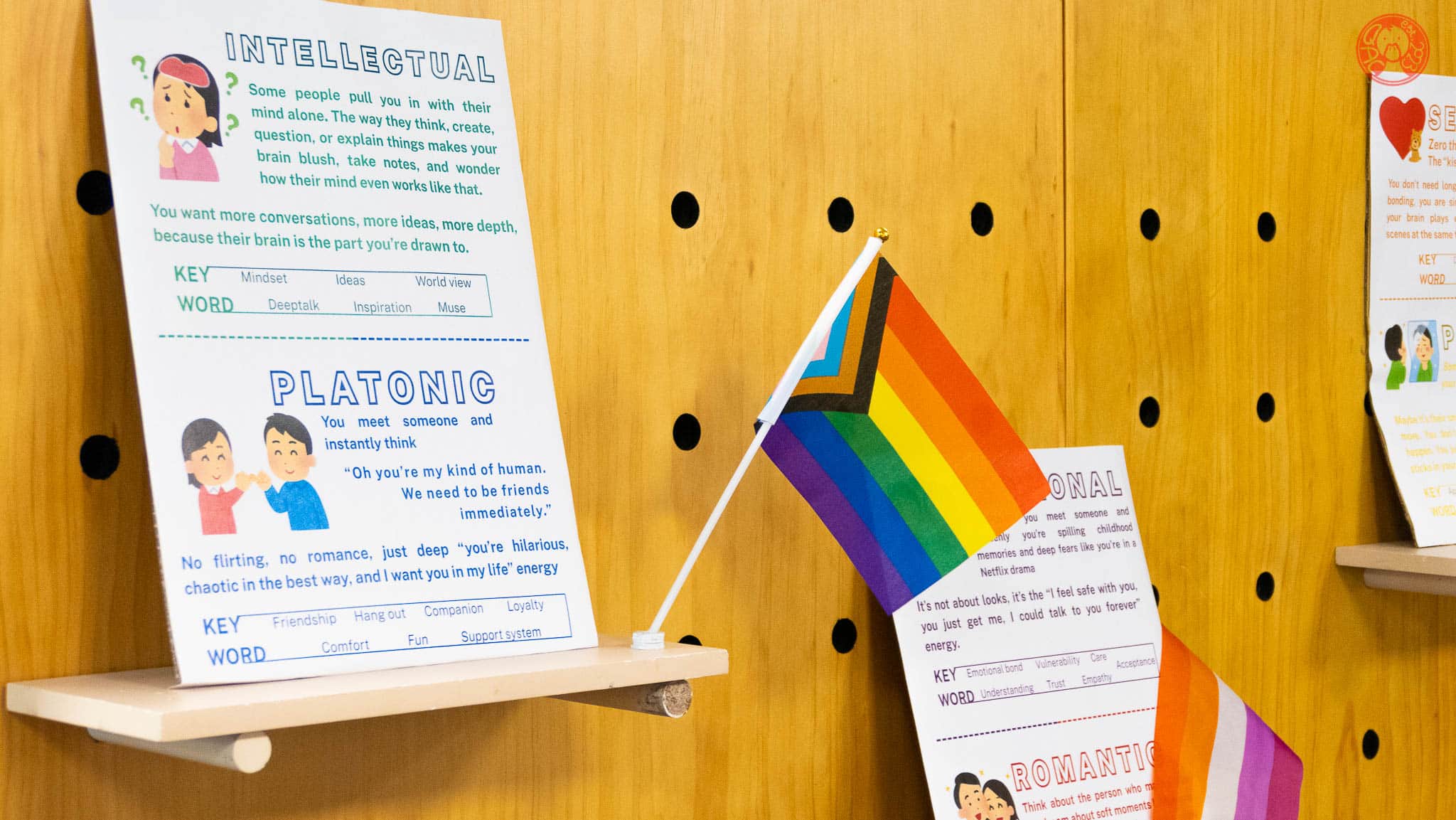
Thuy Duong shared more about Chrysalis’s mission: “We wanted the topic to feel approachable, even for students who are not part of the community or have not engaged with these conversations before.” Students were then invited to reflect on how emotional, romantic, physical, and intellectual attraction show up in their own relationships and sense of self, regardless of labels. 

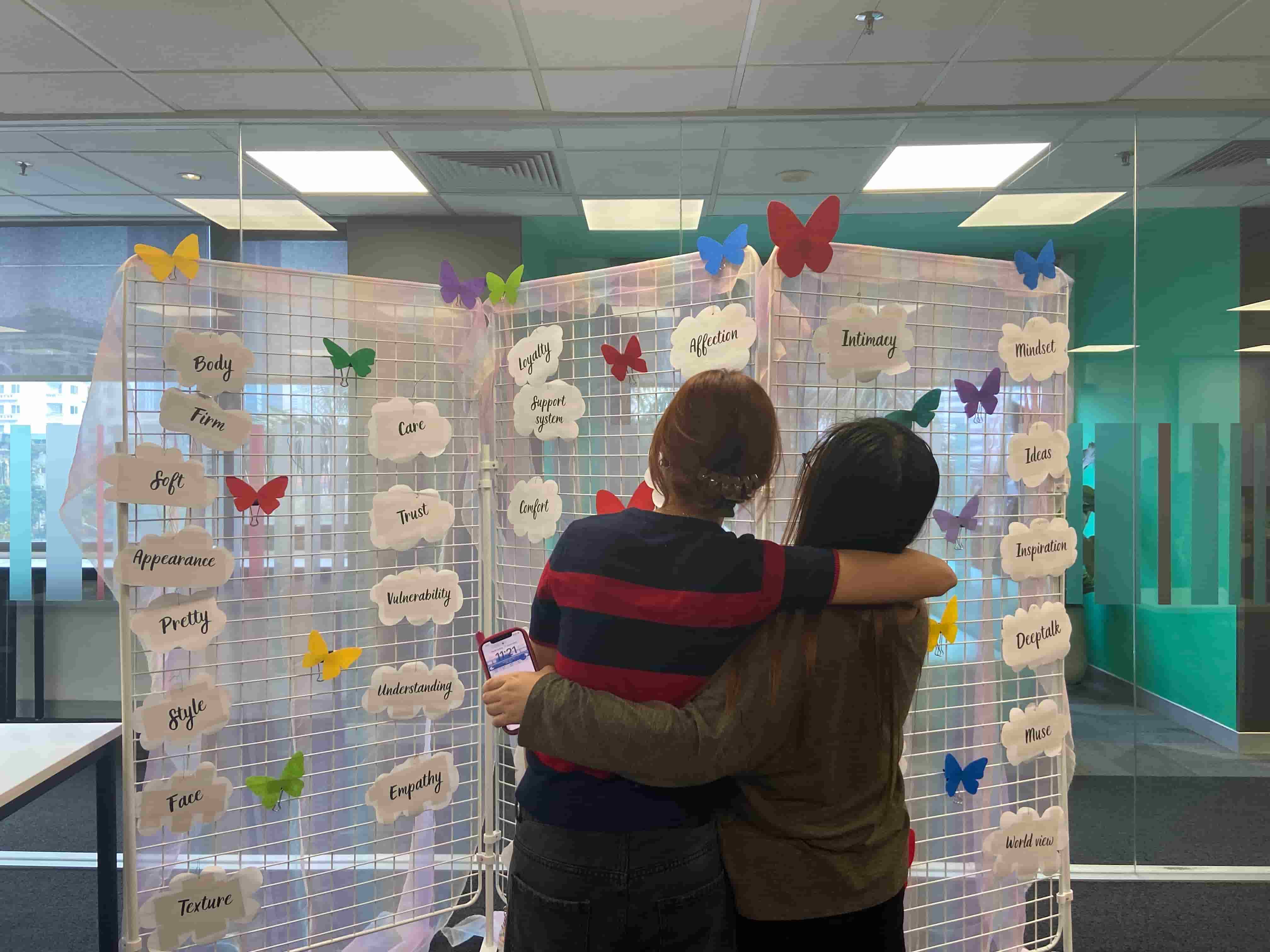
Participants explored different forms of attraction (emotional, platonic, romantic, physical & intellectual attraction) that shape their personal connections and self-understanding. Participants explored different forms of attraction (emotional, platonic, romantic, physical & intellectual attraction) that shape their personal connections and self-understanding.

While some students could easily identify the types of attraction they experienced, others were unsure how to name or define what they felt, as their experiences did not always fit neatly into a single category and were sometimes mixed. This diversity in self-awareness reflects a core belief that guides RQAC’s work: attraction is not fixed or uniform. When students are given the freedom to explore that idea without pressure or labels, understanding and empathy have space to grow. 

Learning more about asexuality and aromanticsm

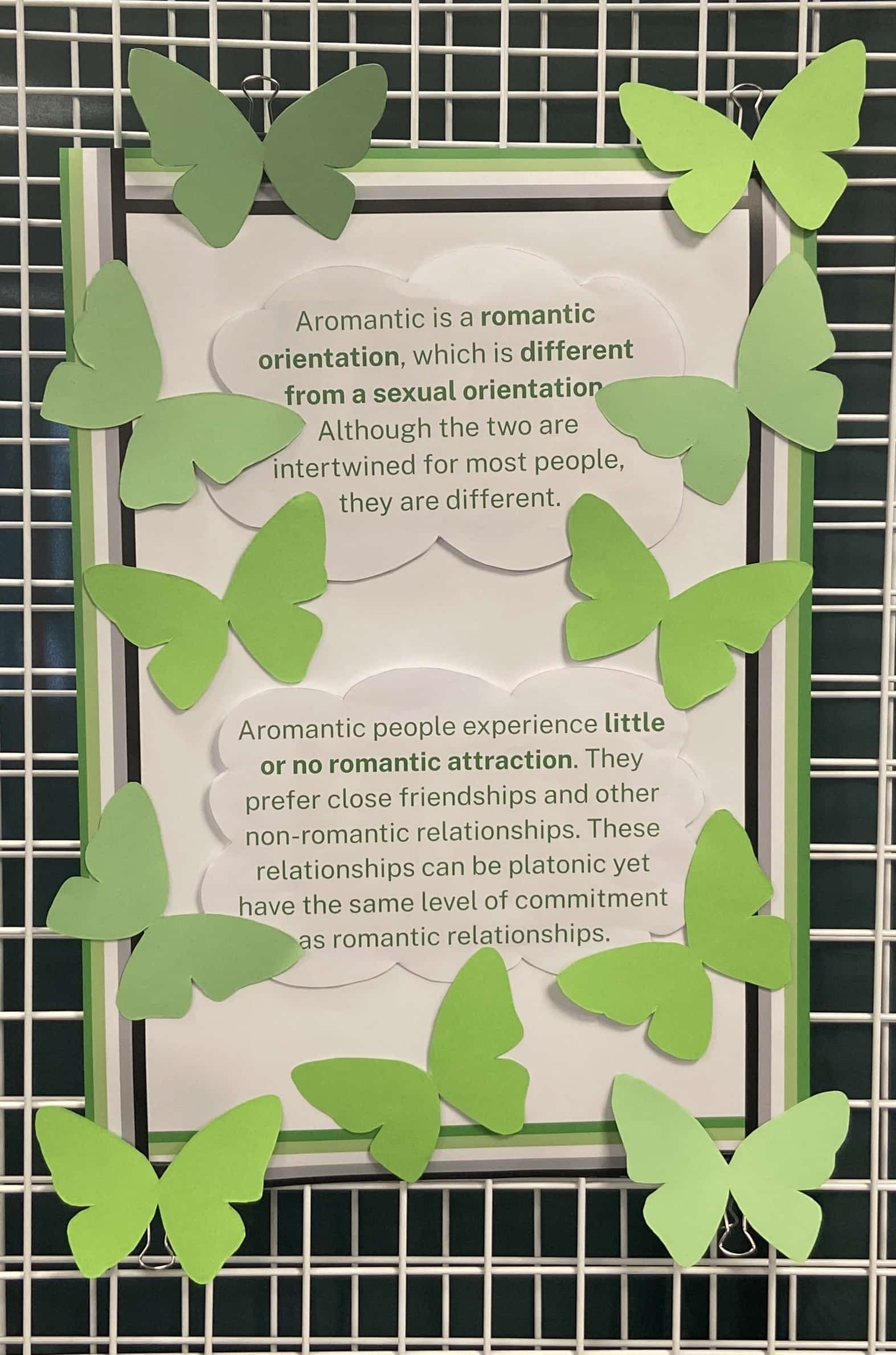
To keep the message approachable for students from all identities, the club used simple definitions and examples representing different facets within the wider spectrum of attraction. Within that scope, RQAC then introduced a part of the spectrum that is still less familiar to many: asexual and aromantic identities, meaning people having low or no sexual or romantic attraction, respectively. While LGBTQIA+ has become a widely recognised term, the letter “A”, standing for asexual, is often misunderstood or overlooked. RQAC sought to change that, not through definitions alone, but through relatable stories and open dialogue that showed how attraction can look different for everyone, including the absence of it. 

Participants were introduced to information about the asexual and aromantic spectrum Participants were introduced to information about the asexual and aromantic spectrum

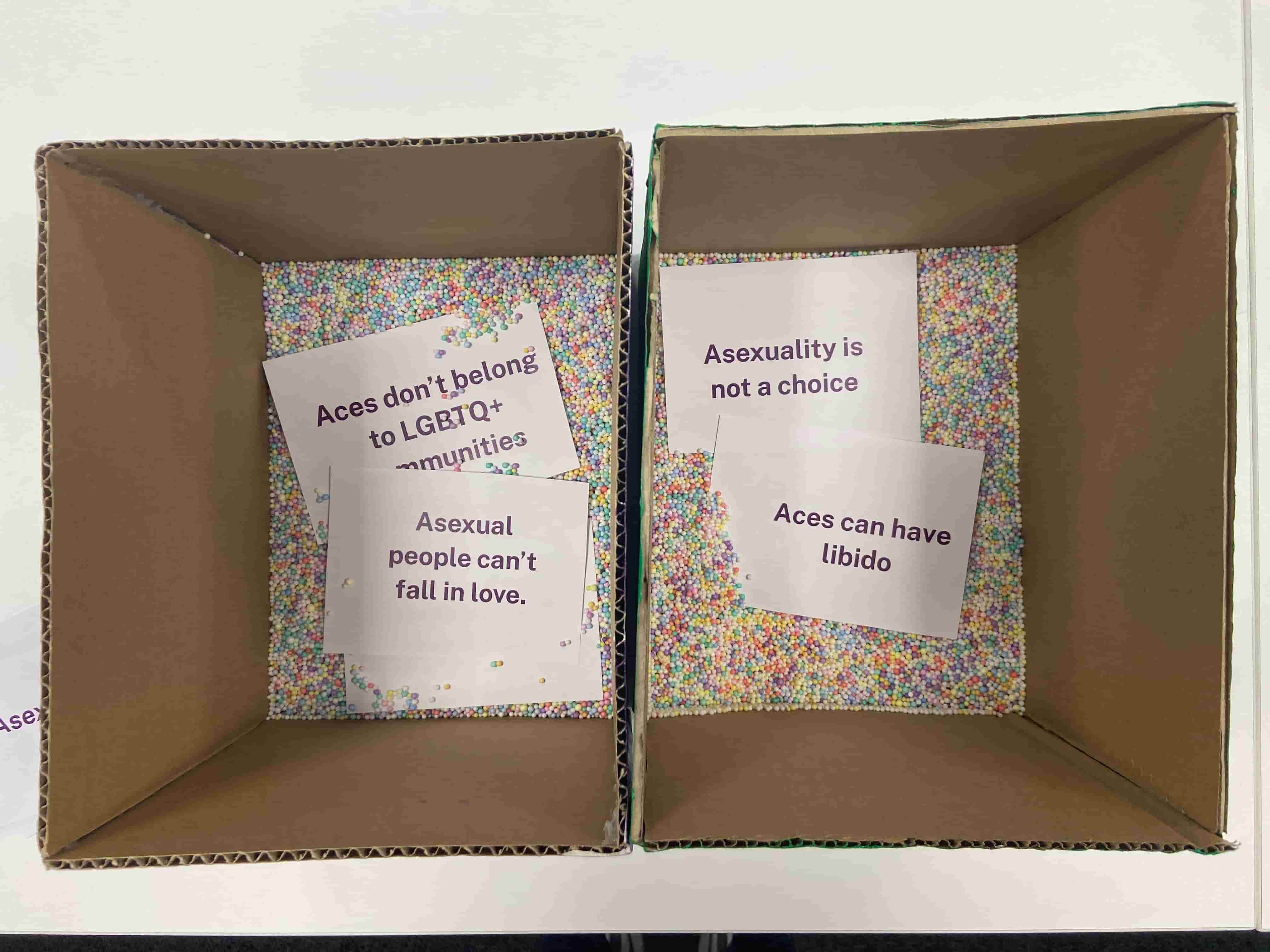
Participants sorted common myths and facts about the asexual spectrum   

RQAC is aware that conversations around gender and attraction can be sensitive. As a club made up largely of allies, it is conscious that it speaks about the asexual spectrum from an outside perspective. To approach the topic with care and responsibility, the club sought guidance from those with lived experience. 

To ensure the information reflected real voices, RQAC partnered with Asexual in Vietnam (AIV), a community-based organisation rooted in the asexual spectrum in Vietnam. AIV provided guidance, resources, and content support, helping the club share information that was accurate, respectful, and grounded in lived realities throughout the exhibition. 

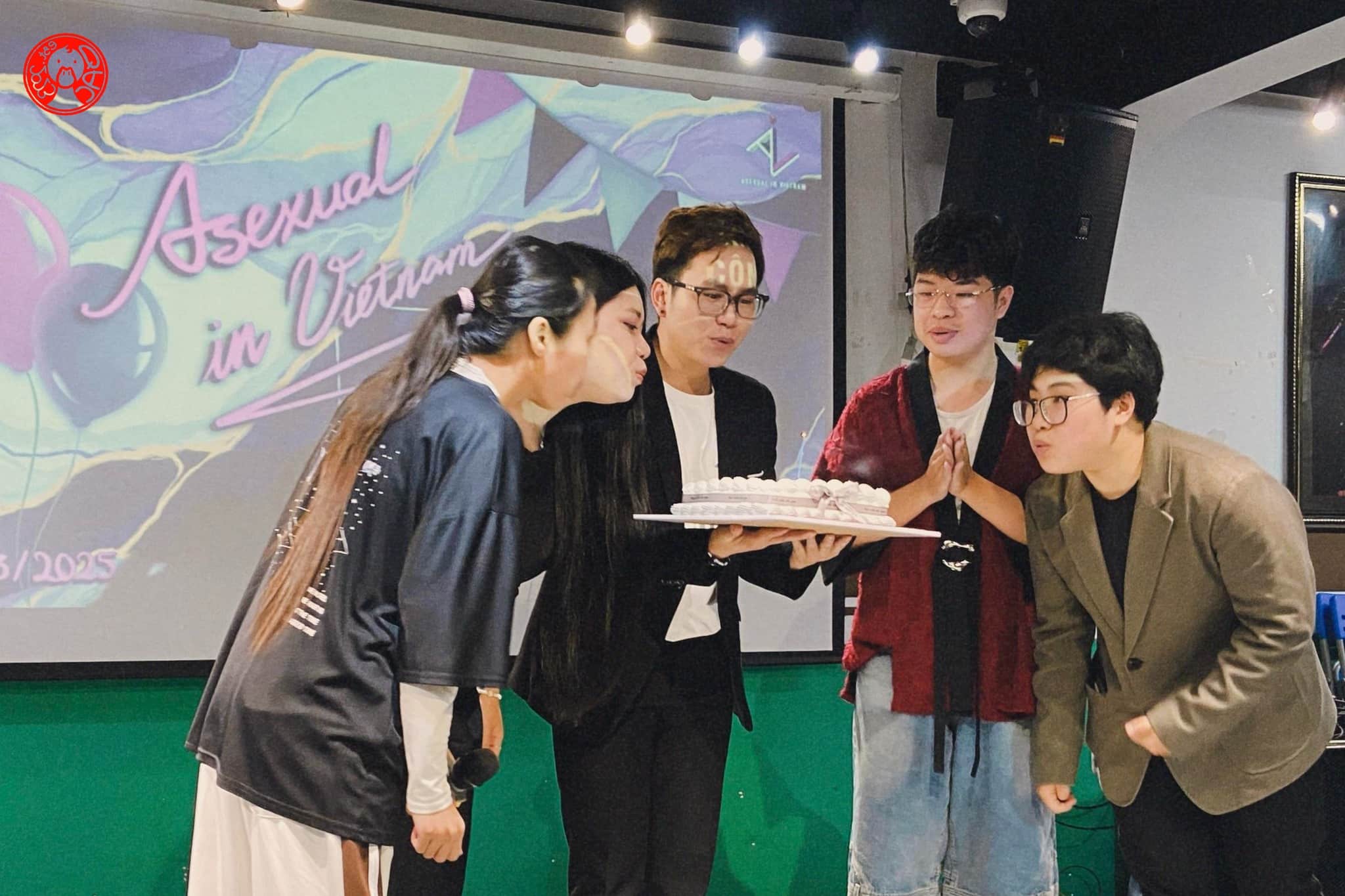
Beyond its impact at RMIT, RQAC extends its reach through local community engagement, evident in its participation in Asexual in Vietnam’s 12th-anniversary celebration Beyond its impact at RMIT, RQAC extends its reach through local community engagement, evident in its participation in Asexual in Vietnam’s 12th-anniversary celebration

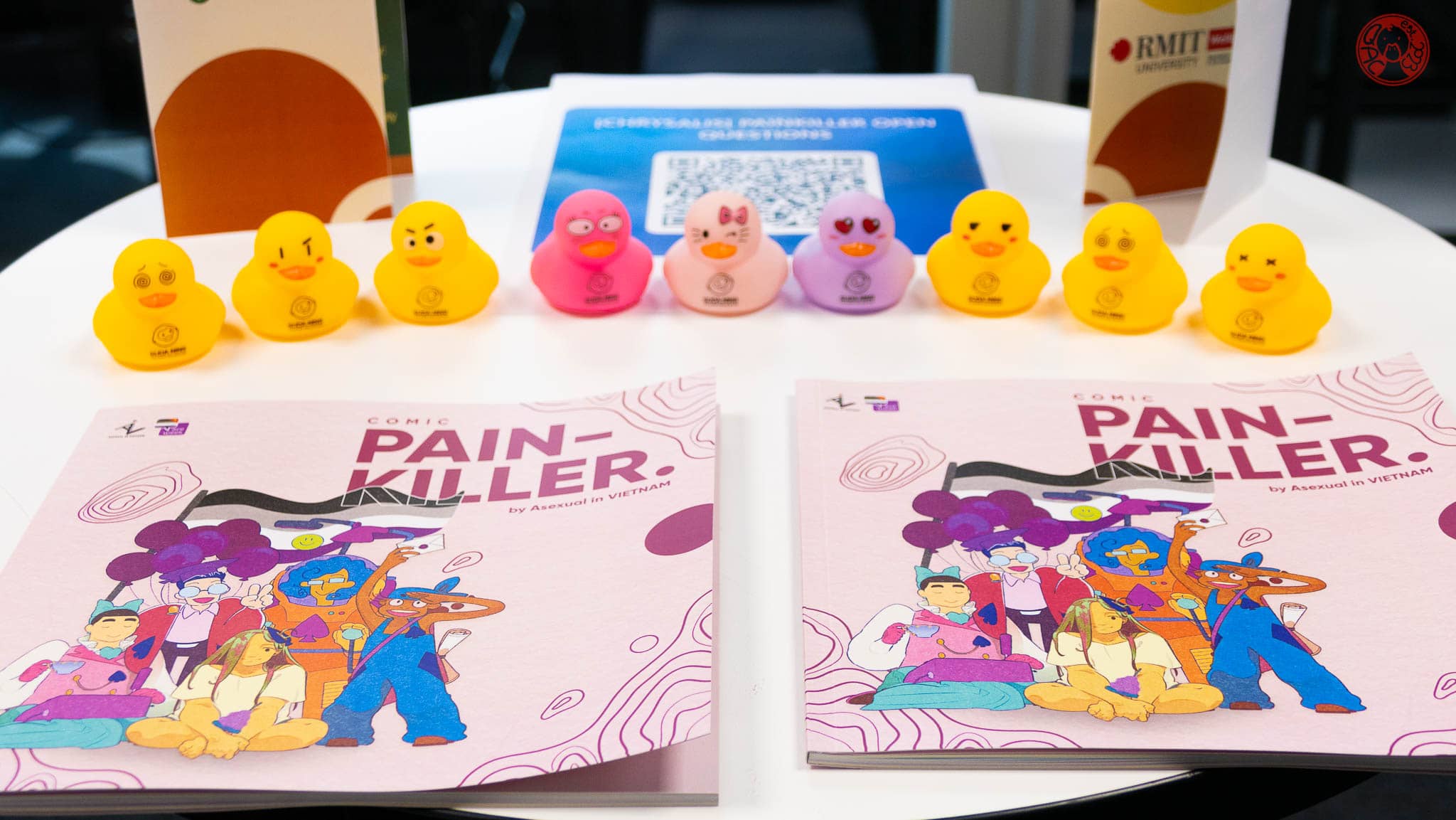
As part of the collaboration, Asexual in Vietnam (AIV) granted RQAC permission to translate and share its comic series, Pain-killer, on campus. Developed by members of AIV, the comics depict everyday situations that people on the asexual spectrum often encounter when explaining their identity to others, using personal storytelling to reflect broader social perceptions and possible ways of navigating these conversations. With translation support from senior Gen 1 RQAC members, the club’s first generation of members and supervision from AIV and the RMIT Wellbeing team, the Painkiller comic series was made accessible to English-speaking audiences on campus. 

painkiller-comic-display-with-duck-figures.jpg

Check out 'Painkiller' - the short comic about the asexual community

'Painkiller' is a short comic about the asexual community created by Asexual in Vietnam and translated to English by RQAC.

Reflecting on the process, Duong shared that the translation became a learning journey in itself. Through the comics, the club began to question earlier assumptions, including the idea that asexuality or aromanticism is simply a personal choice. Instead, the stories highlighted a more complex reality, showing that for many, asexuality is an inherent part of who they are. This made the translation especially meaningful, as it enables real asexual experiences to be shared accurately and accessibly, fostering understanding and empathy through lived stories. 

While educating about the “A” community, the comic and exhibition also highlighted that the absence of attraction doesn’t limit one’s choice to live their life like other people. Some asexual people may engage in sexual activity, particularly within relationships, while others may not. Similarly, being aromantic does not mean rejecting relationships or a shared life. Aromantic individuals may still have partners, seek companionship, or choose to build families. The exhibition deepened understanding of the diversity of attraction, including the experience of having little and no attraction at all, allowing participants to relate to the stories in their own way without feeling confined by labels, and reinforcing the message that everyone deserves respect and recognition for their differences and individuality. 

Keep the spirit alive

As the current leadership, RQAC continues to build new chapters that celebrate diversity and promote inclusivity across campus. The club also acknowledges the foundations laid by its first generation, particularly the opportunities created for members to engage with the wider community. Through participation in events such as Pride Hanoi and other community-led initiatives, RQAC members gained firsthand understanding, which later paved the way for meaningful partnerships with organisations such as AIV. 

Just like a butterfly emerging from its chrysalis, every student’s journey of self-understanding is unique. By centring real experiences and trusted knowledge from often overlooked communities, such as the asexual and aromantic spectrum, RQAC created dialogue that was respectful, accurate, and accessible. Entering its second year, the club continues to shape a campus culture where curiosity is welcomed, and every identity has space to be understood. 

14 January 2026

Share

More news