
What lingers in incense smoke: Reimagining Vietnamese ancestor worship tradition through Huong contemporary incense packaging

What lingers in incense smoke: Reimagining Vietnamese ancestor worship tradition through Huong contemporary incense packaging

Burning incense has long held a sacred place in Vietnamese culture, symbolising remembrance and a connection between the living and those who came before. Seeking to bring this tradition closer to younger generations, first-year Design Studies student Nguyen Tran Gia Huy and his team designed Hương, a contemporary incense packaging that earned 16 honors at the international stage.

In Vietnam's tapestry of traditions, ancestor worship threads through every family, rooted in the belief that the ancestors’ souls linger to guide or guard the living. Burning incense isn't mere custom; it's the smoke's ascent that carves a sacred pathway, embodying filial piety and reverence. Yet for many younger Vietnamese, this thousand-year ritual feels both ever-present and somewhat out of reach: familiar through family practice, but not always deeply understood. 

That tension sits at the centre of Hương, a contemporary incense packaging project created by first-year Design Studies student Nguyen Tran Gia Huy and his team, which went on to receive 16 honors across Brand Design Creation, Creative Use of Technology, Brand Storytelling, Branding for Social Change and Integrated Design,... at the WBDS Student Design Awards 2025/26, GDUSA Design Awards, Young Ones ADC, and Indigo Design Award 2026

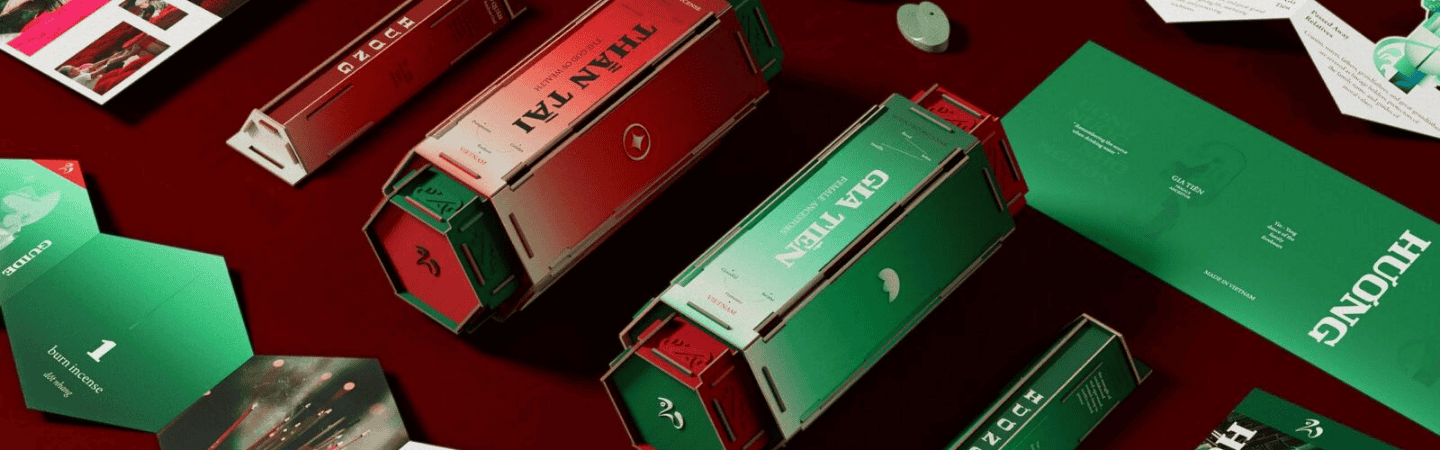
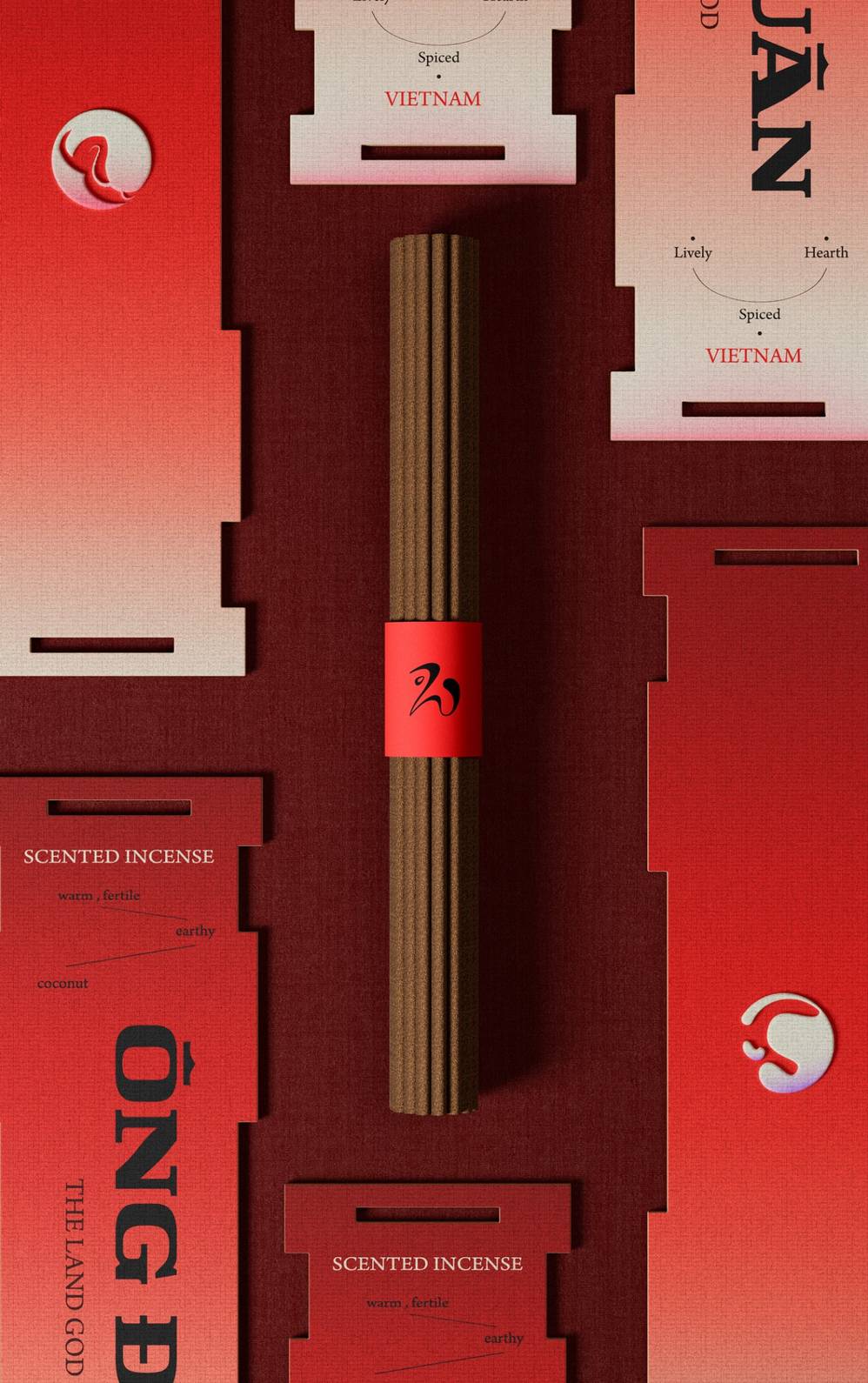
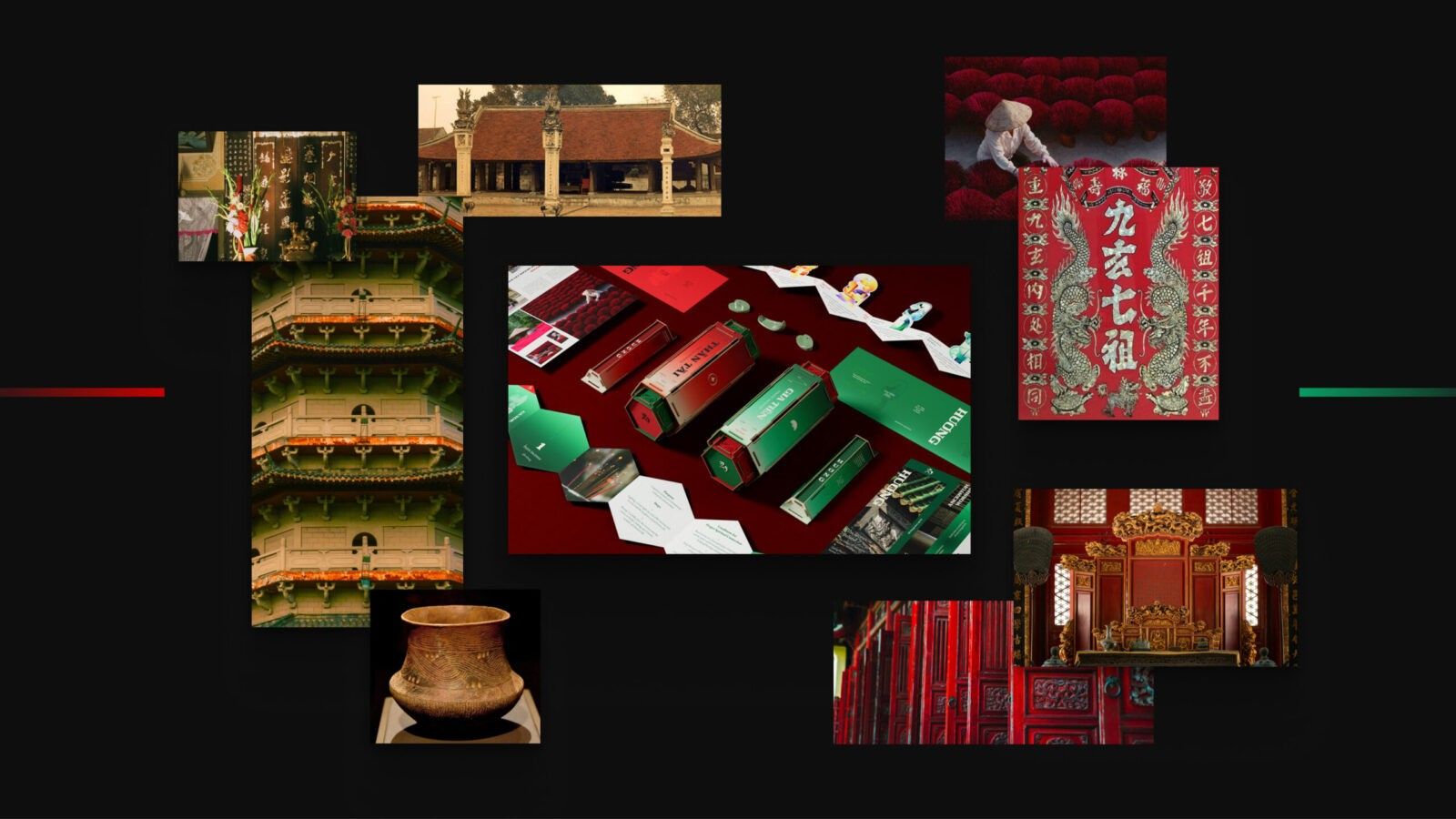
Built as a complete experiential set, including a master box, six individual incense boxes, two holders, brochures, a leaflet, and an instruction guide, Hương approaches incense not simply as a product, but as a vessel of memory, symbolism, and emotion, and as a medium for cultural exchange and connection with international friends and the world. 

The first incense spark

Before Hương became an award-winning project, it began with a question for its director, Nguyen Tran Gia Huy: why does something so deeply rooted in Vietnamese life feel increasingly distant to the generation growing up with it? 

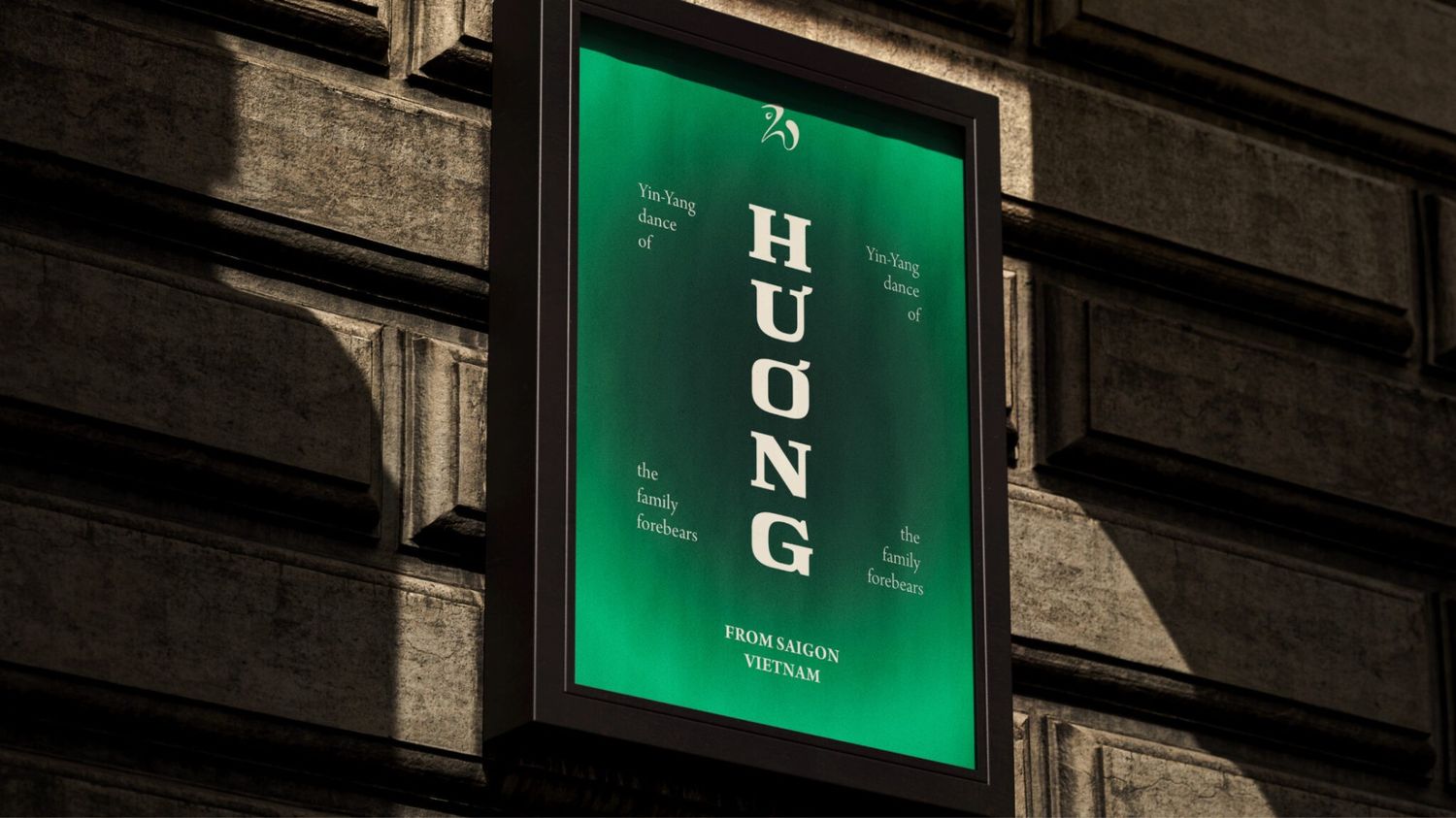
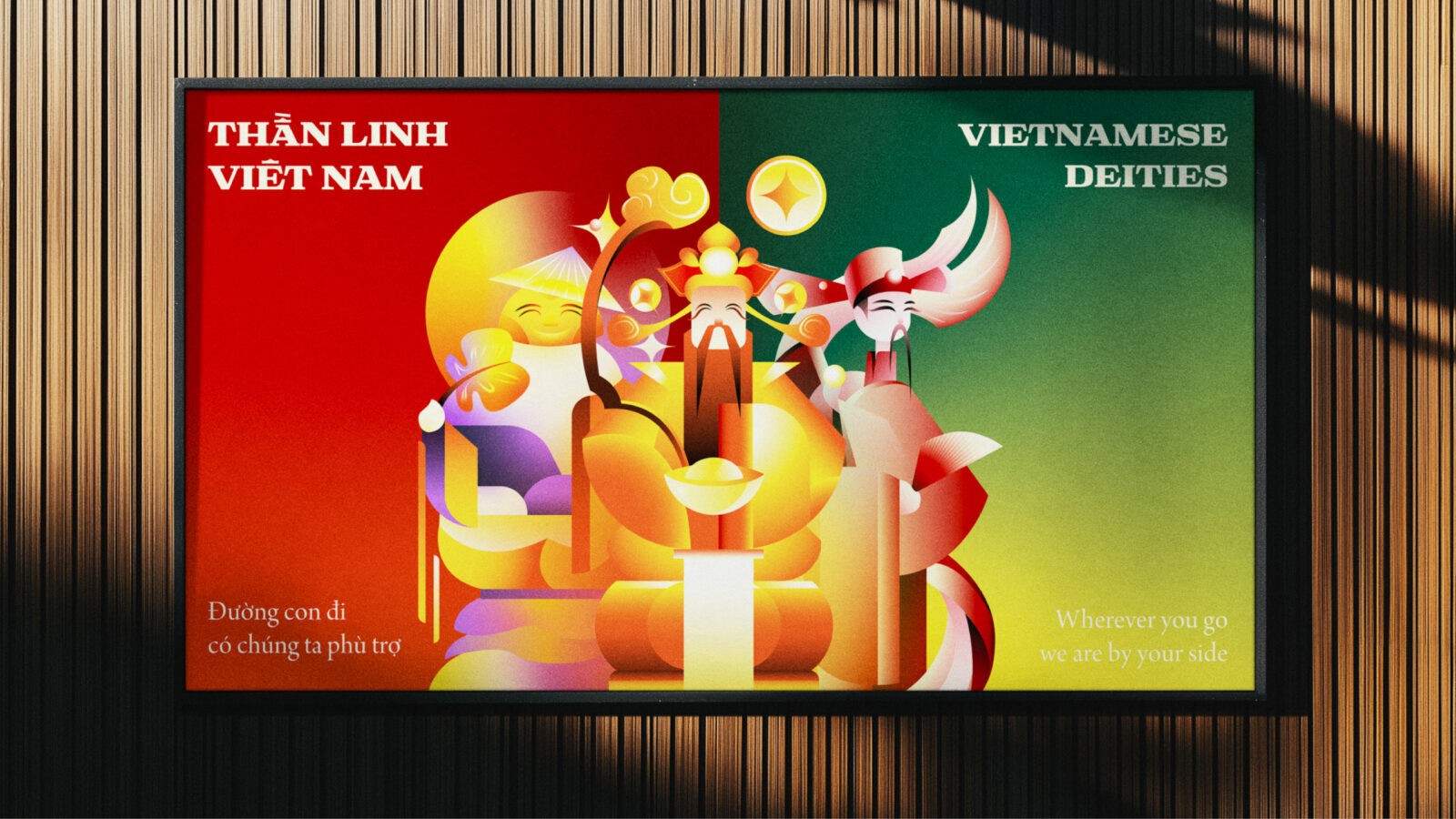
huong-2-project-mock-up-poster

Incense was everywhere in memory, in the rituals of home, in acts of worship repeated across years, in the scent that seemed to hold onto the past, yet it remains underexplored through contemporary design. At the same time, incense is often dismissed by younger people as “old things or out-of-date objects that only old people like elders use,” Huy noted. 

Between those two realities of deep cultural presence and growing generational distance is where Hương found its reason to exist. 

The project was not driven by design curiosity alone. It also came from grief. Huy shared that Hương was “also a gift” for his father, who passed away six years ago. Seen through that personal loss, incense took on another meaning. Its smoke and fragrance became, in his words, a way “to connect between the passed away people and the living people”, not only a ritual gesture, but a trigger for memory. 

That emotional thread gave Hương its mission by asking what younger generations may no longer be seeing in it: the intimacy of remembrance, the sincerity of ritual, the feeling that something invisible still lingers after the smoke has thinned into air. “We aim to transform incense into more modern things that everyone can use daily for relaxing like fragrance or scent candles beyond worship alone.” he explained. 

Huong: More than just a packaging design

The answer Huy and his team arrived at was not a simpler explanation of tradition, but an experience that lets people move through it. 

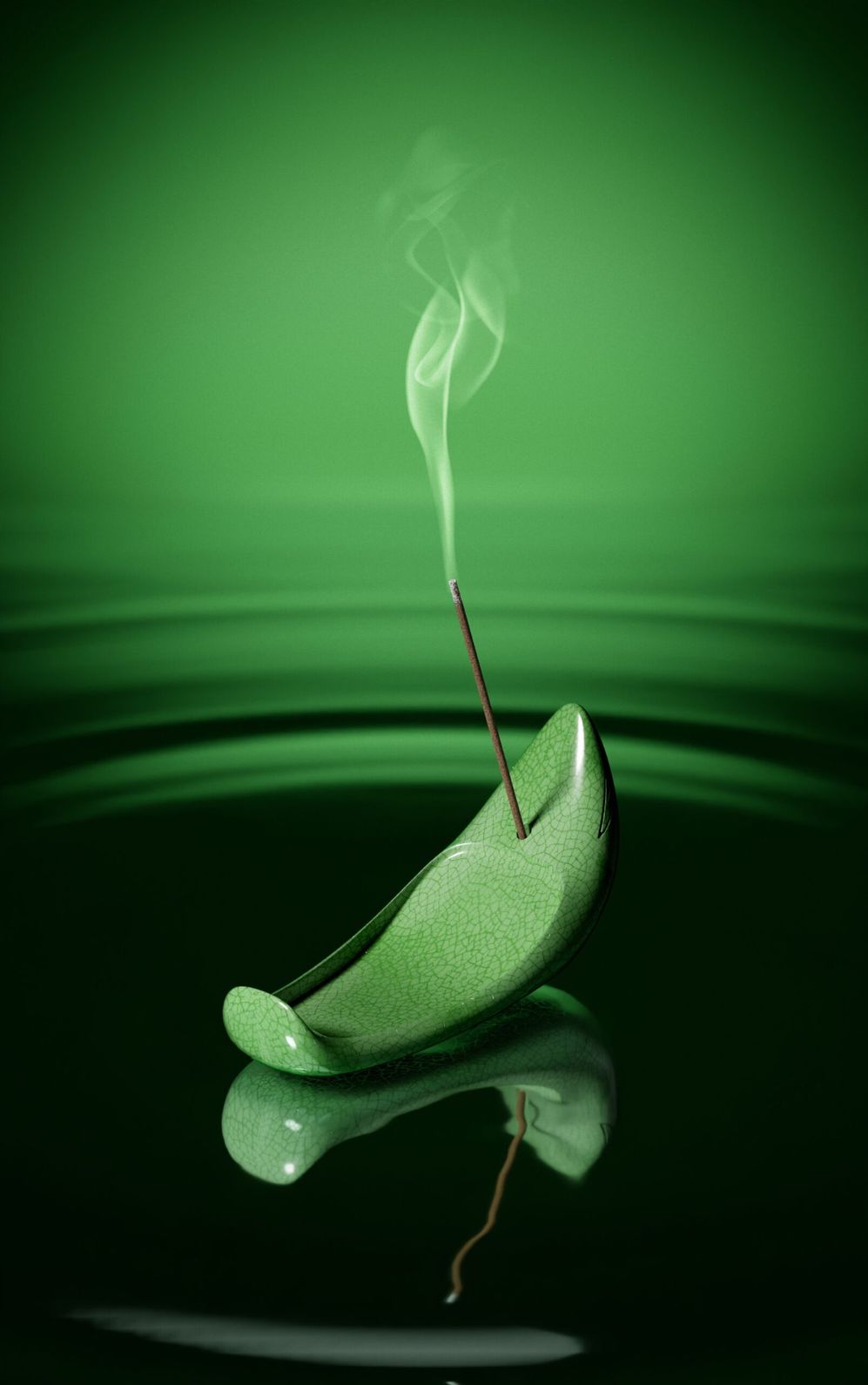
huong-3-project-mock-up-incense.

The first draws younger users through modular packaging, bold colors, and an interactive site that transforms their images into ancestral shadows. He said the team wanted users “to be amazed right at the moment you see the box, since usually, it’s only a small plastic bag.”  

That first moment of surprise matters. It interrupts routine, asks the user to notice what they might otherwise pass by. The aim is not to make tradition less meaningful, but to show that Vietnamese worship culture is not something distant or sealed off from the present, but something that can still be approached, explored, and felt in a contemporary way. 

The second phase focuses on Emotional Engagement. “Through a layered unboxing experience, moving from the master box to individual elements, users are encouraged to slow down and immerse themselves in the process. Reading about incense villages, observing symbolic details, and finally lighting the incense creates a moment of pause,” Huy explained. 

At the centre of that experience is scent. Not as an ornament, but as a memory. Huy and his team describe it as “a trigger for memory,” something capable of prompting reflection on family, ancestors, and shared rituals. By the time the user arrives there, the project has already done something subtle but ambitious: it has turned curiosity into pause and pause into feeling.  

huong-7-project-all-products

Every element in the set from the master box, holders to the instruction guide, is there to create not just a packaging to look at, but a path to follow. 

Hương helps users strengthen their emotional connection to their families, deepen their understanding of cultural traditions, and see these rituals as relevant within their own generation,” the young director shared. 

From ritual to understanding

So, how do you translate intangible ideas like sincerity, spirituality, and connection into visual elements for younger audiences without crossing the line of cultural distortion? 

Before Hương, Huy said ancestor worship was something he mostly knew through habit, because “we have to follow our parents.” Researching the project pushed him to look more closely at the meanings behind those rituals and the symbols embedded within them. 

The team drew from visual cues already embedded in Vietnamese worship culture: altars, plaque typography, stars, worship colors, and spatial layouts, to make abstract ideas feel tangible. Still, Huy was clear that symbolism alone was not enough. “Users’ experiences and feelings with our product are what truly translate these keywords effectively,” he emphasised.  

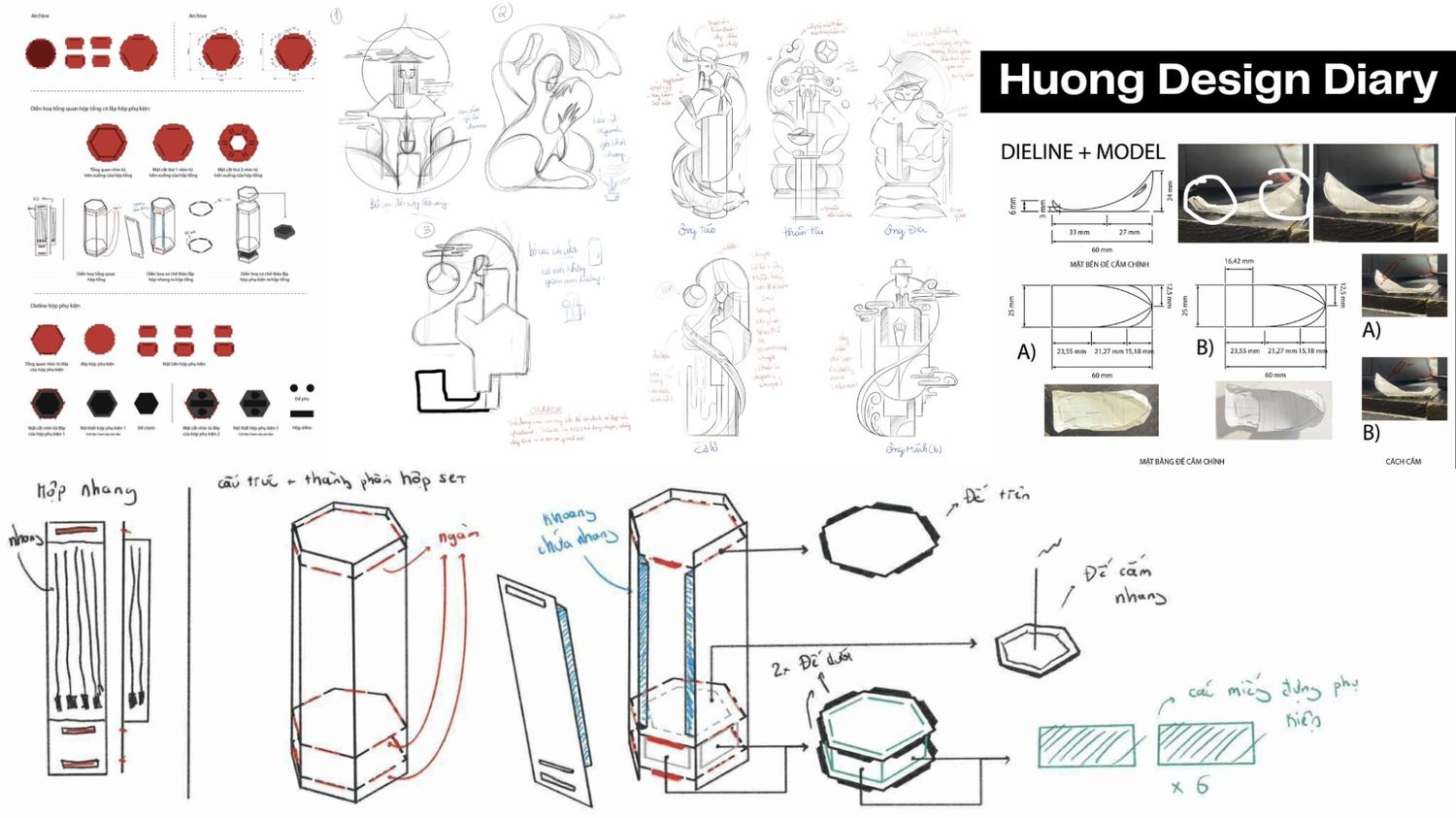
huong-5-design-diaryHuong design diary

That balancing act also defined the project’s visual language. References of the deities and ancestors and patterns inspired by the philosophy of Yin-Yang and the Đông Sơn culture remain woven throughout the set, but they are reinterpreted through bolder forms, gradients, and the familiar brick red and green palette in a way that feels more approachable to younger audiences. The intention was never to strip away meaning, but to create a gentler entry point into it. 

huong-6-poster-mockup

At the same time, the team knew there were boundaries they could not cross. Huy expressed, “There was a lot of tension between preserving authenticity, respect, and making the experience accessible”. The team had to set many non-negotiables for themselves. Faces of ancestors and deities were minimised, while an early idea of a portable altar was crossed out altogether. Some elements, they realised, should not be redesigned. 

In the end, Huy condensed that whole process into one line: “research before design.” It is the sentence that gives Hương its discipline. The project does not simply borrow from culture. It studies it, questions it, and learns where design must give way to reverence. 

Young creatives, old roots

If Hương feels timely, it is because it speaks to a wider shift among young Vietnamese creatives who are returning to culture and heritage not out of nostalgia, but out of a growing awareness that what once seemed ordinary may, in fact, hold immense creative and emotional value.  

Reflecting on his own experience of studying abroad in the United States, Huy reflected that being outside Vietnam made him feel the strength of Vietnamese identity more clearly. “Seeing other cultures up close pushed me back toward my own,” he said. 

That perspective reshapes what cultural preservation means. Young people also need to encounter them through their own questions, aesthetics, and ways of making them. As Huy put it, preserving and sharing culture is also a way “to connect to the world with their own identity and taste”. 

"Through this project, I also got the chance to work with students from north to south as we were from different universities: Van Lang, Ho Chi Minh City University of Architecture, Hanoi National University of Education... came together with shared ambition to revitalise this tradition for youth,” he shared. 

huong-4-project-mock-up-incense-burning

Preserving culture and tradition in a changing world

For Huy, preserving culture is not simply about keeping old forms intact, but about sharing them with the world through a new generation’s own identity and sensibility. At a time when AI and automation often raise concerns about cultural disconnection, Huy takes a different view: “Technology doesn’t distance us from tradition. It is creating new ways for us to reconnect with tradition.”  

Hương embodies that idea. Its interactive elements, branding system, and experiential design do not replace ritual; they open a new path into it, suggesting that tradition can still evolve as long as its core is understood and respected. 

According to Ms Sea Nguyen, Design Studies Lecture, Hương also stands out for the way Huy and his team reinterpret cultural depth into a contemporary experience without losing its essence.  

“Seeing Huy and An bring such clarity, emotional depth and cultural sensitivity into Hương is deeply rewarding. I am incredibly proud of what they have achieved at such an early stage, and I have no doubt they will continue to shape thoughtful and impactful design in the future,” Ms Sea said. 

The international recognition at the WBDS Student Design Awards 2025/26, 62nd Annual GDUSA Design Awards, and Indigo Design Award 2026 Hương received became a milestone for Huy and his team, but the project’s deeper significance lies elsewhere: in the way it brings a ritual long absorbed into the background of Vietnamese family life back into focus, and shows how a young creative voice can carry tradition forward without letting it lose its soul. 

Story: Tram Hoang, a Professional Communication student at RMIT Vietnam. This article does not reflect the views of RMIT Vietnam. 

22 April 2026

Share

More news