Rediscover gender equity with EQUINOPOLY

Rediscover gender equity with EQUINOPOLY

Exploring gender equity takes on new meaning as four RMIT Vietnam students transform the abstract concept into a playable exploration of EQUINOPOLY, their first-prize-winning entry at Hack The Gap, a student-led gender equity competition.

"Pass GO and collect 23% less than your male counterparts" - this isn't your traditional Monopoly board. When RMIT Vietnam students landed on the idea of transforming the classic board game into a tool for gender equity education, they knew the rules had to change.

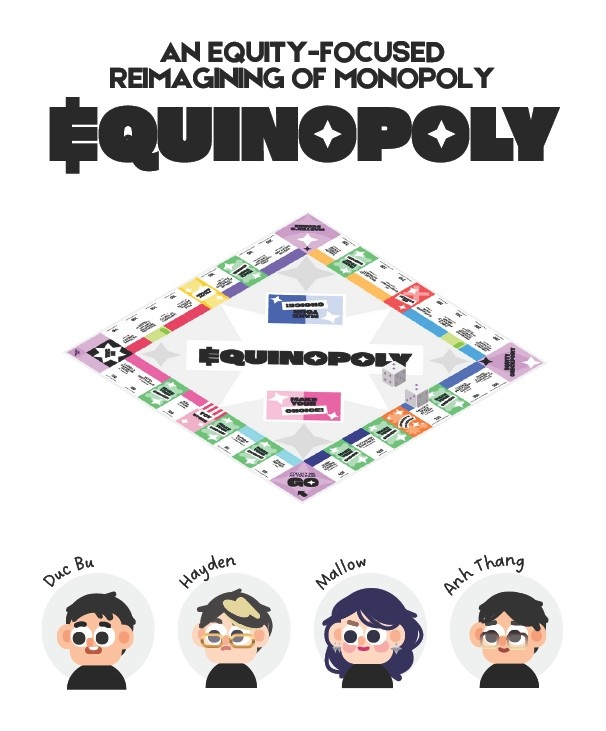
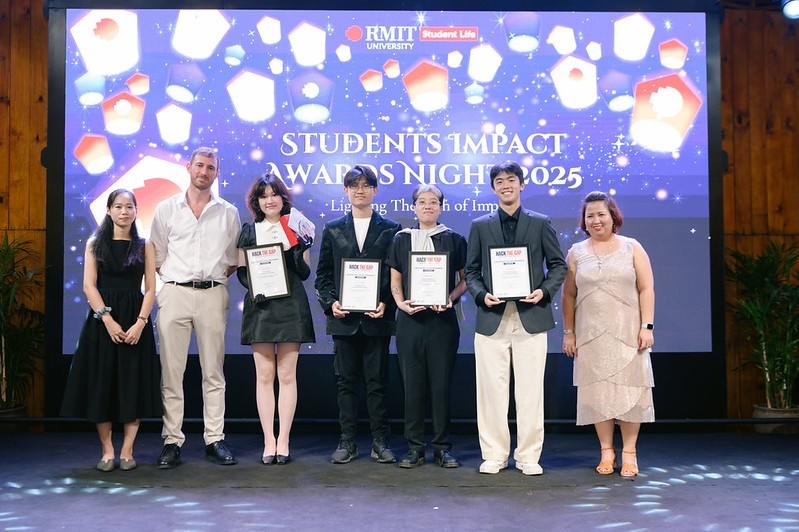
In a creative reimagining of one of the world's best-selling licensed board games, EQUINOPOLY transforms the pursuit of property ownership into a tool for exploring the subtle, yet persistent gender barriers found in professional spaces. The project was created by the H4CKTH3G4P team, made up of RMIT Vietnam students Thai Tan (Psychology), Trang Huyen (Psychology), Anh Thang (Food Technology and Nutrition), and Duc Trung (Finance) and recently claimed first prize at Hack the Gap, a student-led gender equity competition at RMIT Vietnam.

Monopolising gender inequality

The project's inspiration came from an overlooked fact that resonated deeply with the team. "We discovered that Monopoly was originally created by a woman, Elizabeth Magie, as a critique of inequality," Thai Tan explained. Over time, that origin was eclipsed as the game became synonymous with wealth accumulation and competition. "That moment became a conceptual trigger," the team shared, "as it reflected how women’s contributions are often erased or overshadowed gradually."

This historical parallel became the conceptual foundation for EQUINOPOLY. Instead of starting fresh, the team deliberately chose to work within Monopoly's familiar framework. “The original game mechanics show how early advantages such as higher starting income and easier access to property compound over time, mirroring how inequality is sustained by systems rather than individual effort,” they noted.

The event drew over 100 participants, with strong engagement across its activities

Inequality systemic barriers in play

Thuy Dung  shared more about Chrysalis’s mission: “We wanted the topic to feel approachable, even for students who are not part of the community or have not engaged with these conversations before.” Students were then invited to reflect on how emotional, romantic, physical, and intellectual attraction show up in their own relationships and sense of self, regardless of labels. 

Participants explored different forms of attraction (emotional, platonic, romantic, physical & intellectual attraction) that shape their personal connections and self-understanding.

Grounded in sector-based research, EQUINOPOLY highlights familiar yet often overlooked patterns. "When we researched industries like Education and Consumer Services, we found women heavily represented at entry levels but notably absent in leadership roles," the team explained. "The same pattern repeats in high-growth sectors like Technology and Finance." These divisions, reinforced by cultural norms, historical expectations, and organisational structures, form the core inequity EQUINOPOLY seeks to reveal.

“This challenged my prior assumptions and highlighted how deeply structural inequality is embedded across systems,” Duc Trung recalled.

Designing inequality as lived experience

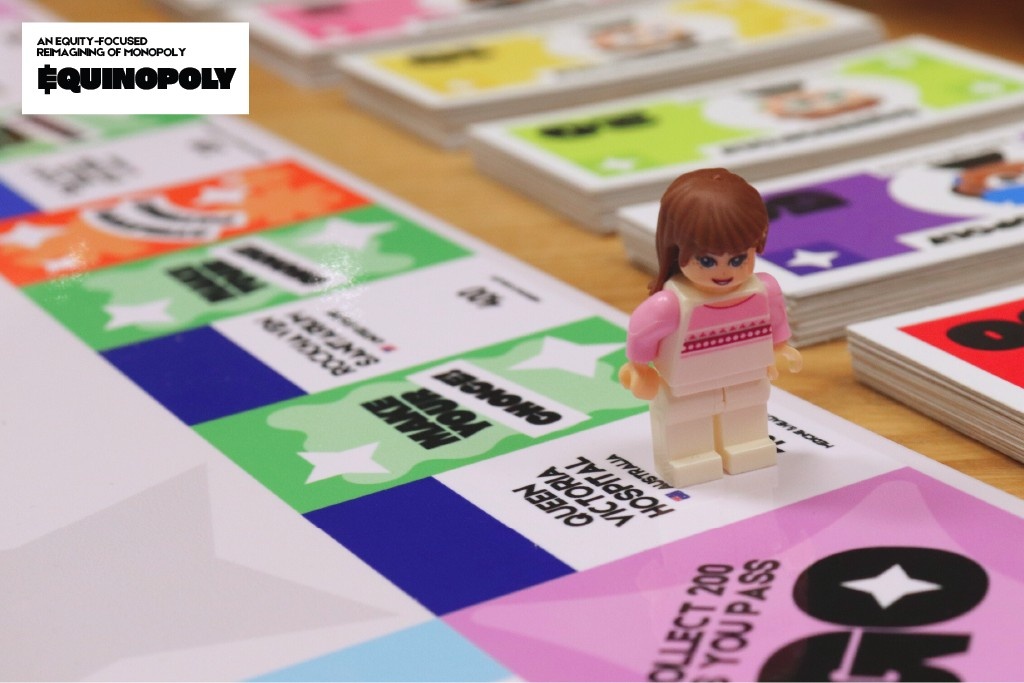
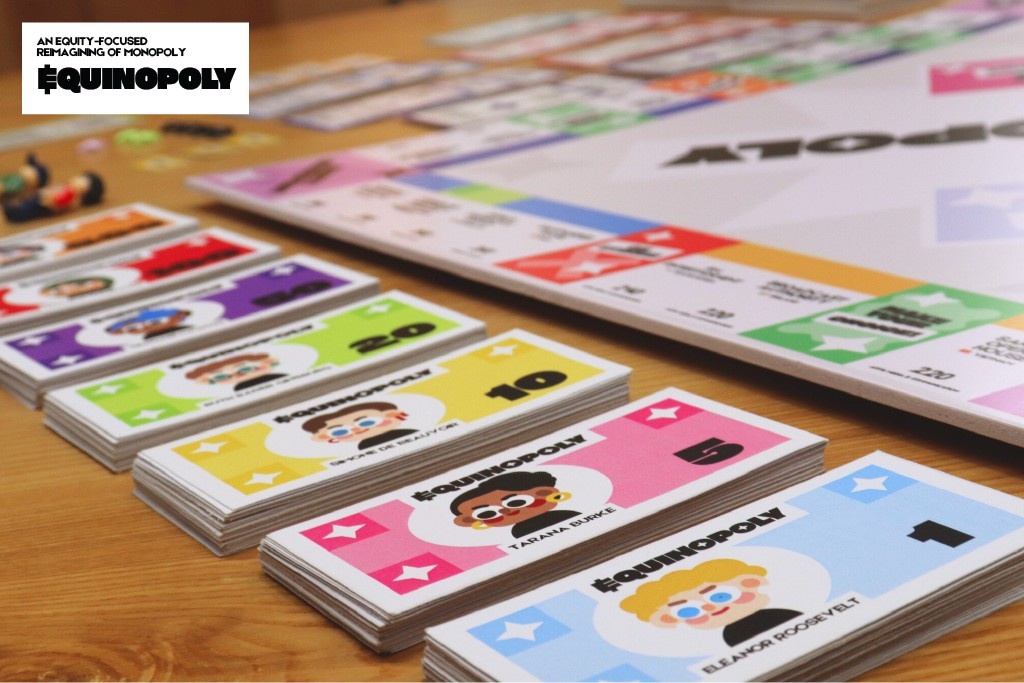
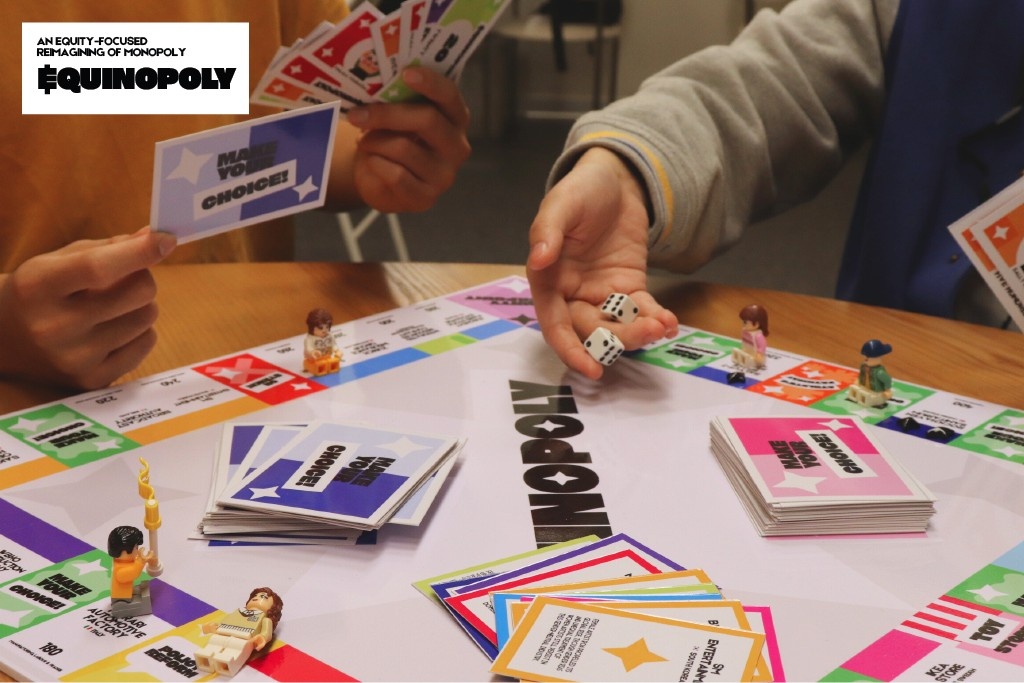
EQUINOPOLY's innovation lies in how it translates complex workplace dynamics into playable experiences. Players don't just learn about gender inequality; they experience it. Through sector-based properties, gender-adjusted income, and scenario-based “Make Your Choice!” cards, players encounter uneven journeys to the same destination, underscoring a core insight: equality at the finish line does not erase inequality along the way.

This focus on experience shaped the team’s choice of format. Rather than any infographic or report format, a board game was chosen because it is inherently social, and the team believed that enjoyment during play would encourage deeper engagement and make the gender inequality message more accessible. By embedding research into gameplay, it allows players to engage emotionally and feel structural constraints firsthand

EQUINOPOLY game play EQUINOPOLY game play

"The guiding mindset was to make people experience the issue before asking them to understand it," the team shared, "Male players might sail through certain challenges while female players face additional requirements or penalties. It's uncomfortable by design, but that discomfort leads to understanding."  

That intention was echoed in player responses. One participant said that playing from a male role felt unexpectedly uncomfortable, as it made structural advantages over female counterparts visible in ways that everyday life often does not. “In real life, we don’t usually compare salaries or opportunities side by side,” the player reflected. “But through gameplay, those gender gaps become tangible, prompting our reflection on how similar dynamics operate in workplaces, universities, and society.” 

EQUINOPOLY and Hack The Gap Competition

More than a competition entry for Hack The Gap Competition, EQUINOPOLY became an interdisciplinary learning process for the team. For Simon O’Donoghue, the Inclusion, Diversity, Equity and Accessibility Advisor at RMIT, the project demonstrated “a powerful example of what happens when gender equity education is designed by students, for students,” highlighting the depth of research, creativity, and critical thinking behind the game.

He added that by engaging audiences in conversations about equity in ways traditional approaches often cannot, EQUINOPOLY shows that meaningful change is achieved not through isolated advantages, but by redesigning systems and trusting students with lived experience as co-creators of change.

For H4CKTH3G4P team, the game’s impact lies in its broader message. “If players walk away from EQUINOPOLY with one realisation,” they reflected, “we hope it’s that gender equality not only liberates women, but also men from prescribed gender stereotypes.”

H4ck th3 G4p Team is awarded first place at the Hack the Gap Competition H4CKTH3G4P Team is awarded first place at the Hack the Gap Competition

That perspective also sits at the heart of Hack the Gap. Simon O’Donoghue described the competition as “one of the most impactful initiatives I’ve worked on in over a decade,” pointing to its focus on student-led exploration of transforming gender equity from an abstract concept into tangible, engaging tools, using their own creativity, disciplines, and lived experiences as starting points.

With 18 multidisciplinary teams responding to this challenge through board games and short films to podcasts, campaigns, and research-informed projects, EQUINOPOLY now stands among a diverse body of student-created work addressing opportunity, wellbeing, safety, sport, and intersectionality.

Together, the projects developed through Hack the Gap now form a foundation of public resource that will be showcased and embedded across RMIT throughout 2026, enriching the RMIT’s ongoing Inclusion, Diversity, Equity and Access (IDEA) conversations with authentic student voices and innovative approaches for actions.

Story: Tram Hoang, a Professional Communication student at RMIT Vietnam. This article does not reflect the views of RMIT Vietnam.

19 January 2026

Share

More news