

Beyond the visible: Redefining fairness with accessible education

Beyond the visible: Redefining fairness with accessible education

Not all learning challenges are visible to the naked eye. Discover how RMIT Vietnam’s Equitable Learning and Accessibility (ELA) service is breaking down barriers and leveling the playing field for every student.

Care beyond the gap

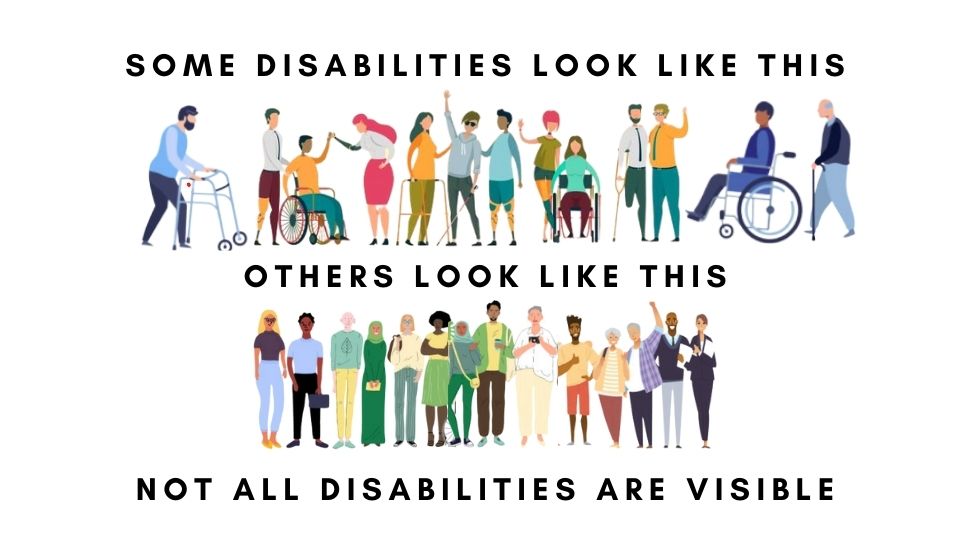
In Vietnam, conversations around disability often begin and end with what is visible or are shaped by misconceptions that lead to it being overlooked or underestimated. Physical impairments, particularly those related to mobility or sensory loss, are the most commonly recognised. Anything beyond that is less visible, and often, less understood. This narrow perception shapes how disability is viewed in everyday life. When something is not immediately apparent, it is easy to assume it does not exist.

beyond-the-impossible-1However, disability is far more complex than what meets the eye. 

Internationally, it is understood as a broad spectrum, one that includes not only physical conditions, but also neurodiversity, long-term medical conditions, and mental health challenges.

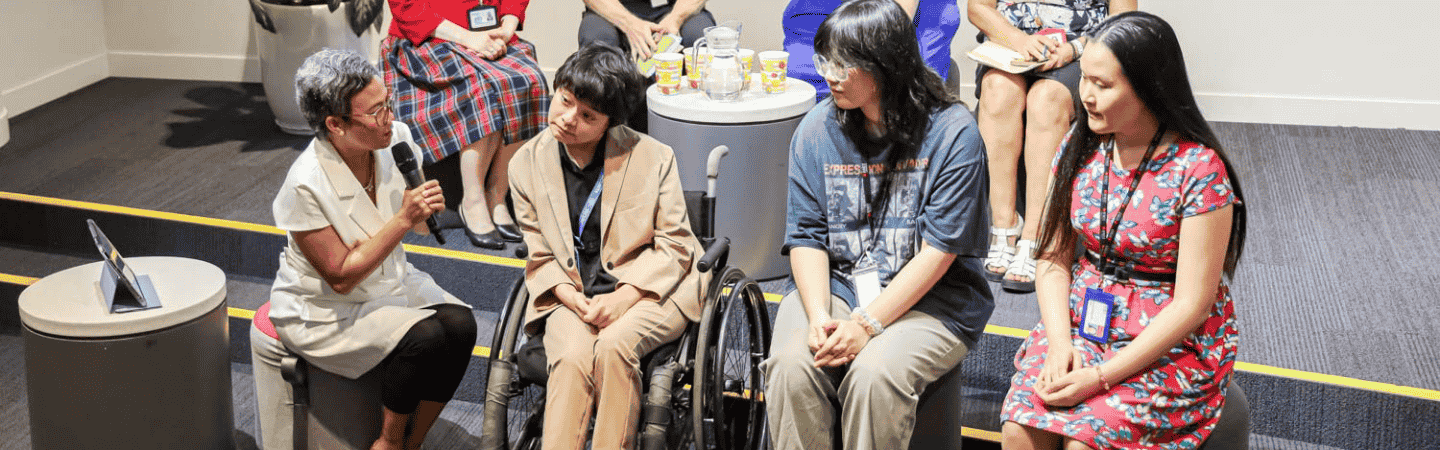
For many students, these differences are part of their daily reality, even if they are not always visible. At RMIT Vietnam, the Equitable Learning and Accessibility (ELA) service exists to bridge that gap. By supporting students with a wide range of conditions and circumstances, ELA helps ensure that education is not only accessible, but equitable, creating space for every student to learn, participate, and belong in their own way.

Empowering and creating equal opportunities | International Day of Persons with Disabilities

Hear from our students on how giving equal opportunities and the corresponding respect can grow a sense of confidence in persons with disabilities and cultivate a sense of belonging.

Working within that system, Student Aids often witness what support looks like in practice. For Nguyen Truong Hoang Thu, a final-year Design Studies student, taking the role to support students in need involves notetaking in both on-campus and online classes, adapting learning materials into accessible formats, and supporting students with mobility around campus.

Through this experience, she began to see layers of need that are not always immediately visible. “What I’ve learned mostly comes from visible disabilities, and I’ve already seen so much room for improvement,” she shared. “So what about the invisible ones? Or even things like trauma that affect someone in similar ways?” 

Her reflection points to a deeper understanding of what support truly means, not only addressing what is visible, but recognising the complexities that often go unnoticed. In this sense, ELA exists not only as a system of support, but in the deliberate act of seeing beyond what is visible, in moments of genuine understanding, and in the spaces we create for every student to feel seen, supported, and valued, moving beyond the common perception that disability is only associated with visible, physical conditions. 

beyond-the-impossible-2-persons-with-disabilities

From the other end of support, another student, Dam Hai Thuy said keeping up with learning is not simply a matter of effort. It is shaped by a constant negotiation between her conditions and their side effects. Living with ADHD, bipolar disorder, and depression, she experiences fatigue, difficulty staying alert during the day, and disrupted sleep at night, all of which make it harder to maintain a steady learning rhythm. 

What others may read as inconsistency often comes from the weight of these overlapping challenges. “For example, a lecture that others might understand after watching twice, I have to go over four or five times for it to really sink in,” she shared. 

That difference is not always understood. At times, she has been labelled as “lazy” or “disorganised,” despite the additional effort it takes just to keep pace. Without a clear way to overcome the effects of her condition, learning becomes a process of constant adjustment. 

Support, in this context, is not about catching up, but about finding a pace that is sustainable. With the help of ELA, through student aides who assist with notetaking and access to recorded lectures, Thuy has been able to navigate her studies in a way that better aligns with how she learns.  

Personalised support for inclusivity

At the heart of ELA is a personalised approach to support, recognising that each student’s needs are different. Students work closely with advisors to develop an Equitable Learning Plan (ELP), with adjustments tailored to their circumstances, from modified assessments and adapted materials to assistive technologies and student-aid support. This process is confidential, flexible, and continuously refined over time.

Before each semester, these plans are shared with course coordinators, guiding how support is implemented in practice. What this looks like, however, varies from case to case. 

Aside from Thuy, Nam Anh, who has ADHD, finds that meeting deadlines is not simply a matter of discipline. Even with early preparation, his focus can slip as pressure builds, causing tasks to pile up and forcing him into intense bursts of work that lead to exhaustion, burnout, and guilt for not keeping up. With deadline extensions, he can approach his work at a more sustainable pace. He sees this support as temporary and aims to rely less on it over time, working in a way that suits him while still excelling. For him, the goal is to turn his differences into strengths that can match or even exceed others’ performance.

beyond-the-impossible-3-person-diffierent-in-the-crowd

As inclusion isn’t one-size-fits-all, to some, the challenges take different forms. With Daniel Pham, who also has ADHD, difficulties with focus and memory during lectures mean that information can easily be lost in the moment, requiring him to revisit the same material multiple times just to grasp the knowledge. Support such as one-on-one tutoring, early access to assignments, or extended deadlines becomes essential in helping him process and navigate the workload. In some cases, adjustments in assessment formats are also introduced to better align with individual needs. 

However, support is not always immediate or straight-forward, sometimes they are misunderstood or underestimated. In such situations, ELA advisors play a crucial role in bridging that gap, working to communicate, advocate, and find common ground with lecturers to ensure that students receive the support outlined in their learning plans.  

Reframe the “fairness”

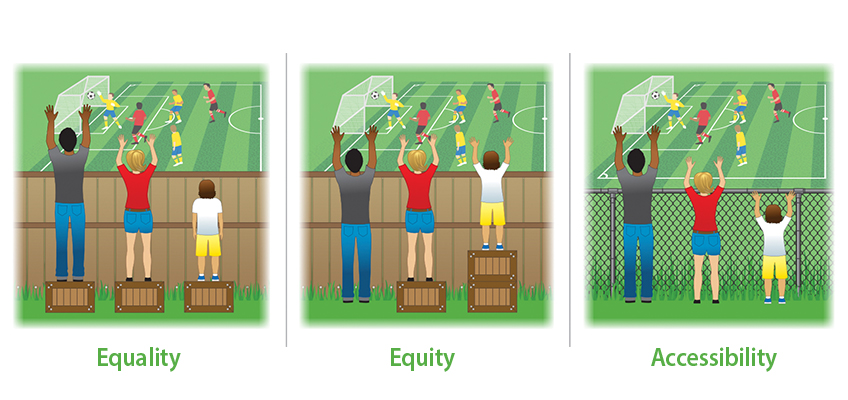
Some may wonder if extra support gives certain students an unfair advantage. Fairness here is not about treating everyone the same, but about giving everyone a real chance to learn. ELA does not lower academic standards or course learning objectives. Instead, it removes barriers so students can access the same opportunities, with outcomes unchanged but conditions adapted.  

Instead, it removes barriers so students can access the same learning opportunities, with outcomes unchanged but conditions adapted. A student with a diagnosis receiving a deadline extension is to ensure an equal chance to demonstrate their learning and skills without being penalised for the impacts of their conditions. Outcomes may differ, but students are given a genuine opportunity to show what they know and can do. 

beyond-the-impossible-4-equality-vs-equity-vs-accesibility

While students like Daniel and Nam Anh initially felt conflicted about using support through the ELP, Thuy offered a different perspective. She emphasised that such support should not be seen as a privilege, but as a way to acknowledge that students start from different points, and that some challenges, such as disabilities, are beyond individual control.  

Thu came to understand this while supporting a student who could not pursue their preferred program, not for lack of interest or effort, but because their condition made it inaccessible. Reflecting on the experience, she said, “I never had to think about whether I was able to learn something at all.” The moment made her realise that access to learning is not equal for everyone. Many of us take for granted not only the ability to study, but also the freedom to choose what to study, while others are limited by circumstances entirely beyond their control. 

True fairness, then, lies in recognising these differences and creating conditions where every student has a genuine opportunity to participate fully and reach their potential. Through the work of ELA, RMIT is building a community where learning is accessible, challenges are understood, and support goes beyond what is visible. By removing barriers and fostering empathy, the program empowers students to reach their potential and creates a campus where inclusivity benefits everyone. 

Story: Pham Thanh Thao, a Professional Communication student, with the input from ELA-registered students & ELA Aid student. This article does not reflect the views of RMIT Vietnam as an institution.

23 April 2026

Share

More news