
How a Vietnamese culture boardgame sparked wins and wider dreams

How a Vietnamese culture boardgame sparked wins and wider dreams

What began as a university assignment has evolved into a global cultural ambassador at the world's biggest board game exhibition. Blending folklore, strategy, and storytelling, Am Binh, created by a group of RMIT students, transforms Vietnam’s spiritual universe into a world that feels vivid, tactile, and unmistakably Vietnamese.

Bachelor of Design (Game Design) student Nguyen Phat Huy has grown his assignment into ‘Am Binh’ (Spirit Gathering), a full-fledged unique boardgame based with Vietnam’s rich spiritual traditions. Along with his teammates, Duy, Dat, and Thao, he took it from the classroom to the grand halls, namely the ‘Most Popular Board Game’ prize at Road to ESSEN Vietnam 2025 and the SPIEL Essen 2025 showcase. 

Where the world of Am Binh began

Am Binh is a strategic card game inspired by Vietnam’s mystical spiritual world. For 3–6 players, it casts each as a shaman tasked with banishing evil from an ancient village where long-imprisoned spirits have broken free and spread suffering among the living. Though the shamans share the same mission, greed, anger, and delusion soon turn allies into rivals. Players must capture wandering spirits, command them, and wield charms and spells to battle both demons and one another. 

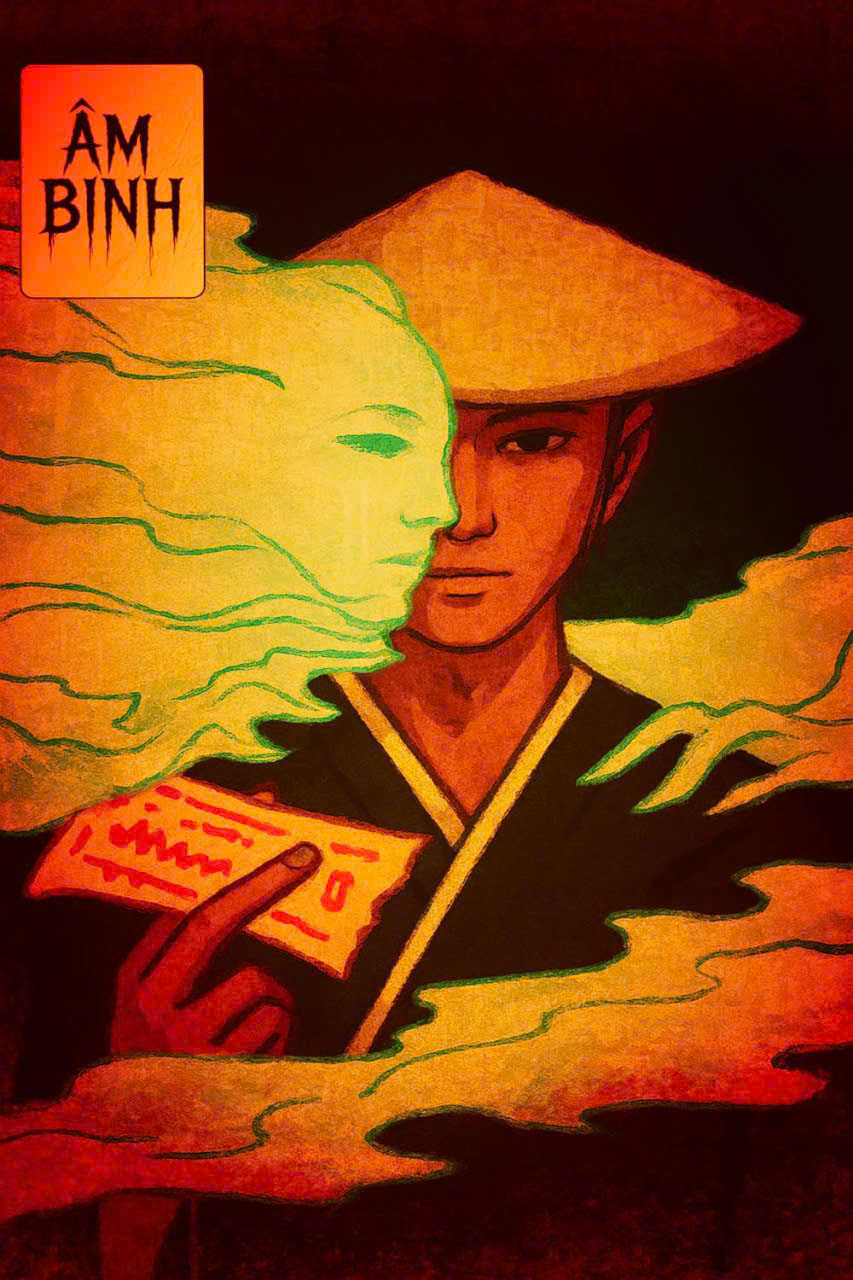
Âm Binh opens the journey where the line between good and evil, human and ghost, is hauntingly blurred. Âm Binh opens the journey where the line between good and evil, human and ghost, is hauntingly blurred.

Huy first developed the idea as an individual assignment for the Game Specialisation 1 course, drawing on the principle that belief and faith have the power to shape reality.  Growing up in in a Buddhist spiritual family gave him a distinctive perspective on Vietnamese folk spirituality.  Building on that foundation, he created a world of shamans and brought to life legendary spirits, ghosts, and demons from folklore as his concept. “Vietnam’s spiritual world is rich and unique, no less compelling than the famous narratives of Thailand or Japan, and it deserves to be known by more people,” he said.  

He expanded this vision into a narrative universe rooted in folk beliefs through a High Distinction-graded assignment on the mystical saga “Ha Tien.” Within this universe, he developed the installment that became the foundation for Âm Binh, building an internal logic that ensures every detail feels consistent and believable. To ensure the game respected traditions without distorting religion, Huy worked closely with his lecturer, Ms. Agnieszka Kiejziewicz, crafting a narrative that was both accurate and respectful. 

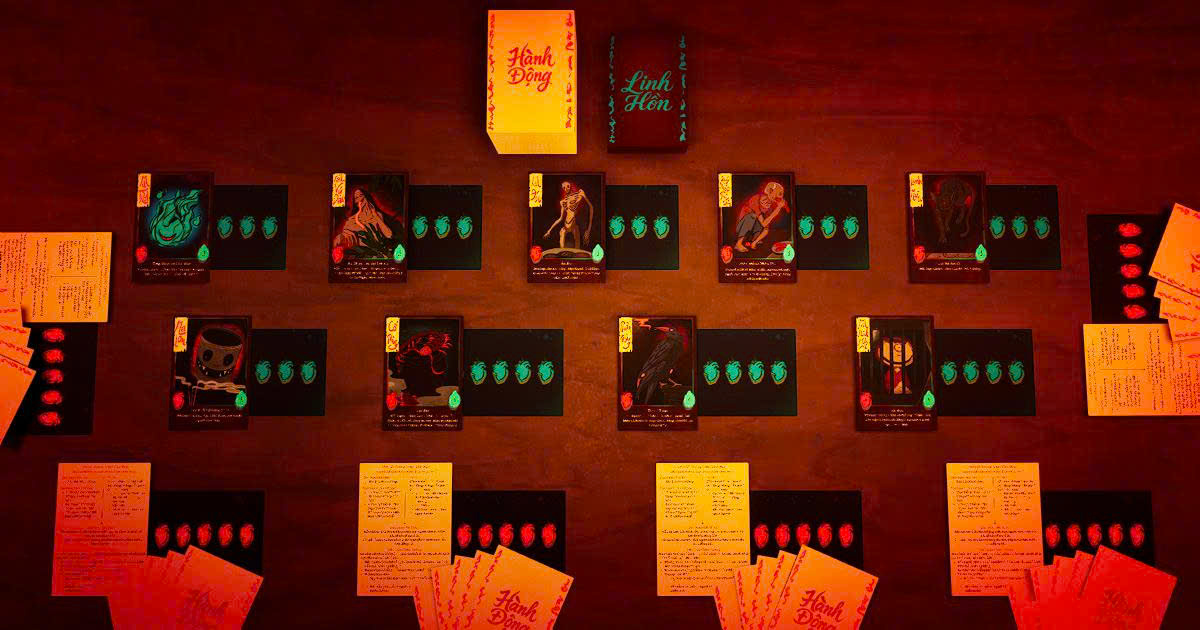
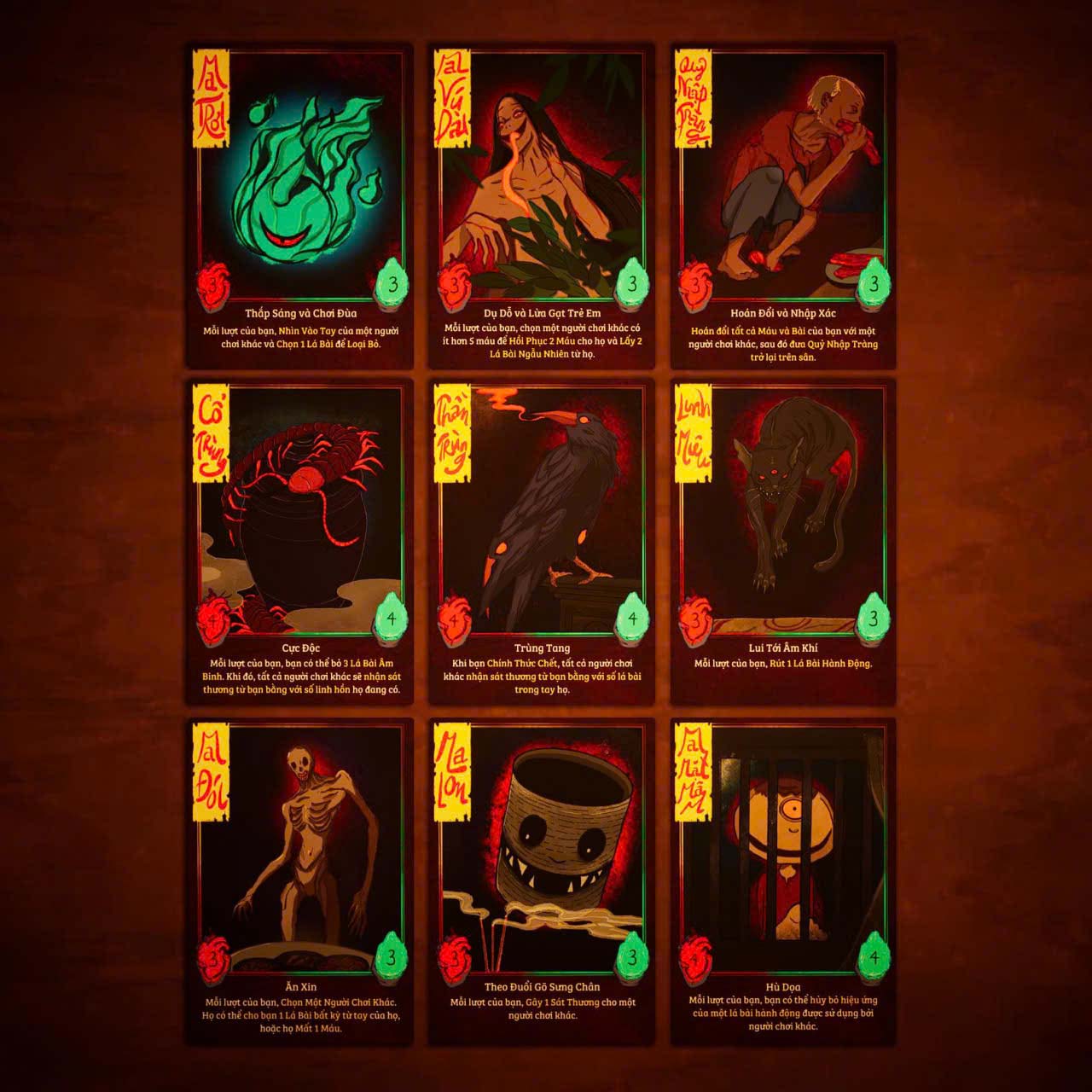
Am Binh game setup Am Binh game setup

Teamwork makes dreams work

The board game soon grew beyond what Huy could envision and manage on his own, leading him to seek collaborators at the RMIT Board Games Club. Together with Logistics and Supply Chain Management student Bui Minh Duy and Information Technology student Nguyen Chi Dat handling marketing and expansion, and Digital Media Design student Cao Nguyen Minh Thao designing its visuals, the idea came to life physically. 
Together, the team tested the game extensively, ensuring each card conveyed the story of the spirit it represented. One key innovation is how the game treats death. In Âm Binh, inspired by Vietnamese beliefs, death is not the end; it opens the possibility of reincarnation. Players can return and continue, making the gameplay distinctive and true to its cultural roots. 

Drawn by Thao, the Dead Army Cards feature a folktale-inspired art style with oil painting touches, adding authenticity and a distinctly Vietnamese flair to the design. Drawn by Thao, the Dead Army Cards feature a folktale-inspired art style with oil painting touches, adding authenticity and a distinctly Vietnamese flair to the design.

By continuously gathering feedback from club members, Huy refined the system to make the gameplay more accessible, even though it was built entirely from scratch rather than based on any existing format on the market. One example of this innovation is how the game treats death. In most board games, death means the end of play. But in Am Binh, inspired by Vietnamese spiritual beliefs, death opens the possibility of reincarnation. Even without remaining “lives,” players still have a chance to return and continue, making the gameplay more distinctive, interesting, and true to its cultural roots. 

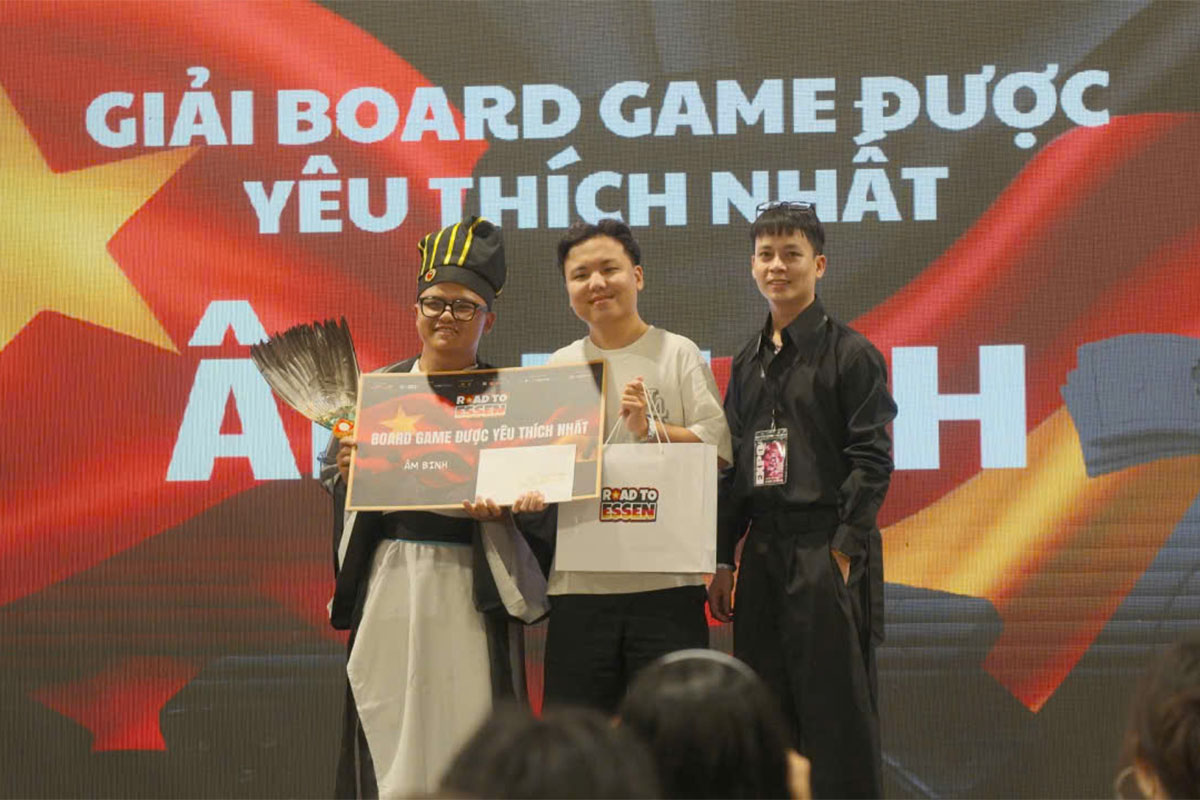
The judges were drawn to the idea’s originality, where cultural elements became part of every move and a unique feature of the gameplay. What started as a rough idea unexpectedly earned them a spot in the top 20 of the Road to Essen 2025 competition. They were up against 128 submissions from across Vietnam, many already refined with sleek designs and polished prototypes. The surprise quickly turned into a drive to go further. Even more remarkably, it was voted the competition’s most popular game, winning over both judges and the audience. 

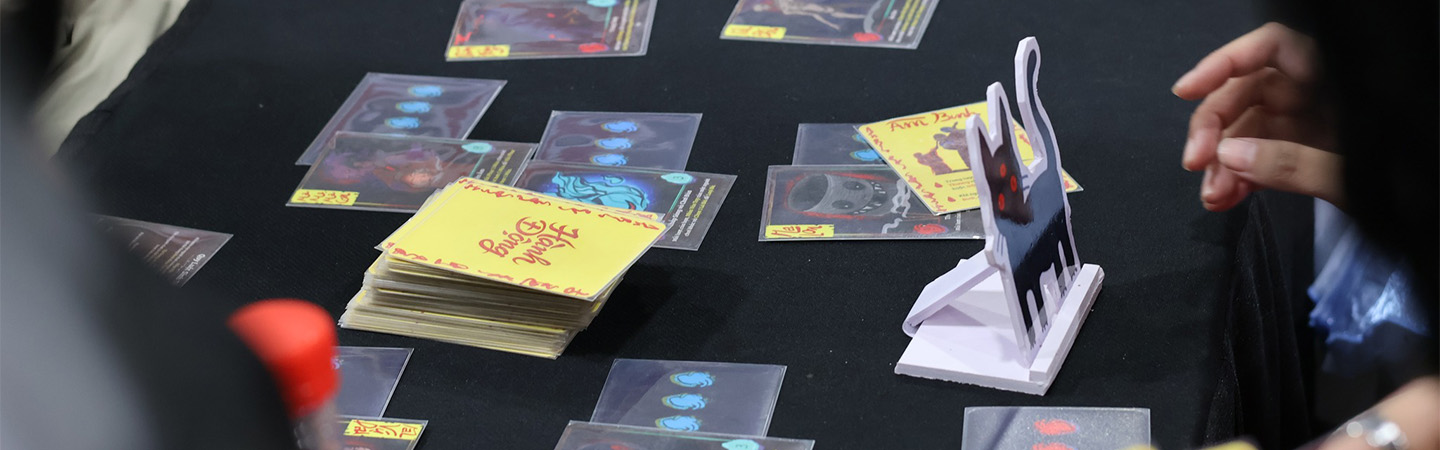
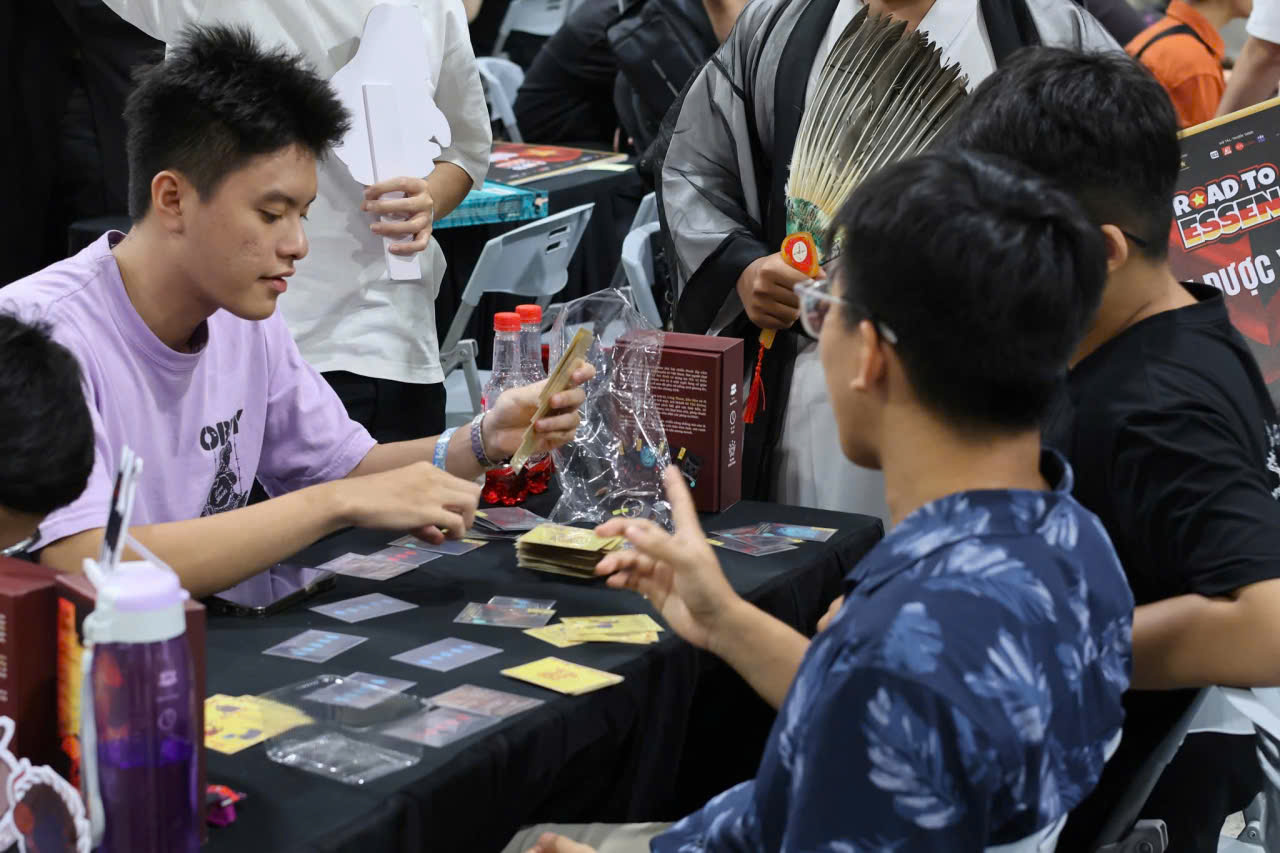
Team Thầy Cúng, creators of Âm Binh, made the top 20 and showcased their game for others. Team Thầy Cúng, creators of Âm Binh, made the top 20 and showcased their game for others.

For Thao, the recognition and win carried a deeply personal meaning. With her teammates’ unwavering support, she grew confident in her art style and, despite intense pressure, completed all the illustrations for the game in just over a week. Am Binh’s success was never about individual achievement but about a team that stood by one another and grew stronger together. 

Changing the future, one card at a time

When people think of games, they often see simple entertainment. “At first, I thought the same,” Duy said. “But through creating Âm Binh, my view changed. I am proud that our game does more than entertain. It helps people connect with the spirit of Vietnamese culture.” 

For Huy, that realisation came while studying Game Design. “I was confused in the beginning,” he recalled. “But my lecturer explained that games could carry elements of tradition, allowing them to influence culture.” 

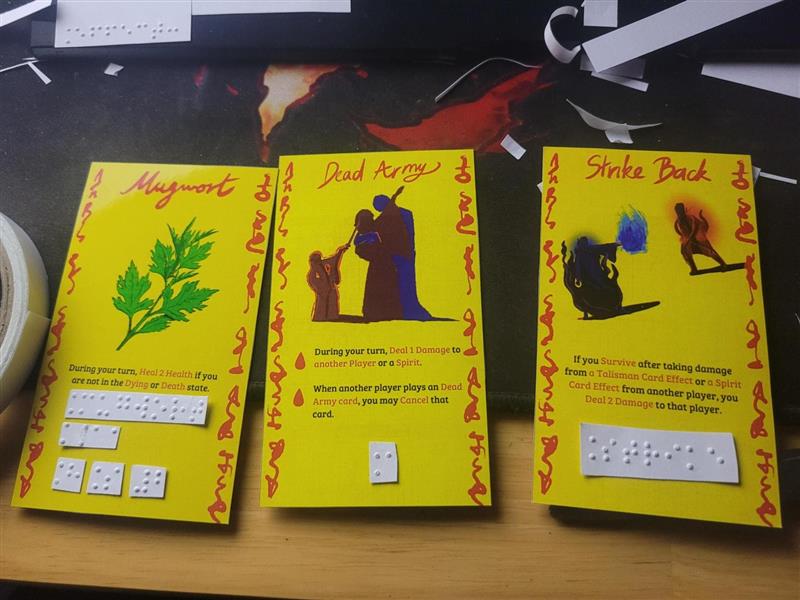
Huy experimented with Braille on the cards to make the game accessible for visually impaired players Huy experimented with Braille on the cards to make the game accessible for visually impaired players

That insight became a turning point. By embedding spiritual beliefs into Âm Binh, Huy aimed to design a game that was entertaining while passing down cultural stories. “When people play, they start to love their own heritage without even realising it,” he explained. “That spark of curiosity can help Vietnamese culture grow stronger and reach further into the world.” 

Duy agreed, noting that Asian spiritual culture is often associated with Japan or Thailand, where gaming companies have brought traditions to global audiences. “So why shouldn’t Vietnam have its own?” he asked. “I hope Âm Binh can lay the foundation for Vietnamese games to share our culture with the world.” 

When asked what advice he would give aspiring creators, Huy was thoughtful. “Any game we make should leave something behind for society,” he said. With Âm Binh, that “something” is a deeper appreciation of Vietnam’s spiritual traditions. 

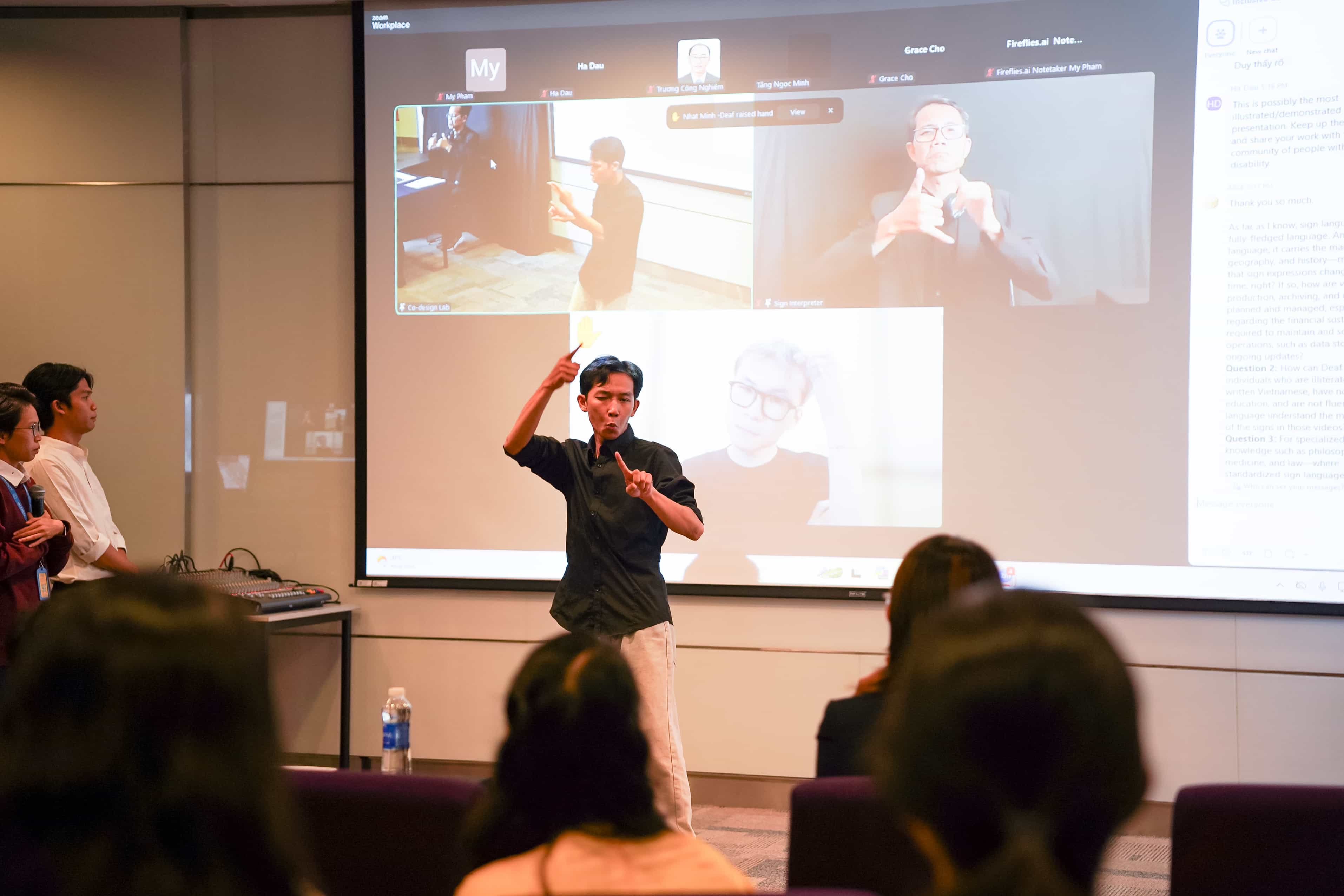
Not stopping there, the team is proving that games are, as Huy calls them, "a universal language." In a move that defines the project's heart, they recently developed a Braille prototype for the 2025 Accessibility Design Challenge. During a playtest, a visually impaired student learned the mechanics and beat the development team after just a couple of rounds, proving that well-designed culture is accessible to everyone. 

With plans to publish Vietnamese and English editions through Everjoy, one of Vietnam’s top board game distributors, Huy is determined to make the game a global cultural export.  

Huy urged other young creators to focus first on cultural and social value.  He believed that the outcomes, whether popularity, recognition, or profitability, would follow naturally. “When you create something meaningful, it will always come back to you,” he said. 

Âm Binh’s recognition at Road to Essen Vietnam 2025 marks the beginning of an even bolder journey. Âm Binh’s recognition at Road to Essen Vietnam 2025 marks the beginning of an even bolder journey.

Story: Pham Thanh Thao, Professional Communication student. This article does not reflect the views of RMIT Vietnam as an institution.

28 November 2025

Share

More news