

Australia now bans social media for under-16s. Should Vietnam follow?

Australia now bans social media for under-16s. Should Vietnam follow?

From 10 December 2025, Australia is the first country that officially bans users aged under 16 from owning a social media account. RMIT experts offer psychological and cyber security insights on the potential implications of a similar ban in Vietnam.

Why ban social media for under-16s?

Social media has been identified as one of the factors contributing to declining youth mental health and wellbeing, disrupted sleep, and reduced attention span. Meanwhile, children are spending less time in free play with friends or exploring nature, limiting their opportunities for real-world learning and development. Because the brain undergoes restructuring during adolescence, excessive and repeated experiences on social media may have lasting effects.

Ms Vu Bich Phuong, RMIT Psychology Associate Lecturer, acknowledges Australia’s initiative. “This bold move shows Australia’s determination in tackling risks and subtle cyber crimes against children. The social media ban also suggests a share in responsibility that not only parents but tech giants should also be responsible”.

Ms Phuong suggests that, while traditional forms of media entertainment like film and television are carefully monitored, censored, and age-regulated, social media – which feeds more directly and is freely created by anyone – has not received the same legal oversight. “Australia’s social media ban implies that all forms of media should be treated the same in terms of psychological and legal consequences,” she says.

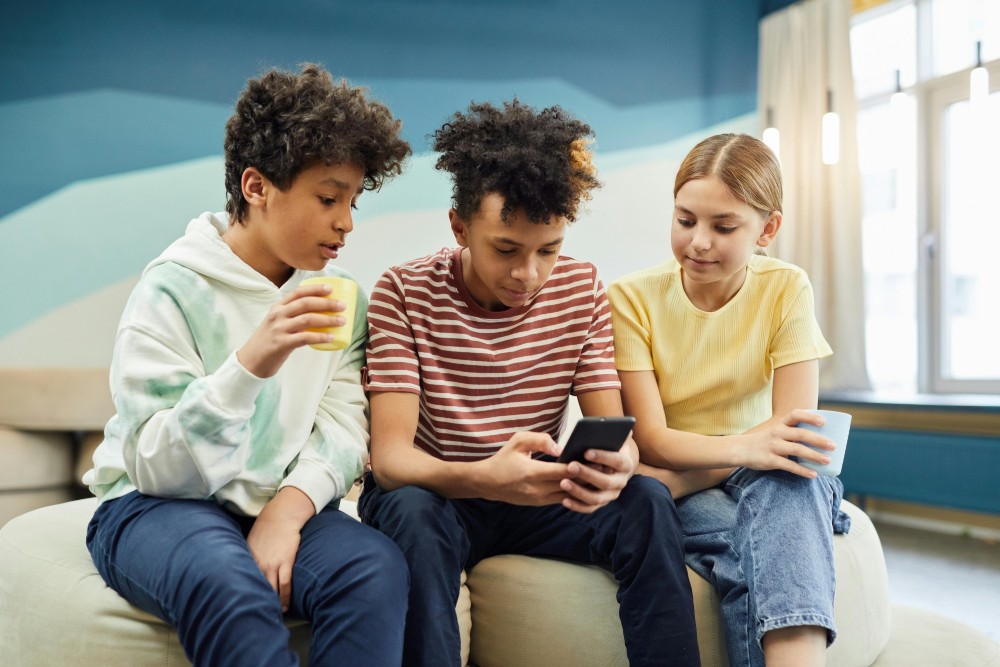
Three children looking at a smartphone Children are spending less time in free play with friends or exploring nature, and more time with technology. (Photo: Pexels)

Banning social media may not solve the root problems

Vietnam can consider this option. However, enforcement of such a ban is not simple, and parental supervision is still crucial.

“We can look around and see Vietnamese children watching TikTok or Facebook reels from their parents’ or grandparents’ smartphones. They don’t need their own account to use social media,” Ms Phuong stresses. “Owning an account and passively viewing social media contents are different. Many platforms have public content that does not require logging in for viewing.”

Gender equity is another issue. While teenage girls often engage with “classic” social networks like Instagram and TikTok, teenage boys spend more time playing multiplayer games with online friends.

“In a real sense, gaming platforms can function like social networks for boys – they’re just focused on a shared online activity, rather than on the social connection itself,” notes Dr Gordon Ingram, RMIT Senior Lecturer in Psychology. Banning social networks but not online gaming thus creates gender equity issues, which could seem very unfair to girls.

“The ban may also drive teens to migrate to other text messaging and gaming platforms, like WhatsApp, Discord, and Roblox, or use VPNs to mask their location”, says Dr Jeff Nijsse, RMIT Senior Lecturer in Software Engineering. While VPNs can mask IP addresses, they may also break the geo-neighborhood algorithms, isolate users from their local peer groups, and serve them irrelevant content from foreign regions. Free VPN apps may introduce even more risks such as malware.

(L-R) Ms Vu Bich Phuong, Dr Gordon Ingram, and Dr Jeff Nijsse (Photo: RMIT) (L-R) Ms Vu Bich Phuong, Dr Gordon Ingram, and Dr Jeff Nijsse (Photo: RMIT)

Another problem raised by Dr Nijsse is junk SIM cards. Vietnam requires all social media accounts to be verified via a mobile number. However, junk SIMs remain available on the local market, offering a potential workaround for users seeking to bypass verification.

Without government IDs, platforms are turning to facial age estimation, but this technology is still immature. The Australian government’s own trials revealed that their AI models struggle to correctly identify the 13-16 age demographic.

“Compounding this is a data privacy paradox: privacy laws limit the collection of children's biometric data, preventing AI models from being trained effectively on adolescent faces,” Dr Nijsse points out. “Relying on facial estimation risks a high rate of false positives or false negatives, potentially blocking adults or wrongly admitting children.”

Are there more sustainable strategies?

Given the problems with implementing a social media ban, many experts consider that a “digital safety” approach can be much more effective. The digital safety approach centres on educating children and parents about online risks, so that kids can be more aware of the dangers, and parents can better understand what their kids are doing with technology. But it is more than just digital literacy education.

“Digital safety also means advocating for tech companies to build more safety features into their apps and algorithms, and for researchers and designers to take young people’s own perspectives and activities more into account,” explains Dr Ingram. “That can help create a safer, more inclusive internet that better aligns with children’s needs and protects their vulnerabilities.”

The OECD-recommended “four pillars” of the digital safety approach – digital literacy training for both young people and their parents, regulation for safer technology, and child-centred design – could form the basis of an approach to social media in Vietnam that is more effective, equitable and sustainable than an outright ban. 

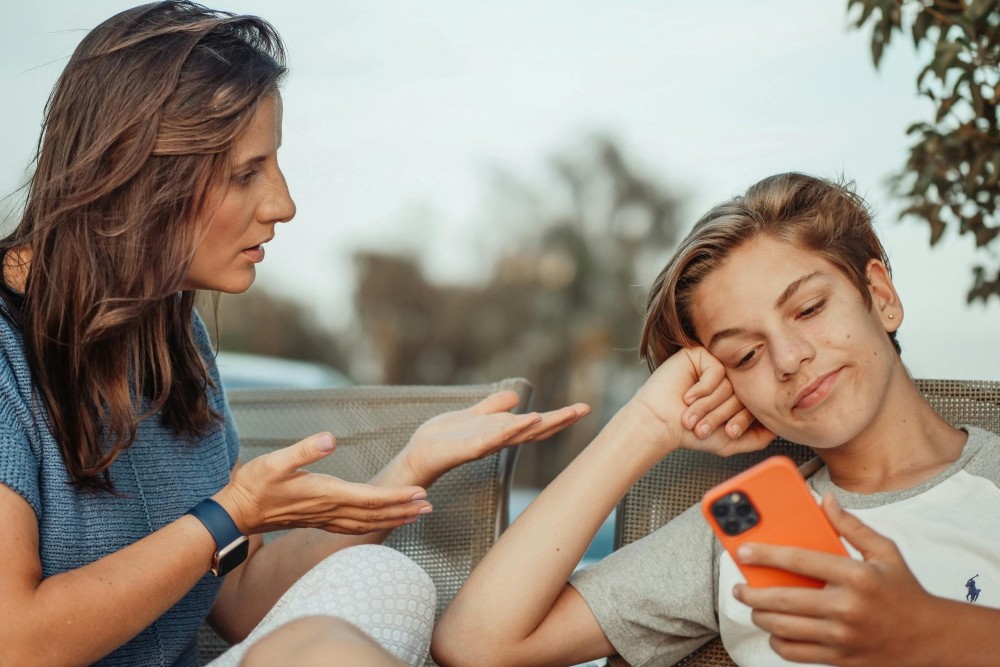
Mother gestures to child who's looking at a smartphone The digital safety approach educates children and parents about online risks, so that kids can be more aware of the dangers, and parents can better understand what their kids are doing with technology. (Photo: Pexels)

Important strides have already been made in these areas. The first national program to protect Vietnamese children in cyber environments was approved by the Vietnamese Prime Minister in 2021. In early 2025, an online training program on internet safety was launched for youth, which was well received by more than 11,000 children. For the next period 2026-2030, youth’s feedback and suggestions were recently collected to help refine the program and make it more relevant to their ever-evolving online activities.

However, more can be done in the future. Digital literacy training for adults (including parents, other caregivers, and teachers) may be an area that is lacking. According to Dr Ingram, “Vietnamese parents need to be more aware of what their children are doing online, have meaningful conversations with them about their activities, and learn about digital safety tools available to block harmful content, limit screen time, and prevent online contact by strangers.”

Rather than banning social media completely, a better use of regulation is to make tech companies comply with creating a safer online environment for children and young people. For example, they should make reporting functions more visible and easier to use, and provide child-safe settings with active content moderation. “This is particularly important as young people’s use of AI tools will also explode over the next few years,” Ms Phuong stresses.

The world’s first social media ban for children is now enforced, but more actions are needed. Media literacy, parental supervision, big tech compliance, and child-centred design are critical in providing a safe environment for young people. Only then can they sustainably benefit from one of the most influential technologies of the 21st century.

Related news