Why bigger AI isn’t the answer to better waste management

Why bigger AI isn’t the answer to better waste management

Dr Dao Vu Truong Son, senior lecturer in electronic and computer systems engineering at RMIT Vietnam, suggested that the future of sustainable waste management may depend less on building bigger AI systems and more on making them smarter, leaner and better suited to real-world conditions.

Every day, we throw things away without giving them much thought. A plastic bottle, a takeaway container, an old newspaper. Once they leave our hands, they seem to disappear. But that is not the end of the story. Each item enters a chain of decisions that determines whether it is recycled, recovered or ultimately ends up in landfill.

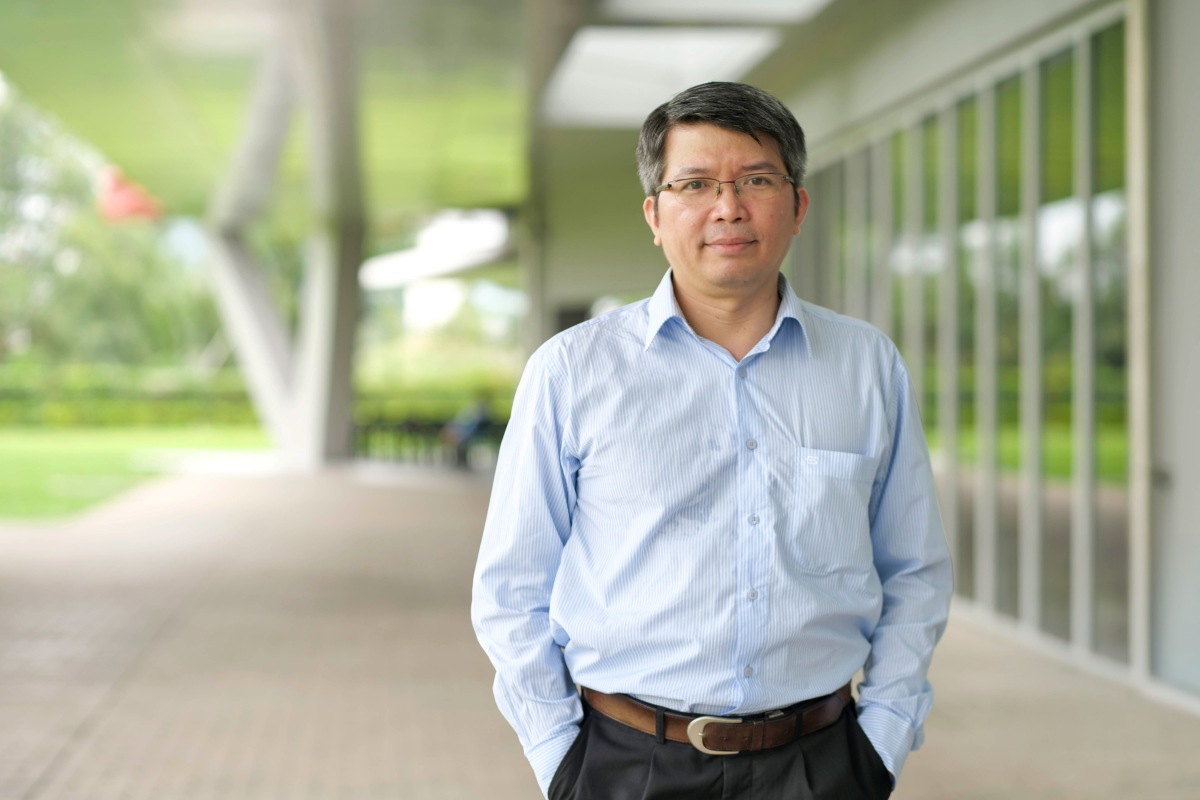
Person standing on a covered walkway beside a modern building.Tiến sĩ Đào Vũ Trường Sơn, giảng viên cấp cao về kỹ thuật điện tử và hệ thống máy tính tại Đại học RMIT Việt Nam (Hình: RMIT)

As cities grow and consumption rises, managing that journey is becoming increasingly difficult. Artificial intelligence (AI) is often presented as a solution, with smart machines helping identify, sort and process waste more efficiently. But according to Dr Son, much of the field has focused on building ever-larger AI models, potentially overlooking a simpler question: what if smaller AI can do the job just as well?

Smarter, not bigger

"Think about the last thing you threw away today," Dr Son said. "Once it leaves your hand, it seems to disappear; but it does not really. It enters a complicated journey of sorting, collection, transport, recycling or disposal."

The most effective waste management systems depend on correctly identifying waste as early as possible. The sooner a plastic bottle, cardboard box or food container is recognised for what it is, the better the chances of recovering resources and reducing environmental impact. A mistake made at the beginning of that journey can follow an item all the way through the system. This is where AI can help.

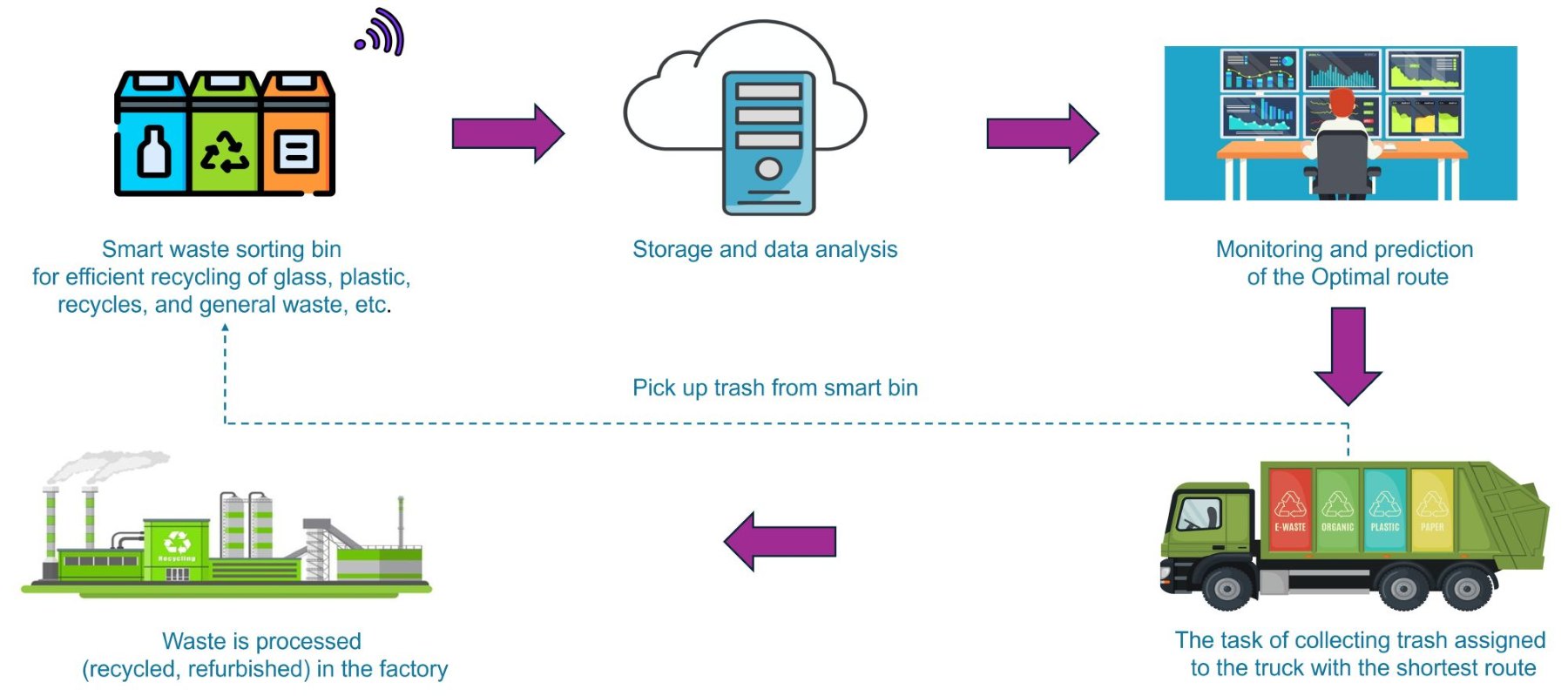
Smart waste management workflow from waste sorting bins to data analysis, route optimisation, collection, and recycling.The waste management process developed by Dr Son’s team. (Image: RMIT)

Using nearly 20,000 labelled images of waste, Dr Son and his collaborators trained an AI system to recognise different categories of waste automatically. Their work draws on deep learning, a type of AI that learns patterns from large amounts of data in much the same way people learn through experience.

What makes the research distinctive is not that it uses AI, but how it uses it.

At a time when many researchers were focused on creating increasingly large models that require vast amounts of computing power, Dr Dao's team took the opposite approach.

“The rest of the field was in an arms race: creating larger models and using more computing power. We went the other way and asked how we can reduce the model size without sacrificing model quality,” he said.

To do that, the team used MobileNetV3, a lightweight deep-learning model designed to deliver strong image-recognition performance while using significantly less computing power than many larger systems. Instead of building a completely new model, they refined and adapted MobileNetV3 for waste classification, teaching it to focus on the most useful information while discarding unnecessary complexity.

The result was an AI system that remained accurate while becoming more efficient. In many ways, the research challenges one of the biggest assumptions driving today's AI boom: that better results always require bigger models and more computing power. For waste operators and local authorities working with limited budgets and infrastructure, an AI system that is easier to deploy and maintain may ultimately create more impact than one that performs only marginally better under ideal conditions.

AI is only part of the solution

While the research highlights the potential of AI, Dr Son is careful not to oversell what technology can achieve on its own.

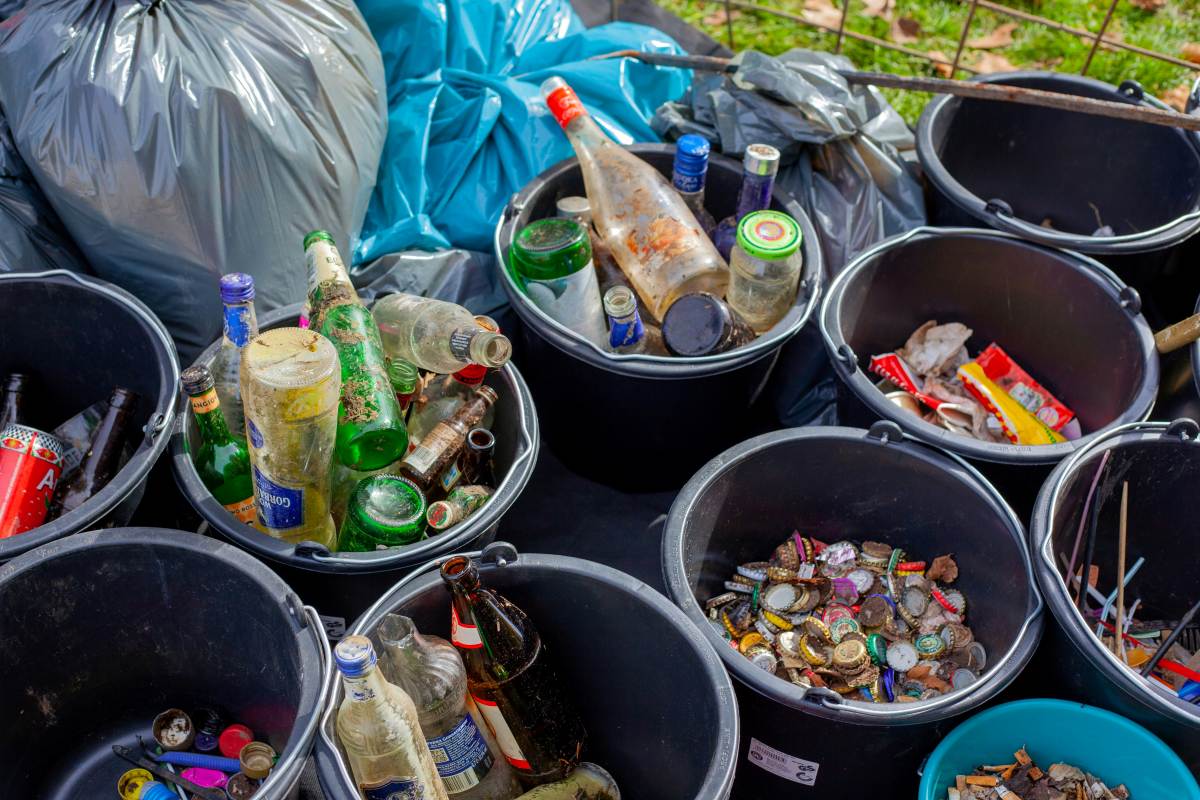
Sorted waste in buckets, including glass bottles, cans, plastic items, and mixed recyclables.Mỗi món đồ chúng ta vứt đi đều bước vào một hành trình phân loại, thu gom, vận chuyển, tái chế và chôn lấp phức tạp. Đưa ra quyết định xác đáng hơn ngay từ đầu có thể giúp tái chế nhiều hơn và xả rác ít hơn. (Hình: Unsplash)

"The key message is to avoid treating AI as a magic box. A useful system needs good data, clear responsibilities, suitable infrastructure and people who understand the local context," he said.

In other words, technology alone will not solve the waste problem. AI is only as effective as the systems surrounding it. Reliable data, effective collection systems, supportive policies and cooperation between organisations remain essential.

For governments, that could mean supporting responsible pilot projects and developing shared standards. For businesses, it means investing in solutions that are practical and maintainable rather than chasing eye-catching demonstrations. For researchers, it means rigorously testing technologies and being transparent about their limitations as well as their strengths.

Looking ahead, Dr Son's team plans to develop a mobile application that helps people separate waste correctly at the source, alongside prototype automated sorting systems and smarter collection solutions. The goal is to make sustainable waste management part of everyday life rather than something that happens only behind the scenes.

For Dr Son, the motivation goes beyond engineering. "What drives me is the possibility of turning engineering knowledge into something people can recognise in their daily lives. Everyone creates waste, so everyone is connected to this problem."

He hopes the research encourages students, researchers, businesses and public agencies to view waste management not simply as an environmental challenge but as an opportunity for creativity and collaboration.

"The most valuable breakthroughs will come when different disciplines and communities work on the problem together," Dr Son noted.

As Vietnam pursues both digital transformation and more sustainable cities, Dr Son's research highlighted a broader challenge facing many emerging technologies: how do we create solutions that are not only innovative but also practical, affordable and built for real-world conditions?

His answer is surprisingly simple. Success depends not only on better technology, but also on better decisions, stronger partnerships and a clearer understanding of the communities those technologies are meant to serve.

That belief sits in the heart of The Ripple Theory, a series of expert perspectives informed by research from RMIT University Vietnam. By connecting academic insight with real-world stories, the series helps readers gain a deeper understanding of the shifts unfolding across the economy, society, environment, and technological world, while exploring solutions and opportunities for what lies ahead. 

Read the full study at:

https://www.sciencedirect.com/science/article/pii/S2589471425000270

Story: Ha Hoang

Thumbnail image: Jas Min – unsplash.com

Related news