Black Friday shows why retailers need to stop thinking “online vs offline”

Black Friday shows why retailers need to stop thinking “online vs offline”

As the year-end shopping season nears, the winning retailers may not be those with the biggest discounts, but those that help customers move seamlessly from searching to deciding.

Black Friday is often treated as the ultimate online shopping event. Consumers scroll through promotions, compare prices across platforms, and hunt for the best deals. For retailers, this can easily turn Black Friday into a competition over which channel captures the sale: the website, the app or the physical store.

But according to researchers from The Business School at RMIT University Vietnam, this is not necessarily how customers think.

During major sales events, shoppers may discover a promotion on social media, compare products across websites, visit a store to see or try the product, check reviews on their phone while standing in the store, and eventually purchase through whichever channel helps them make the decision.

From the customer’s perspective, these are not separate online and offline journeys. They are different parts of the same decision.

As Professor Robert McClelland, Dean of The Business School at RMIT Vietnam, puts it: “Retailers often organise around channels, but customers organise around decisions. The opportunity is to make each channel contribute to that decision, rather than compete to own the transaction.”

The psychology behind switching channels

In their Springer-published book, Customer Switching Behaviours in Omnichannel Retailing, Dr Nguyen Thi Van Anh, Professor Robert McClelland and Associate Professor Nguyen Hoang Thuan from The Business School at RMIT Vietnam suggest that understanding the psychology behind customers’ movements is more useful than simply tracking where customers go.

This becomes particularly important during big sale events like Black Friday because customers are not all looking for the same thing, even when they appear to be following similar journeys. A customer searching across several websites may be looking for speed and convenience, but another may be gathering as much information as possible before committing.

A person holding a credit card and browsing an e-commerce siteConsumers often scroll through promotions, compare prices across platforms, and hunt for the best deals during major sale events. (Photo: Pexels)

RMIT’s research found that “webroomers” – shoppers who research online and then go to a physical store – tend to be cautious decisionmakers. Seeing or experiencing the product can provide the final reassurance they need.

The psychology is different for “showroomers”, those who search offline but order online. They value the ability to physically experience a product first but may subsequently move online for price transparency and economic benefits.

These differences matter because channel switching is also an emotional experience. RMIT’s findings show that confidence, reassurance, perceived control, and even the feeling of being a “smart” shopper can reinforce a customer’s experience. Conversely, uncertainty or difficulty moving between channels can create frustration and encourage customers to look elsewhere.

Dr Nguyen Thi Van Anh, Associate Program Manager for Digital Marketing at RMIT Vietnam, explains: “Customers switch channels because they are trying to solve something: they may need more information, more reassurance, a better deal or simply an easier way to buy. So instead of wondering about ways to stop them from switching, retailers should think about what the customer needs next.”

Ask what the customer needs next

Dr Van Anh proposes tailoring responses to customer needs.

If they need knowledge, make product information, availability, reviews, and price comparisons easy to access.

If they need reassurance, give them opportunities to see or try the product, talk to knowledgeable staff, access reliable reviews or use flexible return policies.

If they want convenience, make the transition effortless: preserve their shopping cart, show real-time store inventory, offer click-and-collect and allow them to continue the same journey across devices.

If they are seeking value, make prices and promotions transparent across channels rather than forcing them to search elsewhere.

The RMIT academic argues that physical stores have an important role during occasions like Black Friday. Stores can reduce uncertainty, provide human reassurance, allow physical product evaluation, and give customers greater confidence in their decisions.

Digital channels, meanwhile, can provide speed, comparison, information, and convenience. The value comes from understanding how these functions work together.

Associate Professor Nguyen Hoang Thuan, Head of Business Innovation Department at The Business School, RMIT Vietnam, explains: “A seamless omnichannel experience does not mean keeping customers on one channel. It means giving them the freedom to move, while making sure that every move brings them closer to a confident purchase decision.”


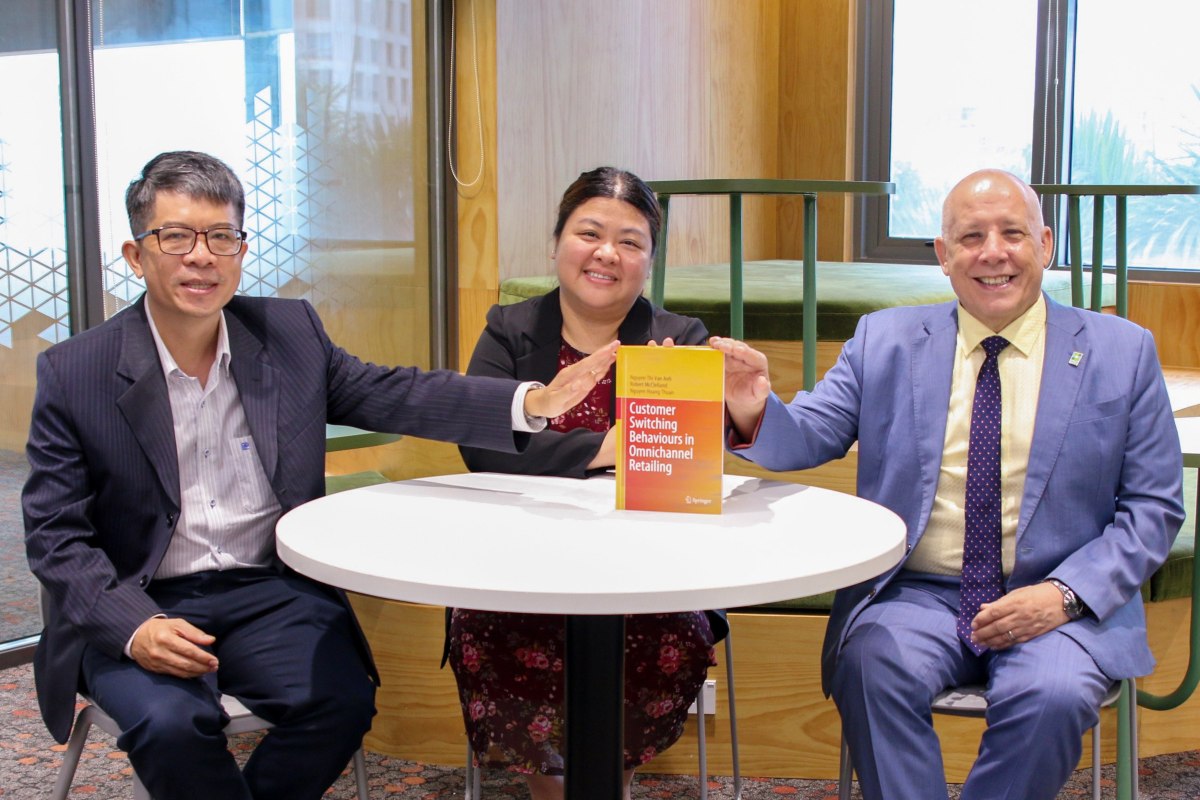
Three people sitting around a table and touching a book(Left to right) Associate Professor Nguyen Hoang Thuan, Dr Nguyen Thi Van Anh and Professor Robert McClelland (Photo: RMIT)

Avoid measuring channels as if they compete

According to the RMIT researchers, it is important for retailers to design the journey to help the customer in their decision making. When product information, pricing, inventory, or promotions are inconsistent across channels, customers have another reason to leave the retailer’s ecosystem. When those channels work together, switching can make the customer feel more confident and in control.

For managers, this means looking beyond which channel gets credit for the transaction. What they should focus on is where customers become uncertain, why they move next, whether the next touchpoint resolves that need, and whether they remain within the brand ecosystem.

It is also why today’s marketing teams increasingly need people who can connect the dots across customer insights, e-commerce analytics, CRM, content, and customer experience, because the customer certainly does not organise their shopping journey according to the company organisation chart.

“Black Friday makes this visible. When consumers face more promotions, more information and more choices, the winning retailer may not simply be the one offering the deepest discount. It may be the one that best helps customers move from uncertainty to confidence, from searching to deciding, and from one channel to another without losing them along the way,” Dr Van Anh concluded.

Related news