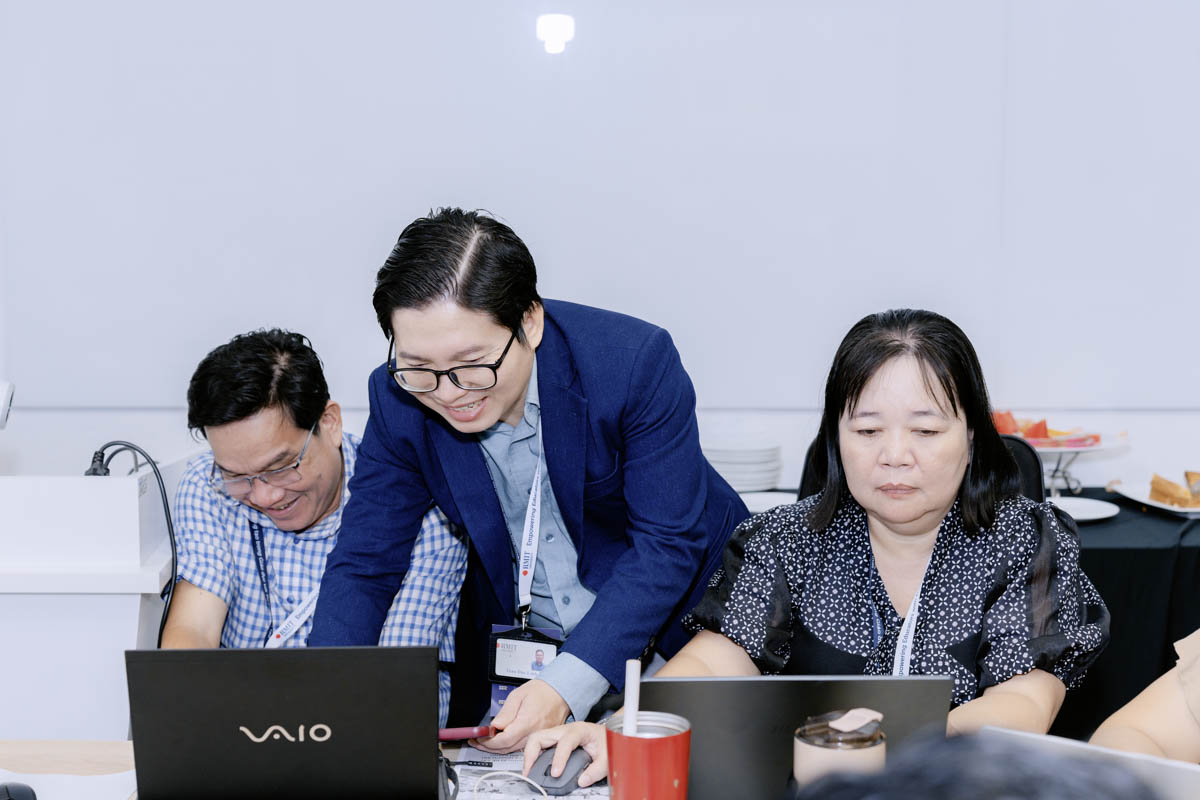
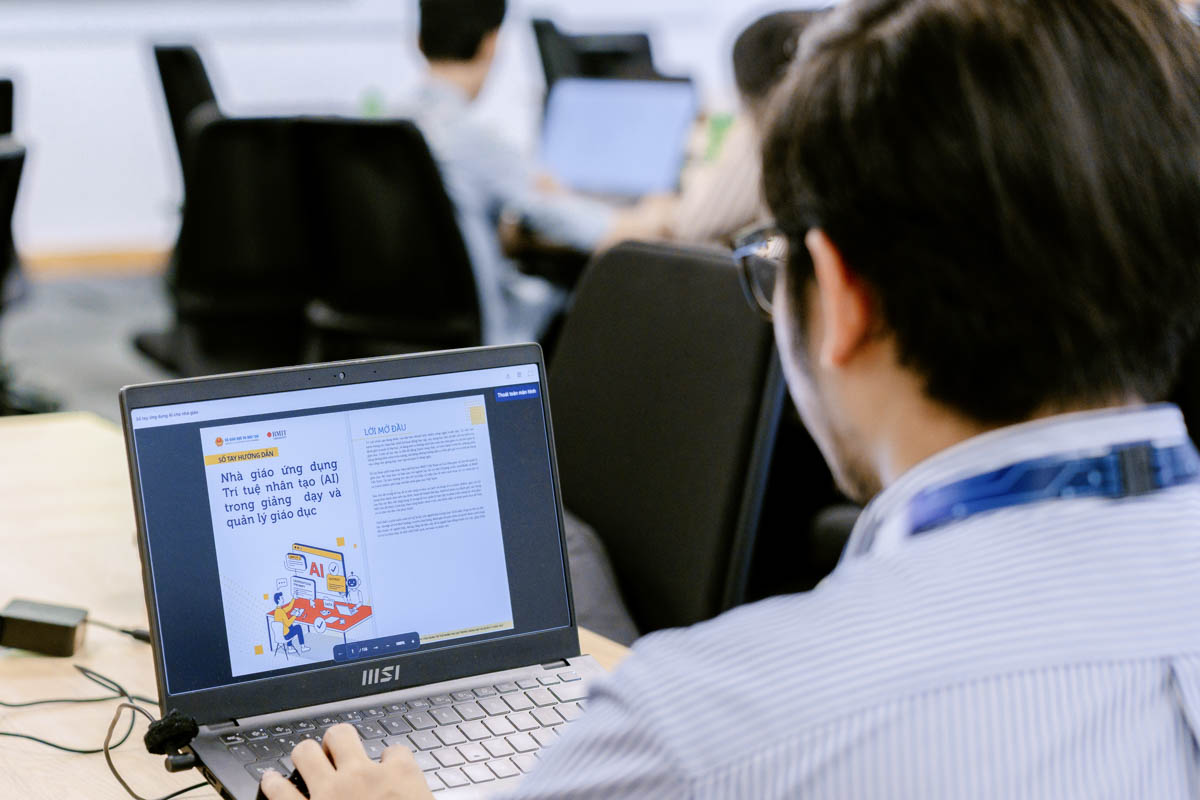
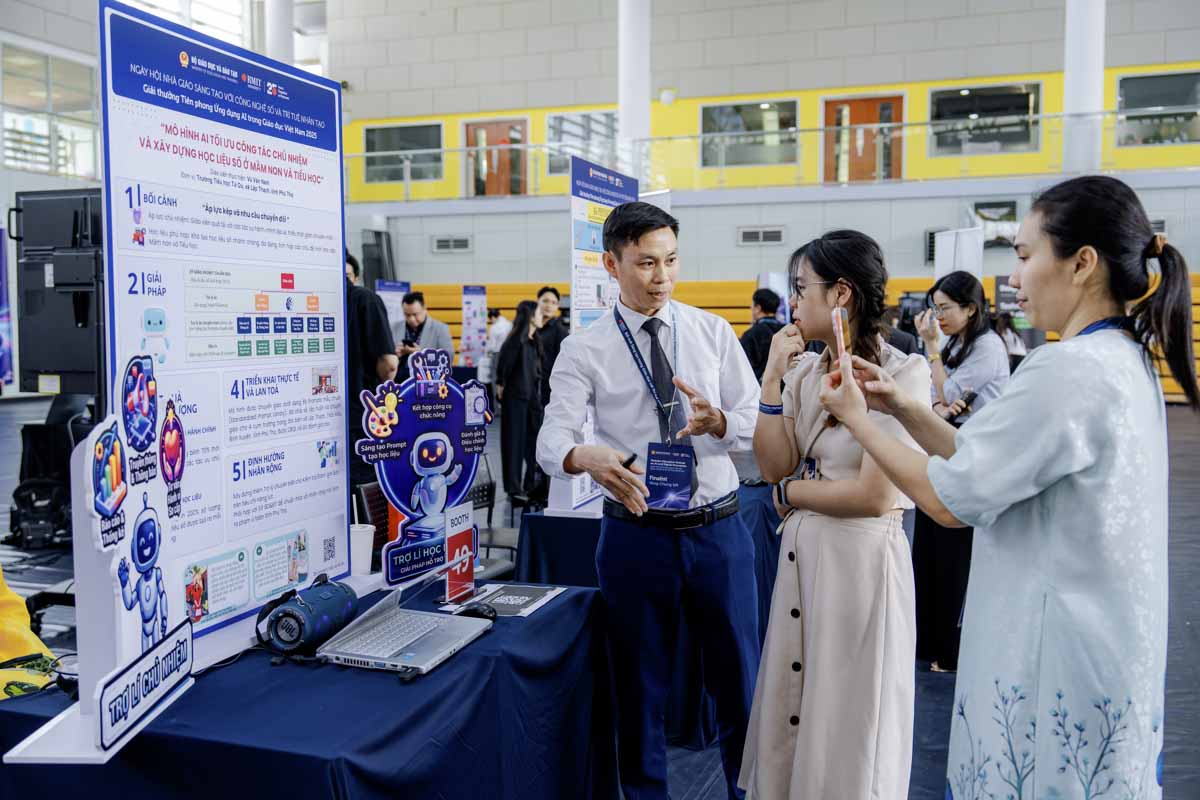
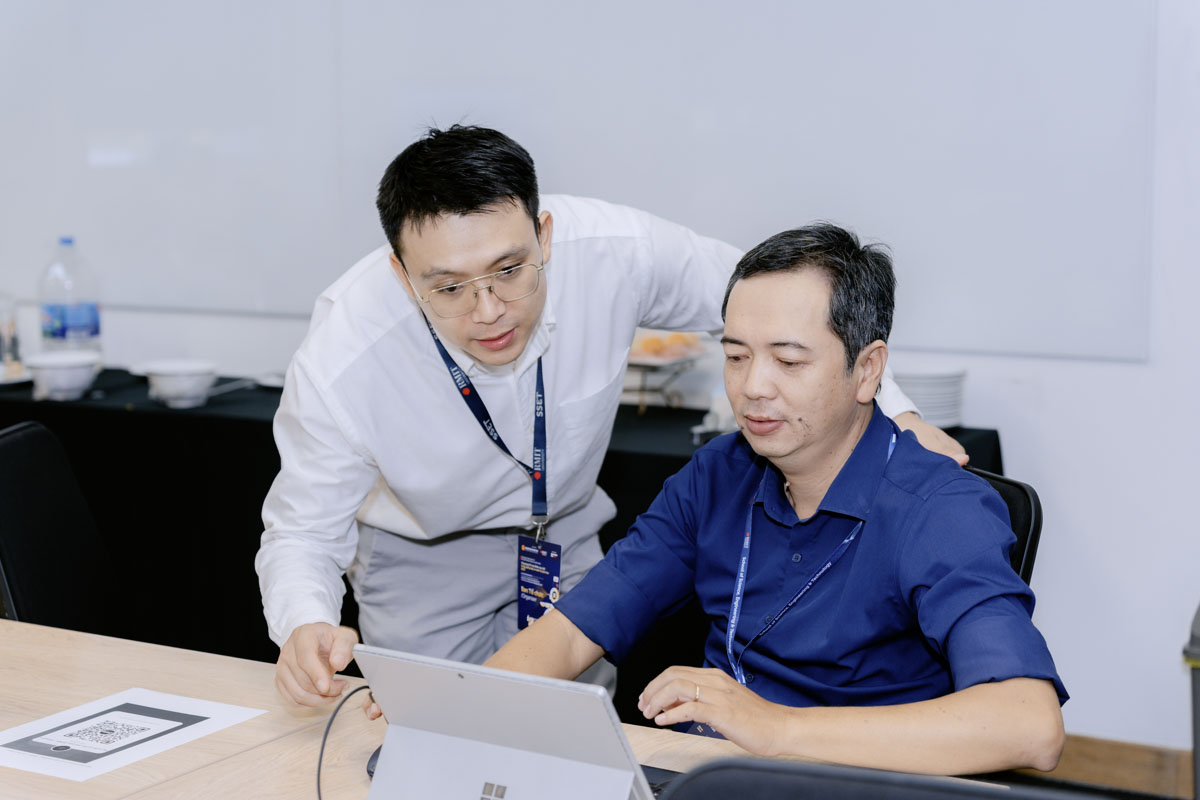
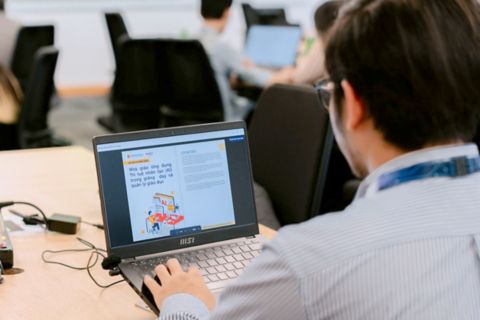
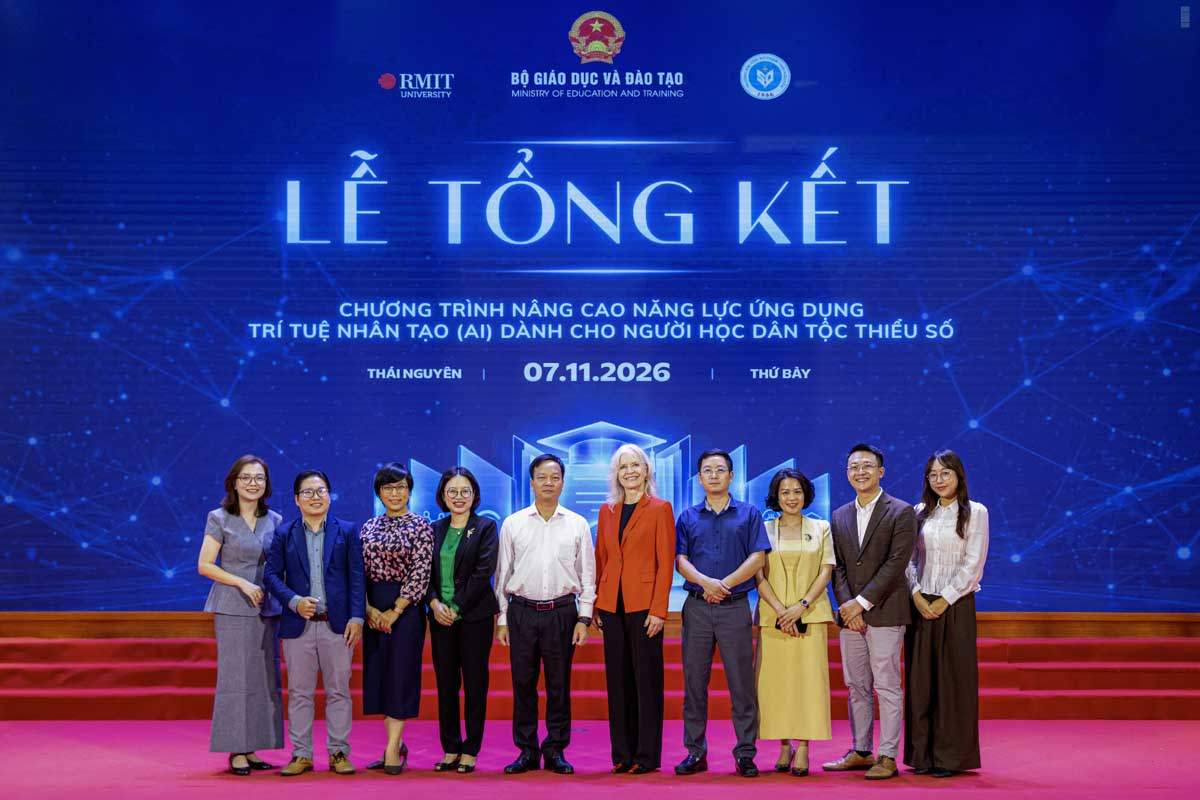
This journey began in 2024, when RMIT University's AI in Education research team, with support from the Australian Government's Round 7 Australian Alumni Grants Fund (AAGF), partnered with provincial Departments of Education and Training to deliver the project Applying AI Tools in Teaching and Learning for Vietnamese Educators. The project provided in-person training for 650 educators and education administrators in Ninh Thuan Province (now Khanh Hoa Province) and Can Tho City, while more than 1,000 educators across the country participated in online training sessions. Lessons learned from this initiative laid the foundation for the development of a larger-scale program.
Building on this foundation, the research team expanded its efforts through the Empowering Educators with AI (EEAI) initiative. Funded by RMIT Vietnam's Strategic Innovation Challenge, EEAI brings together educators, education administrators, researchers, policymakers and technology experts to strengthen AI capability, foster innovation and support Vietnam's digital transformation agenda.
In 2025, EEAI partnered with the Ministry of Education and Training (MOET) to deliver the country's first official nationwide AI training program for the K-12 education sector, reaching more than 350,000 teachers and educational administrators. Building on this success, the initiative further expanded its impact in 2026 through training programs, community-building activities and the recognition of innovative AI applications in teaching, learning and educational management.
"The goal of EEAI is not to encourage AI as a replacement for educators, but to empower educators to use AI as a tool that enhances teaching, supports professional practice and improves learning experiences for students," said Dr Tran Duc Linh, Project Lead and lecturer in Information Technology and Software Engineering at RMIT Vietnam.
"As the initiative evolves, we are seeing a shift from experimentation towards meaningful implementation across Vietnam's education sector. Educators are increasingly exploring how AI can support lesson planning, assessment, learner engagement and educational management while maintaining the critical role of human judgement, creativity and care," Dr Linh said.
At the heart of EEAI 2026 was the focus on helping educators move beyond AI awareness towards real-world application.
The Vietnam National Forum on Education Innovation with AI continued to serve as a national platform for educators, researchers, policymakers and technology experts to exchange knowledge, share best practices and explore opportunities for AI-enabled transformation in education.
The initiative also continued to foster a nationwide educator community dedicated to innovation and knowledge sharing. Today, the EEAI educator community has grown to more than 300,000 members, creating opportunities for teachers and education leaders across the country to learn from one another and exchange experience in using AI.
Alongside these efforts, the research team secured further support through the Australian Government’s Round 8 AAGF to expand its activities into the vocational education and training (VET) sector. In partnership with MOET and Aus4Skills, RMIT Vietnam delivered a dedicated hybrid AI training program for VET educators, helping teachers explore practical AI applications that support industry-relevant teaching and workforce development. The program welcomed approximately 150 in-person participants, including leaders, administrators, teachers from vocational institutions in Ho Chi Minh City, as well as around 14,000 online participants nationwide.