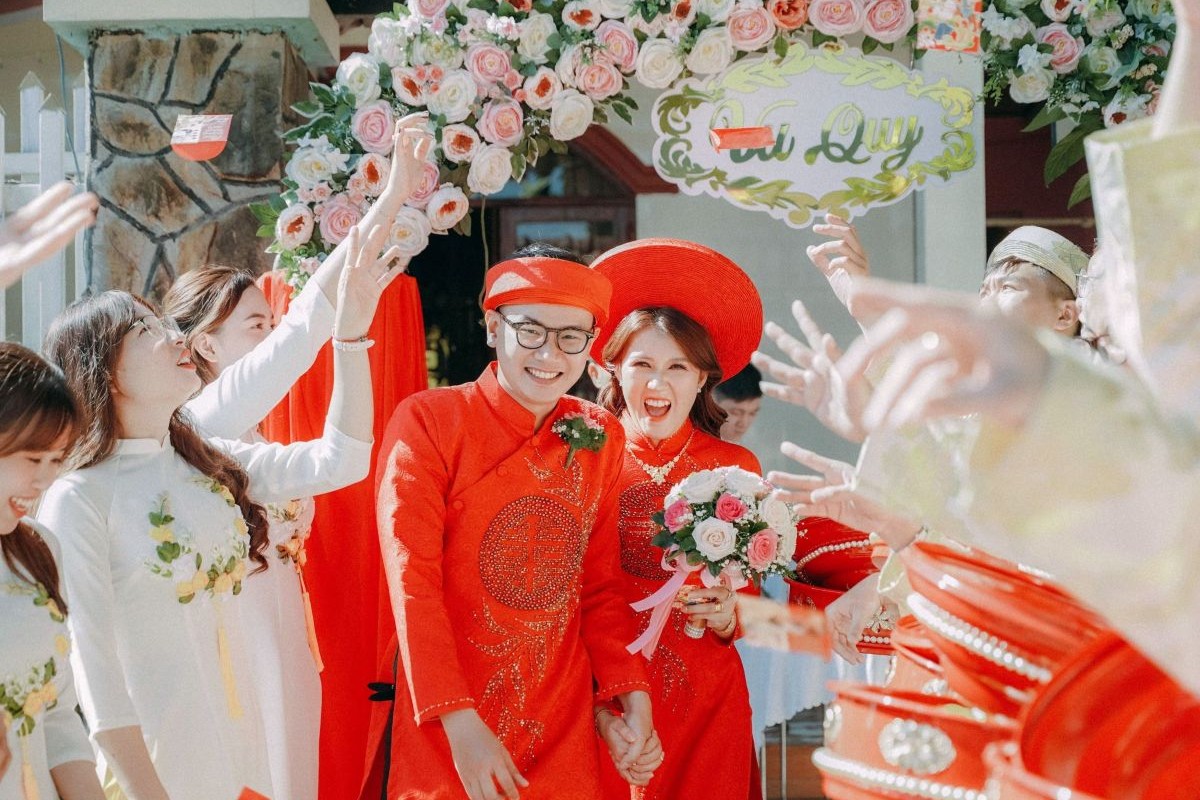
Later marriage: a new stage of adulthood?

Later marriage: a new stage of adulthood?

People across many countries are marrying later than ever. RMIT University academic Dr Gordon Ingram argues that this reflects a shift in how young people experience the transition to adulthood.

Vietnam is seeing more people delay marriage, mirroring a trend observed across much of the world. According to the National Statistics Office, the average age at first marriage in Vietnam was 27.3 years in 2024, up 2.1 years compared with 2019.

Meanwhile, Vietnam's fertility rate has fallen from 2.11 children per woman in 2021 to 1.91 in 2024 and 1.93 in 2025, below the replacement level of 2.1 children per woman.

The trend is not unique to Vietnam. A 2026 global survey by Deloitte found that 55% of Gen Z respondents and 52% of millennials were delaying major life decisions, including marriage and starting a family, because of their financial situation.

From a demographic perspective, this trend is usually discussed in terms of birth rates, population figures and policy targets. But behind the statistics are everyday questions facing ordinary people: how to finish education, find stable work, afford a home, and decide when—or if—to commit to a partner.

From a developmental psychology perspective, later marriage is not simply a demographic or economic phenomenon. Dr Gordon Ingram, a senior lecturer in Psychology at RMIT University Vietnam, argues that it reflects a broader shift in how young people navigate the transition into adulthood.

People in Vietnam are getting married later than previous generations. From your perspective as a developmental psychologist, what's changing about the path into adulthood today?

Dr Ingram: Fundamentally, what has changed is that we live in a more complex society – technologically, culturally and economically – where it can take longer for a young person to find their “niche” in life and achieve economic and social independence.

Vietnam is probably following a pattern that many developed economies experienced several decades ago. However, because of the country's rapid economic transformation, the shift may feel compressed into a single generation.

Traditionally, people tended to start a family relatively soon after adolescence, often with support from their extended family. Today, many young adults spend longer studying and building careers, and may not feel financially secure enough to establish a long-term relationship or raise children.


two newlywedsVietnam is following a pattern in late marriage that many developed economies experienced several decades ago. (Photo: Pexels)

In the media, this is sometimes described somewhat dismissively as “extending adolescence” or "delaying adulthood" – as if people are now taking longer to grow up. But developmental psychologists would argue that these young people are not adolescents at all. They are fully adult.

This has led psychologists such as Jeffrey Arnett to propose a new developmental stage called “emerging adulthood”, covering roughly the period from 18 to 30 or even into the mid-thirties. Rather than adolescence being extended or adulthood delayed, it may be more accurate to say that a new life stage has emerged, one enabled by economic development and changing cultural expectations. In Vietnam, that stage has appeared relatively recently.

Many people struggle to get stable jobs or housing in their 20s and 30s. A common feeling among young people is that they should get their whole life in order before settling down. From a psychological point of view, what are the benefits and risks of waiting that long?

Dr Ingram: One benefit is a greater sense of control. You feel a greater sense of self-efficacy when you finally settle down because you have got your life organised the way you wanted it. We know that self-efficacy is associated with many benefits for wellbeing.

Older people also tend to have more economic resources, which can help with everyday practicalities and reduce stress. From that perspective, waiting can be a rational decision.

The challenge is that the definition of being “ready” can keep expanding. In previous generations, marriage was often one of the things that helped people build a stable life. Increasingly, many young adults feel that stability must come before marriage.

This can lead to perfectionism, indecisiveness and overthinking. You may reject an option that does not seem perfect, whether in a job or a romantic relationship, while waiting for something better that never quite materialises. If that happens after several years, people can experience significant regret.

There are also practical realities to consider. Health problems become more common as people age, and for those who hope to have children, biology still matters. Fertility declines through the thirties, particularly for women, while the likelihood of pregnancy complications rises. People who start families later may also have less support from grandparents, who are themselves older and may increasingly need care.

So while delaying marriage can bring advantages, there can also be real costs.

a young family of four in ao daiKnowing that support is available can make a major difference when young couples are weighing up important life decisions. (Photo: Pexels).

Many young people want to build long-term relationships and families, but feel held back by the cost of housing, raising children, or simply achieving financial stability. What would make the biggest difference in helping them move forward?

Dr Ingram: I think support is needed at three different levels.

First, family support. Rather than pressuring their children to marry, parents can focus on the support they are willing and able to provide. That might include emotional support, practical help or, in some cases, financial assistance. Knowing that support is available can make a major difference when young couples are weighing up important life decisions.

Second, cultural acceptance. People should not feel that starting a family means giving up other parts of their identity or ambitions. Universities, workplaces and other institutions should be more accommodating of young parents, so that people do not feel they must choose between having children and pursuing education or career goals. It would also help if society became more accepting of modest weddings. For many couples, the cost of a wedding has become part of the financial barrier to marriage.

Third, structural support. This is probably where policy can make the biggest difference. Affordable housing remains one of the largest challenges facing young adults. Measures that make housing more accessible for newly married couples or young families could have a significant impact. There is also a strong case for more generous and flexible parental leave, as well as better childcare support, so that people do not feel they must sacrifice their careers in order to start a family.

Young people are not rejecting marriage or family life altogether. But if we as a society want to encourage family formation, then we need to create conditions that make long-term commitment feel achievable.

Story: Ngoc Hoang

04 November 2026

Share

Related news