What drives Vietnamese consumers to adopt electric vehicles?

What drives Vietnamese consumers to adopt electric vehicles?

Vietnam has set ambitious targets to achieve net-zero emissions by 2050, with electric vehicles (EVs) expected to play a central role in reducing transport emissions. But what motivates consumers to make the switch?

New research, “Electric vehicle adoption in Vietnam: usefulness and pro-environmentalism in an emerging market”, by Dr Nguyen Thi Tham and Associate Professor Catherine Earl (School of Communication and Design, RMIT Vietnam), suggests that while environmental goals are shaping national policy, Vietnamese consumers are currently making EV decisions based primarily on practical considerations such as affordability, convenience and reliability. The findings provide practical guidance for policymakers and industry on how to accelerate EV adoption by aligning climate ambitions with consumer priorities. 

Q: What is the most significant insight from your research? 

Dr Nguyen Thi Tham: Our research examined how EVs are discussed in academic studies and Vietnamese online news media, as well as what shapes consumers' attitudes toward adopting EVs. We wanted to understand whether people are motivated more by practical benefits such as cost savings, convenience and performance, or by environmental concerns and lifestyle values. 

We look at EV adoption not only as a question of environmental attitudes, but also through the lens of consumer culture, exploring how practical utility, identity, lifestyle and status influence adoption in an emerging market like Vietnam.  

We found that, at this stage of Vietnam's emerging EV market, practical benefits outweigh environmental motivations. Consumers appear to value what EVs can do for them more than what EV ownership says about their environmental values.  

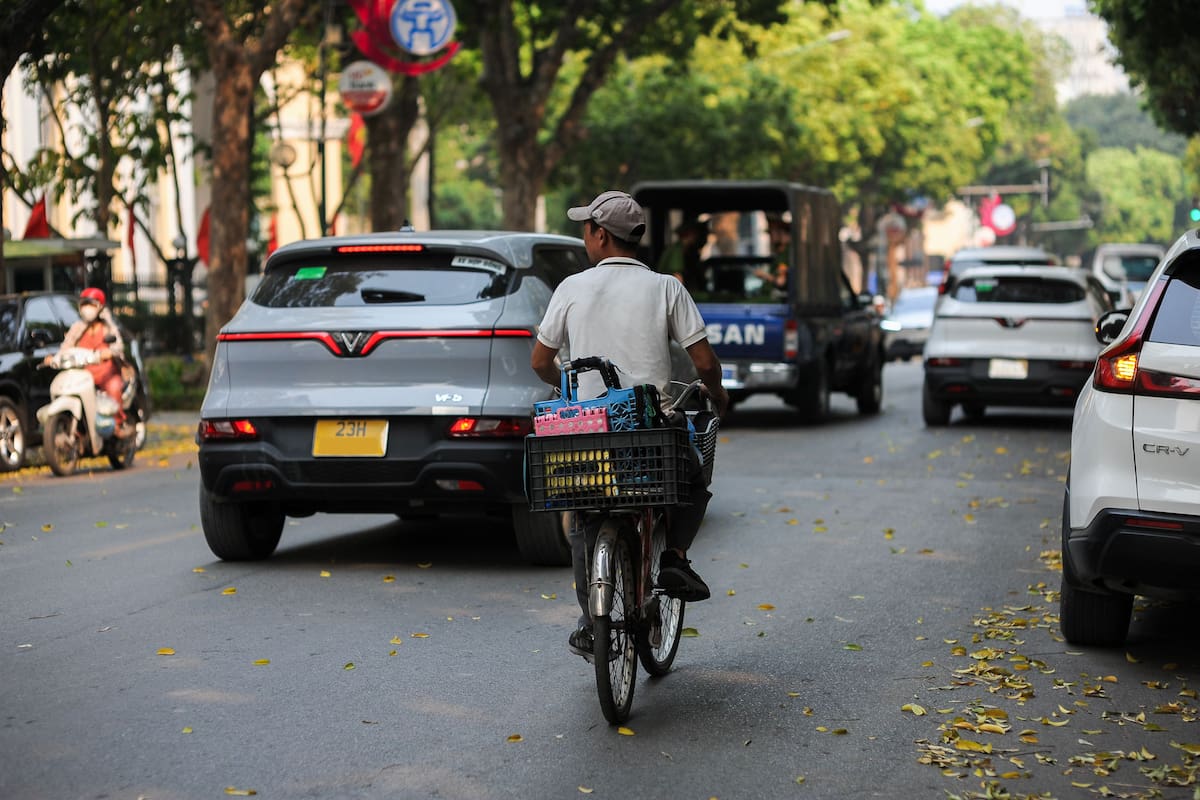
The study examines what motivates Vietnamese consumers to adopt electric vehicles, offering new insights for Vietnam's net-zero transition. (Image: Pexels) The study examines what motivates Vietnamese consumers to adopt electric vehicles, offering new insights for Vietnam's net-zero transition. (Image: Pexels)

Q: Why is this research important for Vietnam's net-zero ambitions?

Dr Nguyen Thi Tham: Researching net-zero emissions requires more than putting EVs on the road but understanding why consumers choose to drive them. Vietnam's transition to EVs will be determined not only by technological innovation and government policy, but also by whether consumers are ready to embrace the change. 

Consumers are first asking, “Can this vehicle meet my daily needs?” before asking, “Does it express my environmental values?”

Several factors help explain this. Vietnam's EV market is still in its early stages, and many consumers remain hesitant to replace conventional vehicles. Purchasing a car is a major financial decision, so buyers naturally prioritise affordability, reliability and convenience over broader environmental considerations. 

Concerns about charging infrastructure, driving range, battery performance and maintenance also influence purchasing decisions. Rather than reflecting a lack of environmental awareness, these priorities reflect the realities of an emerging market, where consumers first need confidence that EVs are suitable for everyday life.

Q: What do your findings mean for policymakers, manufacturers and businesses? 

Dr Nguyen Thi Tham: The findings suggest that accelerating EV adoption in Vietnam requires making EVs easier and more economically attractive to use, rather than relying on environmental appeals alone.

For policymakers, this means continuing to remove practical barriers through investment in charging infrastructure, financial incentives and supportive regulations. For manufacturers, it means focusing on affordability, reliability, driving range, charging convenience and operating costs, while clearly communicating these everyday benefits to consumers. Businesses also have an important role to play by making EV ownership and use more convenient and accessible. 

Overall, the research points to a two-stage strategy: address practical needs first, then gradually build the symbolic and environmental value of EV ownership as the market matures. Environmental messaging should not be abandoned; rather, it is likely to become increasingly effective once consumers are ready.

The study also suggests Vietnam may differ from more mature EV markets in Europe and North America, where environmental identity, lifestyle and social norms often play a larger role alongside practical considerations. As Vietnam's charging infrastructure expands, technology improves and consumers become more familiar with EVs, motivations are also likely to evolve. 

Dr Nguyen Thi Tham, Lecturer in Professional Communication at RMIT Vietnam (Image: RMIT) Dr Nguyen Thi Tham, Lecturer in Professional Communication at RMIT Vietnam (Image: RMIT)

Q: How do you expect Vietnam's EV market to develop in the coming years?

Dr Nguyen Thi Tham: Consumer motivations are likely to shift from primarily practical considerations towards lifestyle and symbolic motivations. Many of today's practical concerns are expected to diminish. 

As EVs become easier to own, consumers may stop asking whether they are practical and start asking what they say about who they are.

We expect environmental identity, technological sophistication, lifestyle and social status to become increasingly important, particularly among Vietnam's growing urban middle class. Social media, online influencers and community engagement may also play a greater role in encouraging EV adoption as a pro-environmental behaviour. 

Ultimately, a successful EV transition is not simply about increasing the number of EVs on Vietnam's roads. It is about making cleaner mobility a practical choice for consumers, a viable market for industry, and a meaningful step toward net zero.

The most important message from this research is simple: “If we want Vietnamese consumers to choose EVs for the climate, we first need to make EVs a practical choice for everyday life.” 

Behind every major shift is a story worth exploring. The Ripple Theory is a series of expert perspectives informed by research from RMIT University Vietnam. By connecting academic insight with real-world stories, the series helps readers gain a deeper understanding of the shifts unfolding across the economy, society, environment, and technological world, while exploring solutions and opportunities for what lies ahead.  

Story: June Pham 

Related news