Vietnam's tiny yeasts show big promise for sustainable edible oils

Vietnam's tiny yeasts show big promise for sustainable edible oils

What do sugarcane bagasse, pickled mustard greens and salted anchovies have in common? They have helped RMIT researchers discover promising oil-producing yeasts.

The discovery is the result of research led by Nguyen Quoc Duy, an RMIT University PhD student, and supervised by Dr Truong Thuc Tuyen, Program Manager of Food Technology and Nutrition at RMIT Vietnam.

Published in Biocatalysis and Agricultural Biotechnology, the study identifies naturally occurring oil-producing yeasts from familiar Vietnamese food sources that could pave the way for more sustainable food ingredients while highlighting the untapped potential of Vietnam's rich microbial biodiversity. 

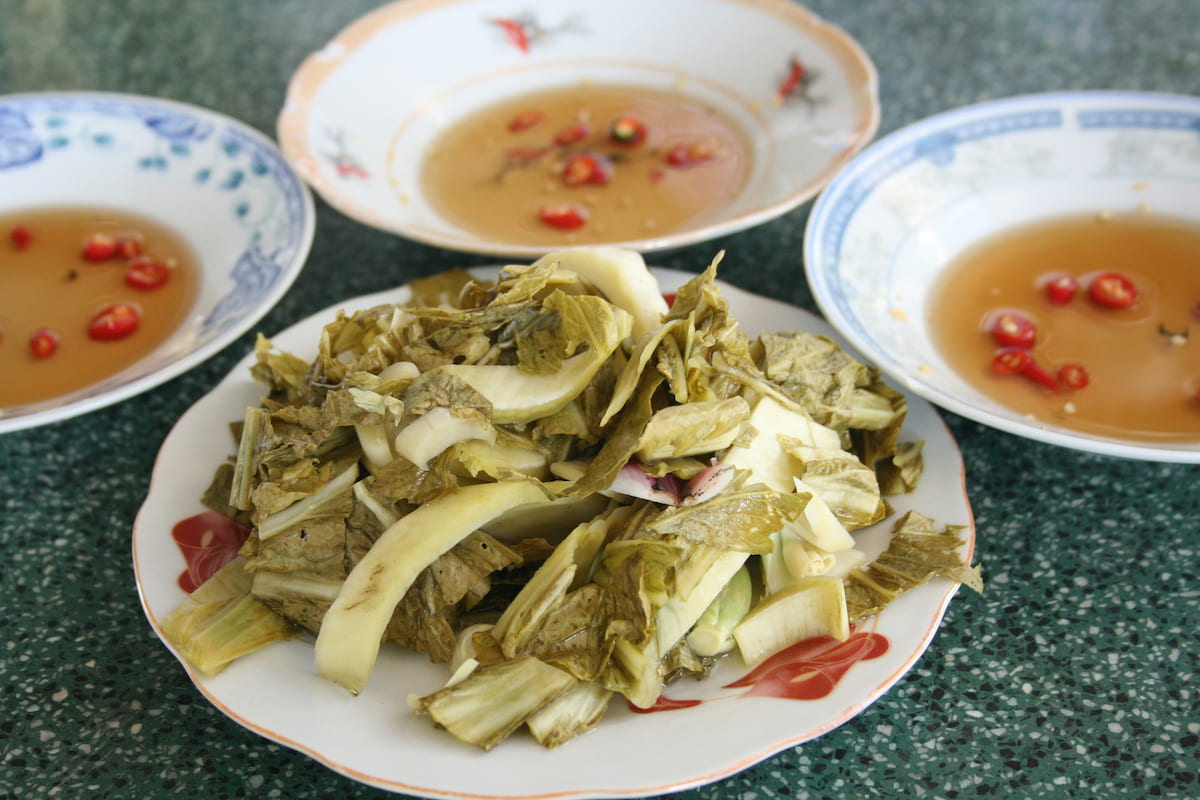
Sugarcane bagasse, pickled mustard greens and salted whole anchovies have helped RMIT researchers uncover native yeasts with the potential to produce sustainable edible oils. (Image: Unsplash) Sugarcane bagasse, pickled mustard greens and salted whole anchovies have helped RMIT researchers uncover native yeasts with the potential to produce sustainable edible oils. (Image: Unsplash)

For Duy, the journey began with a fascination for the invisible world of microorganisms. 

He said: “I've always been passionate about applied food microbiology because I enjoy discovering how invisible microorganisms can create something valuable that benefits people's everyday lives. When I started my PhD, I wondered whether we could discover something valuable from microorganisms living right here in Vietnam.” 

Edible oils are a cornerstone of modern food production, but conventional sources face increasing pressure. Vegetable oils require vast areas of farmland and freshwater, while marine oils depend on healthy ocean ecosystems that are increasingly affected by climate change, population growth and rising global demand. 

The RMIT-led research explores whether naturally occurring yeasts could become a complementary source of edible oils produced through fermentation. Rather than relying on crops or fish, these microorganisms accumulate oils inside their cells as they grow. 

To find promising candidates, the researchers looked close to home. They isolated yeast strains from familiar Vietnamese sources, including sugarcane bagasse, pickled mustard greens and salted whole anchovies. 

“We chose these materials because they come from very different environments, so they are likely to contain different types of microorganisms,” Duy explained. 

A discovery with promise 

“One exciting outcome of this research was the discovery of several oleaginous yeast strains from Vietnamese sources. To the best of our knowledge, this is the first report of these red oil-producing yeasts being isolated and characterised from these local materials in Vietnam.” 

He believes the findings highlight an often-overlooked resource. “This research shows that Vietnam's local biodiversity could become a valuable resource for developing new food ingredients.” 

The team evaluated five yeast strains, examining not only how much oil they produced but also the quality of those oils, including their fatty acid composition and potential food applications. 

“We followed the entire pathway from strain discovery to food ingredient development,” Duy said. 

One finding stood out. All five strains naturally produced oils rich in unsaturated fatty acids, accounting for 70 to 80 per cent of their total fatty acid content. 

Among them, one strain, Rhodotorula mucilaginosa, consistently delivered the strongest performance. “It can accumulate more than 50 per cent of oil inside the biomass,” Duy said. 

“The oil contained high levels of oleic and linoleic acids, which are desirable nutritional fatty acids. At the same time, the strain naturally produced carotenoids – the same class of pigments found in tomatoes – which provide both antioxidant activity and natural colouring.” 

“The combination of high oil content, desirable fatty acids and natural carotenoids in a single organism is what makes this strain stand out and makes it an attractive candidate for a multifunctional food ingredient producer.”

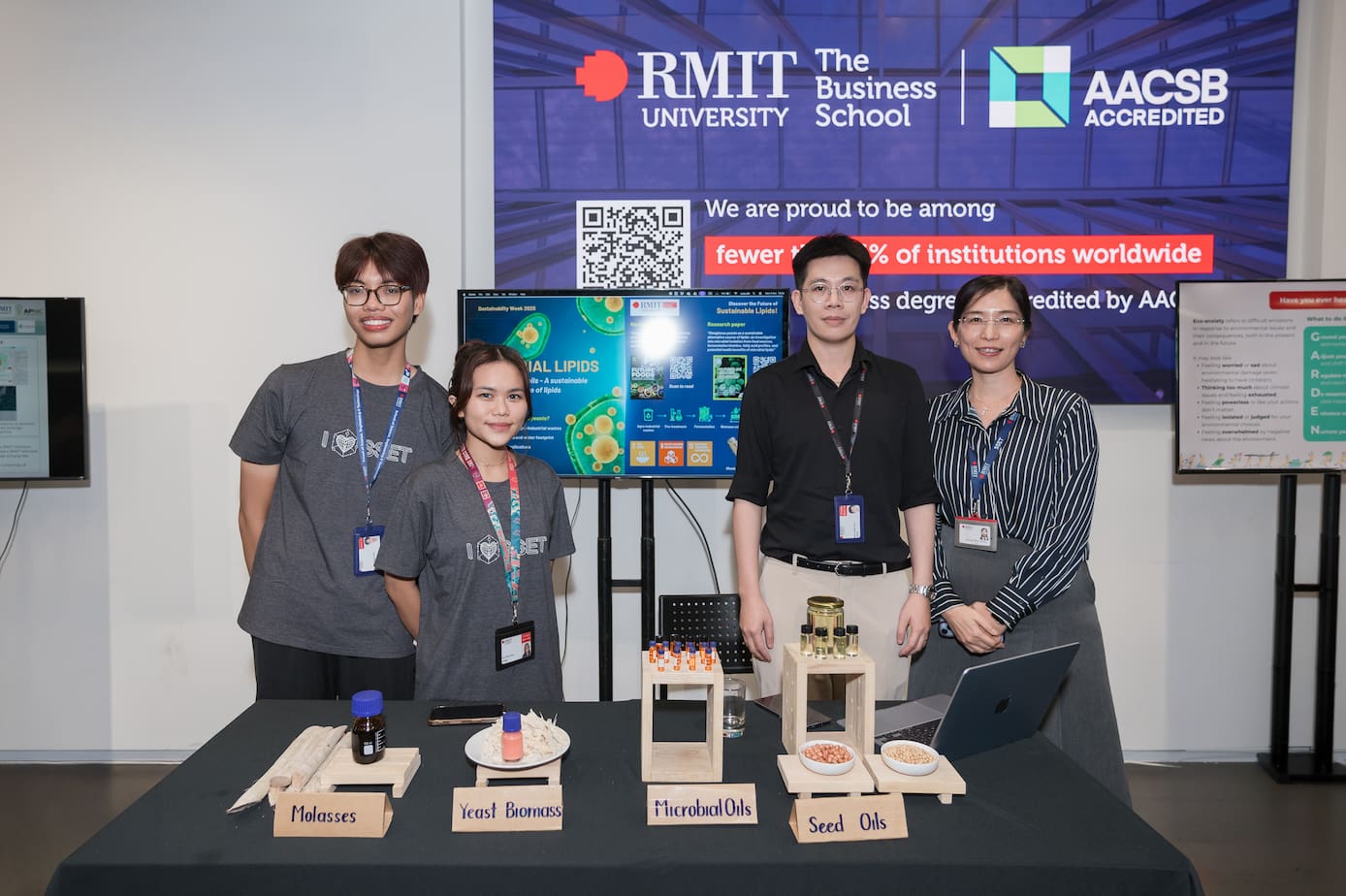
RMIT University PhD student Nguyen Quoc Duy (second from right) and Dr Truong Thuc Tuyen (far right) with a display showcasing sustainable edible oils derived from yeast biomass. (Image: RMIT)RMIT University PhD student Nguyen Quoc Duy (second from right) and Dr Truong Thuc Tuyen (far right) with a display showcasing sustainable edible oils derived from yeast biomass. (Image: RMIT)

The road to supermarket shelves 

Dr Tuyen said the research demonstrates strong proof of concept, although significant work remains before microbial oils reach supermarket shelves. 

She said: “We are still some distance from widespread commercial adoption. We need to further optimise fermentation processes to improve productivity and reduce production costs, while also identifying sustainable, low-cost feedstocks to make production commercially viable.” 

She added that comprehensive safety assessments, toxicological studies and regulatory approval would also be essential before microbial oils could be introduced into the food supply. 

Beyond the oil 

Beyond producing a new type of oil, the researchers see broader opportunities for Vietnam's food innovation ecosystem. 

According to Dr Tuyen, Vietnam's rich microbial biodiversity, strong food processing sector and abundant agricultural side streams provide the foundations for developing a circular bioeconomy, where microorganisms help transform low-value resources into high-value ingredients. 

“The real-world impact is not only the oil itself. This research could help create new value from agri-food by-products, reduce waste, support local biotechnology capability and generate new opportunities for collaboration between universities and industry.” 

She believes microbial oils are likely to complement, rather than replace, conventional edible oils, with future applications extending beyond food into areas such as cosmetics and nutraceuticals. The research has already received an RMIT Impact Starter Grant 2026 to investigate these broader opportunities. 

From lab to reality  

For Duy, the next challenge is building on the team's promising laboratory findings. 

The researchers now aim to scale up production, explore agricultural by-products as sustainable, low-cost fermentation feedstocks, optimise oil extraction methods and evaluate how these microbial oils perform in real food systems. 

“The next phase is about moving beyond the laboratory. We want to work closely with industry partners to develop production processes that are both technically and economically viable,” he said. 

Dr Tuyen hopes the research will inspire people to look at nature differently. “I hope people take away that many of the solutions to future food challenges already exist in nature,” she said. 

“Our role as researchers is to understand these natural systems and translate that knowledge into innovations that improve health, sustainability and food security.” 

Behind every major shift is a story worth exploring. The Ripple Theory is a series of expert perspectives informed by research from RMIT University Vietnam. By connecting academic insight with real-world stories, the series helps readers gain a deeper understanding of the shifts unfolding across the economy, society, environment, and technological world, while exploring solutions and opportunities for what lies ahead.  

Story: June Pham

Related news