
How to deepen connections between universities and communities

How to deepen connections between universities and communities

At the VNx panel discussion within Vietnam Festival of Creativity & Design (VFCD) 2026, speakers from universities, social organisations, and cultural heritage institutions explored a central question: How can connections between universities and communities become deeper and more sustainable?

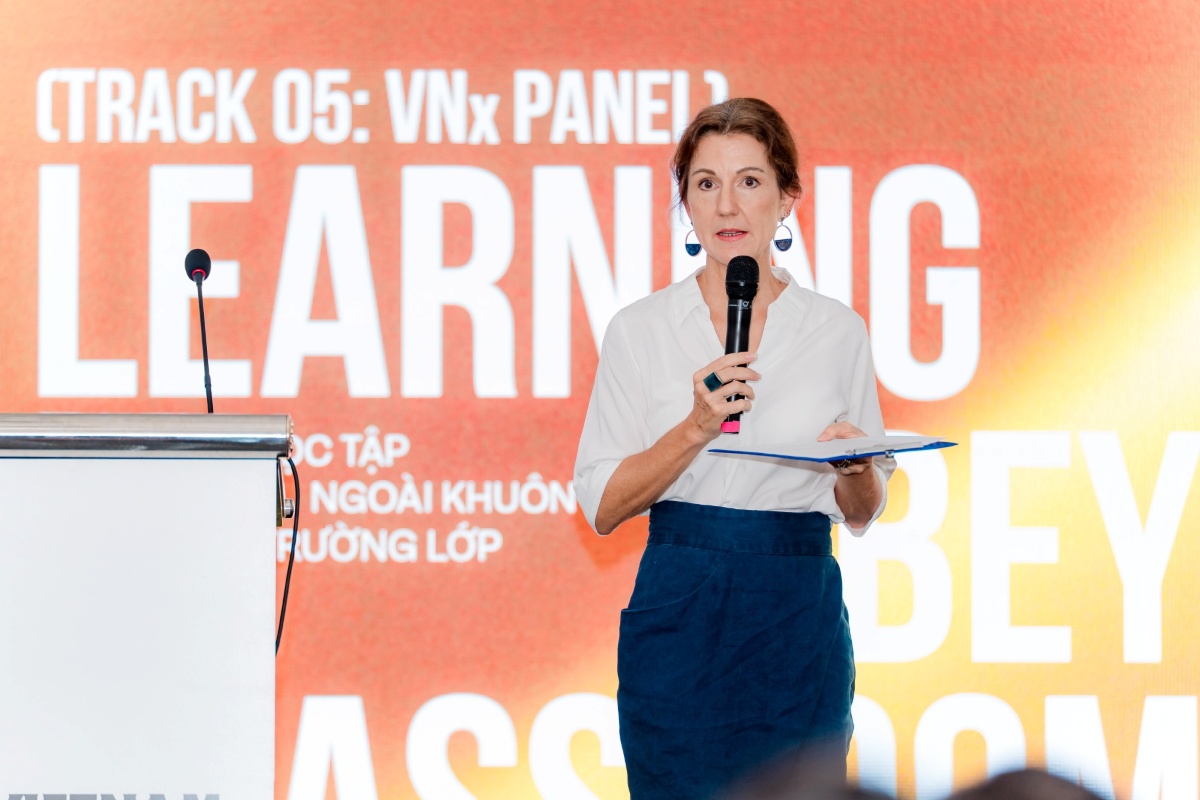
In her opening remarks at VNx | Learning Beyond the Classroom, Ms Corinna Joyce, Interim Associate Dean, Learning & Teaching, School of Communication & Design, RMIT Vietnam, emphasised: “Some of the most meaningful learning happens when students step outside classrooms, when they work with real organisations, engage with communities, respond to real challenges, and learn from people whose knowledge and experiences may be very different from their own.”

Ms Corinna Joyce speakingMs Corinna Joyce delivers the opening remarks. (Photo: Nina Next Space)

Her remarks opened up a broader discussion about experiential learning: a form of education in which knowledge is not simply transmitted from lecturers to students, but developed through a process of co-creation involving universities, students, and communities.

“Some of the most meaningful learning happens when students step outside classrooms, when they work with real organisations, engage with communities, respond to real challenges, and learn from people whose knowledge and experiences may be very different from their own,” Ms Joyce added.

Diverse models of learning beyond the classroom

In the panel moderated by Ms Chau Phan, a lecturer at RMIT’s School of Communication & Design, the speakers shared a range of projects that involve students directly in creating, managing, and addressing real-world challenges. These models demonstrate that learning does not have to be confined to the classroom, while also creating value for both students and the wider community.

One approach involves learning through collaborative projects and communications support for organisations working in real-world contexts. Ms Nguyen Nguyen Nhu Trang, founder of the LIFE Centre for Community Health and Development, highlighted the contributions of RMIT students to projects at the centre. Students not only helped the organisation explore and apply new communication channels, but also contributed to communicating complex and sensitive public health messages to young people in thoughtful and accessible ways.

Another example came from Ms Nguyen Thi Dinh, Deputy Head of the Education and Communications Department at the Vietnam National Museum of History. She noted that students’ creative designs had helped the museum reach younger audiences through fresh and innovative approaches.

Students can also learn through the process of creating together with communities, rather than simply working with established organisations. Ms Tran Thi Ngoc Ha, Project Manager of Co-Lab at RMIT’s School of Communication & Design, shared how the project had connected students with groups of ethnic minority women. Students learned about traditional culture and techniques while also helping communities develop products suited to contemporary tastes without losing their cultural identity.

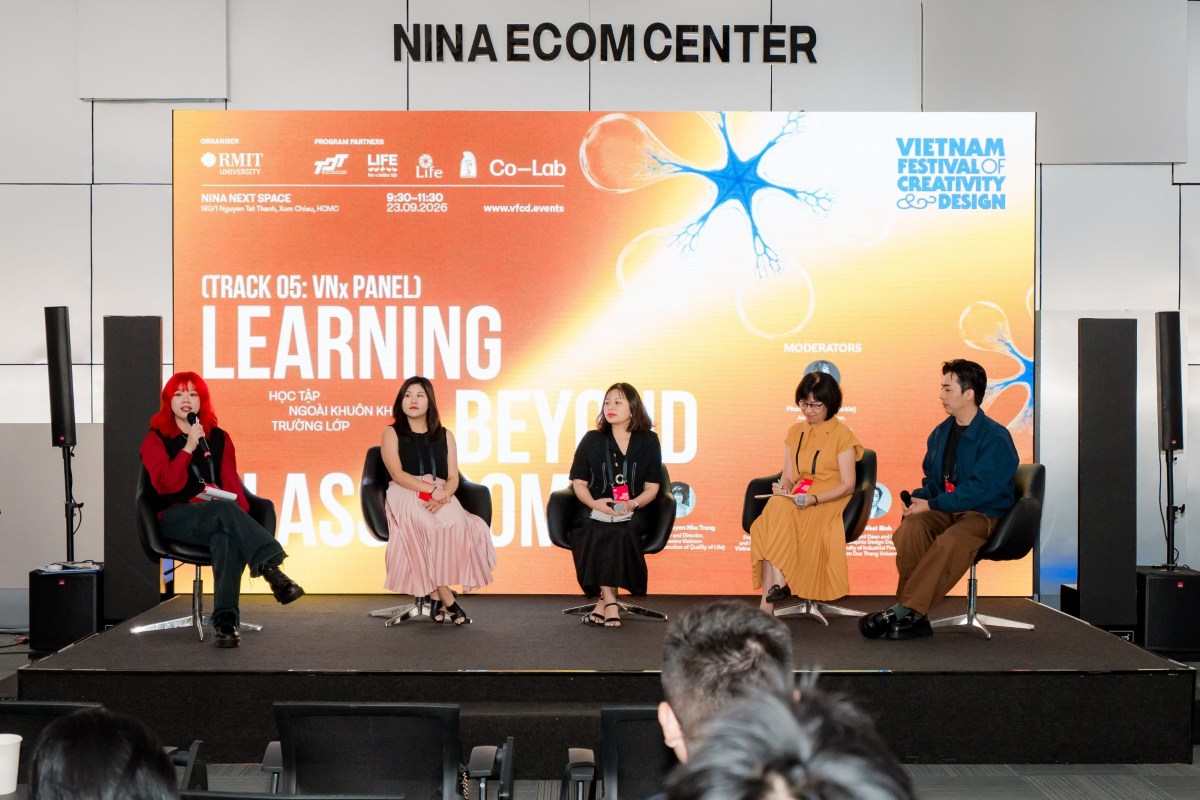
five people on a stageVNx panellists (from left to right): Chau Phan (RMIT University), Tran Thi Ngoc Ha (Co-Lab Project, RMIT University), Nguyen Thi Dinh (Vietnam National Museum of History), Nguyen Nguyen Nhu Trang (LIFE Centre), and Ly Nhat Binh (Ton Duc Thang University). (Photo: Nina Next Space)

In another approach, students can learn by developing and implementing their own projects. Mr Ly Nhat Binh, Assistant Dean of the Faculty of Industrial Fine Arts at Ton Duc Thang University, shared the example of Creative Market, where students develop an entrepreneurial mindset and take ownership of their products: from design and display to business and sales.

The speakers agreed that real-world learning requires students to “ask the right questions,” because a wrong decision can have concrete consequences. The absence of a fixed grading framework gives students greater freedom to explore, but it also requires courage and the ability to communicate with people from different cultural and social contexts, skills that are difficult to develop fully through classroom learning alone.

For these connections to be genuinely meaningful, Nguyen Nguyen Nhu Trang emphasised three principles for learning projects beyond the classroom: “Respect for partners, genuine listening, and a commitment to responsibility”.

The need for more interdisciplinary spaces for connection

While recognising the positive outcomes of existing projects, the speakers also openly acknowledged that experiential learning remains relatively fragmented. Connections among universities, organisations, businesses, and communities have yet to develop into a sufficiently cohesive and systematic network.

Against this backdrop, discussions such as VNx can create spaces where different stakeholders identify barriers together, share resources, and explore opportunities for collaboration. More importantly, they can serve as starting points for individual initiatives to grow into longer-term project networks, making better use of the resources and expertise already available.

In this regard, VFCD serves as a platform for connection. VFCD is not simply a cultural and artistic event; it also creates opportunities for knowledge exchange and interdisciplinary connections among education, professional practice, and the creative community.

Ultimately, “learning beyond the classroom” is not simply about taking students out of the classroom. It is about bringing universities closer to the real challenges facing society, and making the community a meaningful part of the learning process.

Story: Thuy Le

Share

Related news