How the Mekong Delta is reshaping the future of circular design

How the Mekong Delta is reshaping the future of circular design

Amidst global ecological shifts, the Mekong Delta is forging a new design mindset: a transition from viewing the landscape as a static “system” to seeing it as a vibrant “network of relationships".

As part of the Circular Design Week (CDW 2026), a key component of the Vietnam Festival of Creativity & Design (VFCD) 2026, the Mekong Delta took centre stage as a “living laboratory” of Asia-Pacific significance. Within the scope of the field trip to the Mekong Delta and the discussions held from 21 to 25 September, through the lens of “Metabolic Abundance,” the program sparked a conceptual revolution: redefining circular design as an act of empathy, adaptation, and reciprocity.

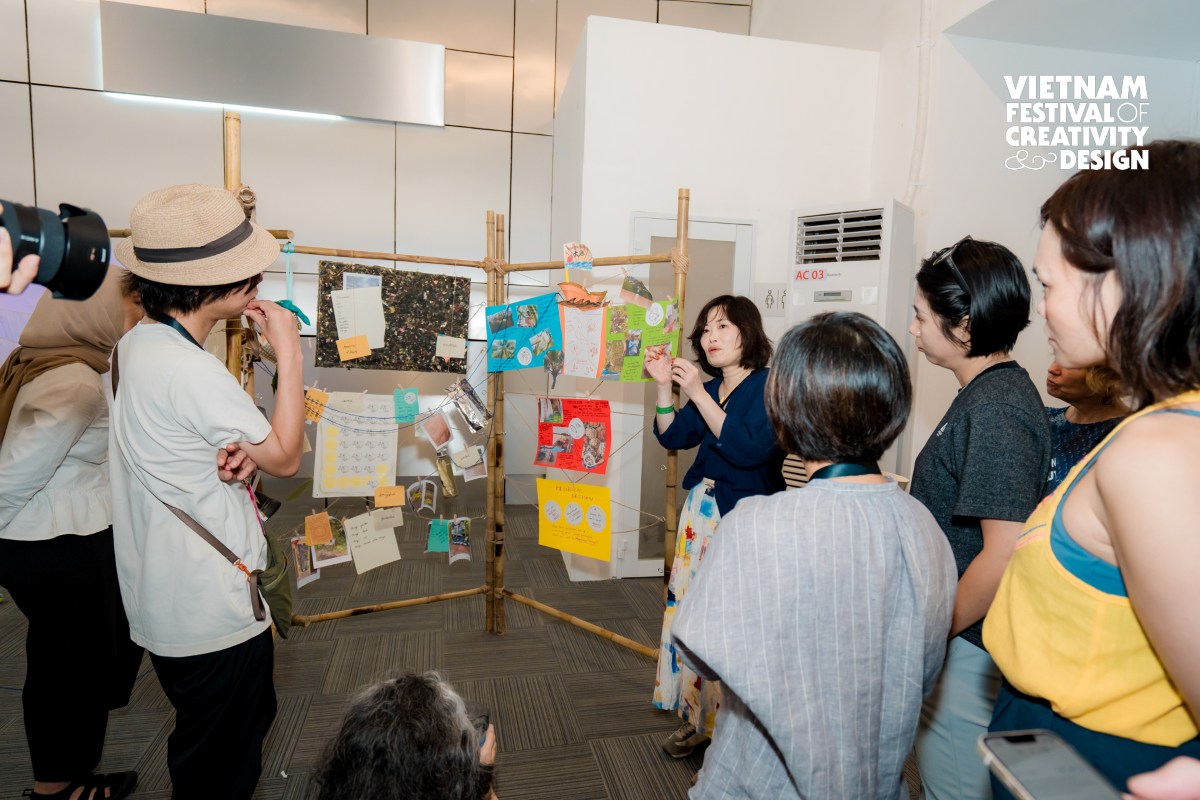
Group of people listening to a presenter at a boothCircular Design Week participants presented findings from their fieldwork in the Mekong Delta. (Photo: Nina Next Space)

Reinterpreting the rhythms of labour and the concept of “living in harmony with nature”

One of the program’s keenest insights, drawn from extensive fieldwork, is the clash between two distinct logics: modern industrial productivity and indigenous ecological rhythms.

While traditional production models often measure efficiency by speed, time, and maximum output, the rhythm of labor in the Mekong Delta presents a completely different face. Work here weaves seamlessly with leisure, shifting weather patterns, seasonal cycles, water flows, and the pulse of community life. Labour in this region demands a high degree of flexibility and adaptability.

Against this backdrop, the concept of “living in harmony with nature”, aligning with and working alongside the natural world, emerges as a fundamental mode of survival. "Going with the flow" means embracing the natural currents, viewing change as a form of knowledge, and moving beyond mere optimisation or exploitation for short-term economic gain.

The richness of relational networks

When the Mekong Delta is mentioned, people often immediately think of fertile soil, abundant water resources, or massive agricultural and aquatic output. However, CDW 2026 offers a deeper perspective: the region's true richness is the richness of its relationships.

True value is found in how people interact with the water, how livelihoods adapt fluidly to the flood season, how knowledge is passed down through generations, and how materials undergo multiple cycles of use. When a landscape is viewed as a network of relationships, the focus of design shifts to fostering an ecosystem where components support, rely upon, and regenerate one another.

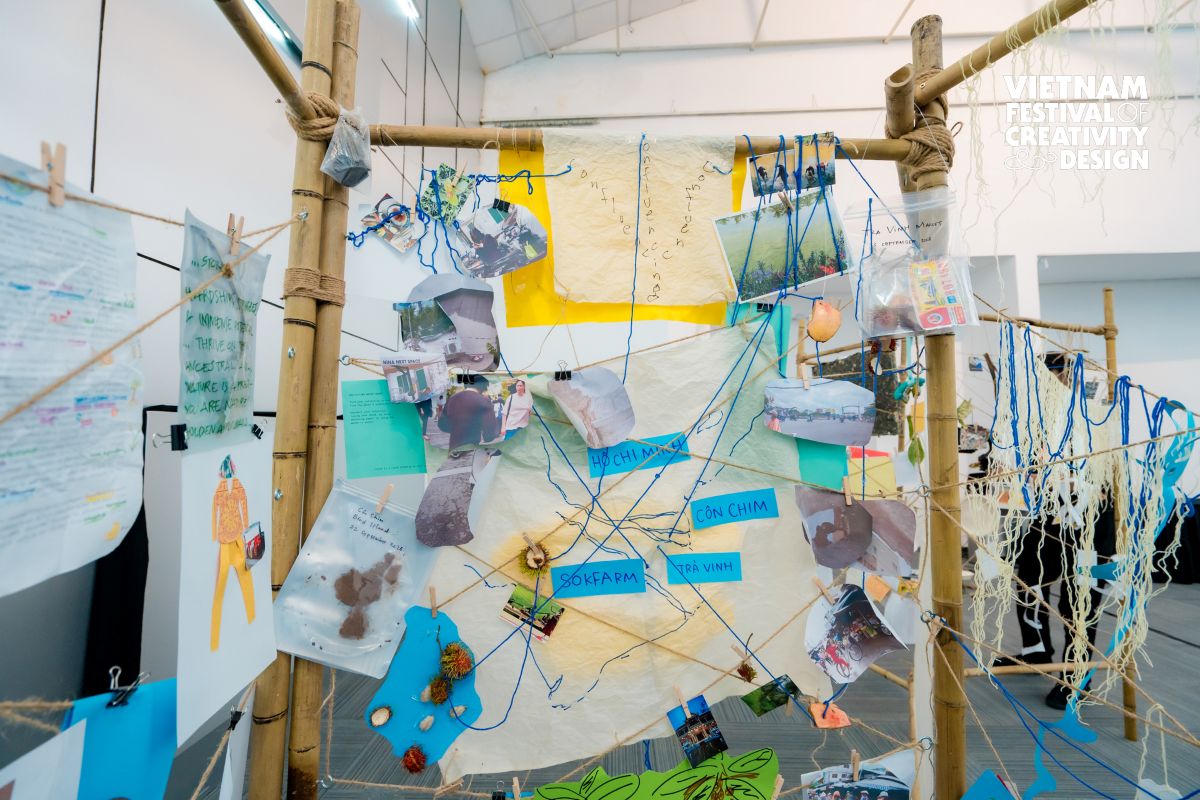
A booth showing results from fieldworkAt the Circular Design Week, the Mekong Delta takes centre stage as a “living laboratory”. (Photo: Nina Next Space)

Making invisible flows visible

The Mekong Delta is shaped by flows that transcend local boundaries, from headwaters upstream, traversing diverse ecosystems before merging with the open sea, to the complex interplay of fresh, brackish, and saline waters in the downstream areas.

Through the lens of "metabolic design," every product, traditional dish, craft, or livelihood model can be interpreted as an intersection of myriad material and cultural flows. The participation of international experts such as Hiraku Ogura (a fermentation design specialist from Fermentation Design Lab), Oliver Kato, and Jo Chi has further reinforced this perspective. For instance, microbial fermentation serves as a concise illustration of transformative design: the transformation itself arises from the intimate interplay between microorganisms, time, the environment, and human beings.

From "Ego" to "Eco": The challenge between  institutions and communities

A pressing issue raised during the discussions was the relationship between large institutions, which concentrate professional standards, resources, and commercial pressures, and local communities.

The proposed solution is "relational design". Projects generate true, sustainable value only when institutions and communities co-create a space for long-term collaboration and when indigenous knowledge is respected as an active resource. Through this, the concept of sustainable development is broadened: it becomes the capacity to maintain harmonious connections between humanity and nature over time.

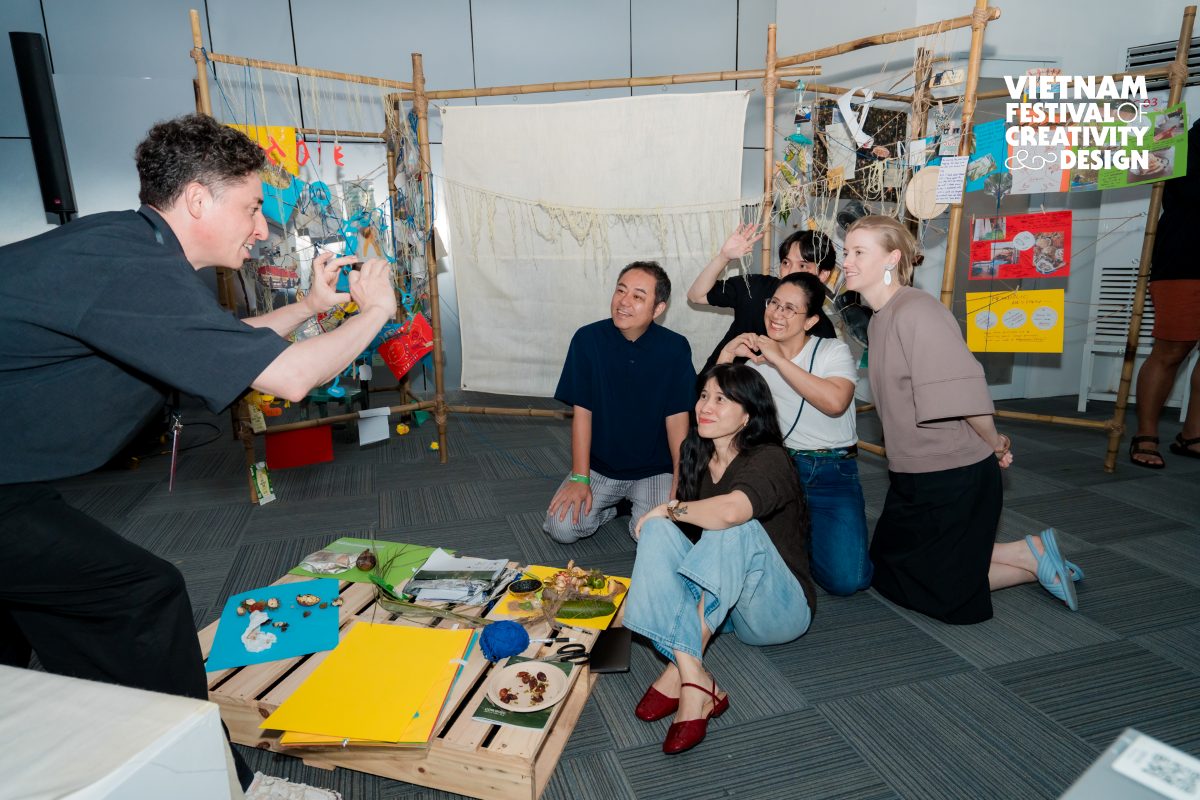
A group of people posing for a photoThe Circular Design Week brought together practitioners from various countries. (Photo: Nina Next Space)

The future of design: empathy and reciprocity

The journey of exploring the Mekong Delta, undertaken via two strategic routes: "Living with Nature" (focusing on the freshwater upstream region) and "The Flow of Water" (exploring the saline-brackish downstream area), has yielded a pivotal message for the academic and design communities: circular design always begins by listening to the land before attempting to intervene in it.

The shift from "system" to "relations", and from "ego" to "eco", is ushering in a new era where the principle of "design for return and deposit" takes centre stage. In this era, silt enriches the soil, water connects spaces, knowledge is preserved through practice, and the Mekong Delta stands tall as a global symbol of resilience, thought, and creativity within systems that are in constant flux.

Story: Dr Liem Bui

Share

Related news