Festival Futures Forward Forum reimagined what a festival can be

Festival Futures Forward Forum reimagined what a festival can be

At the Vietnam Festival of Creativity & Design 2026, festival leaders, artists, researchers and creative practitioners came together to ask a deceptively difficult question: what should a festival leave behind after the crowds go home?

A festival can attract an audience, generate media coverage and fill a program with exhibitions, performances and conversations. But does attention equal impact?

Opening the Vietnam Festival of Creativity & Design (VFCD) 2026,  themed “Living Festival”, Dean of RMIT’s School of Communication & Design Professor Donna Cleveland drew an important distinction between the two. Attendance, media coverage and social engagement can show who noticed or participated in a festival. Lasting impact, she argued, is better understood through what happens afterwards: the partnerships formed, opportunities created, careers supported, knowledge shared and communities that continue to grow.

That question “what changes afterwards?” became an important thread running through the Festival Futures Forward Forum (FFF), Track 2 of VFCD 2026.

Across opening-night provocations, panel discussions and collaborative workshops, FFF brought local, regional and international voices together to consider what future creative festivals might become: who they should serve, how they can remain sustainable and responsive, and how they can create value beyond the temporary intensity of a festival week.

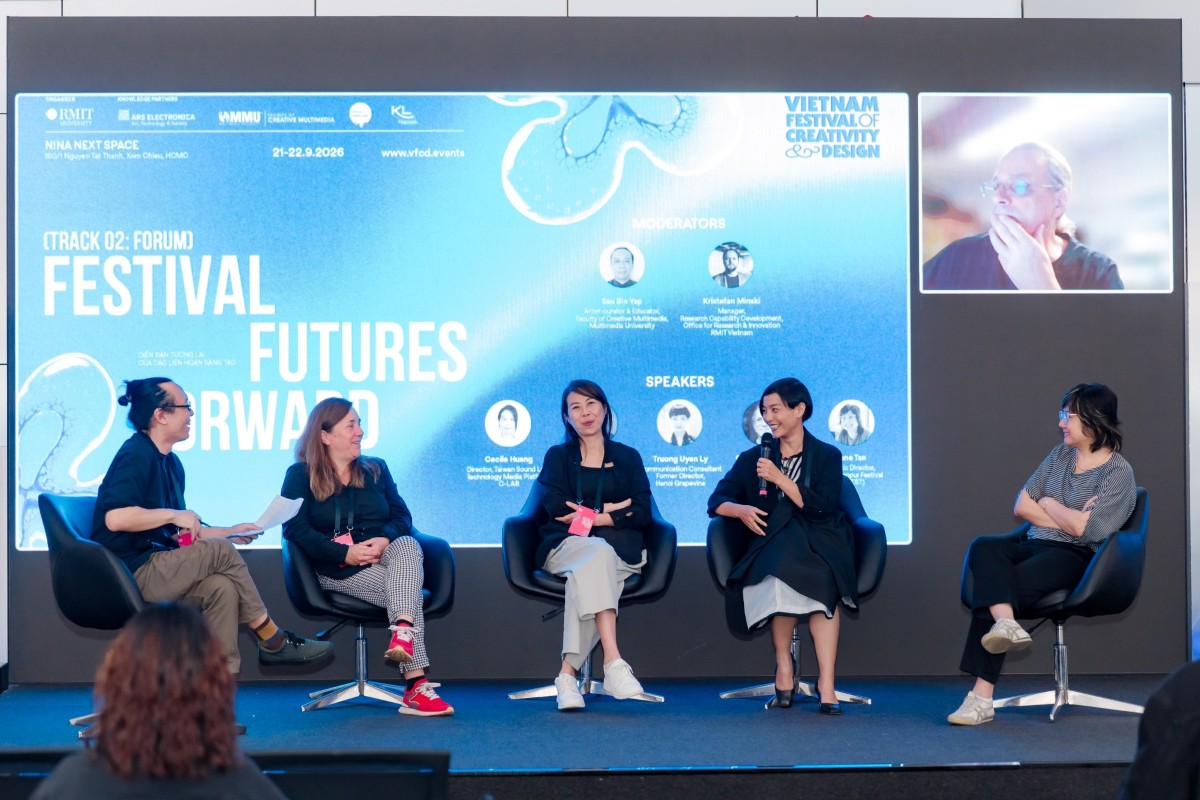
Experts during a panel discussion at the Festival Futures Forward forum.Experts during a panel discussion at the Festival Futures Forward forum. (Photo: Nina Next Space)

Whom does a festival belong to?

As a Malaysian relatively new to Vietnam, Festival Director Associate Professor Lim Kok Yoong acknowledged his position as an outsider and said it had forced him to ask a basic question: “Who does a festival belong to?”

Not, he suggested, to a director or a single institution. A meaningful festival has to belong to the people, communities, practitioners and relationships that give it life. He also resisted the idea that VFCD should distinguish itself simply by becoming “bigger, louder, fancier or more spectacular”.

Instead, the more consequential questions come after people gather and disband: Do relationships continue? Do practices evolve? Do new collaborations emerge? Does the community remain connected? For Associate Professor Lim, recognition cannot be the final objective; the festival must remain useful to the community that gives it life.

The Forum’s international examples showed different ways this might happen.

Mr Gerfried Stocker of Austrian-based Ars Electronica proposed that“a festival has to be a laboratory”, an exceptional space temporarily removed from everyday routines, but one that must still connect back into the city and society. Festivals, he argued, can take risks that more conventional cultural formats cannot, and should continually experiment rather than assume that a final model has been found.

Other provocations widened the conversation further. Ms June Tan, Artistic Director of KL Festival from Malaysia explored festivals as spaces for storytelling, cultural memory and participation rather than passive spectatorship, while Ms Truong Uyen Ly, former director of Hanoi Grapevine situated the discussion within Vietnam’s changing cultural landscape and the practical realities involved in producing creative events — from policy and institutional structures to operational pressures. 

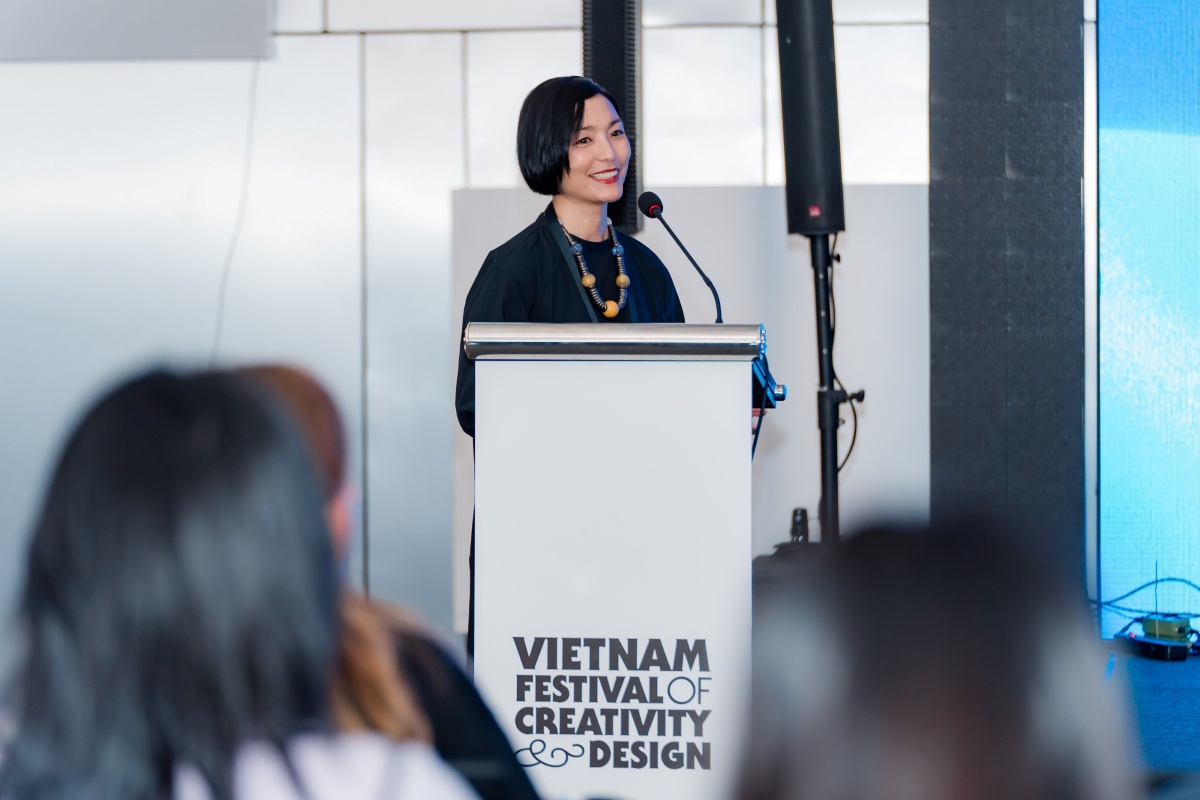
A woman speaking at a lecternMs Truong Uyen Ly, former director of Hanoi Grapevine, spoke at the event. (Photo: Nina Next Space)

From participation to ownership

Day 2 of FFF moved from provocation towards comparison and co-development. The international examples made clear that community participation can mean more than simply inviting people to attend.

The Netherlands-based Luna Festival works with more than 200 volunteers including refugees and international students seeking social connection. Over time, some volunteers began asking not just to assist but to take greater responsibility: “We want to own [the] festival, we want to own the artworks.”

The conclusion offered to the Forum by Festival Director Andrea Möller was strikingly simple: “Festival ownership should be by everyone.” Sharing that ownership can make a festival more resilient and sustainable.

Speaker Cecile Huang, Director of Taiwan’s C-LAB offered another model. Rather than treating a festival primarily as a moment for presenting finished work, its approach emphasises longer-term experimentation and production with artists, alongside public engagement, international exchange, education and university partnerships. Projects may develop for several years before reaching a festival stage.

Together, these examples shifted the discussion away from festivals as isolated events towards festivals as creative infrastructure: places where relationships, skills, knowledge and experiments can develop over time.

From discussion towards a future-festival blueprint

The Forum’s workshops then turned those provocations back onto festival-making itself.

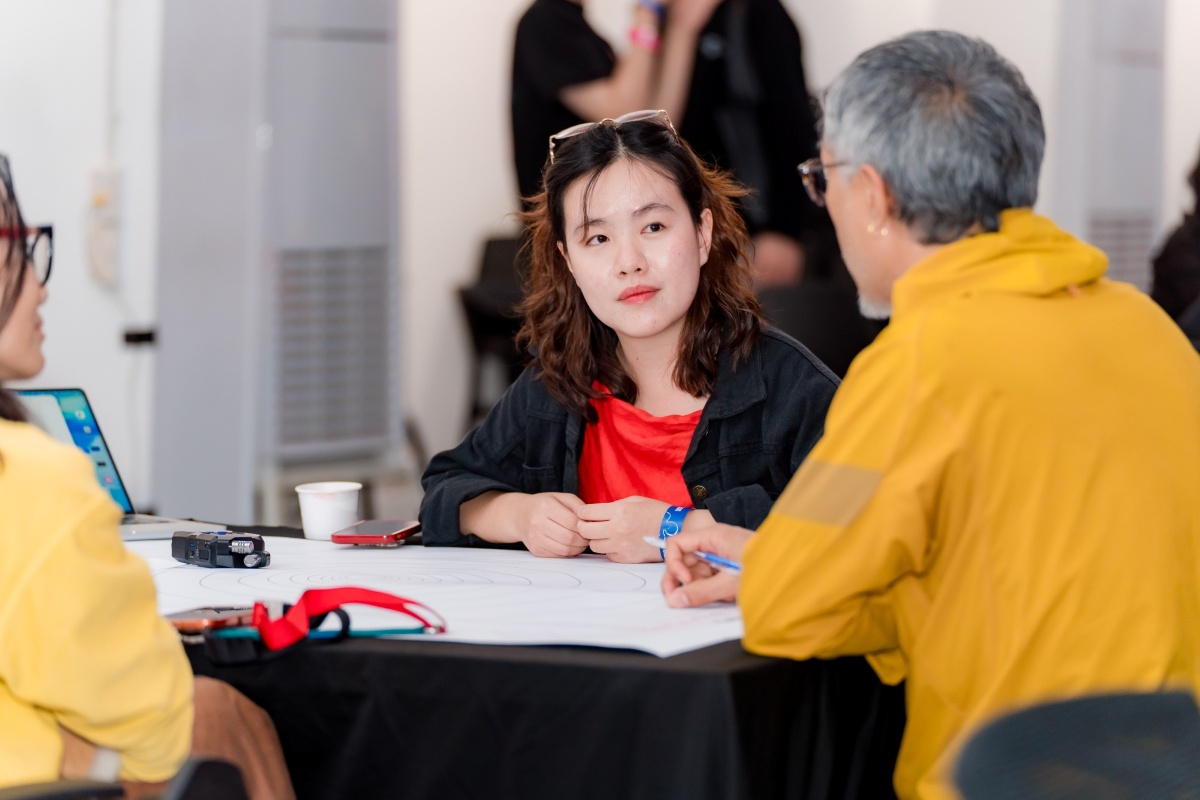
Three people chatting around a tableGroup discussions contributed towards a co-created blueprint for future creative festivals in Vietnam. (Photo: Nina Next Space)

One group identified“time to tell stories” as a priority: making room for lived experience, different perspectives and voices that may not normally fit institutional formats. They also explored whether trust might sometimes be built through deliberately informal settings — eating, drinking and gathering together — rather than through forms, emails and formal meetings.

Other working groups identified openness, accessibility and sustainability as core principles. Discussions extended sustainability beyond environmental impact to include funding, organisational resilience, audiences, individual responsibility and the carrying capacity of local communities.

Participants also identified the persistent gap between universities and fast-moving creative industries, asking whether festivals can create spaces where knowledge exchange happens more quickly and publicly.

These conversations did not produce a neat final answer - nor were they supposed to.

FFF was designed to contribute towards a co-created blueprint for future creative festivals in Vietnam, stronger regional and international networks, more adaptable approaches to festival sustainability, and new ways for universities to use festivals as platforms for research, experimentation and social impact.

What emerged across the two days was therefore less a finished manifesto than the foundations of one: a set of principles, provocations, relationships and unresolved questions that can continue to be tested.

That may ultimately be the most appropriate outcome for a living festival.

Story: Lena Bucatariu

Share

Related news