Can memes reveal how a generation feels about gender?

Can memes reveal how a generation feels about gender?

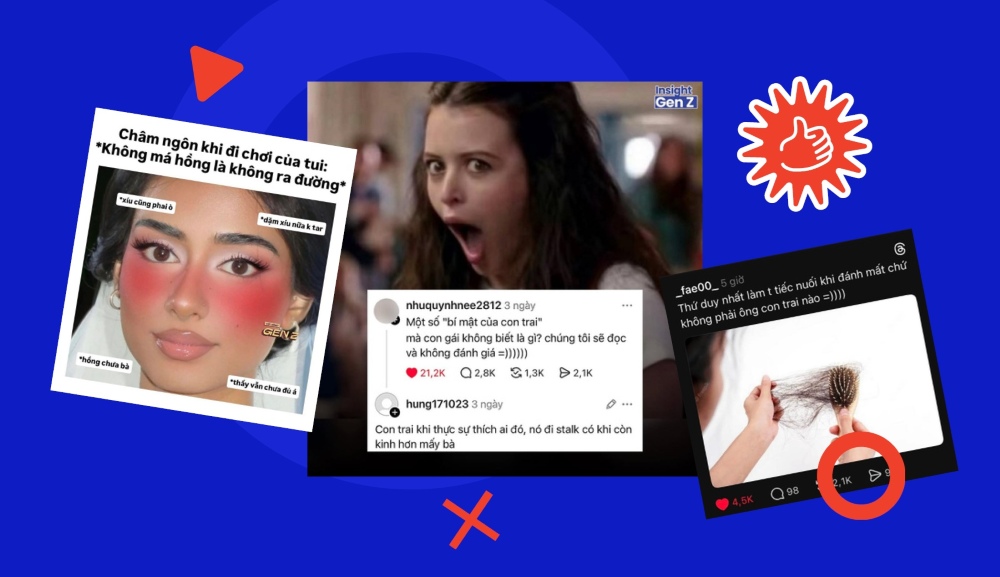
Just in time for International Women's Day, a new bilingual publication from RMIT Vietnam reveals how memes help Gen Z express their feelings about gender in a way that feels light-hearted and relatable.

The e-magazine (e-zine), created by Professional Communication lecturers from RMIT’s School of Communication & Design, is the first in-depth publication from a study examining hundreds of Vietnamese gender‑related memes circulating on Facebook between 2024 and 2025. Its goal is to help the public better understand what young people are really saying about gender today and how they are saying it.

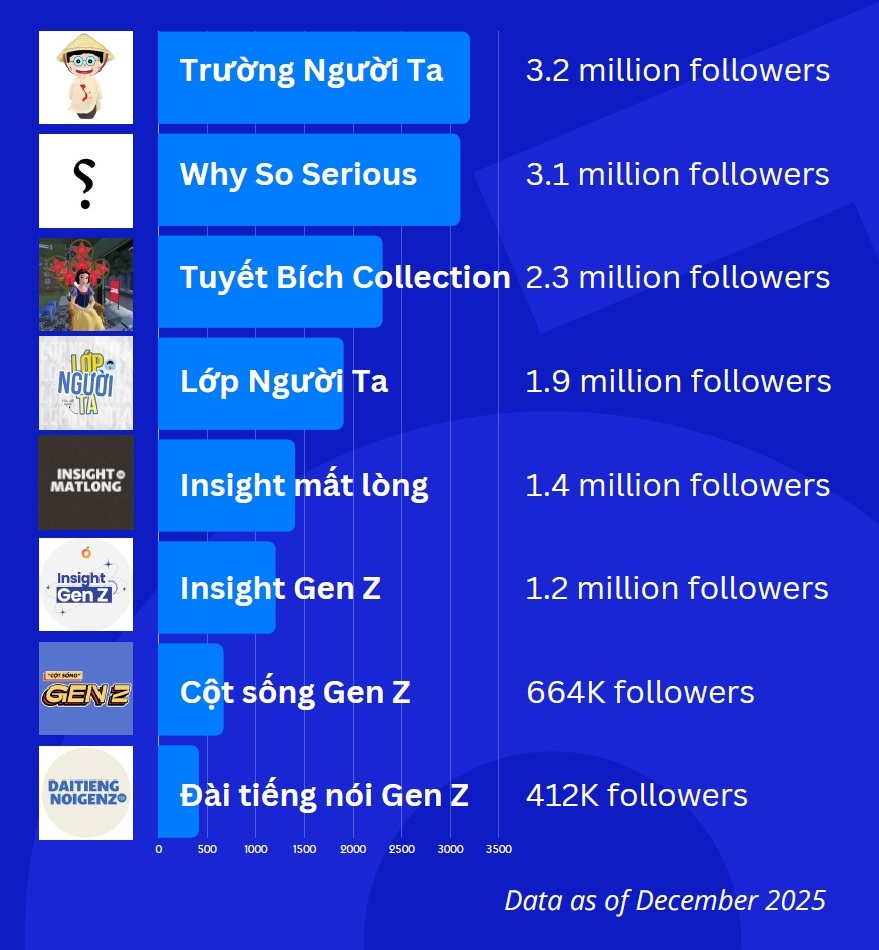
Memes are typically humorous images or videos paired with text or audio, shared widely across the internet for entertainment. Vietnam’s meme culture is prolific, with community pages attracting millions of followers. For example, the “Why so serious” Facebook page had 3.1 million followers as of December 2025. And according to DataReportal’s Digital 2025: Vietnam report, the second most popular account type followed by Vietnamese social media users is Entertainment, Memes and Parody (28.7% of users).

Bar chart of eight popular Facebook pages and their follower counts. Some popular community pages in Vietnam that frequently post memes. (Source: RMIT research)

Project lead and RMIT associate lecturer Nguyen Thi Nam Phuong said memes offer something no traditional survey or focus group can. “When you look at memes and their comments, it's easy to see a lively conversation about gender stereotypes. Young people are eager to voice their opinions, tell their life stories, and tag friends. All of this is done using humour, which softens the potentially controversial topic,” she said.

Inside the memes

The e‑zine, available in both English and Vietnamese, identifies five gender stereotypes that show up most frequently in Vietnamese meme culture: the “irrational woman”, the “superior man”, the “sisterhood” dynamic of women confiding in each other, the “appearance‑obsessed woman,” and the “ignorant male”.

The majority of memes reinforce these ideas (58%), others are ambivalent about them (31%), and a smaller portion (11%) openly challenges them.

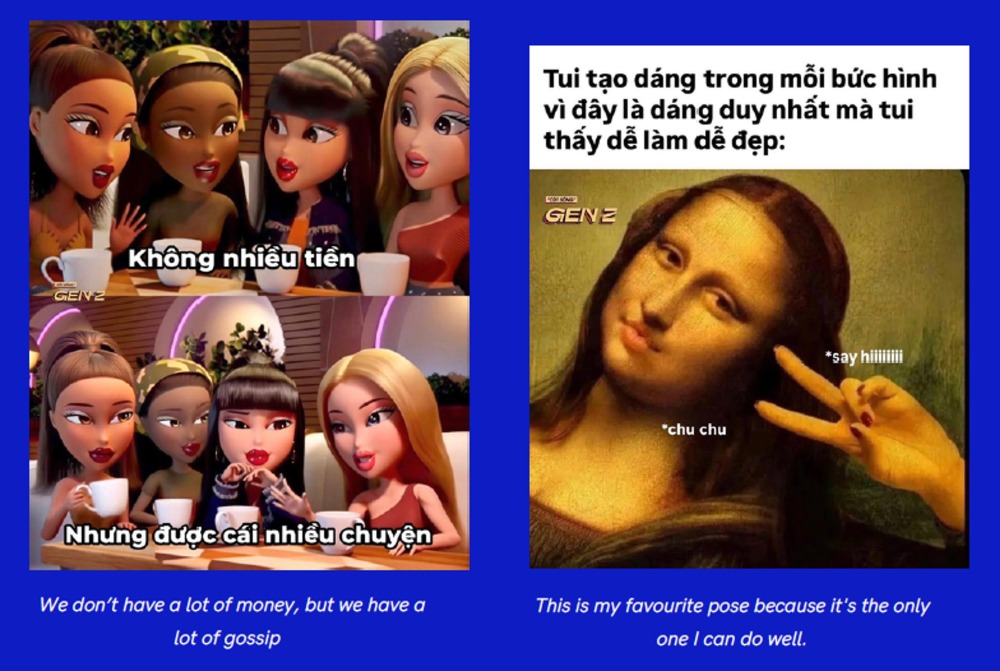
But what makes these memes resonate is not just what they say, but how they say it. The study mapped the rhetorical and visual tricks Gen Z gravitates toward: parodying pop culture, exaggerating everyday scenarios, using slang and spoonerisms, mixing English with Vietnamese, remixing chat screenshots, and crafting dramatic narrative twists. 

Two memes saying: “We don’t have a lot of money, but we have a lot of gossip” and “This is my favourite pose because it's the only one I can do well.” Together with words, visuals help memes convey the message. (Image: RMIT)

One of the study’s most eye‑opening areas is the comments section, which the team analysed to understand audience reactions.

Three patterns emerged: Some threads show consensus, where users play along with the joke and reinforce the meme’s stereotype. Others show negotiation, where commenters partially agree but reinterpret or soften the message. And then there’s opposition, where Gen Z pushes back against sexist narratives, rejects outdated masculinity, or reframes the joke entirely.

“These interactions show that young people do not consume memes passively but actively reshape their meaning,” Ms Phuong said.

Behind the memes

Importantly, the e‑zine explores what the research findings mean for the public.

For brands, understanding Gen Z meme humour is crucial: emotionally honest content that avoids tone‑deaf gender tropes performs best, while formulaic “cute couple” or “provider man” scripts tend to fall flat.

Educators can use memes as conversation starters to ease students into discussions about pressure, ambition and equality without lecturing.

Employers can gain insight into what younger staff value, such as women’s financial independence and more modern, less rigid forms of masculinity.

Three images with humorous text in Vietnamese about gender The e-zine titled “Jokingly serious: How Gen Z uses memes to discuss gender” offers an in-depth look into an often-overlooked aspect of Vietnamese meme culture. (Image: RMIT)

Co-author and RMIT associate lecturer Luong Van Lam said, “Gen Z is now a major consumer base and a new generation of employees. It helps to understand their humour and gender viewpoints.”

She added that Vietnam’s cultural context also shapes these conversations, with long‑standing Confucian norms around gender and family still influencing how young people express themselves. This makes memes a “safe zone” for young people to negotiate and comment on traditional norms and values.

“Humour softens the gender debate and helps Gen Z avoid being too straightforward, in line with Vietnam's non-confrontational culture,” Ms Lam said.

The project team, consisting of Ms Phuong, Ms Lam, Dr Bui Quoc Liem, and Dr Lena Bucatariu, emphasises that the e‑zine is designed for the general public. It functions as a compact guide to decoding gender‑related memes and understanding what drives Gen Z’s online conversations.

Ms Phuong hopes the findings will encourage readers to pause the next time a gender meme appears in their feed. “Instead of just laughing or scrolling, take a moment to notice what’s being said and how people are responding to it. Behind the humour, serious opinions about social issues can be found,” she says.

For a generation raised on screens, memes have become an unexpected mirror reflecting shifting attitudes, anxieties, and aspirations around gender in Vietnam. And for everyone else, they offer a new, often disarming way to understand today’s youth.

Download the e-zine in English (PDF, 18.9 MB) and Vietnamese (PDF, 19.5 MB).

-----

Story: Ngoc Hoang

Thumbnail and masthead images: Tom Wang – stock.adobe.com

Related news