
Turning Lo Lo Chai embroidery into co-created tourism experiences

Turning Lo Lo Chai embroidery into co-created tourism experiences

In Lo Lo Chai village in northernmost Vietnam, traditional embroidery is being transformed into a new driver of community-based tourism.
Located in Lung Cu commune, Tuyen Quang province, Lo Lo Chai has gained increasing attention in recent years for its distinctive earthen houses, rich cultural traditions, and community-based tourism model. In 2025, the village was recognised by UN Tourism as one of the world’s Best Tourism Villages.

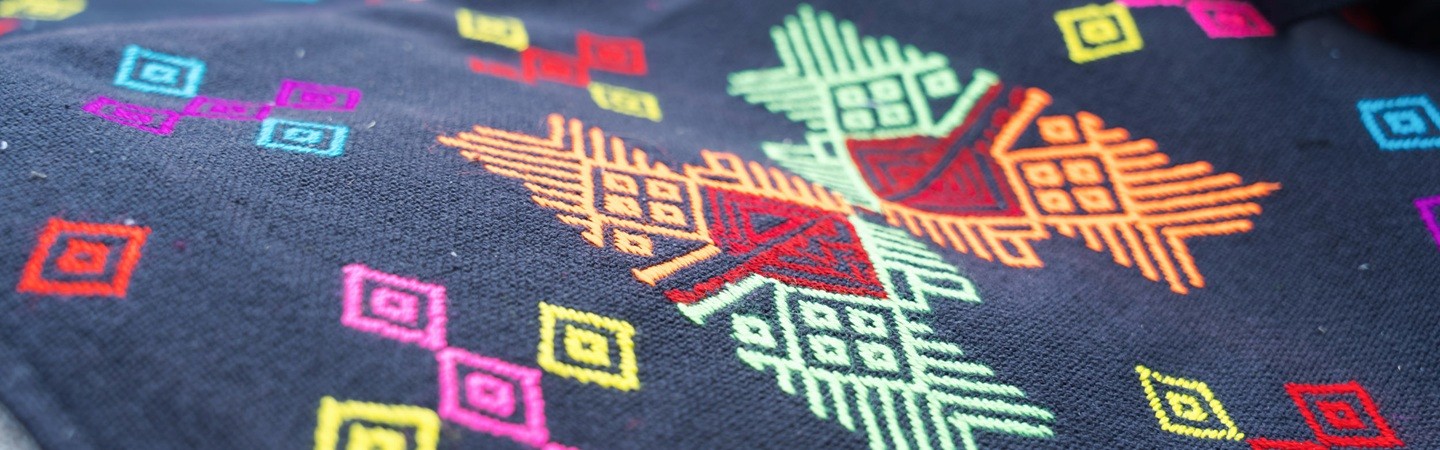
At the heart of this recognition is the cultural life of the Lo Lo ethnic group, where hand embroidery remains both a daily practice and a marker of identity. The intricate patterns, passed down through generations of women, carry stories of family, beliefs, and community life. Yet as tourism grows, many locally sold products risk losing their authenticity, shaped instead by commercial demand.

To address this challenge, a new initiative worked directly with the community to both preserve and evolve the craft.

The ‘Lo Lo Chai – Story of the Woven Futures’ initiative from two RMIT Vietnam lecturers, Dr Pham Huong Trang and Dr Nguyen Thi Van Anh, was among the grant recipients following a tourism marketing innovation contest sponsored by the Swiss State Secretariat for Economic Affairs (SECO) via the Swiss Tourism for Sustainable Development (ST4SD) project, with the Vietnam National Authority as the project owner.

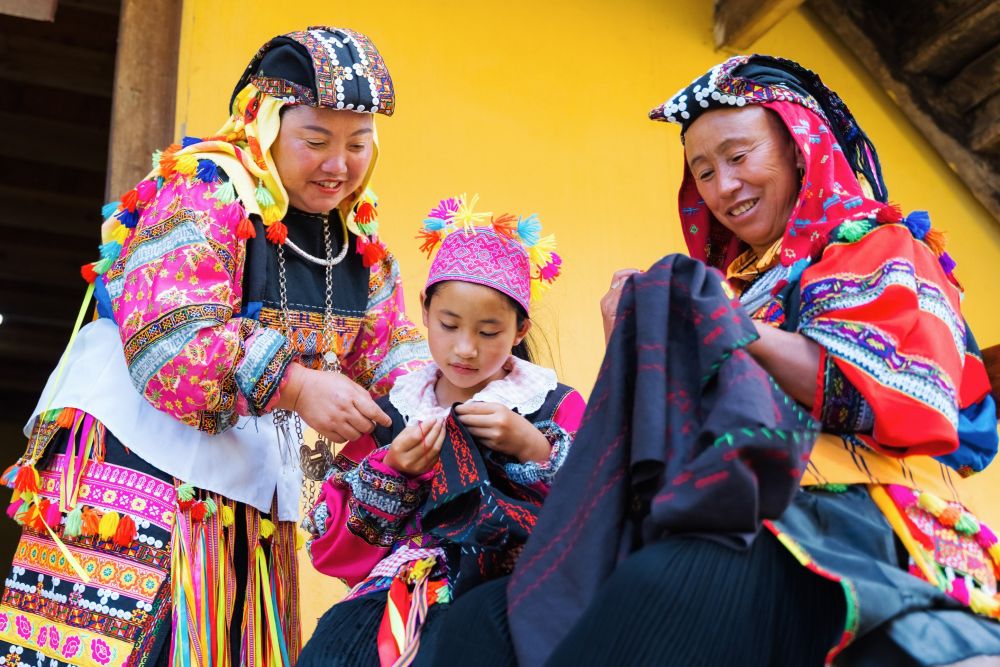
Two women and a young girl embroider pieces of clothingHand embroidery is an integral part of the Lo Lo cultural identity. (Photo: ST4SD/RMIT)

Working closely with 30 members of the local embroidery cooperative and women from the Lo Lo ethnic community from March to June 2026, the RMIT project team focused on a key question: how can traditional craft be sustained not only as heritage, but also as a viable economic activity?

Rather than introducing ready-made solutions, the team co-developed activities with the community, including workshops on contemporary design thinking, cultural storytelling, and experiential tourism. To encourage agency and autonomy, the team organised a product innovation competition where artisans were welcomed to reinterpret traditional motifs into new forms that appeal to modern audiences, while keeping the cultural authenticity.

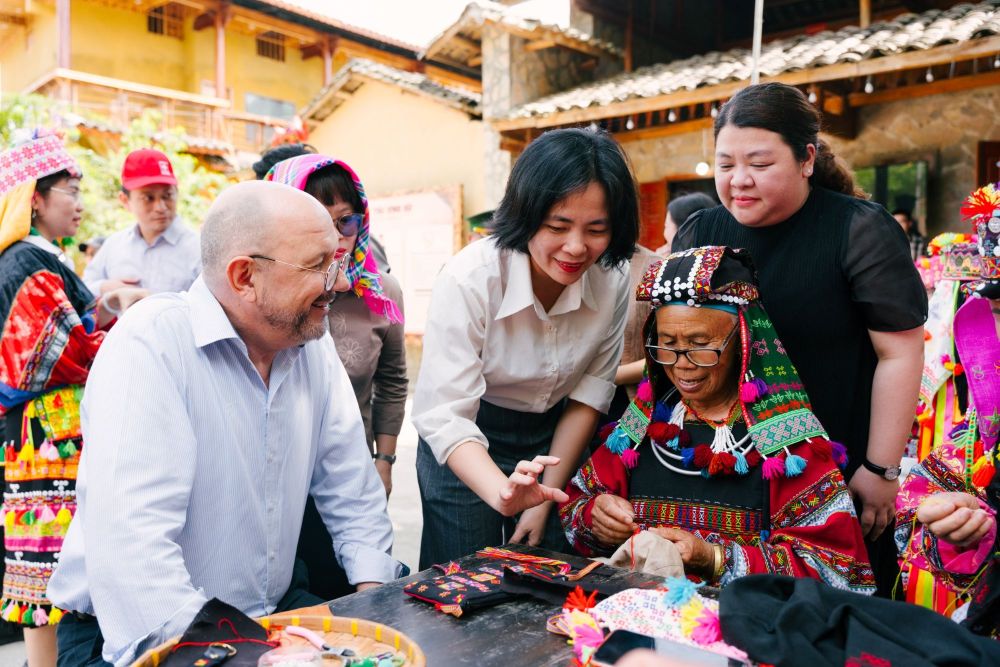
Swiss Ambassador to Vietnam Thomas Gass talked with Dr Pham Huong Trang, a Lo Lo artisan, and Dr Nguyen Thi Van Anh. (L-R) Swiss Ambassador to Vietnam Thomas Gass talked with Dr Pham Huong Trang, a Lo Lo artisan, and Dr Nguyen Thi Van Anh. (Photo: ST4SD/RMIT)

Dr Pham Huong Trang, Associate Program Manager for Tourism and Hospitality Management at RMIT Vietnam, said, “The starting point was recognising that embroidery is more than a craft of the Lo Lo people. It is a way of preserving cultural identity, community traditions, and stories. Yet visitors to Lo Lo Chai rarely have access to embroidered products that truly reflect that heritage. Instead, they often encounter generic souvenirs that could be found in many other tourist destinations.”

The project was developed to tackle this challenge by developing contemporary products inspired by Lo Lo embroidery and cultural heritage, creating memorable souvenirs for visitors while helping keep traditional craftsmanship alive.

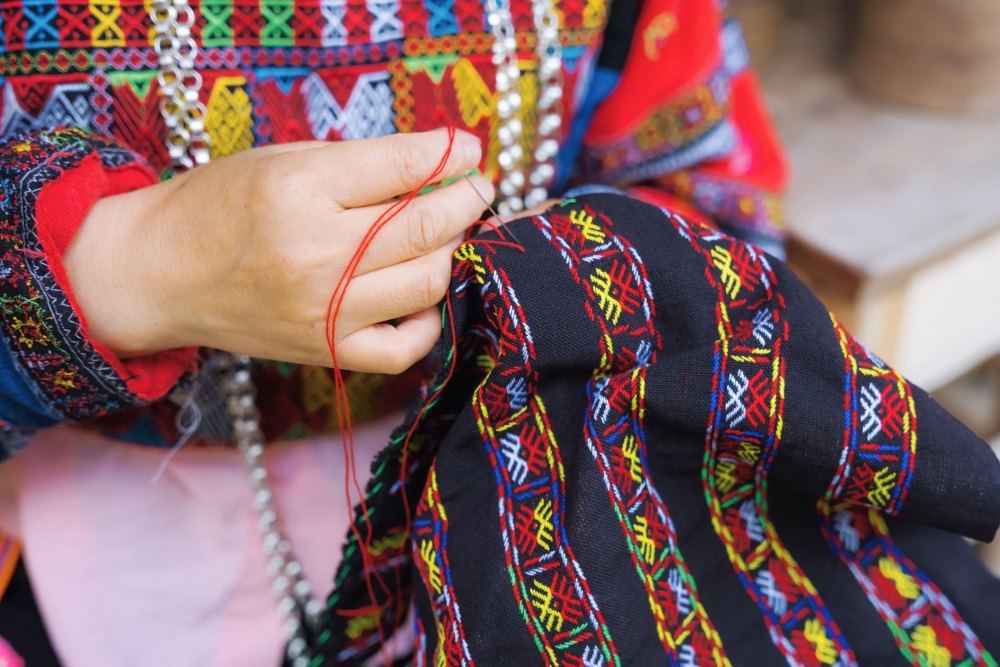
Close-up of a woman's hand embroidering a fabricIntricate motifs in Lo Lo embroidery (Photo: ST4SD/RMIT)

For Dr Nguyen Thi Van Anh, Associate Program Manager for Digital Marketing at RMIT Vietnam, the project also highlighted the role of storytelling in enhancing both cultural and economic value.

“Our role was not to change the story of Lo Lo Chai, but to help the community share its own story more effectively,” she said. “Storytelling is what transforms a handcrafted product into a meaningful cultural experience. When visitors understand the people and traditions behind each product, they develop a deeper connection with the community.”

Beyond supporting product innovation, the project worked with local artisans to create digital content assets, including photographs, videos, and cultural stories that can be used to promote Lo Lo embroidery culture in digital spaces.

“By combining cultural storytelling, digital content creation, and product innovation, communities such as Lo Lo Chai can strengthen both cultural preservation and sustainable livelihood opportunities,” Dr Van Anh said.

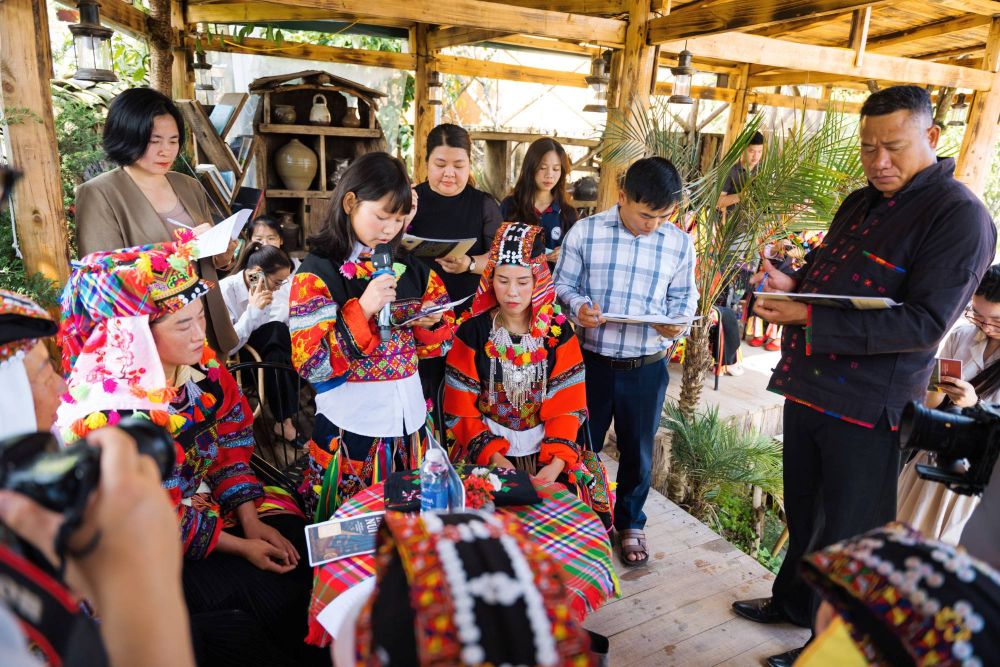
A girl presenting with a microphone, with judges around her taking noteJudges listened to ideas presented by a team during the product innovation challenge. (Photo: ST4SD/RMIT)

The project also piloted how embroidery could be integrated into tourism experiences. Workshops simulated how visitors could be welcomed into local homes, guided through hands-on activities, and introduced to cultural narratives in an immersive way.

From the local government’s perspective, early outcomes of the initiative have been encouraging. Speaking to Tuyen Quang Television, Mr Giang Mi Mua, Vice Chairman of the Lung Cu Commune People’s Committee, said: “The participating groups were able to highlight the traditional identity of the Lo Lo people, while also generating many new ideas for products tailored to visitors.”

For many artisans, the transition from being skilled craft makers to storytellers and tourism hosts is a necessary one.

This shift is particularly significant given that most participants are ethnic minority women, who have long preserved cultural knowledge but have had limited opportunities to position themselves as creative entrepreneurs.

“One of the biggest changes we observed was confidence. By the end of the workshops, many artisans were presenting ideas and sharing their stories with pride,” said Dr Trang.

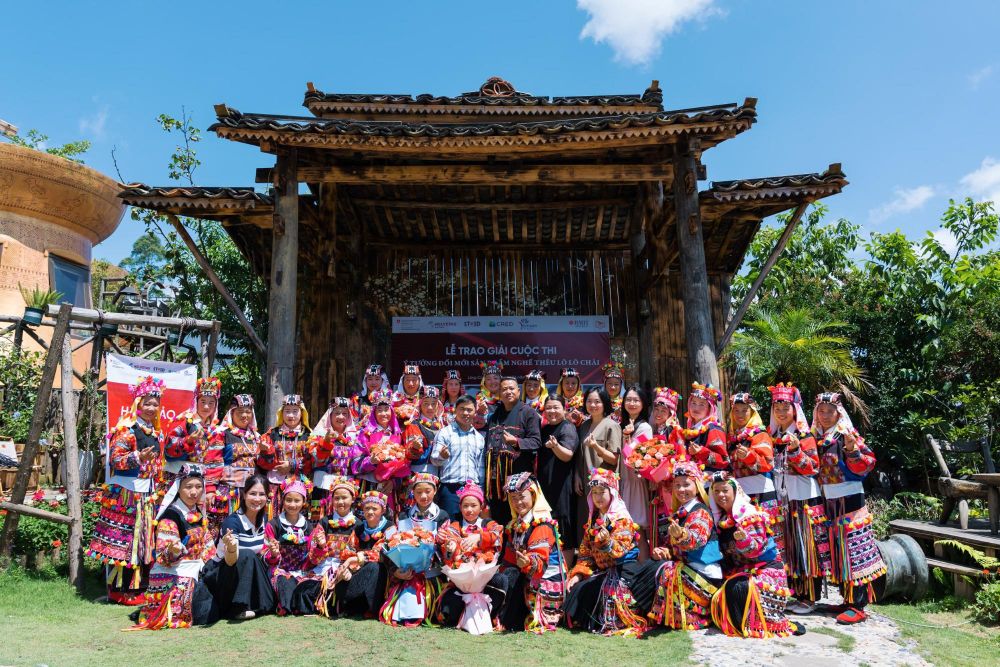
Group photo of organisers and participantsOrganisers and participants at the award ceremony of the product innovation challenge. (Photo: ST4SD/RMIT)

While the ‘Lo Lo Chai – Story of the Woven Futures’ project has concluded, its long-term ambition lies in enabling the community to carry forward and expand what has been started.

With the knowledge gained, the locals are now better positioned to embed experiential workshops into homestay services, develop new product lines, and strengthen Lo Lo Chai’s appeal as a tourism destination.

“In the next few years, we hope visitors will come to Lo Lo Chai and be able to immerse in meaningful cultural experiences, where they can learn and connect with the community,” said Dr Van Anh.

Story: Ngoc Hoang

Related news