Leadership capability at the heart of Vietnam’s SME growth agenda

Leadership capability at the heart of Vietnam’s SME growth agenda

A UN Women-RMIT partnership is helping advance leadership capability and support Vietnam’s SME development agenda.

As Vietnam accelerates reforms to strengthen its small and medium-sized enterprise (SME) sector, leadership capability is increasingly recognised as a cornerstone of sustainable and inclusive economic growth. This shift was prominently featured at a national consultation workshop held in Da Nang in January 2026, where RMIT University Vietnam contributed international research evidence to inform the amended Law on Support for SMEs and the design of large-scale national CEO training initiatives led by the Government.

Co-hosted by the Agency for Private Enterprise and Collective Economy Development (APED) under the Ministry of Finance and UN Women Vietnam, the workshop brought together policymakers, local authorities, development partners and experts to examine how SME support policies can evolve from broad financial assistance towards more effective, outcome-oriented interventions.

A particular focus was placed on the Government’s ambition to roll out a nationwide CEO training program at scale, often referred to as the “10,000 CEOs” initiative, to enhance enterprise competitiveness and resilience.

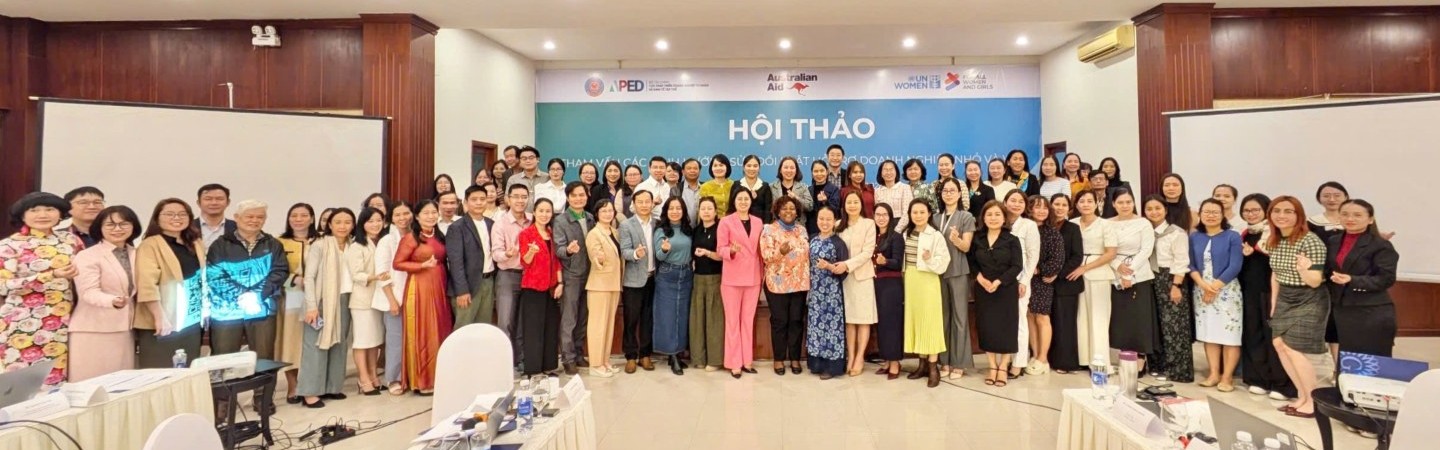
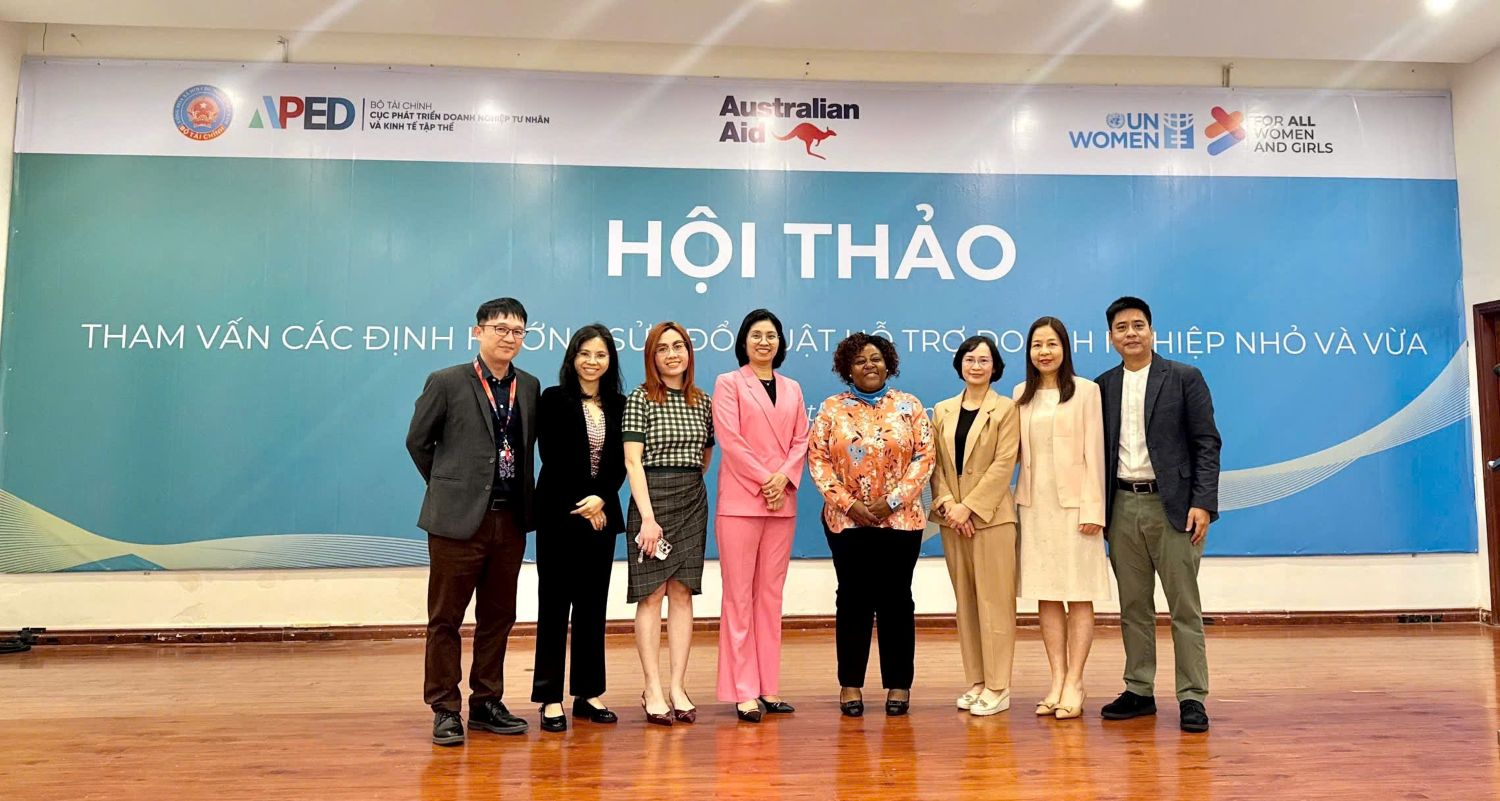
Group photo RMIT researchers with representatives from the Agency for Private Enterprise and Collective Economy Development and UN Women Vietnam. (Photo: RMIT)

RMIT’s contribution focused on policy substance and global evidence, sharing comparative research on how leading economies design SME and CEO development programs for long-term impact.

Drawing on international experience from Singapore, OECD countries and the Asia-Pacific region, RMIT experts highlighted a clear global trend: effective SME policies increasingly prioritise systematic investment in leadership capability, supported by strong delivery mechanisms that connect learning with real business transformation.

“International experience shows that SME support is most effective when leadership development is treated as a strategic policy instrument rather than a stand-alone training activity,” said Associate Professor Pham Cong Hiep, Deputy Dean, Research & Innovation at The Business School, RMIT University Vietnam.

“When CEO capability development is well funded, linked to mentoring and strong networks, and assessed through clear impact measures, it becomes a powerful lever for productivity, resilience and inclusive growth.”

A central theme of the policy dialogue was the role of women-led SMEs and other disadvantaged enterprise groups, which are widely recognised as drivers of employment, innovation and social impact, yet remain underrepresented in many existing leadership development programs.

International benchmarks shared by RMIT demonstrate that high-performing CEO training systems typically combine substantial public investment with flexible delivery models, mentoring, and peer networks – features that help remove barriers related to time, access, geography, and social norms.

“International experience shows that CEO development models designed with flexibility, experiential learning, and close mentoring are especially effective for women-led SMEs,” said Dr Hoang Ai Phuong, Co-lead of The Centre for Business and Emerging Technologies (CBET) at The Business School, RMIT University Vietnam.

“These approaches enable female leaders, as well as entrepreneurs from disadvantaged groups, to strengthen capability, expand networks and participate fully in growth-oriented programs.”

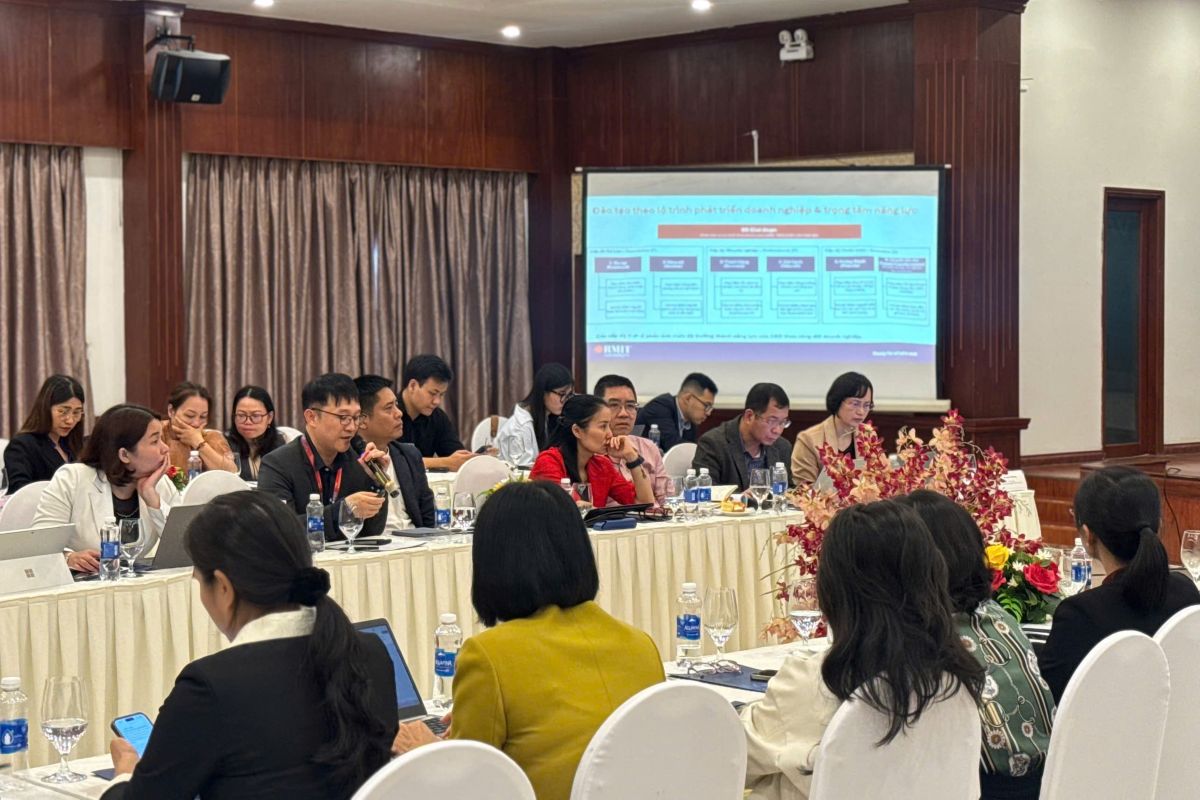
People sitting at tables listening to a presentation Discussions at the workshop underscored the growing consensus that leadership capability development is essential to improving the overall effectiveness and inclusiveness of SME support systems. (Photo: RMIT)

As Vietnam accelerates reforms to strengthen its small and medium-sized enterprise (SME) sector, leadership capability is increasingly recognised as a cornerstone of sustainable and inclusive economic growth. This shift was prominently featured at a national consultation workshop held in Da Nang in January 2026, where RMIT University Vietnam contributed international research evidence to inform the amended Law on Support for SMEs and the design of large-scale national CEO training initiatives led by the Government.

Co-hosted by the Agency for Private Enterprise and Collective Economy Development (APED) under the Ministry of Finance and UN Women Vietnam, the workshop brought together policymakers, local authorities, development partners and experts to examine how SME support policies can evolve from broad financial assistance towards more effective, outcome-oriented interventions.

A particular focus was placed on the Government’s ambition to roll out a nationwide CEO training program at scale, often referred to as the “10,000 CEOs” initiative, to enhance enterprise competitiveness and resilience.

Related news