


Inclusive AI governance: Building Vietnam’s digital future for all

Inclusive AI governance: Building Vietnam’s digital future for all

AI should not only drive efficiency and innovation but also empower individuals who have historically faced barriers, said Dr Abdul Rohman from RMIT Vietnam’s School of Communication & Design.

A senior lecturer in Communication at RMIT Vietnam, Dr Abdul Rohman is the co-founder of the Inclusive Digital Literacy Project, which seeks to ensure that people with disabilities (PwDs) can access the digital domain equitably and securely, harnessing its full benefits. While the Law on Digital Technology Industry will take effect at the beginning of 2026, he once again emphasised that many AI-enabled technologies are developed without considering accessibility, from the design stage to the end-user experience, and often rely on data reflecting general norms, which marginalises PwDs as outliers.

Alt Text is not present for this image, Taking dc:title 'inclusive-ai-governance-dr-abdul-rohman' Dr Abdul Rohman, senior lecturer from RMIT Vietnam School of Communication & Design

“Adding references and data into development is the easiest fix,” he said. “But the most meaningful solution is to involve PwDs in every stage of the process, rather than treating accessibility as an afterthought.”

Why inclusive AI matters?

As Vietnam accelerates its digital transformation, the governance of artificial intelligence (AI) has emerged as a critical strategic priority.

The enactment of the Law on Digital Technology Industry in June 2025 underscores the country’s ambition to position AI and semiconductor technologies at the core of its development agenda.

Yet, a key question persists: how inclusive is Vietnam’s AI governance, particularly for PwDs?

Vietnam’s digital and AI strategies increasingly highlight inclusion, with official documents frequently using terms like “everyone” and “all citizens” to signal a commitment to fairness.

“However, this notion of equality often translates into uniform treatment, overlooking structural barriers that hinder marginalised groups from fully participating in the digital sphere,” he said. “Applying identical standards in an unequal system can inadvertently reinforce exclusion rather than eliminate it.”

The inclusion of PwDs remains particularly limited. Of 25 technology-related policy papers reviewed, only three explicitly reference disability, and these typically group PwDs with other vulnerable populations, emphasising protection over empowerment.

While the shift in terminology from “handicapped people” to “persons with disabilities” reflects global norms such as the United Nations Convention on the Rights of Persons with Disabilities (UNCRPD), inclusive design practices are still optional. Many local websites and applications lack basic accessibility features, and inclusive design is often perceived as a financial burden rather than a standard requirement.

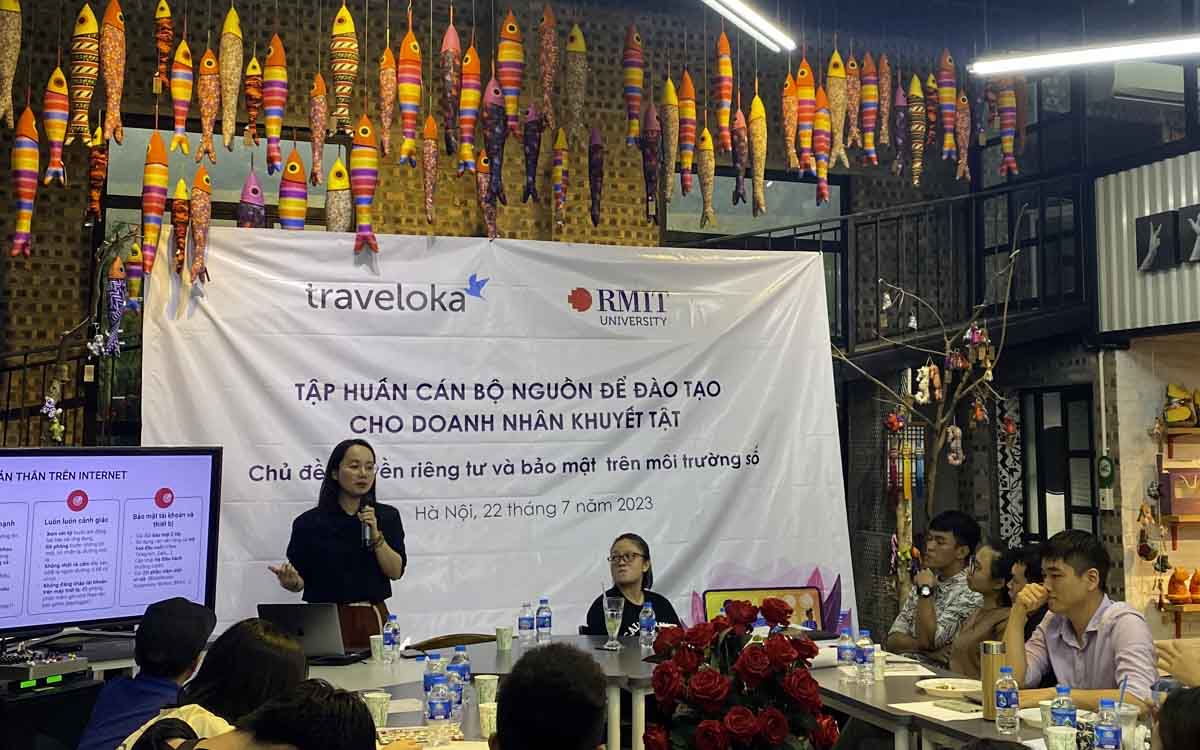
Alt Text is not present for this image, Taking dc:title 'inclusive-ai-governance-2' A Training of Trainers session for 12 PwDs from Hanoi and nearby cities in July 2023, as part of the Inclusive Digital Literacy Project co-founded by Dr Rohman.

Empowering digital citizens through AI governance

Vietnam’s approach to AI governance reflects a largely protective stance. The Law on Digital Technology Industry acknowledges risks for marginalised groups, including PwDs, but by grouping disability, age, and economic hardship together, it overlooks the distinct challenges each faces. For example, the needs of a person with visual impairment differ significantly from those of an elderly individual, or someone who is both. Without nuanced understanding, such policies risk reinforcing ableist assumptions.

Dr Rohman noted that protection alone is not enough.

“True inclusion requires empowerment and systemic change to build an accessible digital environment,” he said. “Targeted education and training for PwDs can help bridge the digital divide, enabling independent and meaningful engagement with AI technologies. Empowerment means equipping individuals with tools and skills, not simply shielding them from harm.”

Vietnam’s centralised governance model offers efficiency but limits public participation, often resulting in tokenistic inclusion. While recent efforts to solicit feedback are promising, stronger commitments to transparency and accountability are essential.

“The concept of digital citizenship provides a powerful framework for reimagining inclusion,” Dr Rohman said. “It emphasises active participation in shaping the digital world. Integrating this principle into AI governance could shift the focus from passive protection to genuine empowerment, ensuring PwDs are not just beneficiaries but contributors to technological innovation.”

As Vietnam advances its digital transformation, the goal should go beyond building smart cities or attracting investment. Inclusive AI governance is not optional, it is fundamental to a fair and resilient digital future.

Story: Ha Hoang

Thumbnail image: Chansom Pantip – stock.adobe.com | Masthead image: Diflope stock.adobe.com

Related news