
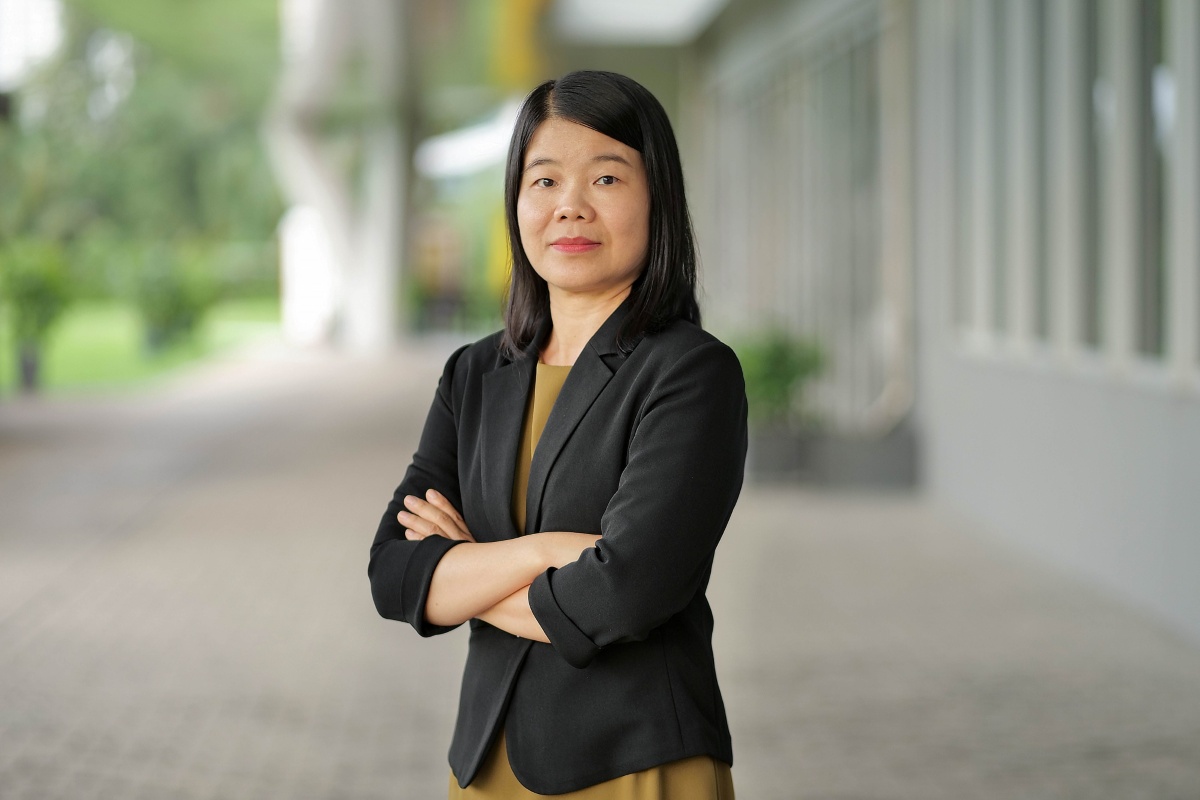


Across Vietnam and Southeast Asia, many women still have weaker digital access and skills, which adds to their lack of confidence using AI.
Associate Professor Earl argues that part of the problem is how society frames AI. Instead of viewing AI as being reserved for the tech-minded, society should consider it a basic skill for all.
“In Vietnam’s past, literacy and calligraphy were tasks of a small group of educated elites, generally not including women. But now women have equal literacy with men. Reading and writing are basic skills,” she says. “Similarly, AI use should be accepted as a basic skill of literacy and not something ‘new’ or ‘special’ used by a few.”
Closing the gender gap in AI
Associate Professor Earl believes that if schools and workplaces regard AI use as a required literacy, then girls and boys, women and men would use it confidently as part of normal activities.
“Overcoming an AI literacy gap between women and men at the current time should be addressed as an issue of basic education. Women’s AI literacy classes and programs could be implemented in the same way that women’s reading and writing classes improved and equalised basic literacy for past generations.”
At the workplace, Vietnamese employers can take a leading role in developing proactive AI inclusion policies and practices for female employees and female leaders. “Sponsoring female staff to build their careers with AI as a basic literacy would help to level the playing field and overcome potential gender discrimination at work,” she says.
Meanwhile, Dr Thuy stresses the importance of strengthening women’s participation in AI research and development. This includes scholarships, mentoring, and leadership tracks that encourage more young women to join the field and rise through it.
She recommends that companies can mitigate gender bias in AI by embedding inclusion throughout development – hiring and promoting more women, using diverse training data, and conducting regular bias audits before and after deployment.
For example, in hiring, companies must actively test their AI for gender bias by checking if certain job applicants, roles, or behaviours are being treated unfairly. “Responsible AI can strip out human biases in hiring or promotions by focusing purely on skills and potential instead of names, photos, or career break gaps,” she says.
The AI educator believes the potential for good is massive because AI can be scaled up quickly and cheaply.
“One well-designed, inclusive system can help millions of women access better opportunities, safer environments, or fairer decisions,” she says. “It’s important to remember that equitable AI isn’t automatic. It’s engineered and learned.”
Story: Ngoc Hoang