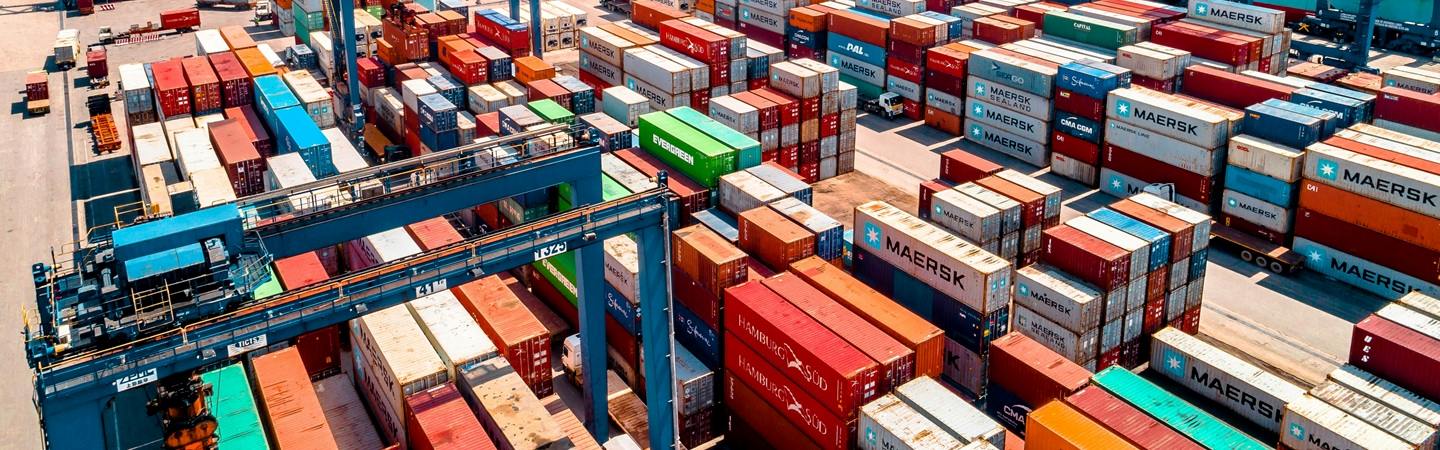
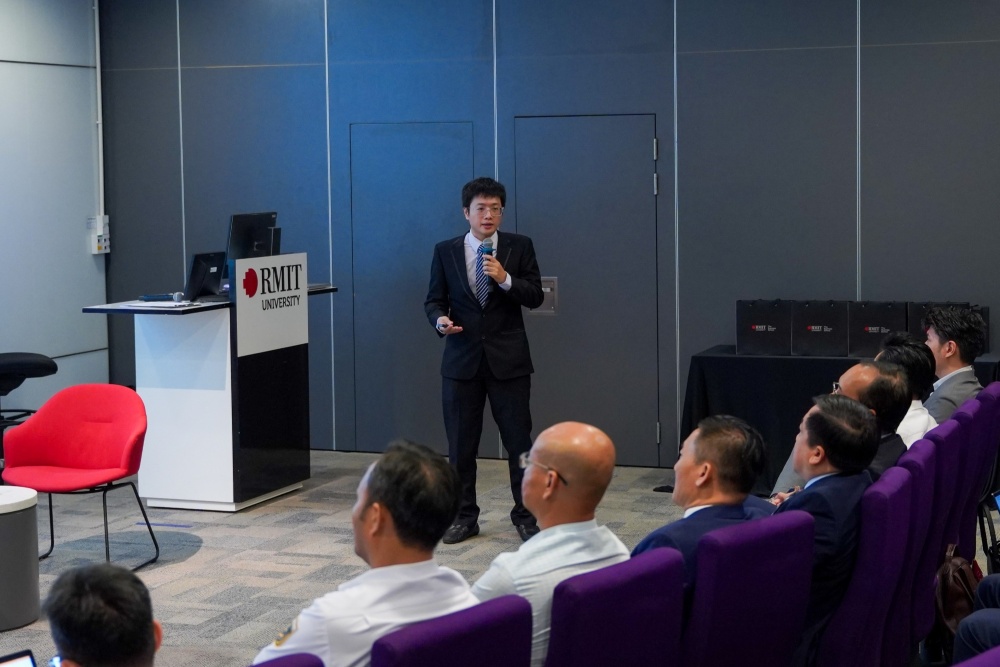
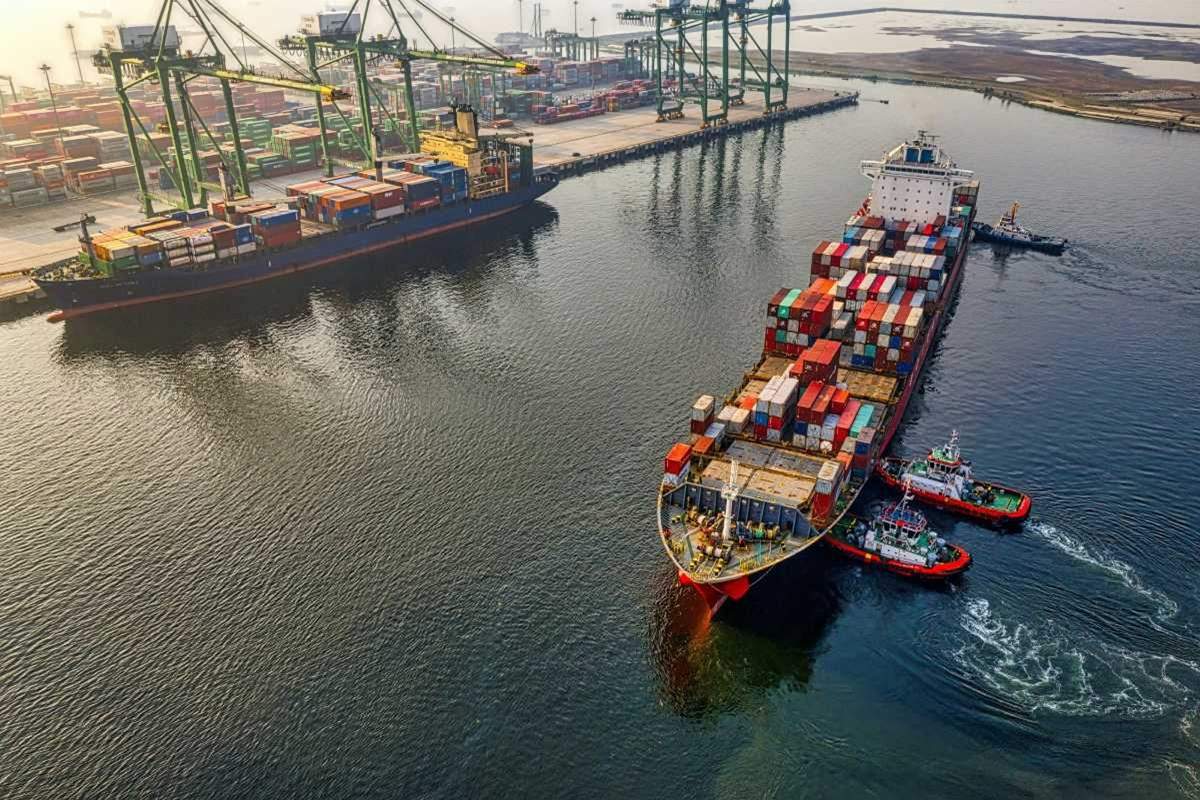
The study also reveals the polarisation of the transition strategies among port operators. Some operators with higher technology and financial capabilities tend to invest beyond compliance and treat the transition as a competitive advantage and even entry barrier. Smaller and purely domestic operators are considering making only minimal investments, choosing to be the cautious followers as they are facing yet-to-materialised regulations, uncertain impacts to business bottom lines, and a weak domestic market for green logistics.
“If this gap continues to widen, heavier market concentration across the sector will become a real concern,” he said.
National regulators emphasise the need for standardisation to avoid fragmented technologies and rising costs. Standards such as TCCS 02:2022 set “green port” criteria across awareness, resource optimisation, environmental quality, energy efficiency, and emissions reduction. Vietnam’s transition roadmap follows four stages - standard development (to 2022), pilot implementation (to 2025), voluntary adoption (to 2030) and mandatory compliance thereafter - supported by Power Development Plan VIII, which targets 30.9-39.2 per cent renewable energy by 2030 and net-zero by 2050.
Local community representatives raise different concerns, especially the alignment of the energy needs of ports and ships, and the local and national energy development directions. They also mentioned safety risks and potential impacts on nearby residents caused by energy-related operations that use hydrogen and ammonia. Yet the local agencies and community representatives remain limited in their authorities, mostly centred on communication and oversight rather than decision-making.
Across all interviews, major barriers emerge: high investment requirements; developing legal framework and energy infrastructure; limited technical capability and knowledge sharing; and misaligned priorities between short-term business pressures and long-term governmental and societal goals.
Building a transition that works in practice
In response, the report recommends an adaptive institutional framework: national objectives should remain strategic, transparent, and progressive, but local implementations should be flexible and specific to regional conditions. The study also emphasises the potentials of ports’ integration with provincial infrastructure as transport-energy hubs, as well as regionalisation as an inevitable development of ports.
The transition should begin with feasible measures in which the resonance of stakeholders is strongest - digitalisation, operational optimisation, equipment electrification and smart energy-management systems - before progressing to renewable energy and higher-risk fuels. Financially, mechanisms such as carbon credits, green bonds, and innovation funds can help transform the transition from a cost burden into a viable investment.
“Technology know-how alone won’t deliver this transition. Real progress depends on governance and collaboration. Regulators, local authorities, operators and shipping lines all need to move in step if Vietnam is to achieve a credible and sustainable port-energy transition,” Dr Son said.
Industry voices converge on collaborative solutions
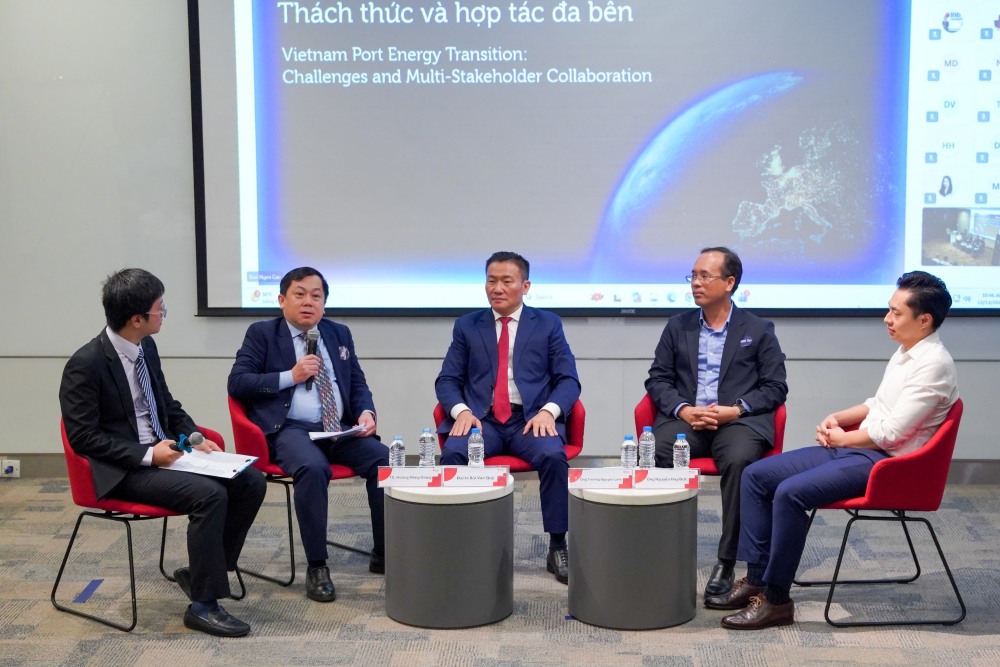
The workshop's panel discussion brought together diverse perspectives from Vietnam's maritime sector, revealing both consensus and complexity in the path forward.
Dr Hoang Hong Giang, Deputy Director General of Vietnam Maritime and Waterway Administration (VIMAWA), emphasised the pioneering multi-stakeholder approach of the research, noting that Vietnam faces an urgent choice: act now or risk exclusion from global supply chains. He highlighted plans for a Port Community System to enable secure information sharing among all stakeholders.