Meet Nguyen Nhat Linh – A quantitative trader who studies Master of Artificial Intelligence at RMIT

Meet Nguyen Nhat Linh – A quantitative trader who studies Master of Artificial Intelligence at RMIT

Already working with AI, Nguyen Nhat Linh saw a gap between using and understanding it. This inspired Linh to study the Master of AI at RMIT and explore the foundations of intelligent systems.
With more than a decade in quantitative trading at WorldQuant, a global quantitative asset management firm, alongside his work as an independent quantitative trader, Nguyen Nhat Linh has focused on applying data and mathematical models to predict stock returns. His work centres on building end-to-end quantitative trading systems, including developing predictive signals, optimising portfolios and designing execution strategies.

Despite that foundation, a sense of curiosity began to emerge. “The rapid progress in artificial intelligence genuinely surprised me,” he shares. “Seeing how systems like ChatGPT can understand language and support complex problem-solving made me realise that AI was entering a completely new stage.”

Rather than simply using these tools, Linh wanted to know how they work, how they learn from data and how they can be applied to complex challenges. As his curiosity deepened, so did the need for a more structured and rigorous understanding.

Pursuing the Master of Artificial Intelligence at RMIT became a natural next step, marking both a continuation of his journey and a shift in perspective. 

Rethink AI study: turn experience into understanding

RMIT’s Master of AI program, particularly through its research stream, provided Linh with an important structure to truly understand the foundations behind machine learning and advanced AI techniques. By combining strong theoretical learning with research opportunities, he is able to revisit his own practice from a deeper, more formal perspective.

A defining part of his master’s journey was joining the research group led by Dr Thuy Nguyen – a senior lecturer in the Master of Artificial Intelligence program at RMIT. Working within a team applying AI in the healthcare domain exposed him to entirely new problem spaces beyond finance, from analysing medical data to supporting research with real-world impact.

He began to appreciate a different approach in modern AI, where models such as neural networks learn complex patterns directly from large amounts of data rather than relying on predefined rules. This method allows systems to capture relationships that are often too complex to specify manually.

The research experience also gave Linh a valuable lesson, helping him shift from “a solution-focused mindset to a question-focused mindset,” and realise that “asking the right question is often more important than finding the answer.” In an era where AI systems are increasingly capable of generating solutions, this perspective becomes even more critical. Linh began to see the importance of framing problems clearly and thoughtfully, as it is a key role in human-machine collaboration.

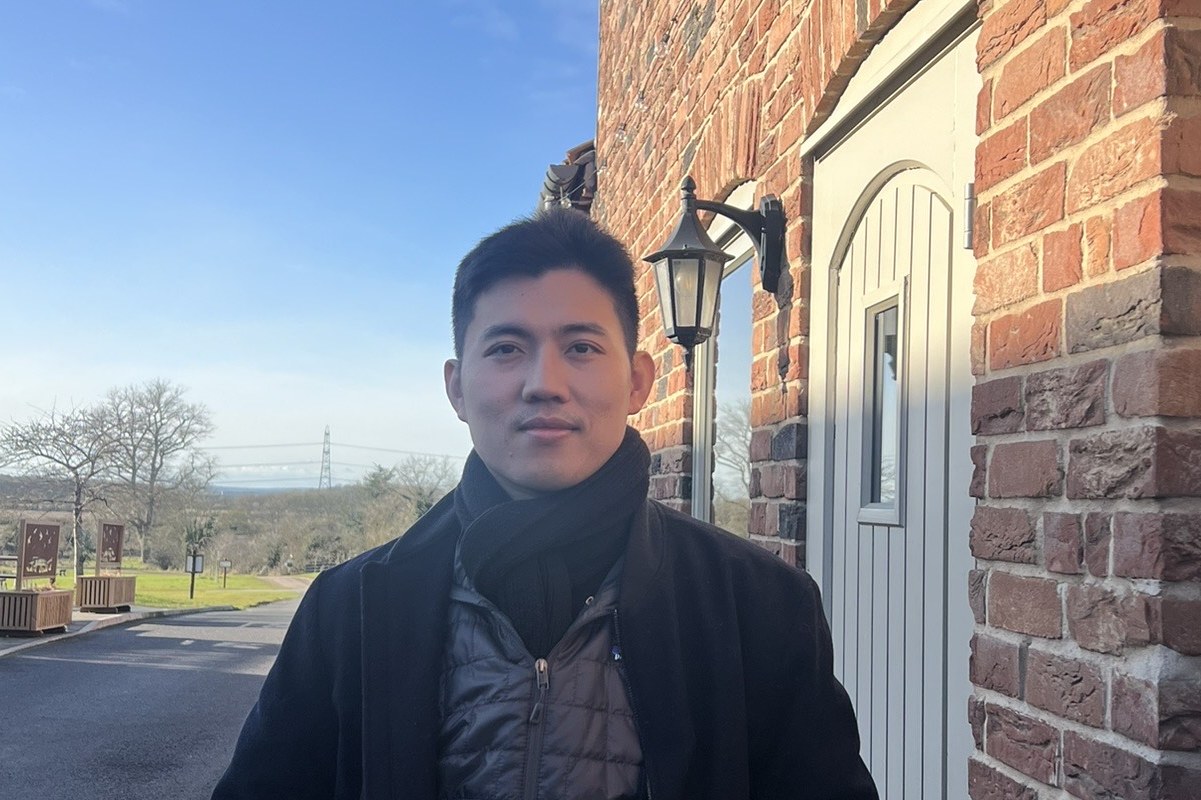
Nguyen Nhat Linh portrait image

A natural next step, with new directions

While the decision to pursue AI felt like a natural extension of his work in quantitative research, the experience also opened up new opportunities.

During the program, he became involved in research exploring how large language models can be guided and improved through better instructions. His work on meta-prompted instruction refinement focuses on making AI systems more reliable by helping them better understand and refine the instructions they receive.

At the same time, exposure to interdisciplinary research in healthcare broadened his view of what AI could achieve. “What stood out to me most was the potential social impact. The idea that AI could be used to improve people’s health and wellbeing was particularly inspiring to me.”

He is now preparing to pursue a PhD, with a focus on applying AI to drug discovery. The goal is to explore how AI can help accelerate the process of identifying promising treatments, an area where both technical complexity and real-world impact intersect.

“The Master of AI helped me build a strong foundation and, more importantly, a research mindset,” he says. “It trained me to approach complex problems in a structured and rigorous way.”

What started as curiosity about a rapidly evolving technology has become a deeper commitment to understanding and contributing to it. For professionals considering a similar path, his experience offers a clear message: sometimes, the next step in your career is not about doing more, but about understanding more. And in a field like AI, it can open up entirely new possibilities.

20 May 2026

Share

Related news