0:00
[Music]
0:04
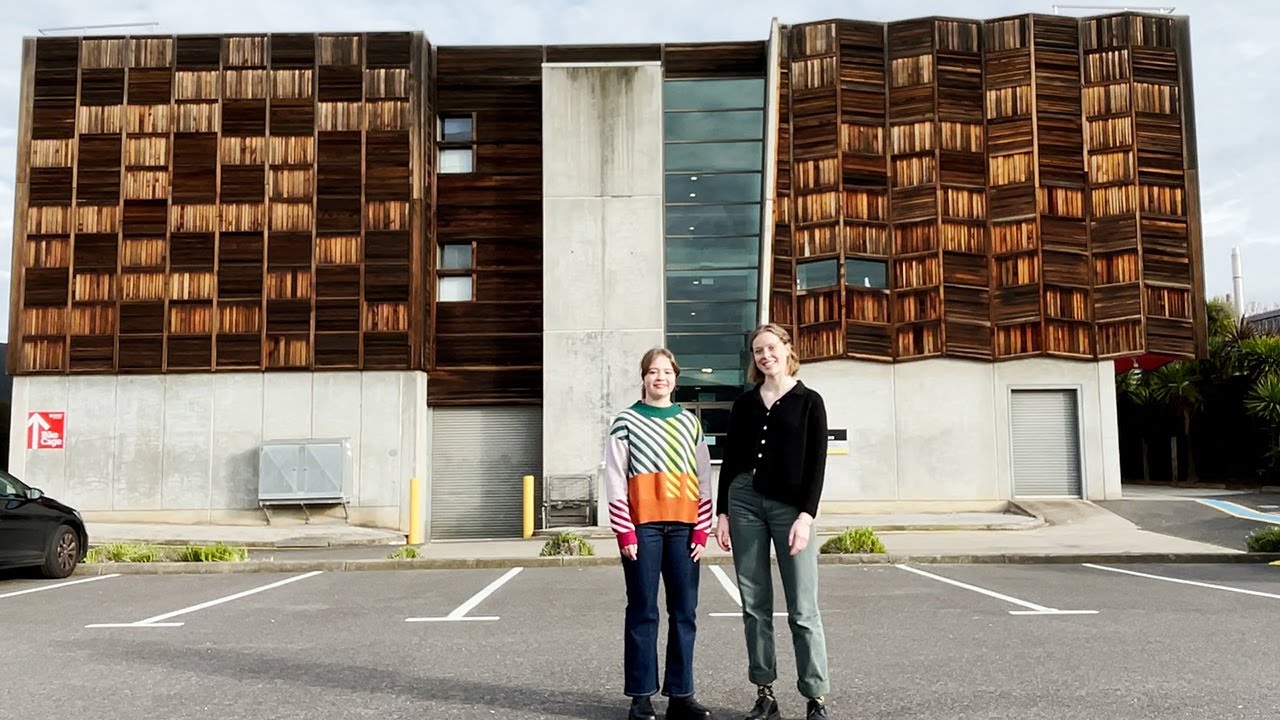
Hi everyone and welcome to the RMIT engineering facility tour.
0:09
I'm Evangeline and today I'm going to give you a quick tour of
0:11
some of RMIT's amazing engineering facilities.
0:15
With 11 different study areas on offer, you are bound to find a
0:18
field of engineering that suits you.
0:19
But if you're not sure if you want to study for robots or race cars,
0:23
RMIT offers a flexible first-year where you can explore
0:26
different fields and find out what you like.
0:29
Now, let's start our tour with one of my favourites,
0:31
the advanced manufacturing precinct.
0:33
[Music continues]
Advanced Manufacturing
0:37
So, advanced manufacturing involves the design of new and
0:40
innovative products.
0:41
And it's transforming industries like the energy sector and
0:44
biomedical manufacturing.
0:46
It also involves a lot of specialised 3-D printing.
0:50
In fact, the first Australian custom made spinal implant
0:53
was made right here.
0:55
And students have access to polymer 3-D printers, just like these.
1:01
The AMP brings together engineering and design.
1:05
And the precinct houses some of the most cutting-edge
1:08
technologies available.
1:09
Researchers here have worked with companies like Boeing, Ford,
1:12
Siemens and many more.
1:14
[Music continues]
Automation
1:20
So, the electrical engineering labs include the automation,
1:23
power electronics and machines labs.
1:27
So, here we are in our automations lab where we have our
1:30
Programmable Logic Controllers or PLCs, which are powerful
1:35
computers used in industrial automation.
1:38
These controllers can automate a specific process, machine function
1:42
or even an entire production line, like we see here.
1:49
So, this is our machines lab, which is equipped with an
1:51
electrical plant for power systems, microgrids and renewable
1:56
energy studies.
1:57
So, we know that the sun converts nuclear energy into heat and
2:01
light energy.
2:02
This is known as energy conversion.
2:04
In the power electronics lab, we convert electrical energy into
2:08
different forms using rectifiers and inverters.
2:11
Like the one we have here.
2:13
[Music continues]
2:21
Now, let's go find out what a photon is.
2:29
Photonics powers our Internet.
2:30
And last year, right in this lab, we broke the world record for
2:34
fastest Internet on a single optical chip with a speed of
2:38
around 44 terabits per second.
2:40
To put that into perspective, at that speed you could download
2:43
1000 high definition movies in about a second.
2:48
So, the surface mount devices lab laboratory is a new facility in
2:50
the School of Engineering.
2:52
Here, students can produce functional electronic prototypes
2:56
to really bring their designs to life.
2:58
Plus, it's got some pretty cool equipment, including a thermal
3:01
imaging camera, 3-D microscope, as well as plenty of testing
3:05
equipment and assembly workspaces.
3:08
[Music continues]
civil environmental
3:15
So, we're now in the civil and environmental engineering lab.
3:18
This lab has some specimens from major rock and mineral types.
3:22
Students can learn about these samples, how they were formed,
3:25
and about their engineering properties.
3:28
This is a model which demonstrates the movement of
3:30
water below the earth through different materials.
3:33
The lab is also a hub for hydrogeology research projects,
3:37
as well as visits to industry partner sites.
chemical engineering
3:48
This is the chemical engineering lab where students can turn raw
3:51
materials into products like pharmaceuticals, plastic,
3:55
petrol and even food.
3:57
They also find ways to make the processing industries more
4:00
environmentally sustainable.
wind tunnel
4:05
This is the second largest wind tunnel in the southern hemisphere
4:08
used for research and education.
4:10
It can mimic wind speeds of up to 150 kilometres per hour.
4:15
It's used to assess wind drag on a range of small-scale aircraft,
4:19
cars, trucks and trains.
4:22
And it can even be used to affect the position of an athlete on
4:26
their aerodynamic drag.
4:31
This is our heavy structures lab, where our civil engineers spend
4:34
a lot of their time.
4:36
This lab experiments with technologies like robotics and
4:39
3-D printing for use in construction.
4:42
As well as developing smart materials for use in extreme or
4:45
harsh conditions, such as a fire, an explosion or under severe pressure.
4:52
They also aim to increase the use of sustainable and recyclable
4:55
materials in construction.
4:57
[Music continues]
5:01
Here we are in our thermal fluids lab, another one of our
thermal fluids lab
5:05
mechanical workshops.
5:07
This is used for research and testing by students, professors
5:11
and industry partners.
outro
5:15
I hope you enjoyed this tour of RMIT's impressive
5:18
engineering facilities.
5:19
And remember, if you have any more questions, you can reach out
5:22
to the friendly team at Study at RMIT.
5:25
And we hope to see you soon.