


AI should give nurses more time to care, not replace them

AI should give nurses more time to care, not replace them

Large language models could help nurses spend less time on paperwork and more time with patients. But according to research from RMIT, their success depends on treating AI as a trusted assistant rather than an autonomous decision-maker.

Nurses are central to healthcare. Alongside caring for patients, they spend a significant amount of time documenting care, explaining complex medical information, coordinating treatment and managing administrative tasks. As healthcare systems worldwide face increasing pressure, artificial intelligence (AI) is emerging as a potential way to reduce this burden. 

For Mr Tom Huynh, Associate Lecturer in the Information Technology program at RMIT Vietnam, however, the conversation is not about replacing nurses with AI. It is about helping them spend more time doing what matters most. 

“Our research started with a simple question. Where could large language models genuinely help nurses, and what safeguards would be needed before using them in real healthcare settings?” Mr Huynh said. 

Those questions underpin the research “Transforming nursing with large language models: from concept to practice”, published in the European Journal of Cardiovascular Nursing. The paper explores how large language models (LLMs) could support nursing practice through patient education, clinical documentation, information support, health informatics and social support, while also examining the risks and safeguards needed for their responsible use.  

LLMs give nurses more time for observation, communication, reassurance and clinical judgement. (Image: Magnific) LLMs give nurses more time for observation, communication, reassurance and clinical judgement. (Image: Magnific)

Mr Huynh believes the greatest value of LLMs lies in helping nurses reduce routine administrative work so they can focus on patient care. 

“It could help draft or translate education materials, summarise long notes, organise clinical documentation and prepare checklists. It may also support continuing education, research tasks and case-based learning for nursing students,” he said. 

“The safest approach is to use the technology as support rather than as a substitute for professional judgement. The nurse still needs to check the information, understand the patient's circumstances and make the final decision.” 

The RMIT lecturer added: “I think of an LLM as a co-pilot. It may help with routine work and organise information, but the healthcare professional remains in charge. The goal is not to replace nurses, but to return more of their time and attention to nursing.” 

Yet while AI offers significant opportunities, he cautions that its limitations can be just as important as its capabilities. 

One of the biggest concerns is that LLMs can generate responses that sound convincing but are factually incorrect – a phenomenon known as AI hallucination. 

“What surprised me most was how easily fluent language can be mistaken for reliable knowledge. An LLM can sound polished, confident and even empathetic while giving the wrong answer. That is a serious problem in healthcare because people may trust the tone before they check the facts.” 

For Vietnam, the challenge extends beyond the technology itself. 

Vietnamese is considered a low-resource language in AI because there is much less high-quality digital and medical text available for training than there is in English. As a result, a model that performs well in English may perform much less reliably in Vietnamese. 

Mr Huynh's wider research has already demonstrated this gap. In one case study, GPT-3.5 repeatedly confused atrial fibrillation with Parkinson's disease when answering in Vietnamese. The team also found that one widely used open-source model had a reported training mix of 89.7 per cent English and only 0.08 per cent Vietnamese. 

“This shows why the same technology can be helpful to one group and unreliable for another. Language is part of the infrastructure of AI, and people are disadvantaged when that infrastructure is weak.”

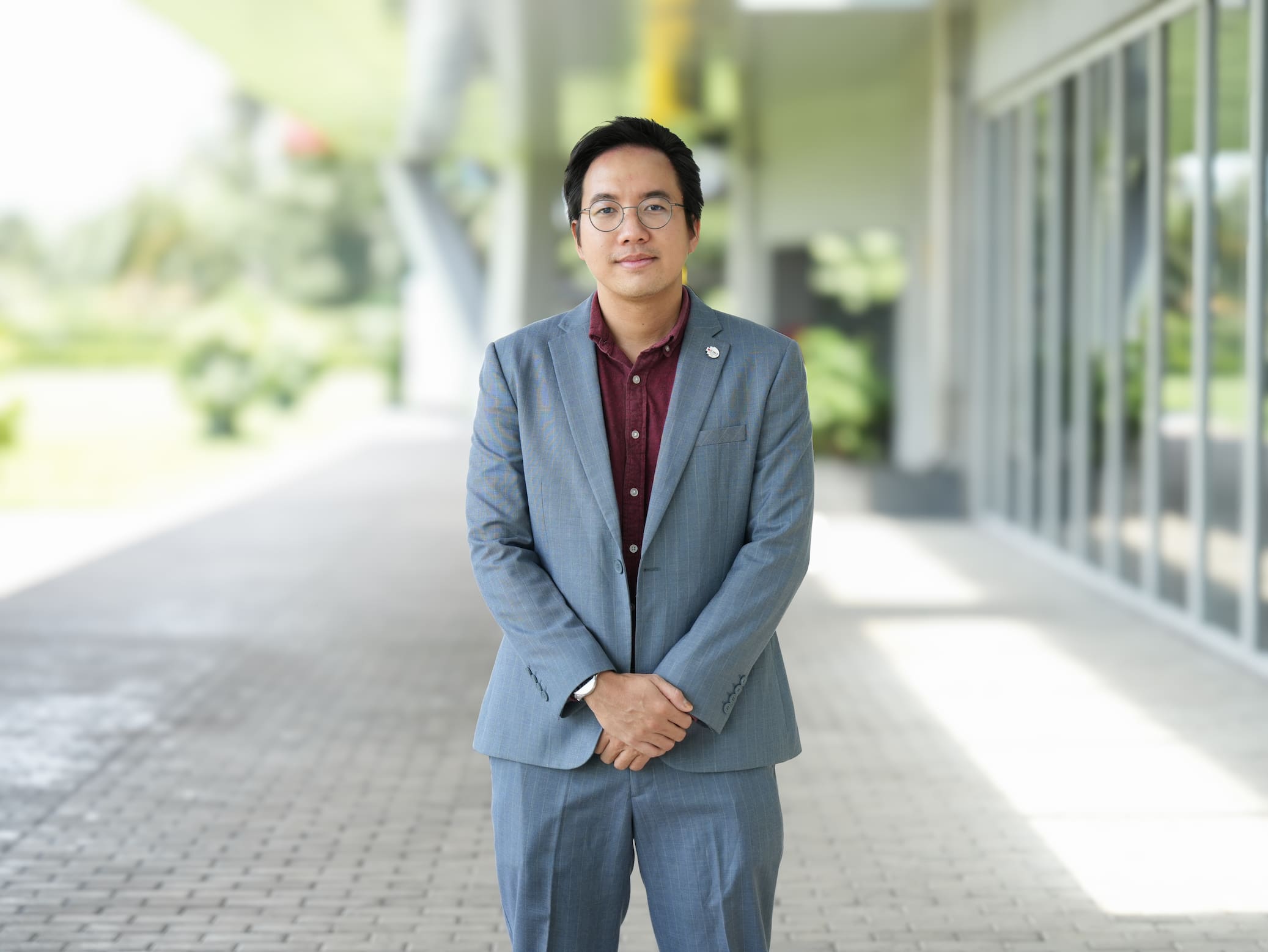
Mr Tom Huynh, Associate Lecturer in the Information Technology program, School of Science, Engineering & Technology, RMIT Vietnam (Image: RMIT)Mr Tom Huynh, Associate Lecturer in the Information Technology program, School of Science, Engineering & Technology, RMIT Vietnam (Image: RMIT)

Rather than rushing AI into hospitals, Mr Huynh advocates a staged and evidence-based approach. 

Vietnam, he said, has talented AI researchers, innovative universities and healthcare organisations willing to experiment. But readiness involves much more than whether an AI model can produce fluent text. 

The country needs stronger Vietnamese medical datasets, independent evaluation, robust privacy and cybersecurity safeguards, clear professional accountability, staff training and evidence from real clinical settings before AI can be safely integrated into routine care. 

“A staged approach would be more sensible. Vietnam can begin with lower-risk uses such as staff education, non-sensitive administrative drafting and patient information that is checked by clinicians. Documentation support can follow once secure systems and local evaluation are in place. Higher-risk decision support should come only after careful testing and regulatory review. The aim should be safe and fair adoption rather than adoption at any cost.” 

The research reflects RMIT Vietnam's commitment to applying emerging technologies to address real-world challenges through international collaboration. It has brought together researchers from the National University of Singapore, the Chinese University of Hong Kong, the AI Research Center at Hon Hai Research Institute in Taiwan, and the Oxford University Clinical Research Unit in Vietnam. The broader research program is led by Associate Professor Arthur Tang, Deputy Dean of Research and Innovation in RMIT Vietnam's School of Science, Engineering & Technology. 

Looking ahead, the RMIT researcher hopes Vietnam will become known not for adopting healthcare AI the fastest, but for adopting it responsibly and equitably. 

“I am not arguing that AI should be kept out of nursing. I want it to be used in ways that make nursing stronger. It should reduce avoidable burden, help people understand health information and support better decisions while protecting the human relationship at the heart of care.” 

As AI becomes increasingly integrated into healthcare, Mr Huynh believes its greatest contribution will not be replacing nurses, but giving them something increasingly precious: more time to care. 

Behind every major shift is a story worth exploring. The Ripple Theory is a series of expert perspectives informed by research from RMIT University Vietnam. By connecting academic insight with real-world stories, the series helps readers gain a deeper understanding of the shifts unfolding across the economy, society, environment, and technological world, while exploring solutions and opportunities for what lies ahead.   

Story: June Pham

Related news