RMIT students join FAO efforts to promote safer food practices in Vietnam

RMIT students join FAO efforts to promote safer food practices in Vietnam

Ahead of World Food Safety Day on 7 June, nearly 400 RMIT University students have developed mock communication campaigns for the Food and Agriculture Organization of the United Nations (FAO) to help raise awareness of food safety in Vietnam.

A glass of iced tea on a hot day is a familiar part of daily life in Vietnam. Yet behind those clear, colourless ice cubes may lie hidden food safety risks that many consumers rarely consider.

This overlooked issue became the focus of a winning campaign by Team Ice Breaker at a recent pitching showcase held by RMIT Vietnam where students presented their communications ideas to experts from FAO in Vietnam in support of World Food Safety Day.

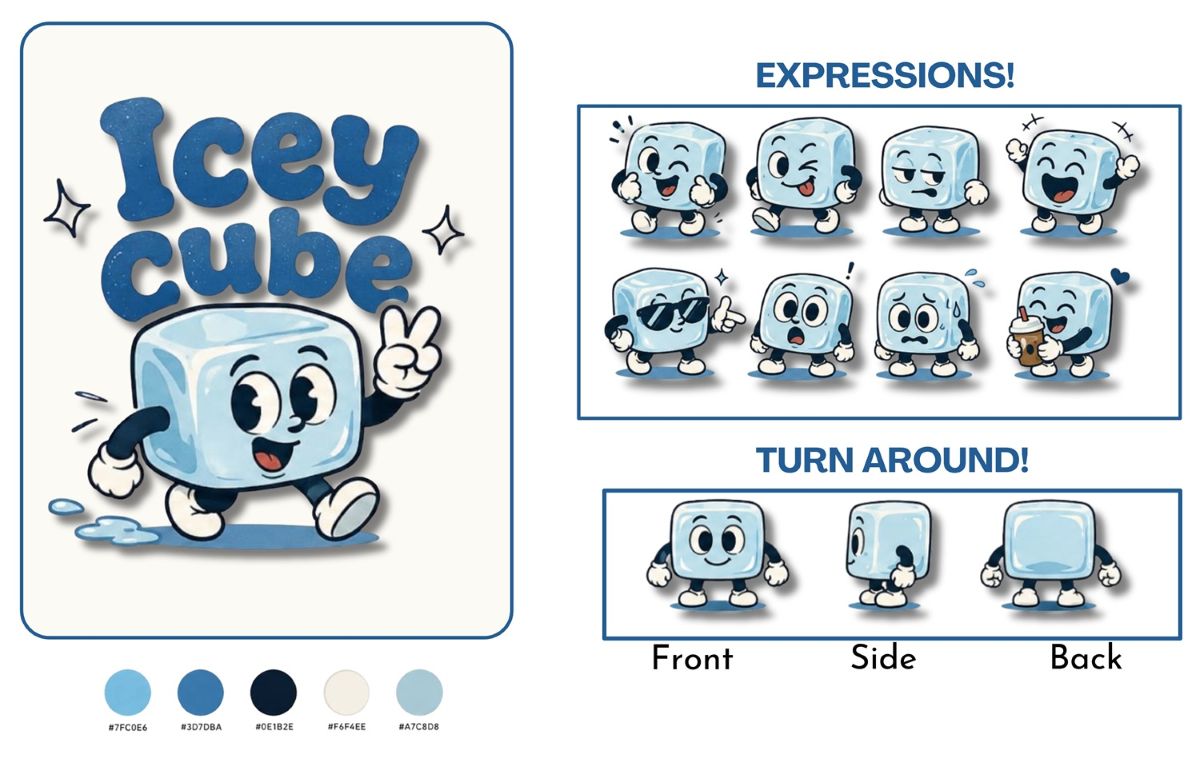
Besides producing social media content aimed at Gen Z audiences, featuring a playful ice-cube mascot and relatable storytelling, the team’s advocacy campaign also introduced a verification badge for vendors using clean ice in their products.

Mock-up of Icey Cube's design with different expressions“Icey Cube” - the campaign mascot designed by the Ice Breaker team. (AI-generated images by Team Ice Breaker)

The campaign stood out for addressing a blind spot in both public awareness and existing food safety communication.

“Our goal was to make people question a small everyday habit,” the team shared. “If consumers start paying attention to something as simple as ice, it can lead to broader changes in food safety awareness.”

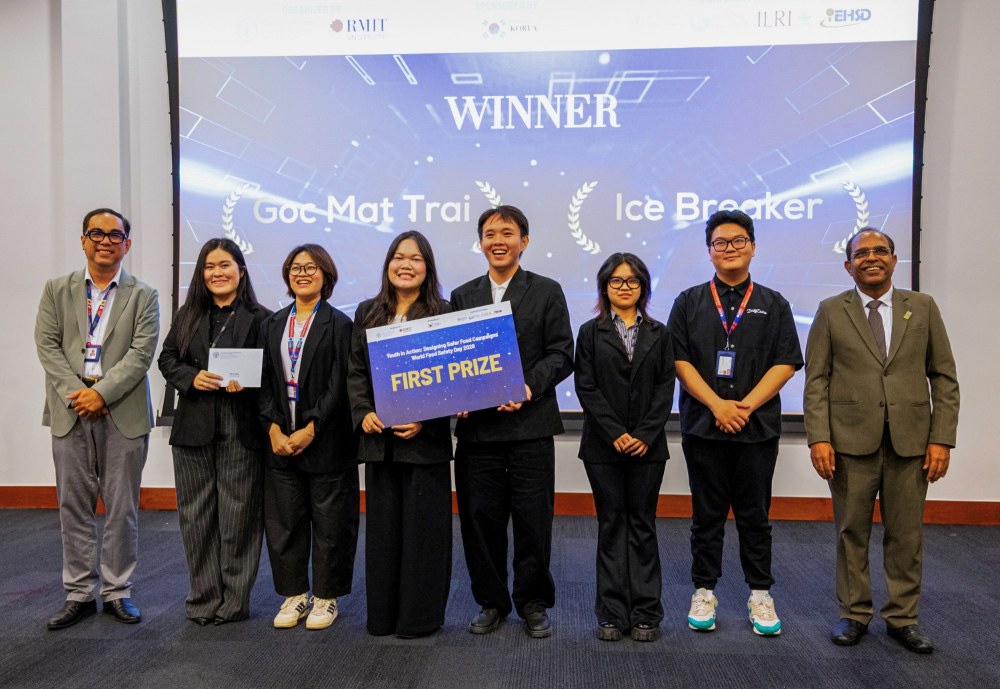
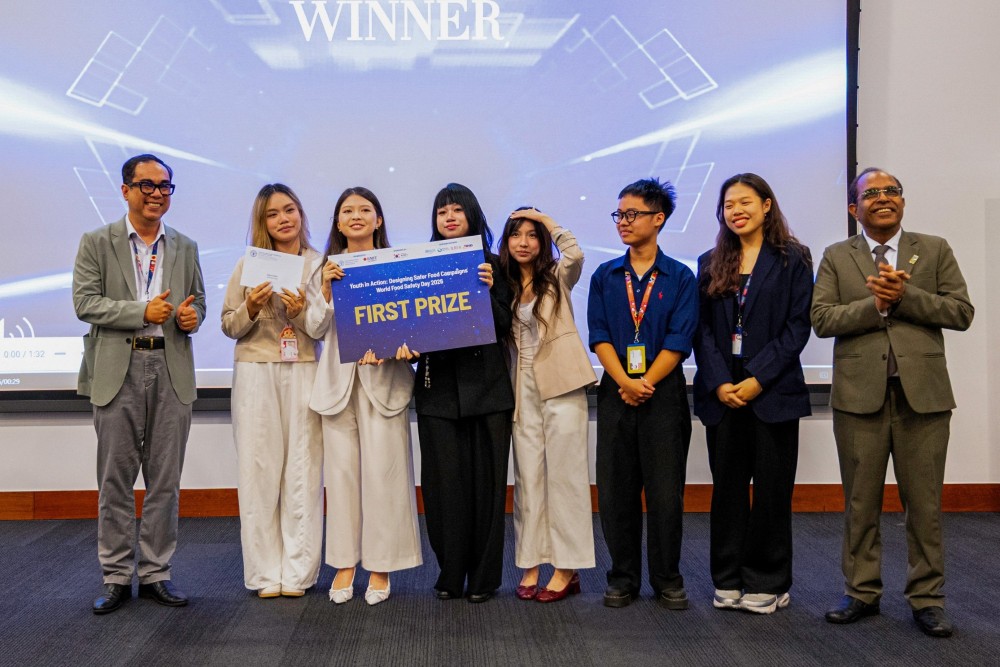
Group photo of the winning team on stageTeam Ice Breaker from the Saigon South campus (Nguyen Thuy Tien, Nguyen Thi Phuong Linh, Bui Thi Phuong Thao, Pham Thien Loc, Tran Thien Khanh, Tran Ngoc Minh Tu) won First Prize in the “Advocacy and Voice in PR” category. (Photo: RMIT)

Empowering young people to drive safer food practices

In Vietnam, as in many rapidly developing food systems, food safety remains an important public health priority. As food systems become more diverse, urbanised, and interconnected, continued attention is needed to strengthen food handling practices, hygiene standards, and consumer awareness across homes, schools, markets, restaurants, and other food environments.

At the same time, changing consumption patterns and the growing influence of digital and social media are creating new opportunities to engage young people as informed consumers, communicators, and advocates for safer food practices and healthier behaviours.

Recognising the important role youth can play as communicators, consumers, and advocates, FAO in Vietnam partnered with RMIT’s School of Communication & Design to explore how they can distil food safety knowledge into creative, relatable, and actionable messages.

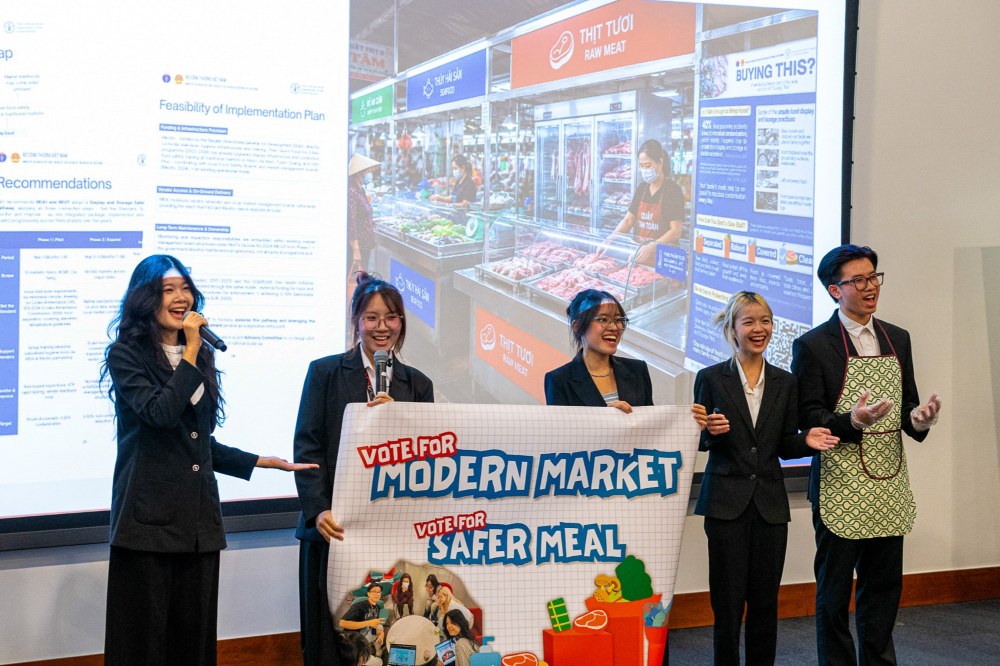
A team pitching on stageThe collaboration between FAO in Vietnam and RMIT leverages the creative voice of the youth. (Photo: RMIT)

Supporting the 2026 World Food Safety Day theme, “From burden to solutions – safe food everywhere”, the collaboration forms part of a broader communication initiative to strengthen food safety awareness. The communication initiative is jointly implemented by FAO in Vietnam, the International Livestock Research Institute, the World Health Organization, Mekong Institute, and the Institute of Environmental Health and Sustainable Development.

When students become campaign creators

Launched in March 2026, Youth in Action: Designing Safer FoodCampaigns is a learning project that brought together nearly 400 students across RMIT’s Hanoi and Saigon South campuses. Coming from two courses, Contemporary Media Relations and Advocacy and Voice in PR, the students worked in teams to develop creative communication campaigns for FAO in Vietnam aimed at raising public awareness about food safety.

Over three months, they interviewed experts from FAO, RMIT, and the National Institute of Food Control before developing communication strategies and creative content tailored to Vietnamese audiences. Their work included short-form videos, social media storytelling, advocacy campaigns, and media engagement plans.

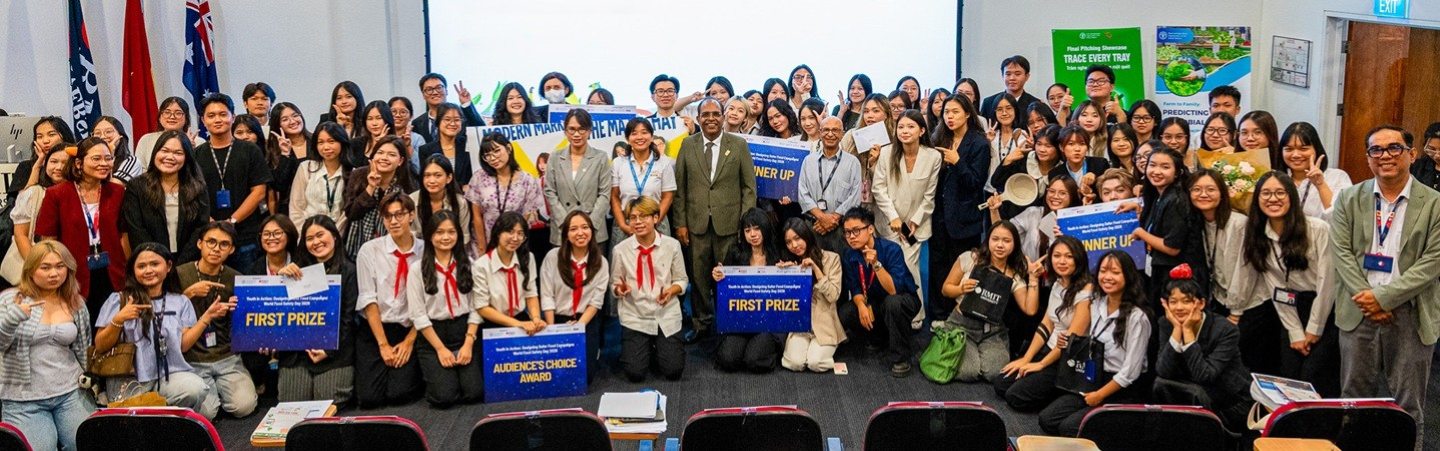
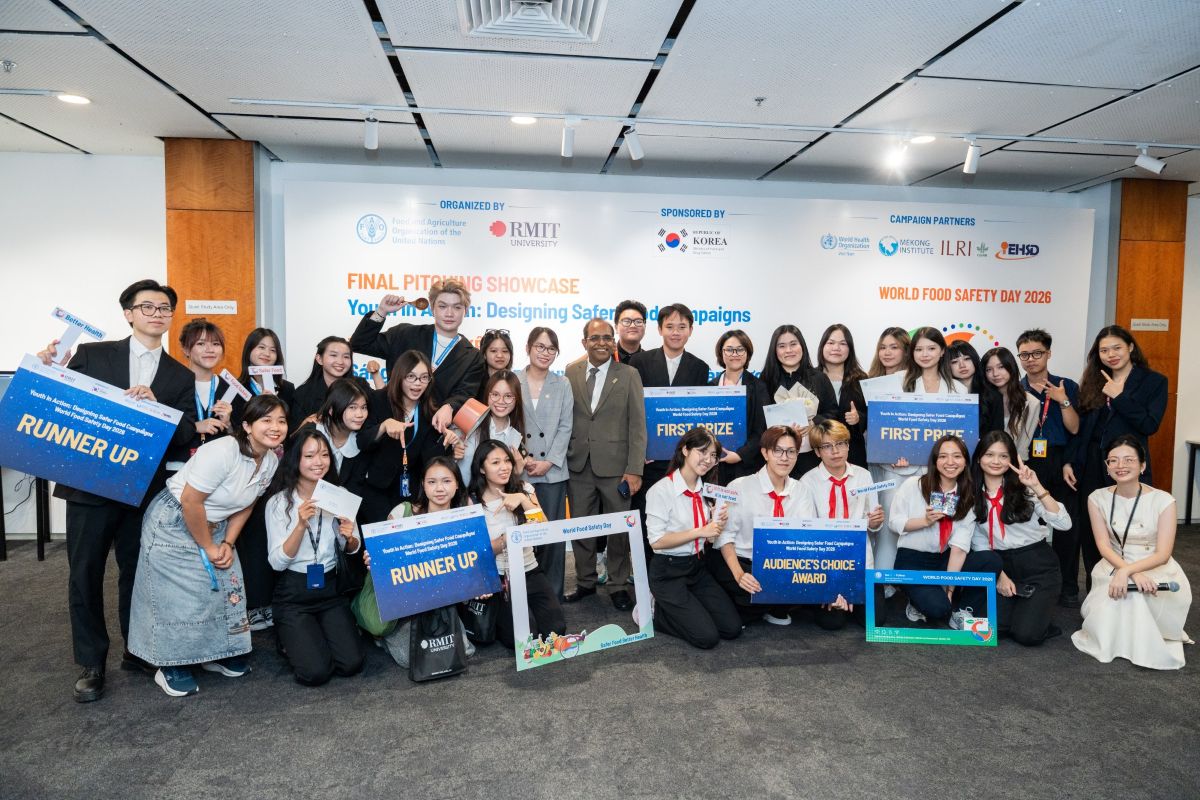
Group photo of winning teams with organisersWinning teams at the final pitching event on 28 May 2026. (Photo: RMIT)

Following preliminary pitching rounds, twelve teams advanced to a final pitching event held on 28 May 2026 at RMIT’s Saigon South campus, where four winning teams from each course were recognised. Several of these ideas are now being considered by FAO for use in their public communication efforts.

For FAO in Vietnam, the collaboration brings fresh perspectives to a long-standing public health issue.

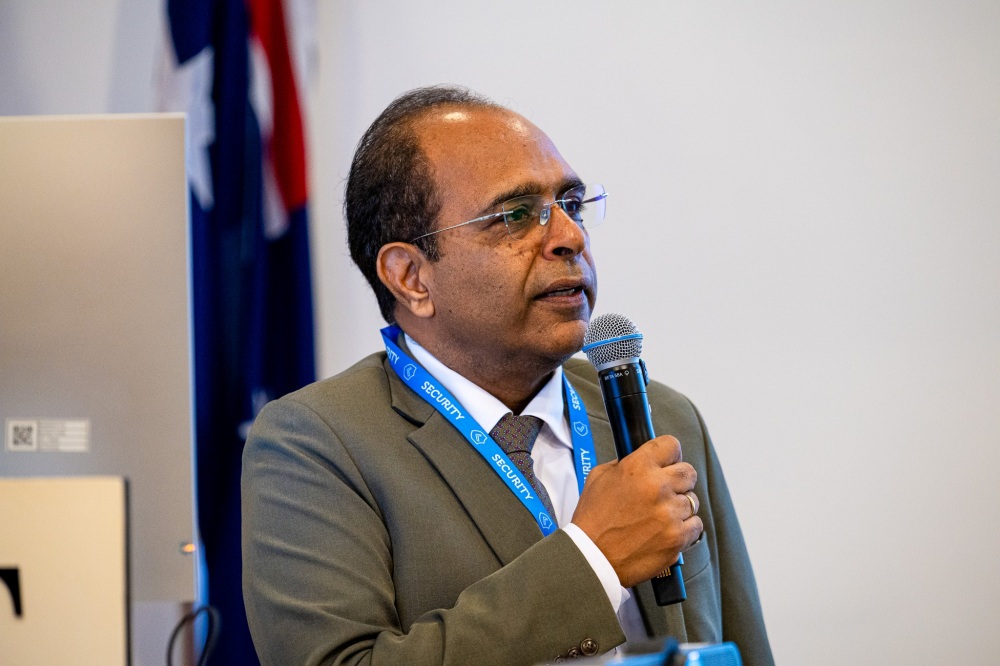
“Young people are not only consumers of food, but also powerful communicators and changemakers who can help shape safer food practices in their families and communities,” said Mr Vinod Ahuja, FAO Representative in Vietnam. “By empowering youth to turn food safety knowledge into creative and relatable messages, we can help build a stronger culture of food safety for everyone.”

Mr Ahuja speakingMr Vinod Ahuja, FAO Representative in Vietnam, speaking at the pitching event. (Photo: RMIT)

Learning with purpose and public impact

The initiative forms part of RMIT’s Work-Integrated Learning (WIL) approach, which connects students with real-world challenges through industry and community partnerships.

“We’re proud that through this partnership with FAO in Vietnam, our students have a chance to contribute to promoting food safety in Vietnam, which is a pressing social issue affecting millions of people every day,” said Dr Manny Ling, Deputy Dean, Engagement and International at RMIT’s School of Communication & Design. “RMIT is committed to combining academic learning and real-life practice, as well as connecting with industry partners.”

Group photo of the winning team on stageTeam Goc Mat Trai from the Hanoi campus (Vu Phuong Linh, Do Quyen Bao Ngoc, Dao Quynh Duong, Nguyen Linh Dan, Tran Nhat Minh, Dinh Bao Minh) won First Prize in the “Contemporary Media Relations” category. (Photo: RMIT)

Co-led by RMIT Professional Communication associate lecturers Wendy Nam-Phuong Nguyen and Lam Luong, the learning activity showed how communication education can contribute to broader societal goals. Students tackled real challenges, with outcomes that extend beyond the classroom.

Dr Ling added, “Food safety is ultimately about behaviour change. Through this project, our students have learned how their ideas and communication strategies can play a role in influencing that change.”

“The most rewarding part is knowing our work could be potentially used in real life,” said Team Goc Mat Trai, the other First Prize-winning team in the final pitching round. “It shows that what we learn in class can actually contribute to something bigger.”

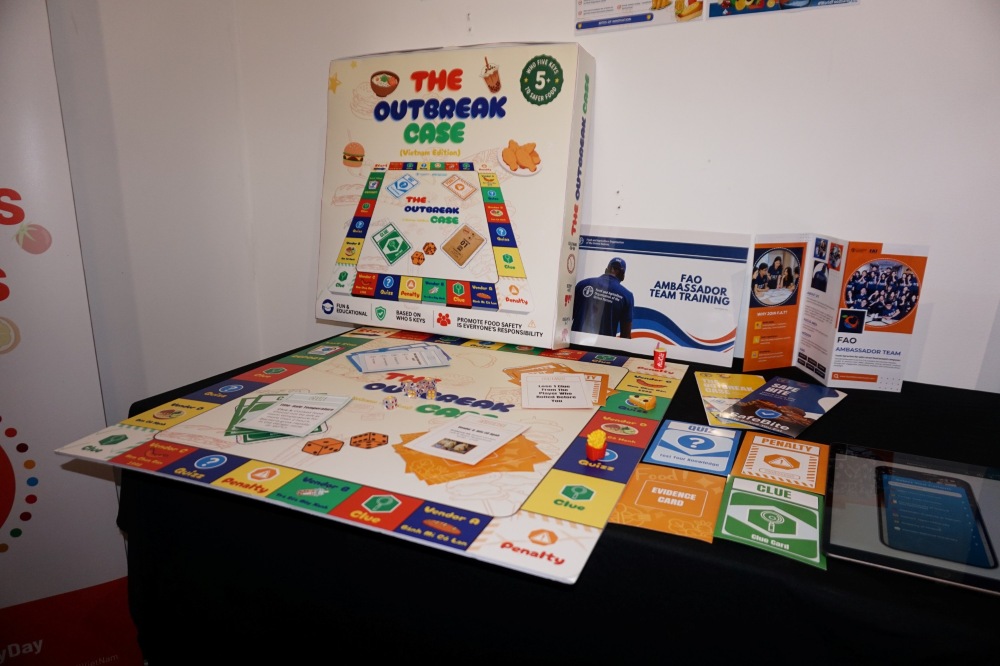
Prints of the board game and brochuresAmong other creative ideas, Team Goc Mat Trai designed a board game to raise awareness of safe street food practices. (Photo: Goc Mat Trai)

As World Food Safety Day approaches, these student-led ideas point to a more collaborative way of tackling public health challenges, where young people join hands with global organisations to play an active role in turning knowledge into action for safer communities.

Related news