Vietnamese music enters a new era of identity and global reach

Vietnamese music enters a new era of identity and global reach

A new whitepaper from RMIT University reveals how Vietnamese artists and audiences are blending cultural heritage with global trends to carve out a distinctive V-Pop identity.

The Vietnam Music Landscape 2025-2026 whitepaper, just released by researchers from the School of Communication & Design at RMIT University Vietnam, paints a vivid picture of a sector in transition.

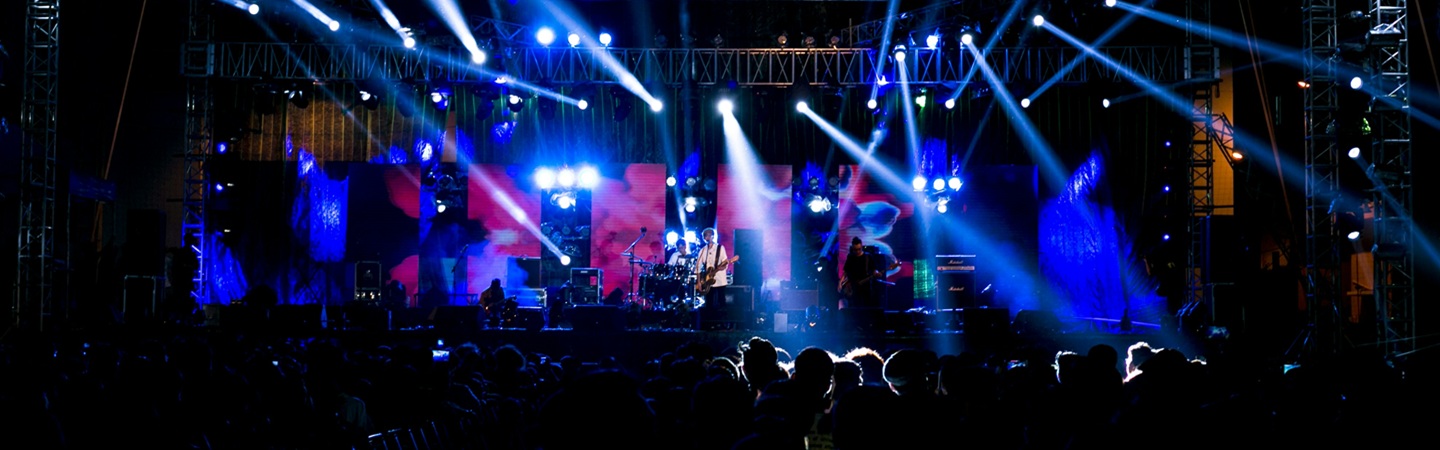
From stadium-filling concerts to viral folk-inspired hits, 2025 was a year of milestones. More than 800 music events lit up the calendar, with August emerging as the peak season for live entertainment. National-scale shows, such as V Concert - Rạng rỡ Việt Nam and Tổ quốc trong tim, drew crowds of 25,500-50,000 per night, underscoring the appetite for immersive cultural experiences.

Vietnamese artists also stepped confidently onto the global stage. Đức Phúc clinched first place at Intervision 2025 in Moscow, while Phương Mỹ Chi secured third place at Sing! Asia 2025. International stars were also drawn to Vietnam – G-Dragon’s Übermensch World Tour alone attracted nearly 100,000 fans, signalling the country’s growing clout as a regional music hub.

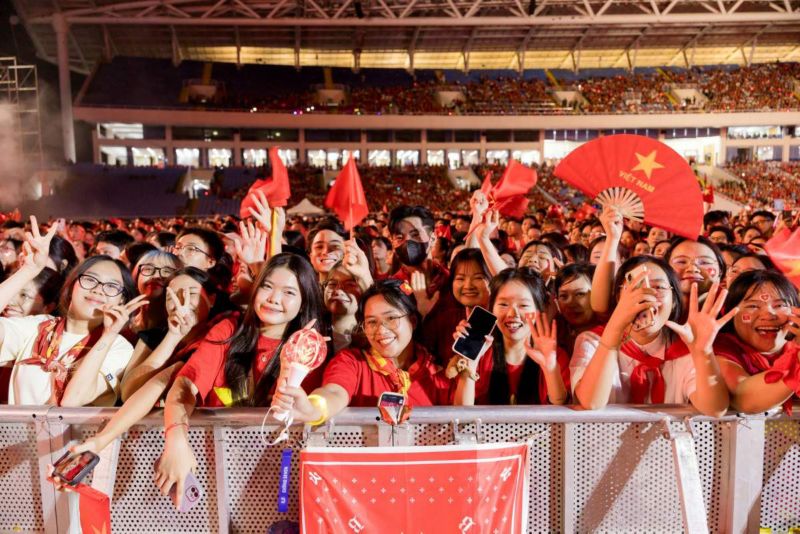
Music concert goers with Vietnamese flags 2025 witnessed an unprecedented surge of large-scale music events. (Image: Pexels)

“2025 marked a remarkable transformation for Vietnam’s music market and cultural industry, reflecting not only growth in quantity but also a significant leap in quality,” said Associate Professor Nguyen Van Thang Long, who led the research team.

However, to truly compete with regional and global music markets, the sector requires comprehensive professionalisation, sustainable development strategies, and the cultivation of a distinctive V-Pop identity, according to Associate Professor Long.

“The time has come not only to organise large-scale events but also to build a cultural industry with depth and character,” he stressed.

Cultivating a stronger identity

The report situates music within Vietnam’s broader cultural development agenda. The National Target Program on Cultural Development (2025-2035) allocates over 122,000 billion VND to preserve traditions and elevate Vietnam’s global cultural standing. Music, the study argues, is emerging as one of the most dynamic forms of cultural diplomacy.

Professor Donna Cleveland, Dean of RMIT Vietnam’s School of Communication & Design, noted: “Music can connect not only different creative sectors but also countries. Through music, Vietnamese identity can enhance its regional and global influence. This represents an opportune moment for culture to become a driver of sustainable development and a form of soft power that shapes Vietnam’s image for the future.”

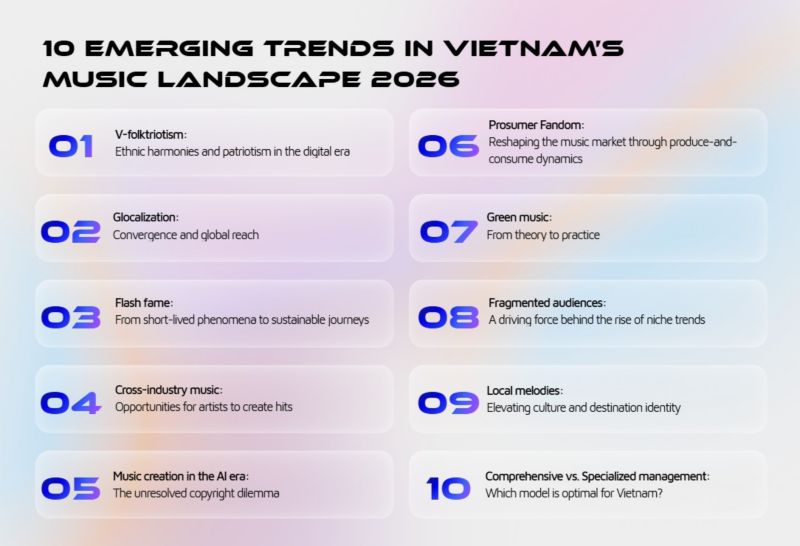
In fact, among the 10 emerging trends identified in the Vietnam Music Landscape 2025-2026 whitepaper, several are connected to the promotion of Vietnamese identity and cultural storytelling through music.

List of the 10 trends The whitepaper identified 10 emerging trends in Vietnam’s music landscape in 2026. (Image: RMIT)

One of the most striking currents is V-folktriotism – a wave of folk-inspired, patriotic music reimagined through modern genres like EDM and pop. Last year, songs such as Hòa Minzy’s Bắc Bling and DTAP’s Made in Vietnam album didn’t just dominate playlists. They sparked cultural pride and even tourism campaigns. DTAP’s Made in Vietnam project, featuring 25 artists across generations, became a cultural phenomenon, combining music with a cross-country journey that celebrated historical sites and national heritage.

Another defining movement is glocalisation. Artists like Hoàng Thùy Linh and Phương Mỹ Chi are crafting globally appealing music without sacrificing local identity, turning each track into what the report calls a “cultural passport.” This approach, blending folk tunes and imagery with contemporary production, is helping Vietnamese music stand out internationally through authenticity rather than imitation.

The third cultural trend, local melodies for destination branding, highlights music’s role in tourism. The viral success of Bắc Bling led Bac Ninh’s provincial authorities to launch free weekend tours to locations featured in the music video, attracting hundreds of visitors weekly. Following major administrative mergers in 2025, music has emerged as a strategic tool helping regions reposition their cultural identities and enhance tourism appeal amid a wave of re-identification.

Growth beyond 2025

So how can the successes of 2025 be transformed into long-term growth momentum? What are the keys to establishing a distinctive V-Pop identity on the international stage?

The research team argues that structured strategies, spanning artist development, public-private partnerships, and cross-sector collaboration, are essential to transform Vietnam’s music industry from a vibrant scene into a global force.

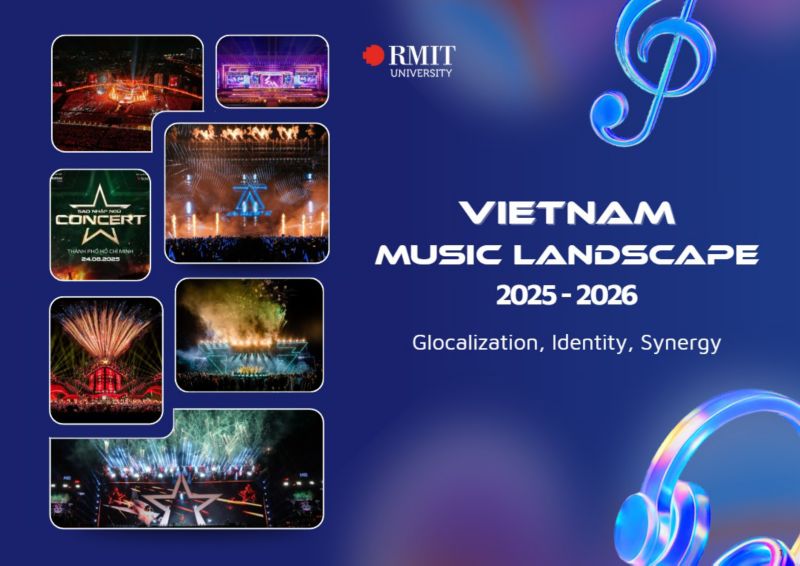
cover of whitepaper The Vietnam Music Landscape 2025-2026 whitepaper reveals how Vietnamese artists and audiences are blending cultural heritage with global trends. (Image: RMIT)

Artists remain the heart of Vietnam’s music ecosystem, serving both as conveyors of emotion and as cultural ambassadors connecting audiences at home and abroad. The convergence of artistry, professional management, and technology is shaping a new generation of Vietnamese artists. Through their individual creativity and distinctive styles, they not only shape musical tastes but also help bring Vietnamese identity closer to the world.

The report also highlights that music, and cultural products in general, must be intelligently packaged: distinctive in identity, contemporary in form, and emotionally resonant to enable wide circulation. A complete value chain is essential, spanning creation, production, distribution, communication, and extensions into tourism and ancillary products.

“When supported by systematic investment and a global vision, music can become a bridge that carries Vietnamese heritage further, no longer just art, but a strategic asset for sustainable cultural integration,” said Associate Professor Long. “With our report, we aim to share insights for artists, brands, and policymakers ready to shape that future.”

About the whitepaper

The whitepaper Vietnam Music Landscape 2025-2026: Globalisation, Identity, Synergy is the third edition of the previously titled Vietnam Digital Music Landscape whitepaper.

This year’s whitepaper draws on secondary research from global market reports and academic studies, a database of music events aggregated from media and ticketing platforms, an online survey of 471 young users, and in-depth interviews with 23 experts from leading cultural and music organisations.

View the full report in English and Vietnamese

Related news