
RMIT Vietnam drives everyday sustainability through action and innovation

RMIT Vietnam drives everyday sustainability through action and innovation

RMIT Vietnam continues to drive meaningful sustainability outcomes through various programs that integrate responsible practices into daily campus life, teaching and learning, event management, and cross-sector collaboration.

Anchored in the University’s 7Rs Culture (Rethink, Refuse, Reduce, Reuse, Repair, Recycle, and Going beyond RMIT), these initiatives aim to build an environmentally aware, action-driven community committed to long-term change.

Professor Julia Gaimster, Strategic Advisor to the Pro Vice-Chancellor of RMIT Vietnam, highlighted the University’s commitment: “At RMIT, the 7Rs Culture represents the way we commit, work, and live as a sustainable university. Since setting our Circular Campus goal in 2020, we have been reimagining how resources, waste, and carbon are managed across our operations.  

“This mindset is deeply embedded in how we design, teach, and engage, from hosting low-carbon, educational events to empowering students and staff to practice sustainability in their daily lives.”

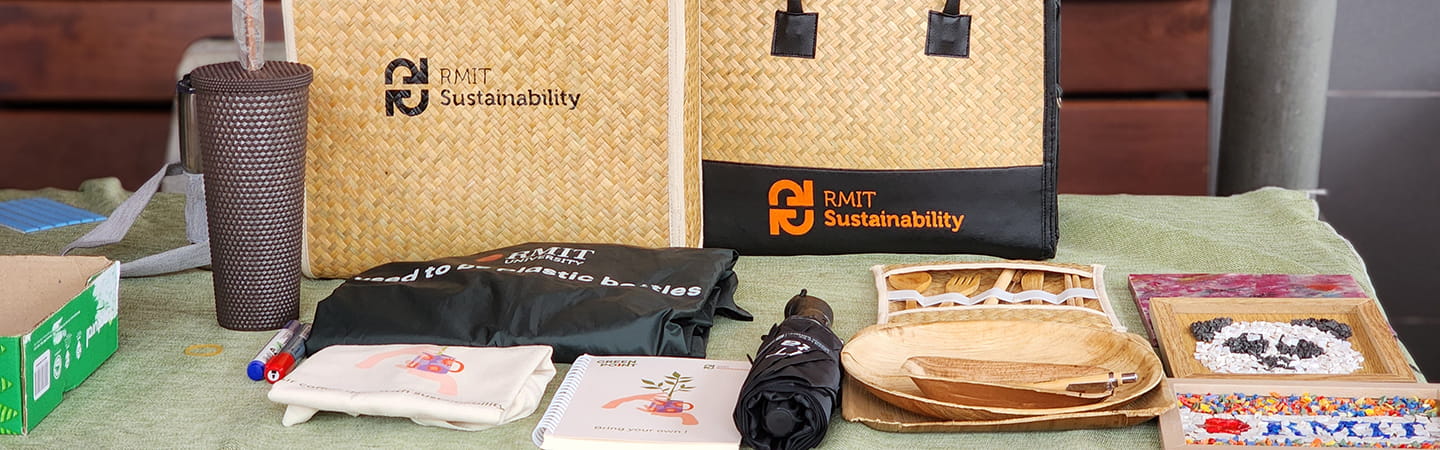
Sitting at the heart of this effort is the Zero Waste Booth - “Bring clean plastics, take home gifts”, launched in January 2024 as a practical platform for students and staff to exchange cleaned plastic waste for Green Points redeemable for eco-friendly gifts.  

Hosted monthly, the booth provides a simple and engaging way for the RMIT Vietnam community to practise sustainable habits and better understand the value of waste segregation. Through collaborations with Plastic People, Vietnam Green Environment JSC, Asia Environment JSC, and Veca, all collected plastics are cleaned, processed, and responsibly recycled.

The Zero Waste Booth - “Bring clean plastics, take home gifts” creates a practical platform for students and staff to exchange cleaned plastic waste for Green Points redeemable for eco-friendly gifts. The Zero Waste Booth - “Bring clean plastics, take home gifts” creates a practical platform for students and staff to exchange cleaned plastic waste for Green Points redeemable for eco-friendly gifts.

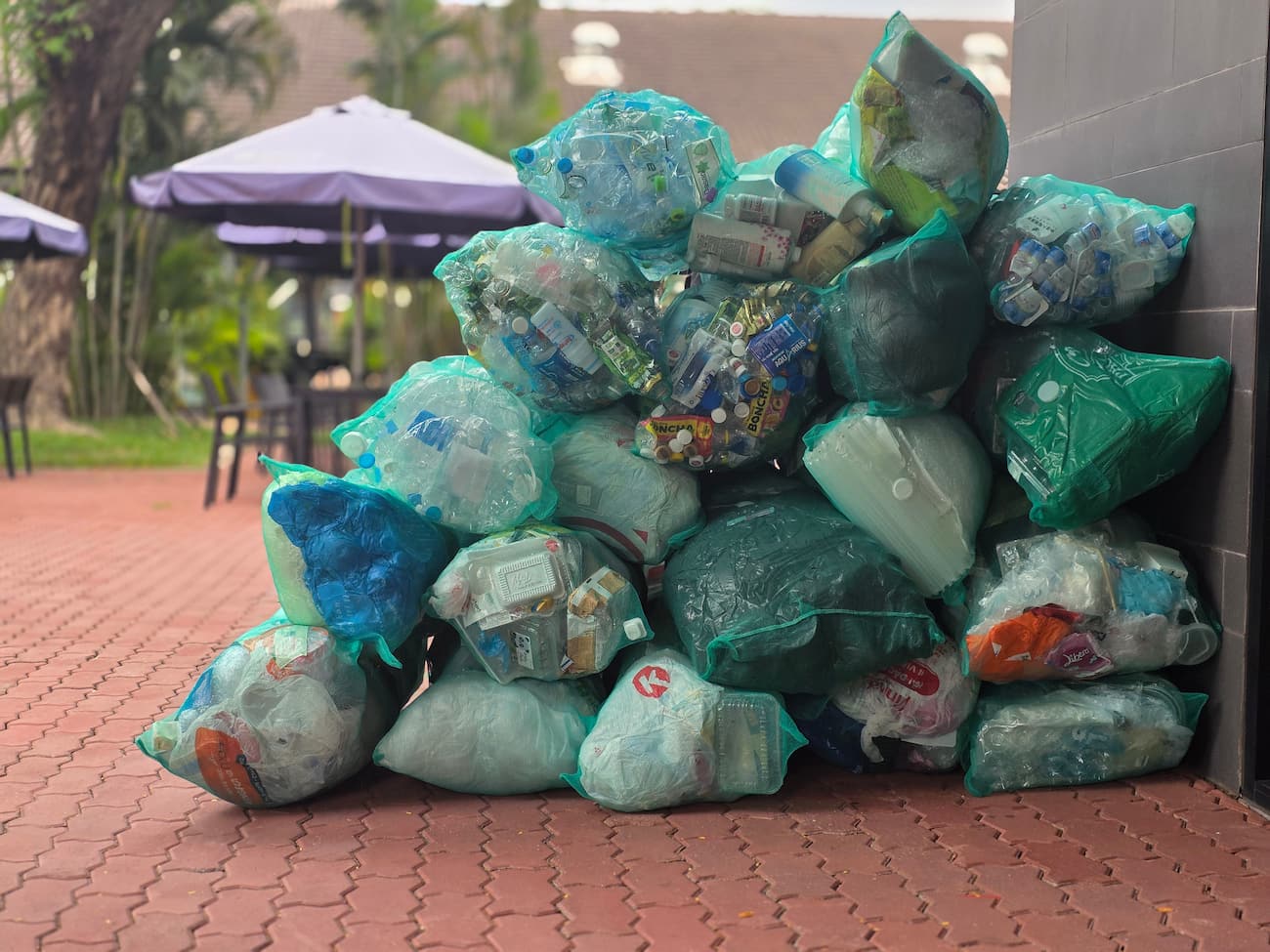
Between January 2024 and September 2025, the Zero Waste Booth achieved strong engagement, welcoming 507 individual participants across 21 events. More than 1,149 booth visits were recorded, resulting in 1,064 kilograms of plastic waste collected, including 762 kilograms from staff and 302 kilograms from students, demonstrating a shared commitment to reducing plastic pollution on campus.

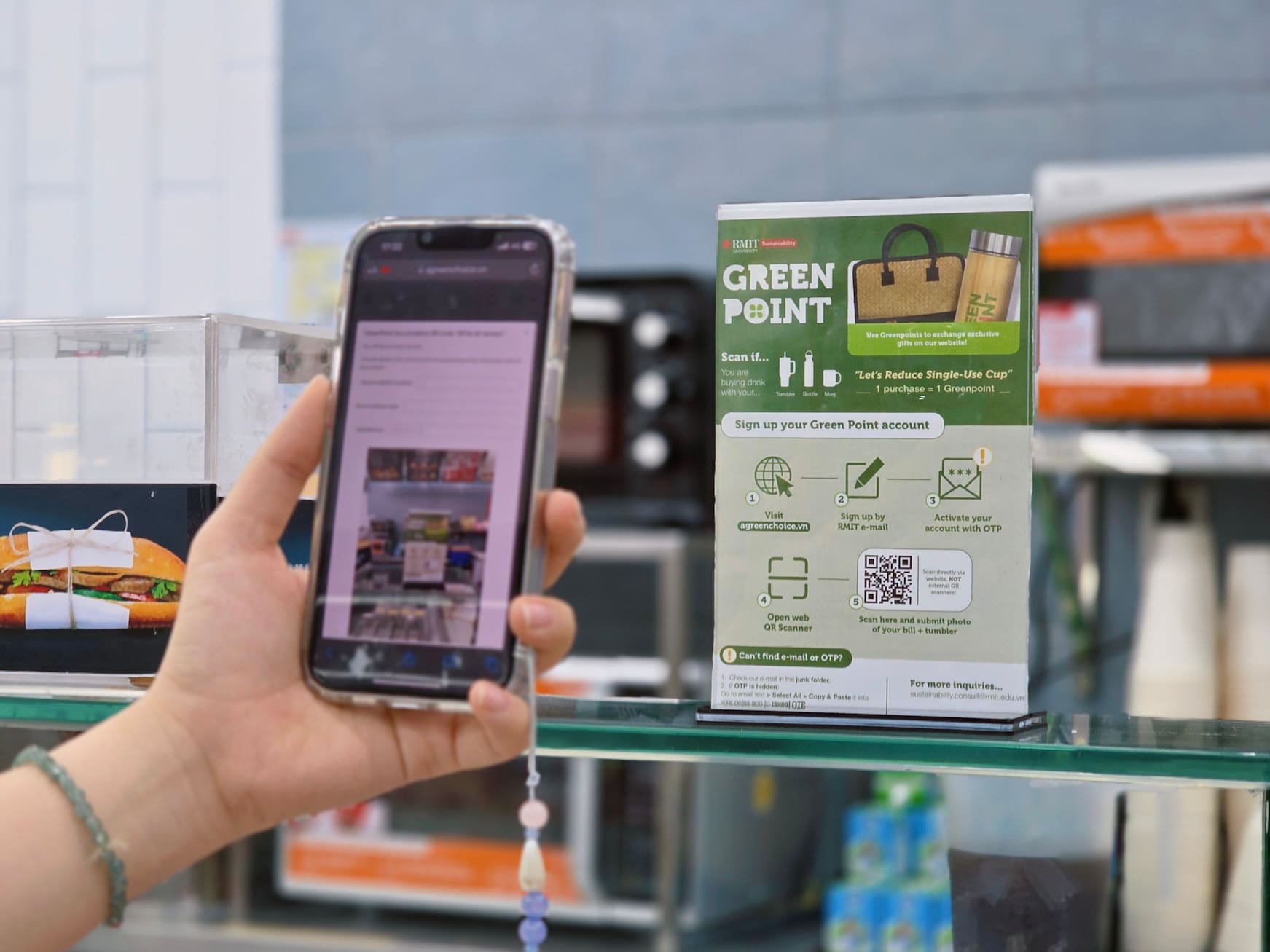
Complementing this effort is the Green Point Program, introduced in April 2023 to reward the RMIT Vietnam community for adopting eco-friendly habits. Participants earn Green Points by using reusable drink bottles, joining the Zero Waste Booth booth, or taking part in other sustainability initiatives. 

QR scans for reusable bottle use soared across RMIT’s Saigon South campus. QR scans for reusable bottle use soared across RMIT’s Saigon South campus.

By July 2025, the program had recorded 4,497 Green Points across all activities, supported by 1,160 registered users. Importantly, sustainable behaviour is growing: QR scans from students more than doubled from 235 to 535, while staff scans increased from 300 to 486, resulting in 1,015 paper cups saved through reusable bottle use alone.

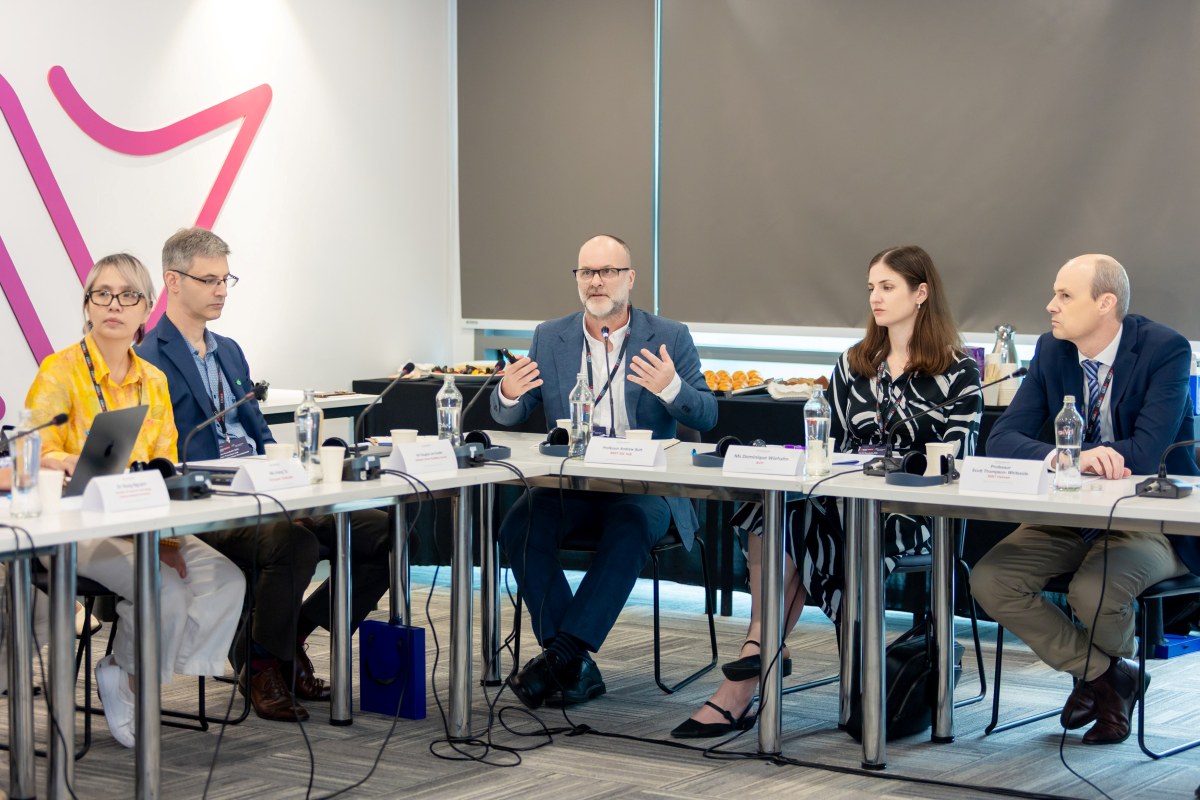
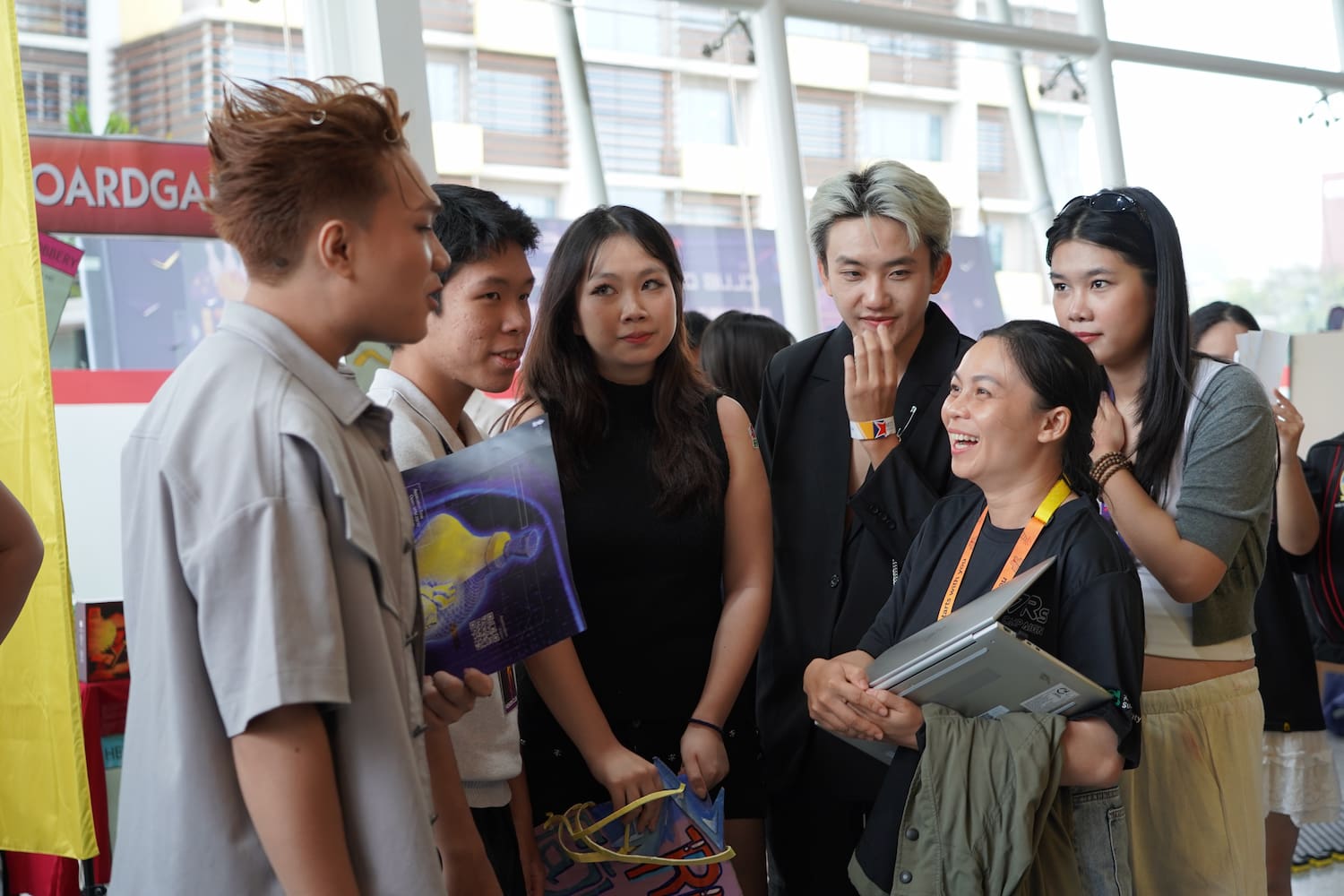
Sustainability has also become a core principle in the way the University designs and delivers events. Through the Sustainable Event Program, launched in July 2023, RMIT provides guidelines, training, and hands-on support to help organisers embed sustainability into decision-making processes, from material selection and catering to waste management and communication. 

The Sustainable Event Program supported events to become greener. The Sustainable Event Program supported events to become greener.

The five-bin waste-sorting system, introduced in September 2023, has played an important role in reducing landfill waste and increasing recycling rates across the University. With five waste categories – paper and cardboard, clean plastics, organic waste, bottles and cans, and other residual waste – the system enables the community to sort waste correctly at the source. As of September 2025, it has collected and sent for recycling 995 kilograms of bottles and cans, 18,720 kilograms of paper, and 2,798 kilograms of clean plastic, helping RMIT advance its commitment to standardising practices and ensuring transparency in resource and waste management. 

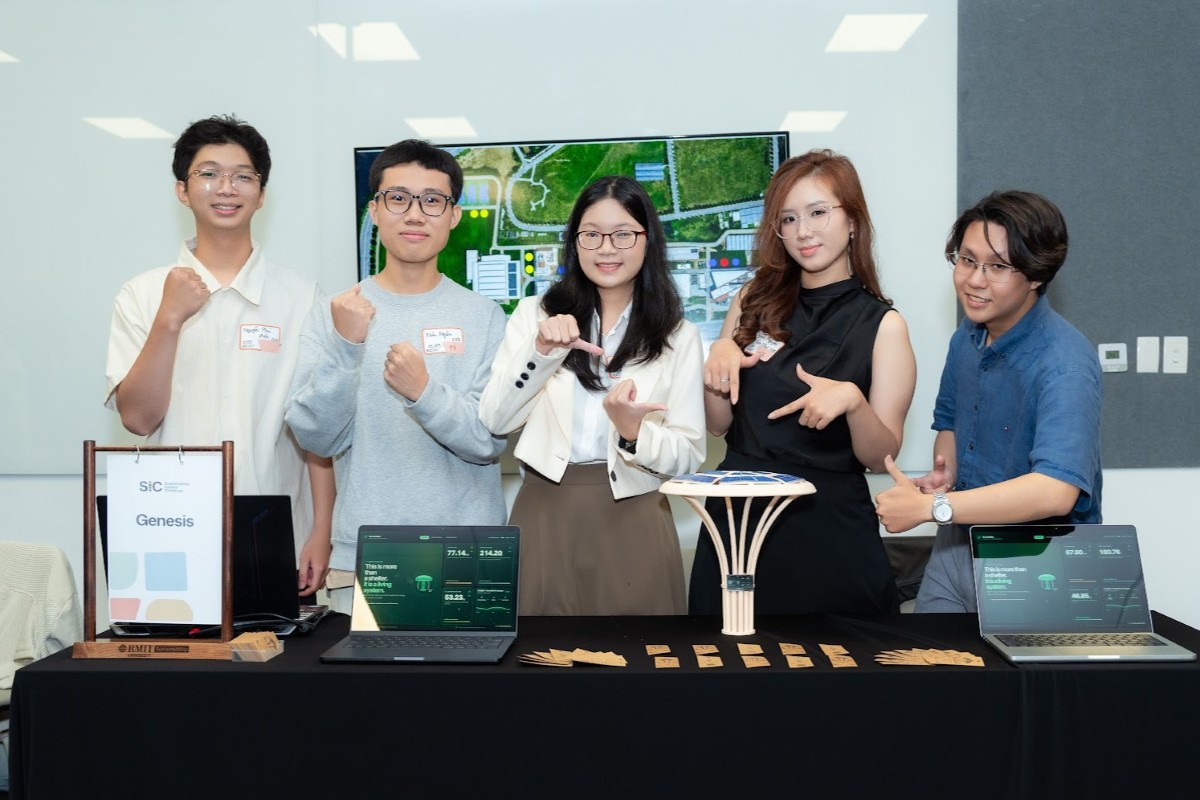
In 2025, RMIT Vietnam extended its sustainability leadership beyond campus through the Sustainability Impact Challenge (SIC), an inter-university innovation competition designed to equip students with interdisciplinary knowledge, systems thinking, and practical experience in addressing pressing sustainability issues in the country. 

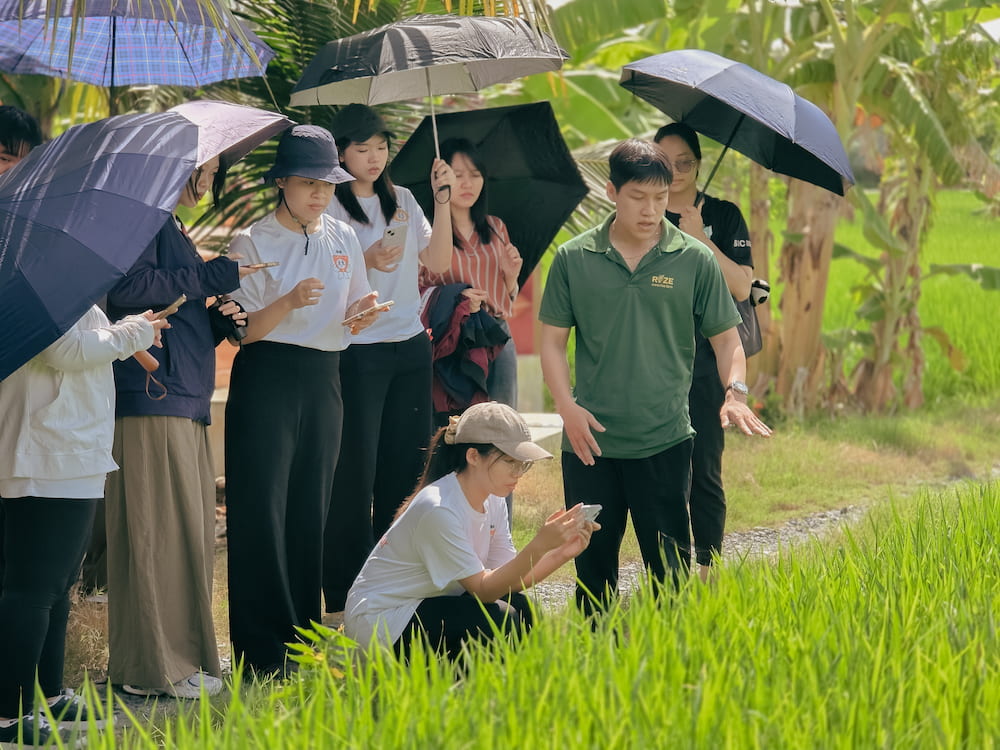
Co-organised with the University of Social Sciences and Humanities (USSH, VNU-HCM), International University (IU, VNU-HCM), and Vietnamese-German University, and supported by industry partners including Bosch Vietnam, Panasonic Vietnam, Rize, and MOTUL, the program attracted significant national interest. A total of 442 students registered from over 50 universities, with 142 selected for the full program and 128 completing a 27-hour sustainability training course co-developed by academic experts across five universities.

SIC 2025 empowered students to tackle Vietnam’s real-world sustainability challenges through innovation and action. SIC 2025 empowered students to tackle Vietnam’s real-world sustainability challenges through innovation and action.

Throughout the six-month competition, students formed 26 teams to develop solutions for four corporate innovation challenges, with eight advancing to the final round. Participants received targeted coaching, soft-skill training, and mentoring from industry leaders, culminating in four winning teams earning real-world internship opportunities. Post-program assessments also revealed meaningful behavioural change, with 60 percent of students sharing sustainability knowledge within their networks and half adopting sustainable habits more consistently.

In November, RMIT Vietnam’s Sustainability Week 2025 brought together more than 1,000 participants for a vibrant celebration of innovation, collaboration, and collective action toward a more sustainable future. The event centred on the theme “Sustainability in Action”, highlighting how the University is turning its sustainability vision into tangible outcomes. 

Together, these initiatives reflect RMIT Vietnam’s commitment to enabling sustainable development through education, innovation, and collective action. Professor Gaimster concluded: “Together, we are cultivating a university community that turns sustainability from a concept into a lived culture and drives the green transition from within.”

Story: June Pham

28 November 2025

Related news