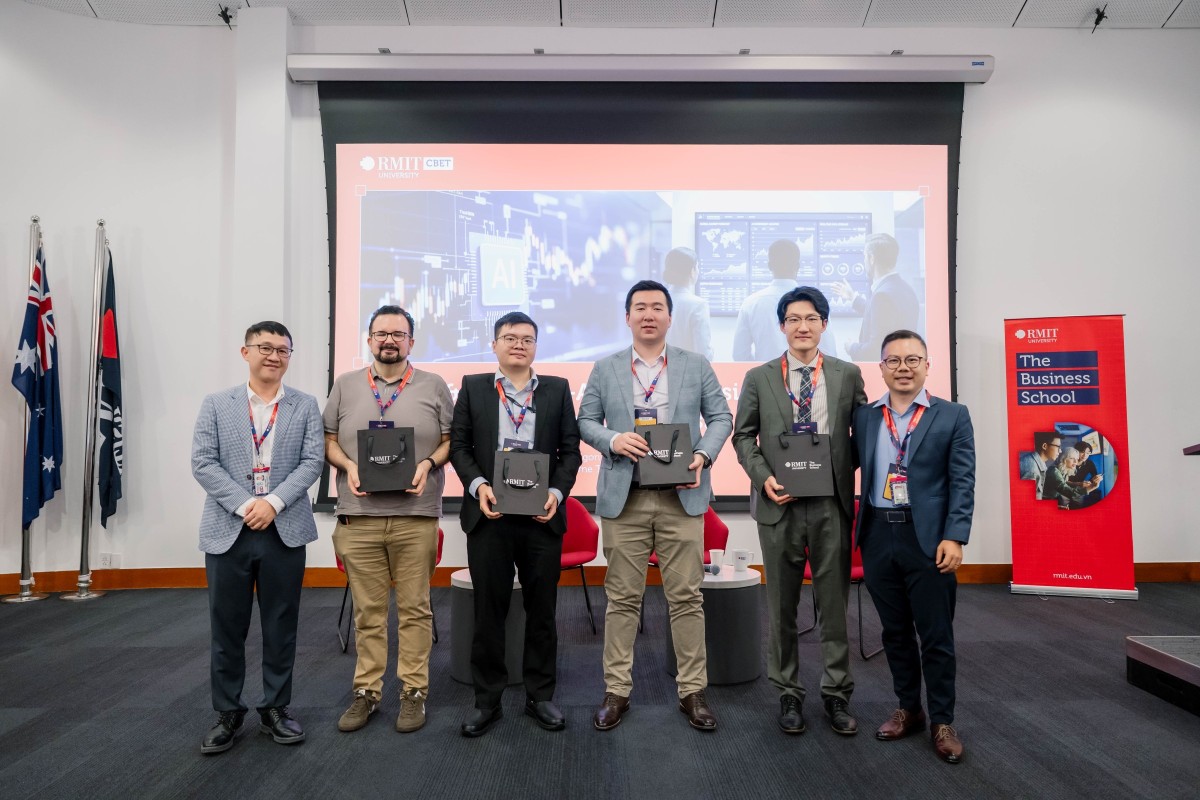
After a two-month journey of learning, mentoring, and creative problem-solving, five of Vietnam’s most promising high school teams gathered on 7 December for the Grand Finale of the RMIT Business Plan Competition 2025, presenting technology-driven business ideas inspired by Vietnam’s cultural and local identity.
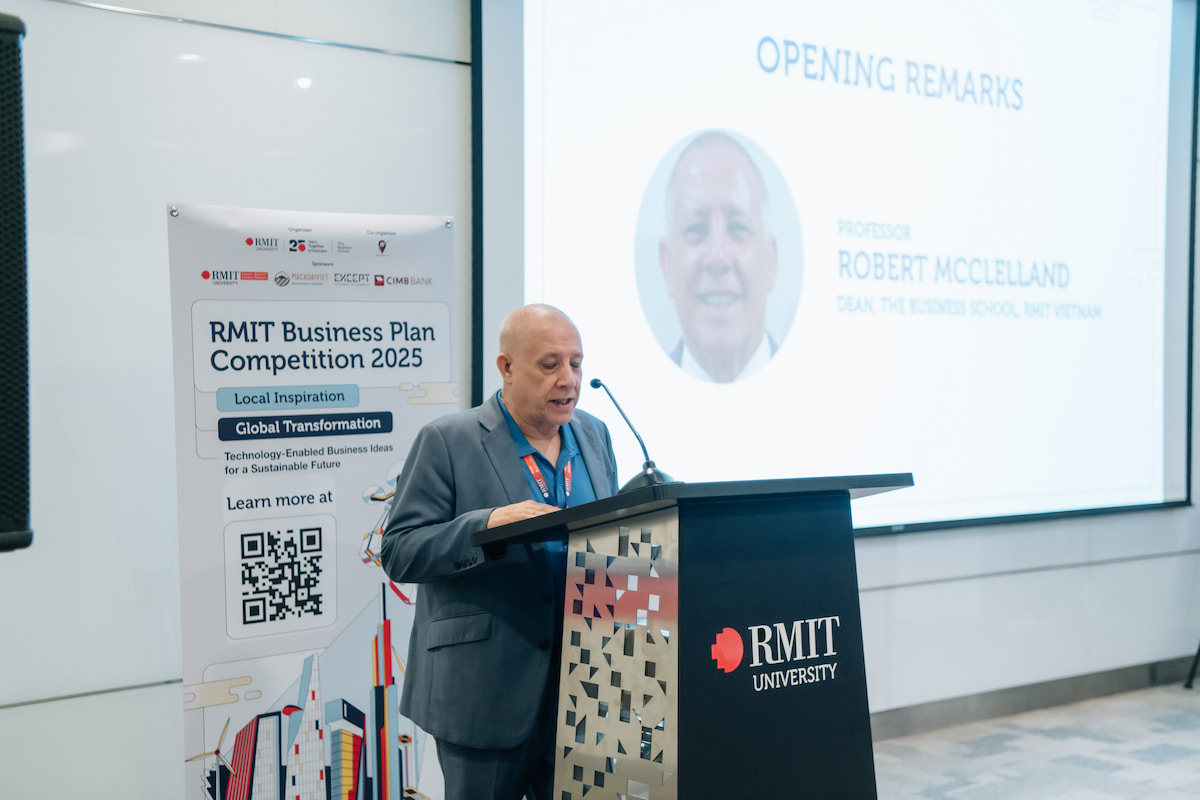
Professor Robert McClelland, Dean of The Business School at RMIT Vietnam, delivers the welcome remarks at the Grand Finale of the RMIT Business Plan Competition 2025. (Photo: RMIT)
Now in its third year, the RMIT Business Plan Competition (RBPC) has become one of RMIT Vietnam’s signature initiatives for building entrepreneurial capability among high school students. Evolving from the RMIT Fintech Blockchain Competition of 2021-2022, the competition now tackles a broader challenge: nurturing sustainable solutions that stay rooted in local culture while ready for global impact. As young people navigate rapid technological change and rising environmental pressures, RBPC aims to give them the tools, confidence, and mentorship to turn ideas into meaningful action.
This year’s theme, Local inspiration and global transformation through tech-driven business solutions for a sustainable future, encouraged students to rethink how tradition and innovation can reinforce one another. Learners were asked to build on Vietnam’s cultural and geographic strengths while leveraging emerging technologies such as AI, IoT, blockchain, cloud computing, and data analytics. The approach reflects a growing need in Vietnam’s education landscape: equipping young people not only with knowledge, but with agency to address real-world problems.
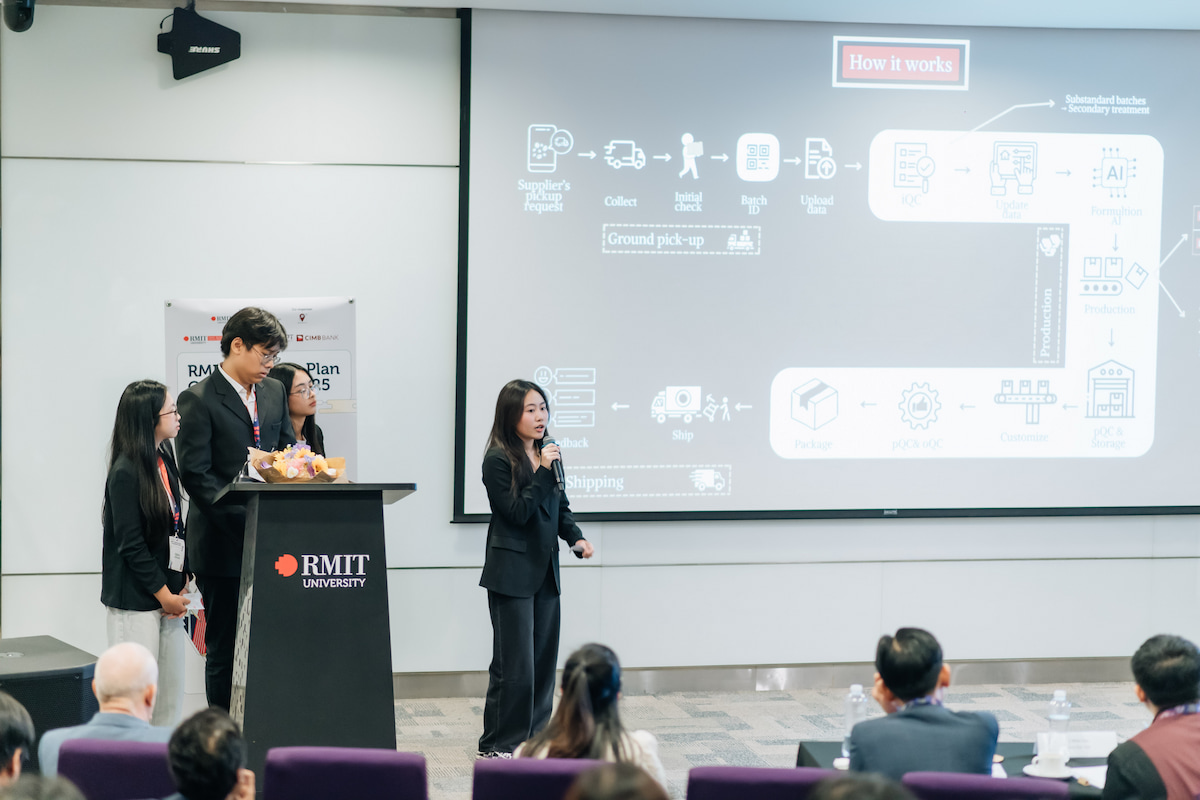
A finalist team presents their tech-driven business solution during the pitching session at the RMIT Business Plan Competition 2025. (Photo: RMIT)
The 2025 edition attracted strong nationwide interest. More than 750 students formed over 200 teams from more than 150 high schools across Vietnam. Throughout the competition, students worked through key challenges including identifying real needs, developing sustainable business models, assessing feasibility, and integrating cultural insight into their value propositions. The high number of submissions this year reflects the rising appeal of innovation-driven learning.
From these entries, five finalist teams were selected from Ho Chi Minh City, Hanoi and Gia Lai, representing diverse industry areas. Their projects ranged across tourism, fashion and manufacturing, sustainable consumption, craft innovation, and agriculture - demonstrating how cultural heritage and advanced technology can come together to create globally relevant solutions. In the lead-up to the finale, teams worked closely with industry mentors to refine assumptions, strengthen commercial and technical reasoning, and elevate the story behind their ideas.
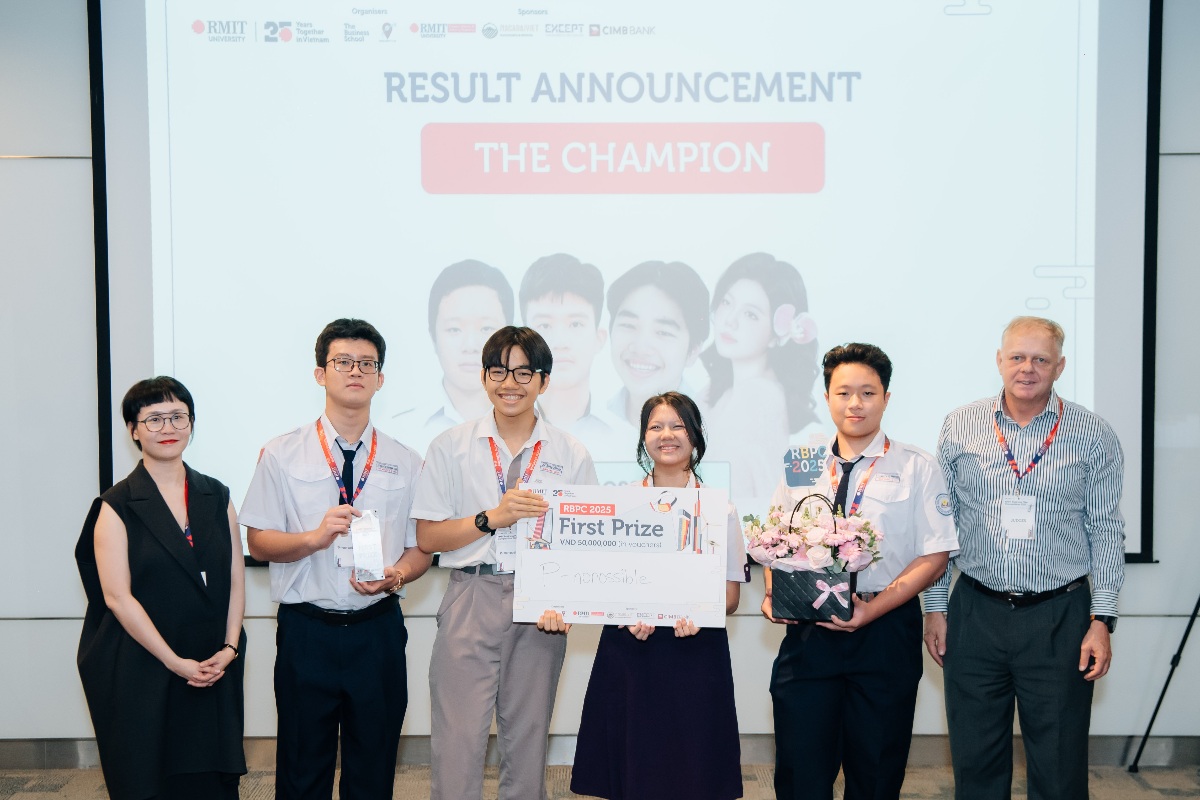
Team P-nonossible won First Prize for CraftVerse, a digital ecosystem that connects artisans, rural youth and global markets through advanced technologies. (Photo: RMIT)
The Grand Finale brought this journey to its defining moment. Each team delivered a ten-minute pitch followed by questioning from the judging panel. Their proposals showed how Vietnamese identity can anchor forward-looking innovation - from tech-enabled models that revitalise local craftsmanship, to sustainable agriculture informed by regional knowledge, to community-centred financial and environmental solutions.
Reflecting on the students’ work, Associate Professor Tra Pham, Head of the Department of Economics and Finance at RMIT Vietnam, said: “Each team reminded us that innovation does not have to start from scratch. It begins when you treasure your authentic self and understand who you are, where you come from, and what you value. These students showed remarkable clarity in understanding the needs of their communities, and they used technology not as an end in itself, but as a means to create meaningful improvements.”
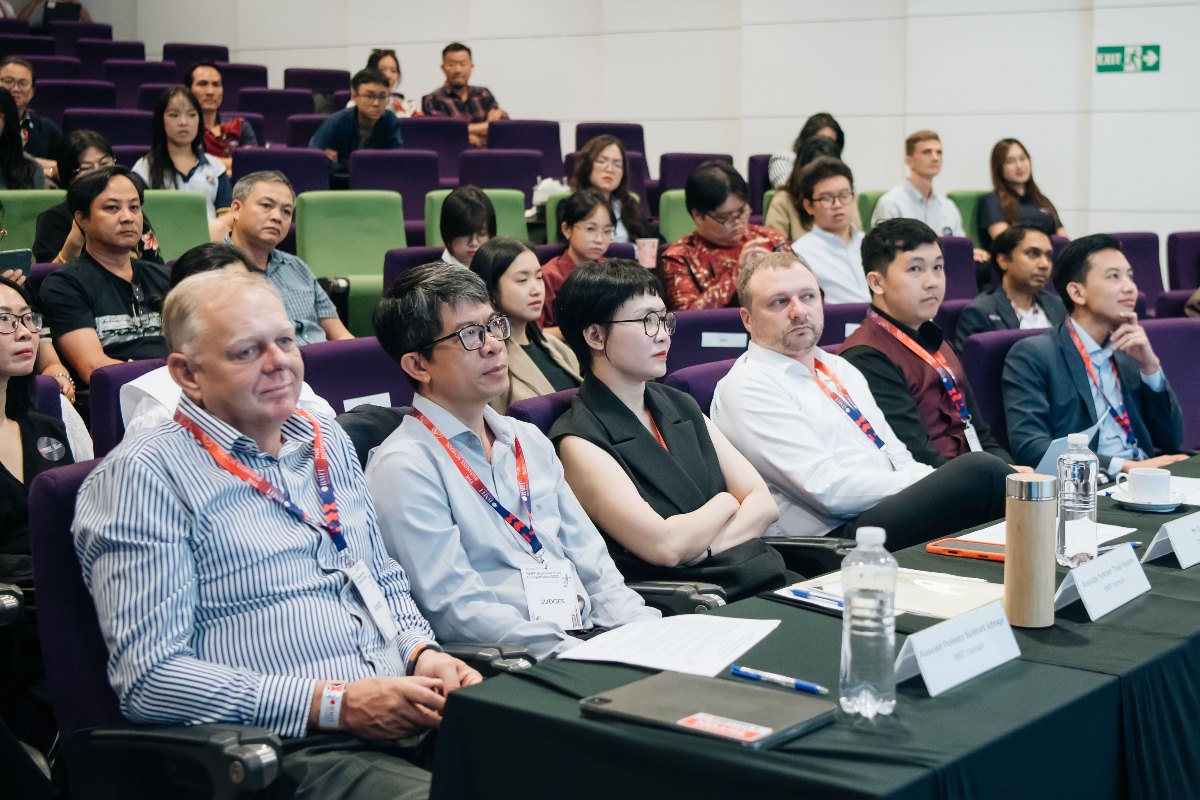
The judging panel listens attentively as finalist teams present their innovative business proposals. (Photo: RMIT)
Industry judge Tom Bosschaert, Director and Founder of Except Integrated Sustainability, also praised their approach. “What stood out to me is how naturally these students think about sustainability. They recognise the connections between culture, technology, economics and community, and design their solutions with a global outlook while maintaining a strong sense of local identity,” he said.
After deliberation, the judges announced the winners. P-nonossible, representing Nguyen Thi Minh Khai High School and Le Hong Phong High School for the Gifted (Ho Chi Minh City), earned First Prize for CraftVerse - a solution praised for its creativity, strong cultural grounding, and clear potential for real-world application. The Second and Third Prizes were awarded to Alpha School (Alpha School, Hanoi) and Guardians of the Earth (International School Ho Chi Minh City, Wellspring Saigon and the European International School), whose proposals demonstrated notable innovation and meaningful social impact.
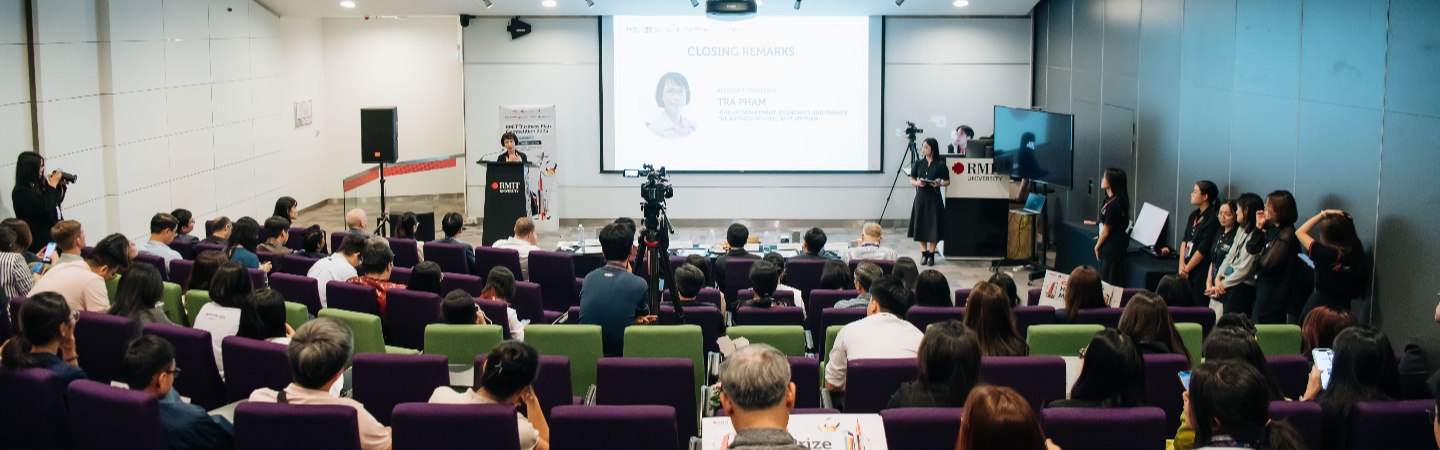
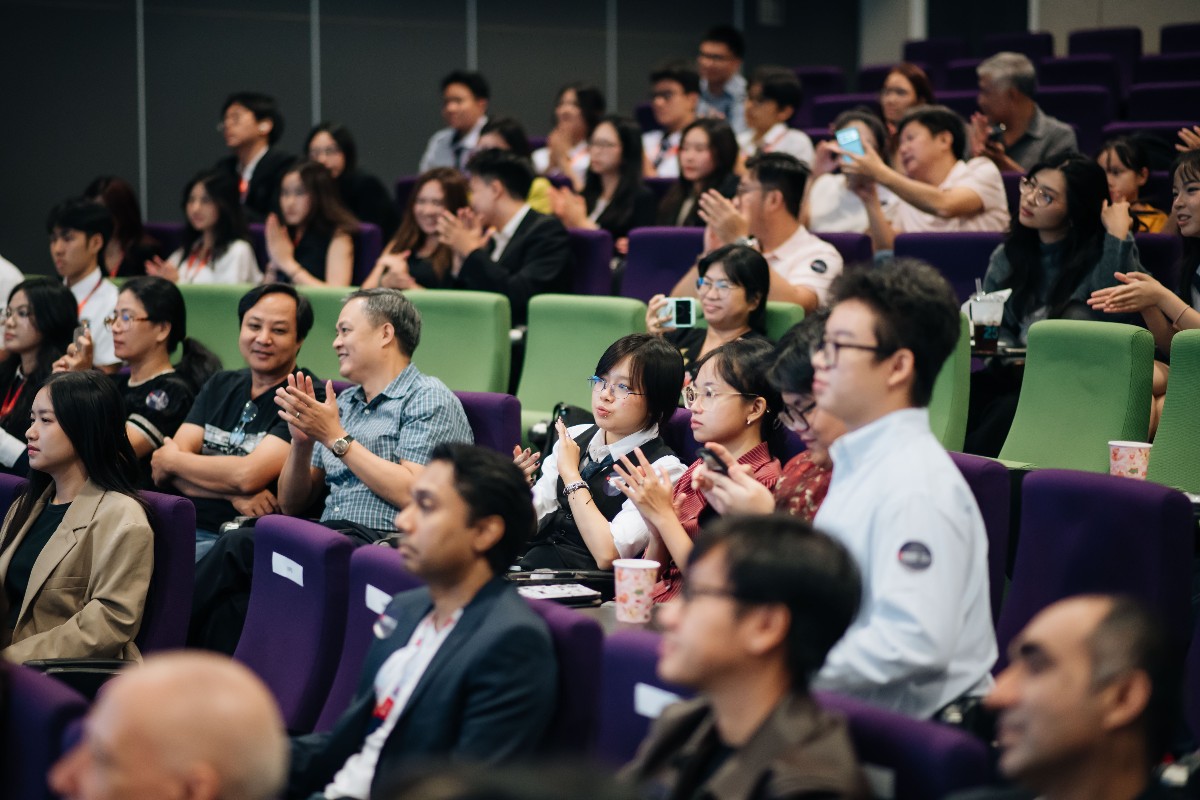
The audience attends the Grand Finale to support the five finalist teams from Ho Chi Minh City, Hanoi and Gia Lai. (Photo: RMIT)
For the champion team, the win marked the beginning of a new journey. “This competition changed the way we see ourselves. We learned how to break down problems, defend our decisions, and rely on each other as a team. The win is amazing, but the growth we experienced along the way matters even more,” team leader Nguyen My Ngoc Anh said.
RBPC 2025 reaffirmed RMIT Vietnam’s commitment to supporting young innovators nationwide. The competition ultimately aims to nurture a generation of thinkers who can carry Vietnam’s heritage forward - using technology, creativity and purpose to contribute to a more sustainable and globally connected future.
Story: Quan Dinh H.
Five finalist teams from Ho Chi Minh City, Hanoi and Gia Lai showcased tech-driven business ideas inspired by Vietnam’s cultural identity at the RMIT Business Plan Competition 2025 Grand Finale.
The dominance of foreign-invested companies in Vietnam’s high-tech sector limits technology spillovers and domestic productivity gains, according to researchers from The Business School at RMIT Vietnam.
Extreme rainfall and successive storms are reshaping Vietnam’s flood risks, prompting experts to call for a more proactive and coordinated approach to disaster management.
What if the key to deeper learning, stronger collaboration, and more creative thinking in universities wasn’t found in textbooks, but in a box of LEGO® bricks via LEGO® Serious Play®?