Why it matters
Why should this issue matter to RMIT students and Vietnam’s Gen Z? Because littering is not trivial. It discourages tourists from visiting, damages the country’s image and harms ecosystems. The numbers tell the story. In 2023, the Mekong Delta recorded microplastic levels averaging 53.8 items per cubic metre of water. In the same year, a study of shrimps collected from Cau Hai lagoon found microplastics in every shrimp sampled, averaging 2.3 - 8.6 particles per individual. But change is already within reach. Mr. Nhan noted that despite being one of the largest plastic consumers, Japan already recycles ≈85% of their plastic use. Interestingly, that success is driven less by technology than by education: children are taught to sort waste from their first day of school.
If Japan can normalise recycling, why can’t Vietnam normalise anti-littering? The aim is not to shame but to educate and inspire. Anti-littering is the entry point to sustainability, which is the first domino that sets others in motion. Once the public sees littering as unacceptable, environmental laws gain traction and other solutions, like bioplastics, are explored. Mr. Nhan acknowledges the obstacles: bioplastics remain expensive, and many businesses focus narrowly on profit. Yet he insists that cultural norms can change faster than expected.
Signs of change
Examples of change already exist. RMIT requires all on-campus food vendors to use biodegradable packaging, showing how institutional policy can alter everyday practice. In tourism, the Vespa Green Ribbon campaign demonstrated that businesses can demarket waste. Green Turtle Hero itself has reached milestones - activity books are in circulation, pilot events are underway and social media engagement is rising. These are not just symbolic actions, they’re signs that Vietnamese behaviour is beginning to shift.
Our call
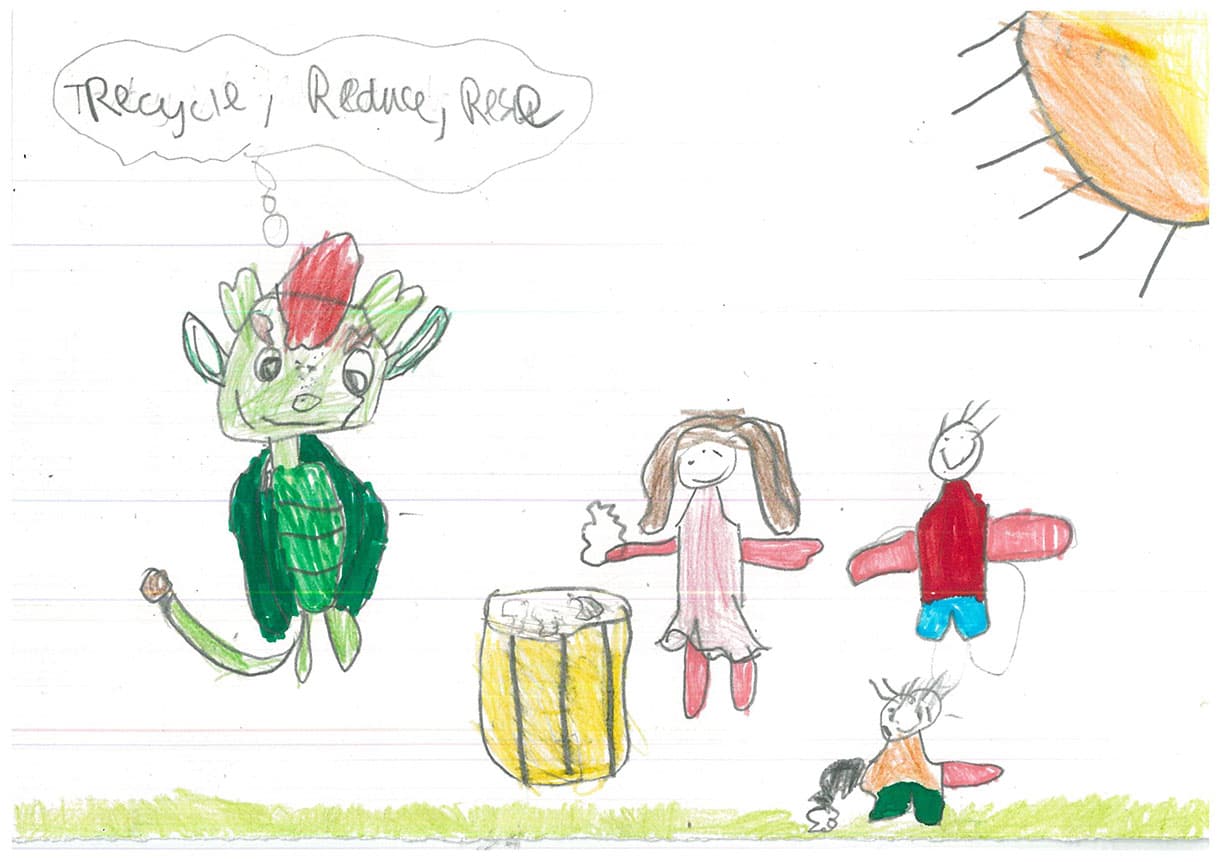
The Green Turtle Hero project frames littering as a serious socio-cultural issue. Children who learn to use the bin today will shape national waste culture tomorrow. The turtle mascot is a cartoon reminder that sustainability begins with ordinary acts. Our call is simple: Don’t litter. Separate your waste. From a boy’s milk carton on the ground to the Green Turtle Hero spreading across schools and social media, the movement is already in motion. Together, we can turn the smallest act into the largest change.
To scale this change, we invite collaboration across universities, communities and businesses. Contact Nhan Nguyen at: nhan.nguyen@rmit.edu.vn
Authors: Jasmin Fransesca Nissilä, Nguyen Trong Nhan, Vo Quynh Le, Tran Ngoc Linh, Ngo Ngoc Quynh