Preparing leaders for human-centric digital transformation in the AI age: Associate Professor Agnis Stibe

Preparing leaders for human-centric digital transformation in the AI age: Associate Professor Agnis Stibe

Blending AI-driven digital innovation with behavioural science, AP Agnis Stibe helps students understand how people and technology change together.

What first caught Associate Professor Agnis Stibe’s attention wasn’t technology itself, but how differently people reacted to it. Some adapted quickly. Others resisted. That simple observation led him into a career exploring how human behaviour shapes every digital shift.

He began his journey in technology, training in computer science and later strengthening his perspective with an MBA and a PhD in socially influencing systems. His research path eventually took him to the Massachusetts Institute of Technology (MIT Media Lab), where a pivotal insight became clear: technology alone never transforms an organisation. People do. Culture does. Behaviour does. Real transformation only happens when those elements move together with purpose. 

As digital marketing and innovation evolved, AP Stibe followed the changes closely, from early online analytics to persuasive technology, and now to what he calls Human Artificial Intelligence for Hyper-Performance. Across this journey, one pattern remained constant. Tools and platforms changed rapidly, but human habits and cognitive biases were far more stable. Understanding that gap became central to his work.

Teaching and working across Europe, the United States, Africa, the Middle East and Asia further shaped his thinking. He saw that strategies successful in one market could fail in another if local context was ignored. From Boston to Paris to Ho Chi Minh City, the lesson was consistent: context matters more than concepts. This global perspective now defines how he teaches at RMIT Vietnam.

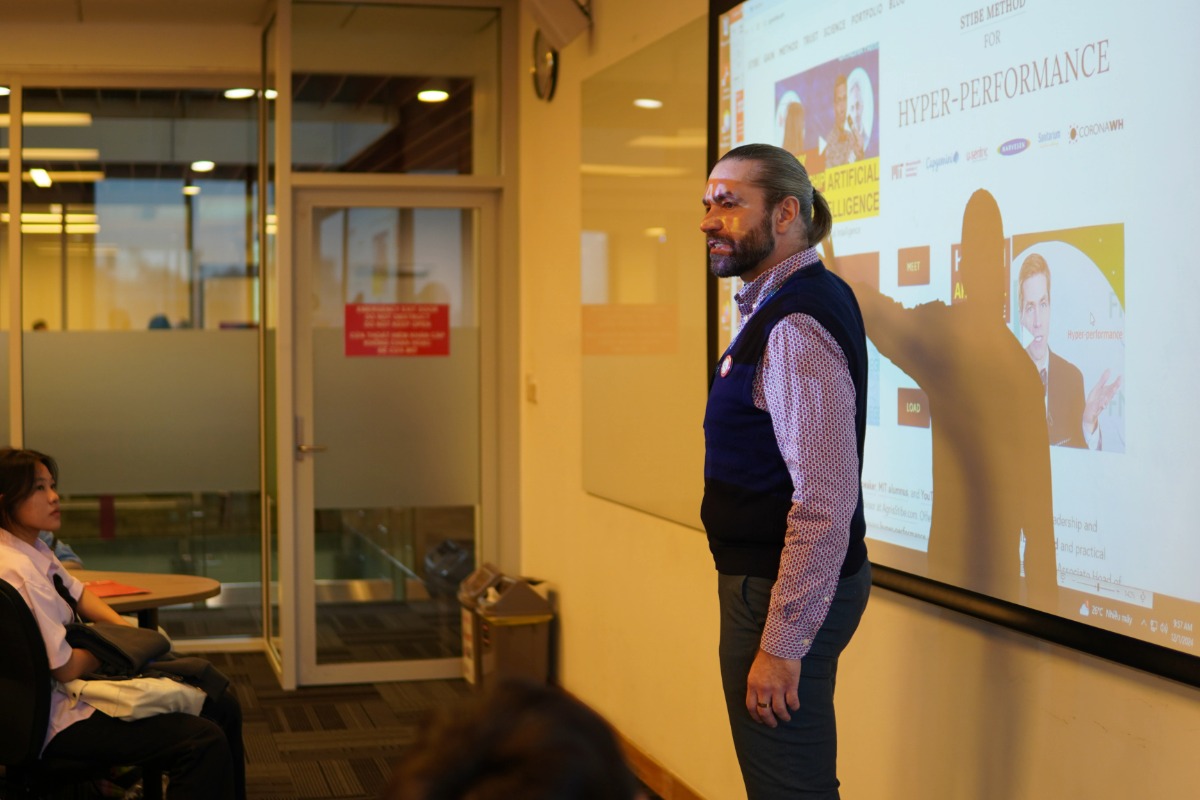
In the classroom, AP Stibe approaches digital transformation as a practical, human-centred design challenge. He helps students break down change into three clear layers: purpose, process and experience, and behaviour and culture. Assignments are treated as real-world prototypes, encouraging students to test ideas, question assumptions, and design solutions grounded in evidence rather than buzzwords.

Academia became the right space for him because it allows curiosity and rigour to meet. His industry experience keeps his teaching anchored in reality, from AI adoption and ethical dilemmas to the hard lessons learned when transformation efforts fail.

After years of studying change across technologies and cultures, AP Stibe continues to return to the same insight that first drew him in: meaningful digital transformation begins with people. That belief sits at the heart of his teaching and shapes the transformation-ready thinkers he helps develop at RMIT. 

15 January 2026

Related news