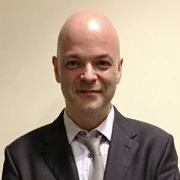
Dr Jonathan Clementi-Smith
Details
 College: School of Communication & Design
 Department: School of Communication & Design
 Campus: Saigon South Campus Vietnam
 jonnie.clementi-smith@rmit.edu.vn
About
Dr. Jonathan Clementi-Smith is an academic, filmmaker, and visual artist whose work bridges creative practice and critical theory. Holding a PhD in Film by Theory and Practice, and an MA European Cinema from the University of Exeter. He has taught across the UK, and Asia, including roles at Mahidol University (Thailand), Xi’an Jiaotong-Liverpool University (China), Baptist University, Academy of Film (Hong Kong), and The University of Hong Kong (HKU).
An award-winning filmmaker, his work has been commissioned by the Arts Council UK and screened at international venues including HotDocs Toronto and the Baltic Centre for Contemporary Arts. His practice explores postcolonial and trance cinema, expanded cinema, and emerging digital media. His documentary work focuses on the ethnographic in relation to disenfranchised communities.
Teaching Areas
Film theory and history
Digital filmmaking and production
Screenwriting and visual storytelling
Postcolonial cinema
Emerging technologies in media
Selected Creative Works and Awards
The Surroundings – Best Cinematography, Fresh Wave Hong Kong
The Offerings – DUR Award 5 Day Docu Challenge, HotDocs Toronto
Therapeutic Community – Kessler Institute Prize
People Inbetween – Arts Council UK Commission
Contributor to De-Westernizing Film Studies (Routledge, 2011)

Media

Academic positions
- Senior Lecturer
- Mahidol University
- Dept of Communication
- Bangkok, Thailand
- 1 Mar 2018 – 1 Sep 2020
- Lecturer
- Xi’an Jiaotong-Liverpool University
- Film Dept.
- Suzhou, China
- 1 Mar 2015 – 1 Mar 2018
- Associate Professor (Visiting Scholar)
- University of Hong Kong
- Comp Lit
- Pok Fu Lam, Hong Kong
- 1 Jan 2011 – 1 Sep 2013
- Senior Lecturer
- Hong Kong Baptist University
- Academy of Film CTV
- Hong Kong, Hong Kong
- 1 Sep 2008 – 1 Sep 2013
- Lecturer
- Dartington College of Arts
- Fine Art
- Dartington Totnes, United Kingdom
- 1 Sep 2001 – 1 Sep 2006
- Lecturer (filmmaker in Residence)
- University of Exeter
- SML
- Exeter, United Kingdom
- 1 Sep 2000 – 1 Sep 2008

Teaching interests
Approach to Teaching
Dr. Clementi-Smith’s pedagogy is rooted in collaboration, inclusivity, and creative experimentation. He integrates professional filmmaking experience into academic contexts, encouraging students to develop critical insight alongside technical skill. His teaching emphasizes student agency, cultural diversity, and the integration of theory and practice.
I have taught a very diverse series of modules, from World Cinemas,
Film Theory & Popular Culture,
Experimental Film,
The Art of Scriptwriting and Storyboarding,
Visual Storytelling,
Cinematography,
Interactivity and Emerging Technology,
Media Ethics,
Practical Documentary,
Visual Communication,
Pre-Production, & Post-Production,
Short Form Video Production

Research interests
Research Interests
Global screen cultures and intercultural storytelling
Practice-based research in film and video art
Postcolonial perspectives in cinema
Digital media aesthetics and narrative innovation
Currently working a new book called,
Sleepwalking Through Dreamtime
A film philosophy of Oniro-Modernism
Cinema Saigon - Dr Jonathan Clementi-Smith
Saigon in Cinema is a book examining the cultural and social evolution of the city as reflected in its film representations. It considers space, identity, and the shifting socio-economic landscape, all connected to Saigon's role as a major cultural centre. This work goes beyond merely portraying Saigon in film; it delves into how the city has contributed to shaping a national and transnational media identity.
Specific areas of interest within the text would be how the city is represented through fiction and documentary, through commercial and experimental works. Underpinned by key historical moments within the greater ideological narratives of the times.
I will also create my own poetic documentary work similar in style to the city symphony films of the mid-20thcentury, both to highlight key movements in cultural thought connected to time, place, and space within HCMC.
This will be a form of ‘cartographic schizoanalysis’ inspired by the philosophies of Giles Deleuze, yet pragmatically reinterpreted and grounded through visual media, both traditional and experimental, analogue and digital.
Currently working on 2 Journal articles
The Fractal Simulacra: AI and the Art of War
Abstract: This paper explores Jean Baudrillard’s Simulacra and Simulation in relation to modern media ecology to analyse how media coverage of the Iran-American war exemplifies the evolution of simulacra. The fractal simulacra are described as recursive, self-similar layers of simulated content occurring at different scales of states. This concept clarifies the interactions among generative AI, platform structures, and institutional messaging in creating networks of credibility that are detached from stable references. The paper investigates AI-generated videos as propaganda, conceptualises such media as fictionalised truth-entertainment, situates these developments within the frameworks of hyperreality and non-linear reality, and considers likely near-term advancements in AI for war reporting, war creation, and the art in-between. It concludes with technical, institutional, and normative recommendations aimed at upholding procedural epistemic standards while recognising systemic shifts in mediation from fractural truth to refracted meaning.
Jean Baudrillard’s Simulacra and Simulation (1981/1994) argues that in late modernity, images and signs no longer reliably refer to underlying reality; instead, simulacra create a precession where the map precedes and shapes the territory. This diagnosis has gained renewed urgency with the proliferation of generative AI, which produces fictitious content by automating the creation, synthesis, and modification of images and videos. Deepfake videos and algorithmic narratives, generated or influenced by AI, circulate rapidly on platforms, further complicating the relationship between media and reality. In this context, the media ecology surrounding the Iran-American war, characterised by conflicting visual “evidence,” claims of AI-created footage, and layered institutional narratives, calls for a reexamination of Baudrillard’s thesis.
The term 'fractal simulacra' describes the modern phenomenon of recursive, self-similar simulation patterns appearing across multiple scales: micro (single clips), meso (aggregated feeds), and macro (state and media ecosystems). Generative AI automatically creates or modifies media artefacts at each level, enabling both the proliferation and stratification of simulations. This fractalisation heightens epistemic uncertainty: video footage is no longer definitive proof; verification processes become sites of political contestation; and the boundaries between entertainment and documentary grow more blurred. The original paper’s structure is expanded by providing a focused analysis of AI-enabled fictionalised propaganda and outlining the unique roles of AI in crafting and disseminating such narratives. Additionally, the discussion explores AI’s relationship to hyperreality and non-linear temporality, which concludes with an evidence-based projection of future trajectories for AI in war and war reporting, along with the pervasive algorithmic biases that fuel this within a multilayered fractal loop. The paper concludes that with a character like President Trump, is AI playing ‘catch-up’ within the realm of the “alternative fact-image”? Ultimately ending in a ‘howlround effect’ descending into meme-based AI trolling. The human toll of war becomes an image of the absurd.
AI and the Halucination of Reality
(Journal Article)
Currently working on a joint reserch project with RMIT Melbourne
Creating a short-form Documentry around the secondhand clothing industry
Creating a long-form Documentry: Saigon. A City Symphony
Art Drift Outcomes
Techno City Futures