MOET and RMIT Vietnam launch AI skills program for ethnic minority students

MOET and RMIT Vietnam launch AI skills program for ethnic minority students

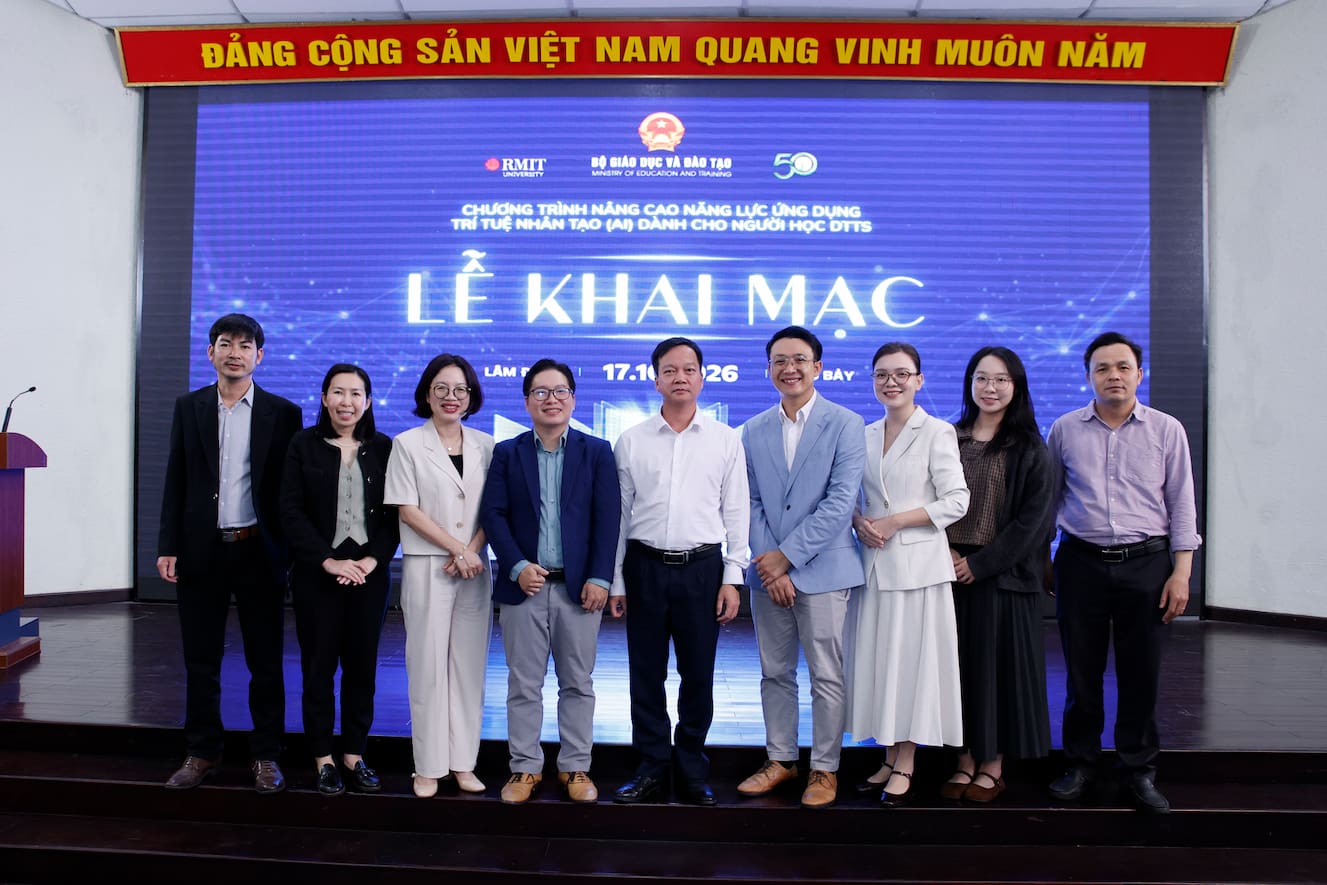
The Vietnam’s Ministry of Education and Training (MOET) and RMIT Vietnam launched AI skills development program for more than 5,400 ethnic minority students across eight higher education institutions.
The program aims to enhance AI capabilities among ethnic minority students at eight higher education institutions: Thai Nguyen University (including the University of Education and campuses in Ha Giang, Lao Cai and Dien Bien), Dalat University, Dong Thap University, Tan Trao University, Tay Bac University, Tay Nguyen University, Tra Vinh University, and Vinh Medical University. It officially commenced on Saturday morning, 17 October 2026, at Dalat University, with online connections to participating institutions. 

Representatives from MOET and RMIT Vietnam launched the AI skills development program for ethnic minority students.Representatives from MOET and RMIT Vietnam launched the AI skills development program for ethnic minority students. (Photo: Organising Committee)

The program is part of the implementation of the project Training high-quality ethnic minority human resources in selected key sectors for the 2026-2035 period, with a vision towards 2045, approved by the Prime Minister under Decision No. 2776/QD-TTg dated 24 December 2025.

The program comprises six practical training sessions running from 17 October to 7 November 2026, combining in-person and online activities, with a focus on supporting ethnic minority students at higher education institutions. Staff from participating institutions, including Youth Union and Student Association representatives, academic advisers and lecturers, will also take part to guide and support students throughout the program.

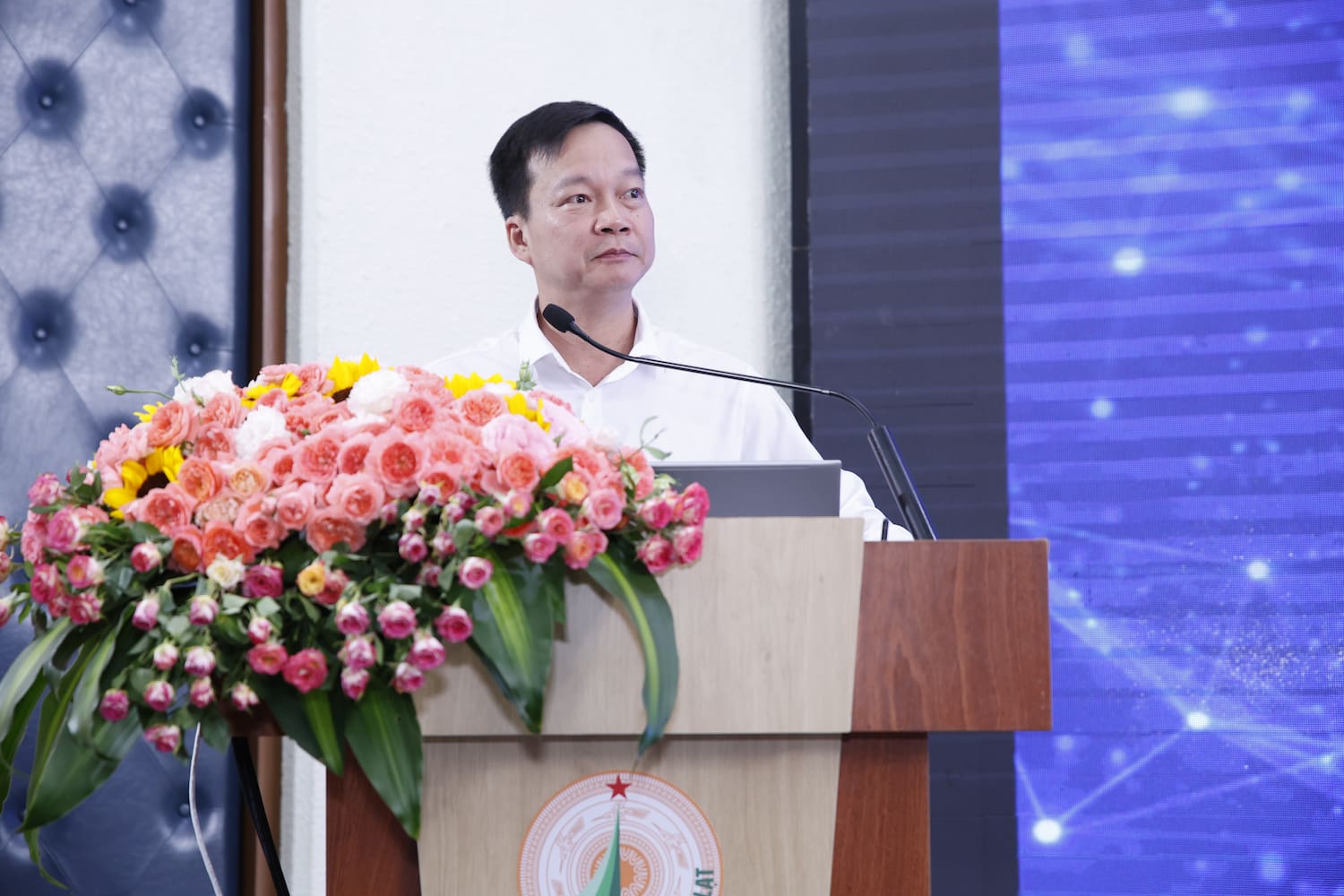
Associate Professor Dr Nguyen Anh Dung, Deputy Director of Higher Education Department, Ministry of Education and Training (Photo: Organising Committee)Associate Professor Dr Nguyen Anh Dung, Deputy Director of Higher Education Department, Ministry of Education and Training (Photo: Organising Committee)

Associate Professor Dr Nguyen Anh Dung, Deputy Director of Higher Education Department, Ministry of Education and Training, said: “The program aims to help students not only access AI, but also use the technology effectively, safely and responsibly in their studies and in preparation for their future careers.”

The training materials have been developed based on MOETs Digital Competency Framework for Learners, with reference to UNESCO’s 2024 AI Competency Framework for Students. Rather than focusing on a handful of individual tools, the program is designed as a progressive learning journey, building AI capabilities from foundational knowledge to practical applications. It caters to students across different disciplines and levels of technological proficiency, with no prior programming knowledge required. 

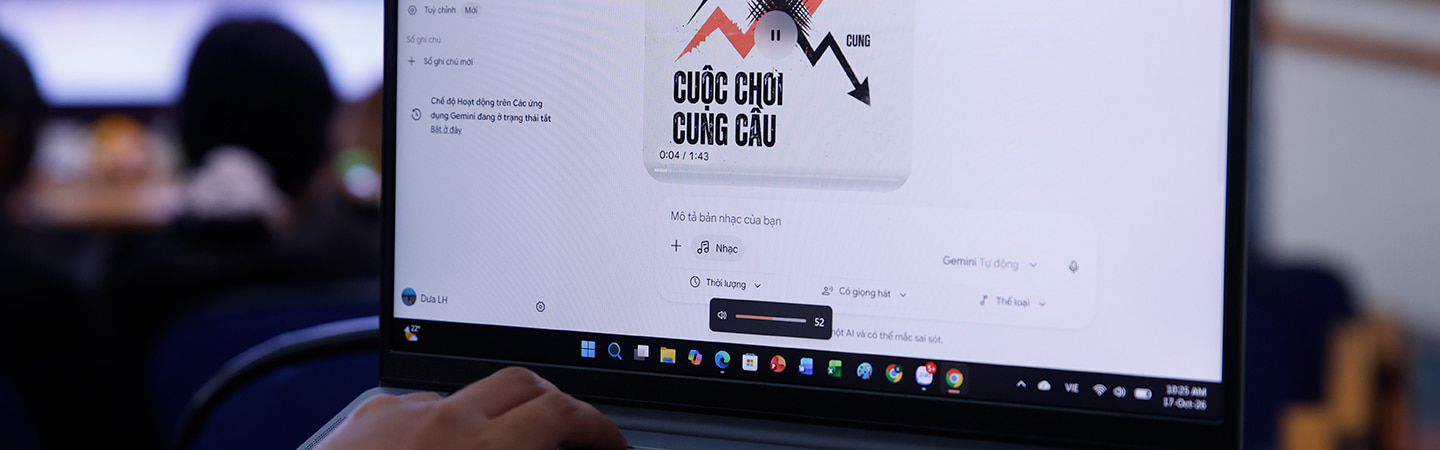
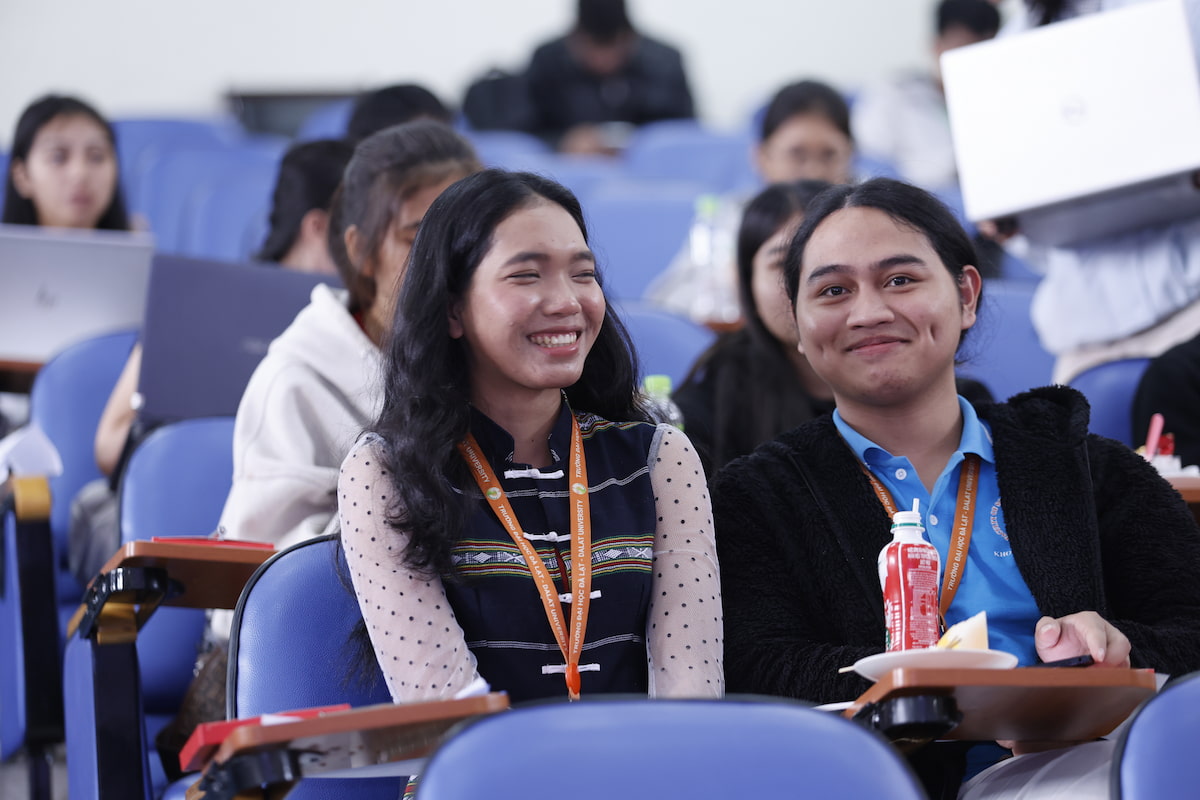
Ethnic minority students take part in practical training designed to build their AI skills. (Photo: Organising Committee)Ethnic minority students take part in practical training designed to build their AI skills. (Photo: Organising Committee)

Students will begin by learning about generative AI and prompt writing, before progressing to using AI to search for, analyse and verify information, work with documents, build study assistants and create multimodal digital content. The curriculum will also cover data analysis and visualisation, online safety, app development through vibe coding, automation using AI agents, and the use of AI for career planning, CV preparation and interview practice.

Ms Thai Thi Cam Chi, Associate Director of Government Strategy and Partnership at RMIT Vietnam, said: “What we hope students take away from the program is not simply knowledge of more AI tools, but the ability to assign AI the right tasks, verify its outputs and take responsibility for their final decisions.” 

Following the six training sessions, students will be encouraged to develop an AI-powered product or solution to support learning, research, creativity or address a real-world problem. Outstanding projects will be selected for recognition at a program showcase event expected to take place in November 2026.

Watch the livestream recording here.

19 October 2026

Share

Related news