
Building a stronger higher education community

Building a stronger higher education community

RMIT Vietnam’s Higher Education Community of Practice 2026 brought universities together to explore practical responses to shared challenges and strengthen collaboration across Vietnam’s higher education sector.

Over 60 educators and academic leaders from universities across Vietnam have come together through the Higher Education Community of Practice (HE COP) 2026 to exchange knowledge, develop practical ideas and explore new approaches to some of the most pressing challenges facing higher education.

Now in its sixth year, HE COP has evolved as a platform connecting universities and experts to share knowledge, strengthen professional networks, and explore new approaches to teaching and learning. In 2026, the initiative adopted a project-based model under RMIT’s Country Commitment to Vietnam, supporting collaboration between RMIT and Vietnamese universities around quality improvement, digital transformation and workforce readiness.


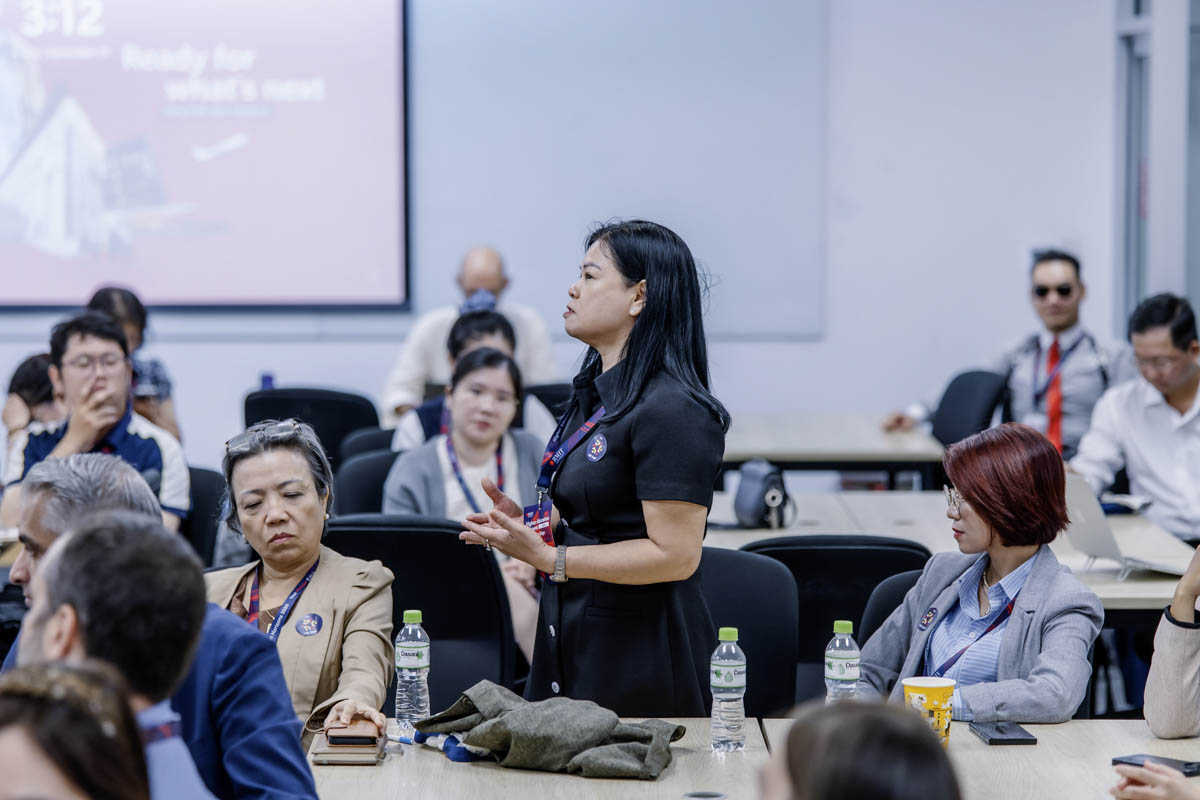
Participant speaks during a group discussion at the Higher Education Community of Practice.Participants exchanged ideas and perspectives during the Higher Education Community of Practice 2026 Final Symposium.

The 2026 program focused on three areas of growing importance to higher education, including using artificial intelligence to support deep learning, strengthening student engagement through assessment design and learning, and building strategic higher education capabilities, with an emphasis on English as a medium of instruction. Across these themes was a common question: how can universities move beyond discussing changes to developing approaches that respond to their own institutional contexts and deliver meaningful benefits for educators and students?

Through project development, reviews, peer discussions and expert input, participating teams worked together to examine challenges and refine potential responses. The process was designed not only to generate project outcomes, but also to strengthen the capabilities of educators and academic leaders while creating opportunities for universities to jointly develop work with broader relevance to the sector.

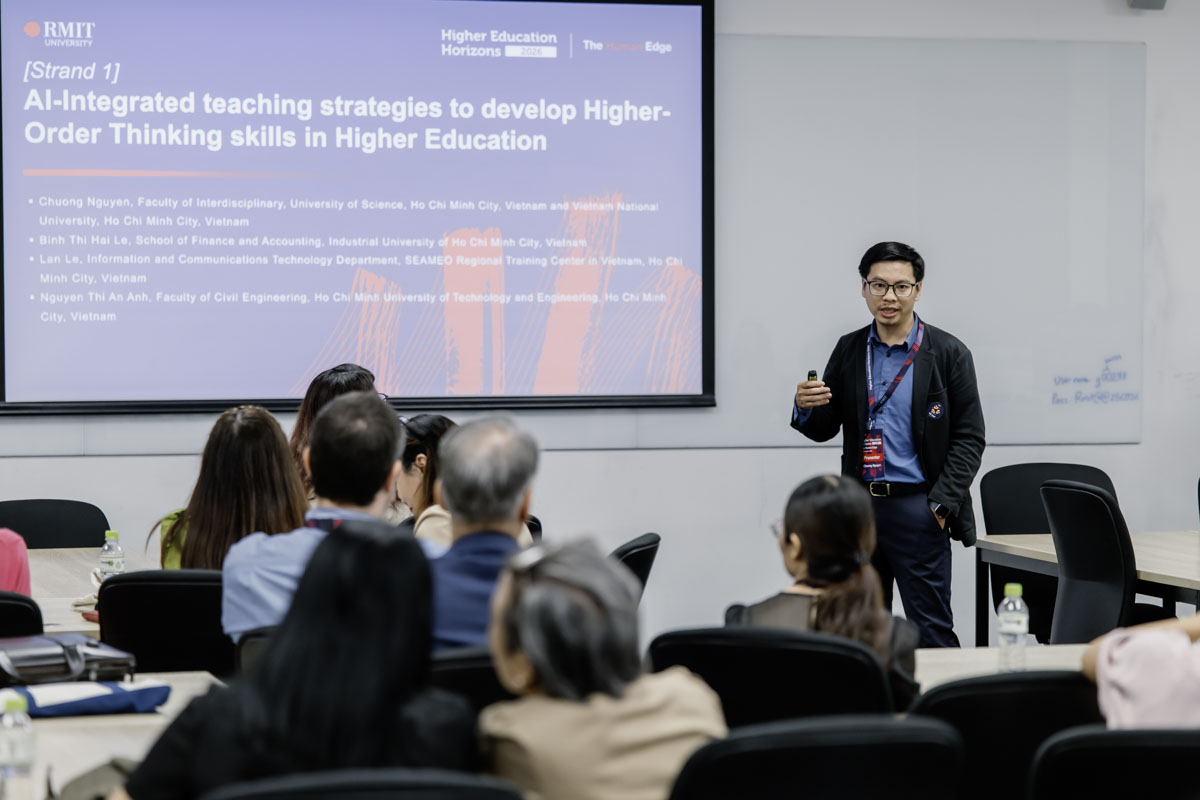
Presenter discusses AI-integrated teaching strategies with participants at the Higher Education Community of Practice.Dr Nguyen Ha Hung Chuong from University of Science, VNU HCM, shared insights from HE COP’s Theme 1 on using AI to support deep learning.

For Dr Nguyen Ha Hung Chuong from University of Science, VNU HCM, an active member and contributor to HE COP’S Theme 1, the value of the Community of Practice extended from new ideas for his teaching to new opportunities for research collaboration.

“Exchanging ideas with colleagues from other universities has introduced me to new AI tools and fresh approaches to teaching and assessment that I had not explored before, some of which I was able to adapt to my own teaching context,” Dr Chuong said.

“Just as importantly, HE COP has helped create meaningful connections beyond the exchange of ideas. Through the Community, I met some colleagues from another university, and together we went on to co-develop a research project on education and the application of AI. For me, this has been one of the most valuable outcomes of being part of the Community of Practice.”

The journey culminated in the Final Symposium held at RMIT Vietnam’s Saigon South campus this week, where educators, academic leaders, researchers and other higher education stakeholders shared project outcomes and explored how the work could be developed further. Project teams reflected on their implementation journeys, key innovations and early impact, as well as opportunities for future development and scaling.

Closing the symposium, Professor Seng Kok, Dean of Students at RMIT University Vietnam, highlighted the importance of bringing together different universities, disciplines and perspectives to address important questions facing higher education.

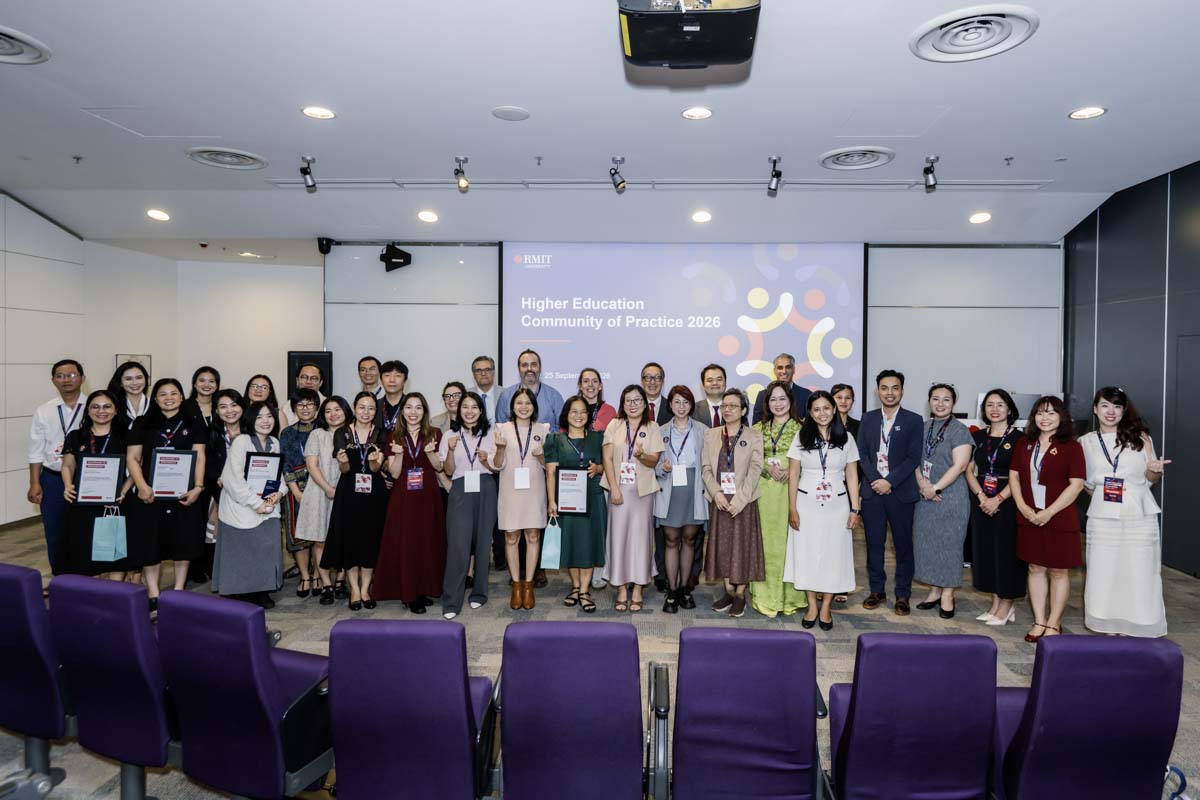
Higher Education Community of Practice participants gather for a group photo at the 2026 closing event.Higher Education Community of Practice 2026 participants marked the end of their journey together.

“The future of higher education is not simply about adopting new technologies or new approaches, but about strengthening our capacity to use them purposefully. Innovation is most meaningful when it is grounded in context, informed by evidence and translated into practice,” Professor Seng said.

This focus on translating shared knowledge into practice was also central to Dr Ly Thien Trang, Vice President of Ho Chi Minh City University of Technology (HUTECH), who highlighted the value of learning from what works across institutions, but also from what does not.

“It allows universities to share experiences, use evidence to identify specific issues, learn from peers and experts, and develop practical solutions that can tested in their own institutional contexts,” Dr Trang said.

“The most valuable part is the opportunity to review progress, share what works and what does not, and consider how successful approaches can be further developed and scaled. In this way, the HE COP becomes a platform for collaborative problem-solving and action, helping universities turn shared learning into practical and sustainable improvements in teaching and learning.”

That progression from sharing ideas to testing and refining them has shaped the HE COP journey throughout 2026. Following its launch in March, the program included project preparation and selection, mid-year reviews, insights-sharing and peer-to-peer discussions before the Final Symposium. Experts also engaged with the project teams to help refine and strengthen their concepts, analysis and outcomes.

The three focus areas are also intended to inform a Higher Education Paper and Sector Development Report examining the role of AI in digital transformation, enhancements in assessment to support deeper student learning and engagement, and strategies to advance English language capability across the sector over the next three years.

For Professor Seng Kok, however, the symposium represented a starting point rather than an endpoint. He encouraged participants to consider what they could take back to their institutions, which ideas could be tested or developed further, and where universities could continue collaborating.

“The opportunity now is to build on this year’s work and turn shared insights into practical and sustainable improvements,” he said.

Story: Ha Hoang

Related news