The quiet loss of human character: How AI is making us more alike

The quiet loss of human character: How AI is making us more alike

In the pursuit of perfection and efficiency, we may be sacrificing the diversity of personalities that makes us human, warned Dr James Kang from RMIT University Vietnam.

How many times have you received an email beginning with, “I hope this email finds you well”?

Whenever I see this sentence in my inbox, I cannot help but wonder whether the email was written by the sender or polished by AI. Of course, this may be an unfair assumption. There is nothing wrong with using AI assistance. For many people, especially non-native English speakers and writers, AI is a useful tool for improving grammar, correcting spelling mistakes and avoiding unintended tones.

But gradually, AI is no longer being used only to fix mistakes. People use it to make their writing smoother, more neutral, more professional and perhaps, less human.

Would you be comfortable if all your emails from friends, family members or colleagues sounded similar? Imagine receiving birthday wishes or farewell notes written in the same polished tone. Imagine your closest friend's messages sounding as carefully crafted as the fine print of your home loan agreement.

Technically, such writing may be flawless. But would it still feel human?

If this becomes the norm, what will happen in five or ten years? Perhaps we will simply choose from a list of styles, such as 'professional but warm' or 'friendly and persuasive', enter a few keywords, and let AI compose the rest.

Language has never been just a vehicle for information. It is how we reveal our personalities, emotions, quirks, and imperfections. If AI systems consistently encourage the same communication styles and the same ways of reasoning, society may slowly drift towards standardised personalities. We may become more efficient communicators, but less interesting human beings.

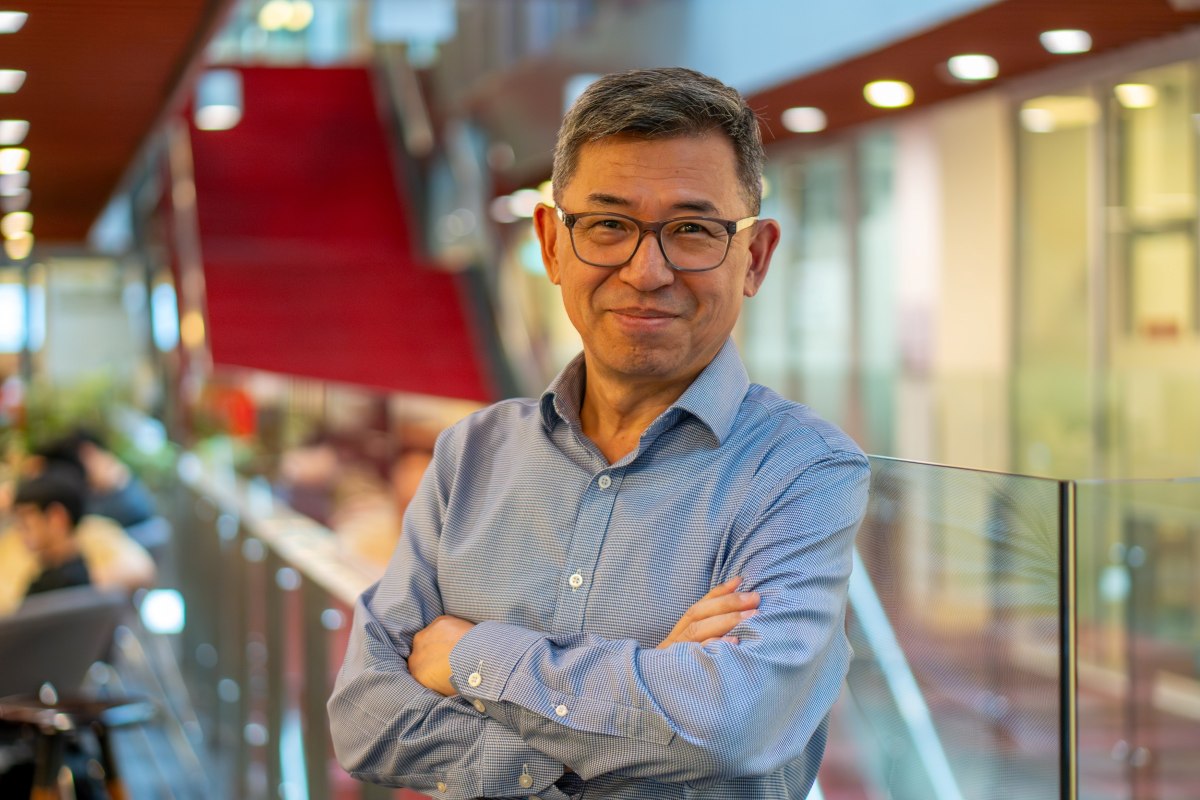
Dr James Kang portrait photoDr James Kang, Senior Lecturer in Computer Science, RMIT University Vietnam (Photo: RMIT)

The great convergence of human character

There is evidence that AI writing suggestions can shift style in culturally significant ways. In a cross-cultural study, AI assistants made writing more similar and pushed Indian participants' writing toward Western styles, partly because many popular AI tools were developed in the US.

But beyond grammar, tone and writing style lies a deeper risk: AI does not just smooth out our sentences. It sanitises our personalities.

When people run their daily correspondence through AI to make it flawless or professional, they may unintentionally censor their true selves.

For example, a teacher might use AI to make all emails to students sound neutral and calm. The goal is understandable. But language is supposed to show our real state. It should show when we are hurried, passionate or deeply invested.

Even though it is natural to be polite and professional in our communications, if a naturally energetic academic suddenly appears perfectly relaxed and passive online, students form an opinion based on a distorted version of reality.

We are trading the honest reality of human character for a flawless artificial avatar. If the way people see us is entirely managed by a machine, our genuine relationships begin to break down. We are moving toward a world with much less variety in human character. Our unique temperaments, sharp edges, and quirks are being filtered out.

In the rush to be flawless, we risk losing the variety of human nature itself and the very friction that makes us human.

A different way to design and use AI

Today, people ask AI for answers from the outset: write an email, generate ideas or draft an argument. But what if the order were reversed?

Instead of immediately generating content, AI could first ask users for minimal input. What is your opinion? What arguments would you make? How would you explain this idea in your own words? AI could then analyse the user's writing style and reasoning before offering suggestions.

In other words, AI should learn from humans first, not the other way around.

This may sound like a small design tweak for AI platform developers, but it could encourage people to think before asking for answers, to struggle before receiving polished outputs, and to develop their own voices instead of gradually adopting the style of machines.

This issue is particularly important for students. Education is not simply about obtaining correct answers. It is about learning how to think critically, make mistakes and develop independent judgement. If students rely on AI too early and too often, they may complete assignments efficiently but miss the very purpose of education.

Human abilities are like muscles. If we stop using them, they gradually weaken. Critical thinking, creativity and independent judgement are no exception. When students outsource too much of their thinking to AI, there is a risk that these abilities may slowly deteriorate over time.

Parents and teachers are already worried about the effects of social media on young people. Now they face another challenge: AI.

AI does not simply influence what young people see. It can influence how they think, communicate and perhaps, over time, how they develop their identities.

Diverse people in white shirts looking down at their smartphonesIn the rush to be flawless, we risk losing the variety of human nature. (Photo: Pexels)

Who will protect human character?

If human character is worth preserving, this responsibility cannot be left to individuals alone.

AI developers, educators, service providers and policymakers all have a role to play to ensure that smarter AI does not gradually make humans less distinctive.

Today's AI systems are developed by large technology companies competing to build more powerful products. But human character is not something to be optimised away.

Future AI systems should be designed in a way that encourages people to think and form their own judgement, to raise their own opinions and showcase their individuality.

At schools and universities, students need to learn not only how to use AI, but also when not to use it. The goal of education is not to produce the fastest answer. It is to cultivate independent thinking, creativity and character.

History shows that once humans become deeply dependent on a technology, they rarely abandon it. There is no simple way to undo its social consequences. That is why the conversation about AI should now also focus on what kind of humans we want to remain in an AI-powered world.

Human diversity is not a flaw waiting to be corrected. Our different personalities, emotions and imperfections are what make us human. If AI helps us preserve these qualities, it may become one of humanity's greatest inventions. But if it gradually erases them, the greatest cost of AI may not be technological at all.

It may be the quiet loss of our human character.

Story: Dr James Kang, Senior Lecturer in Computer Science, RMIT University Vietnam

For related insights, read “How AI is flattening how we think, write, and communicate”.

---

Masthead image: Mellimage – stock.adobe.com

Share

Related news