Vietnam-Australia team advances concrete fracture research

Vietnam-Australia team advances concrete fracture research

Supported by an Australian Government-funded initiative, a collaboration between Vietnam- and Australia-based researchers has led to a pioneering publication in construction engineering.

When Dr Vu Thi Thuy Anh of Vietnam National University, Hanoi (VNU) began working with Associate Professor Jonathan Tran from RMIT University, the collaboration brought together perspectives from Vietnam and Australia around a shared challenge in construction engineering.

Their team has now published a joint paper in the Archives of Civil and Mechanical Engineering journal on modelling how cracks form and spread in concrete – an area of research with important implications for infrastructure design.

The study focuses on improving how engineers simulate complex fracture behaviour in concrete using the phase-field method. Understanding and predicting how cracks initiate, propagate, and branch is essential for assessing the safety and durability of structures such as bridges and buildings.

In their work, the researchers developed a standard protocol for generating highly stable simulation data, paving the way for AI application in the design of safe and sustainable infrastructure.

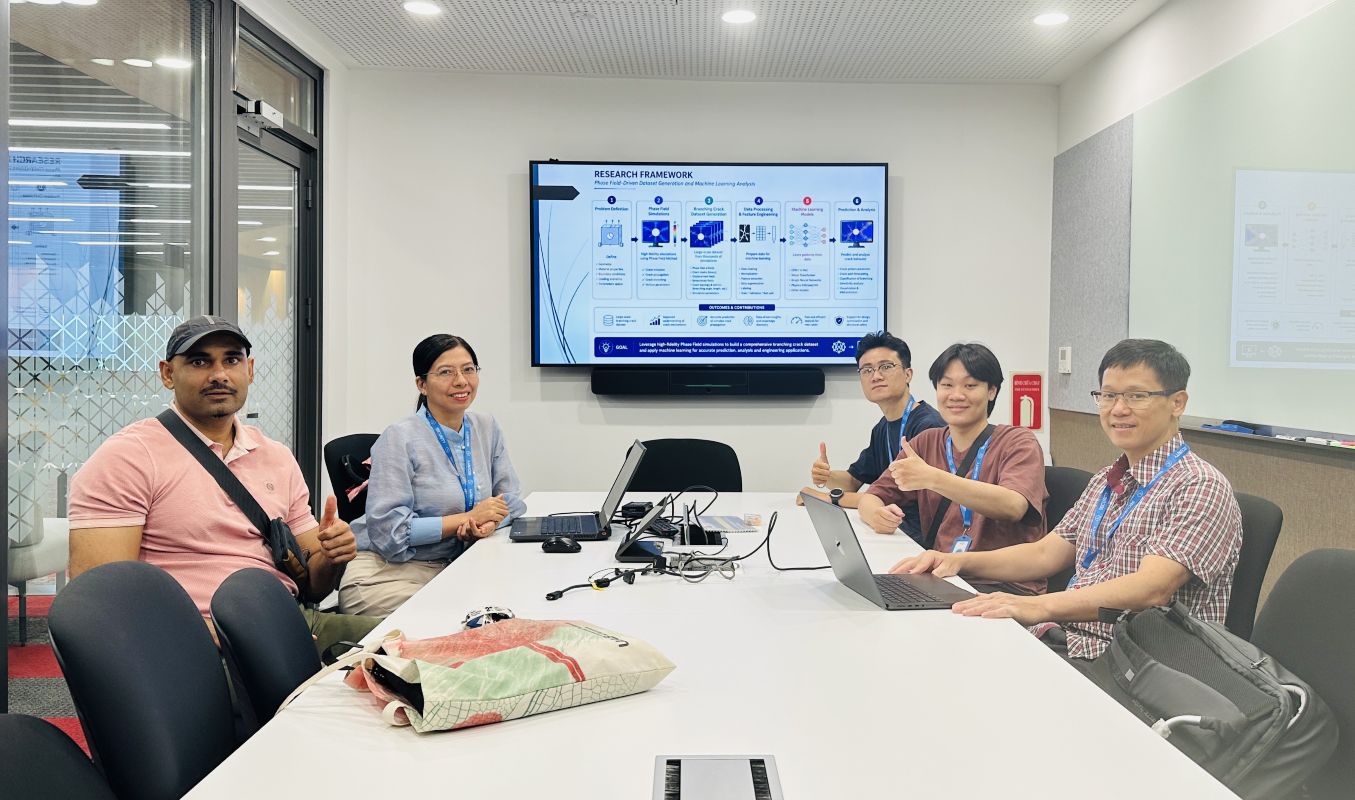
Photo of 5 people sitting around a table in a meeting room(From right to left) The four co-authors of the research paper – Associate Professor Jonathan Tran, Ha Chi Hieu, Phan Dang Huy, and Dr Vu Thi Thuy Anh – with RMIT Vietnam senior lecturer Dr Kapil Dev. (Photo courtesy of Jonathan Tran)

Dr Thuy Anh’s work with Associate Professor Tran followed a research placement at RMIT University’s School of Engineering in Australia. The placement was facilitated by the IEIF ASEAN Research Collaboration Project, which was administered by the Australian Government Department of Education through the International Education Innovation Fund (IEIF) and delivered in partnership with the RMIT Asia Hub.

The initiative supported post-PhD early-career researchers from across ASEAN to undertake short-term placements at Australian institutions, typically lasting between one and three months. Participants had access to research facilities, academic networks, and opportunities for collaboration that could continue beyond the duration of the placement.

Dr Thuy Anh completed a two-month placement in Australia in late 2025 as part of the program. For her, the experience provided a setting to work closely with international collaborators and contribute to a joint research output that has now been published.

“Working with Associate Professor Tran and the team at RMIT significantly shaped this research. Their expertise in fracture mechanics helped me gain a deeper understanding of crack propagation in sustainable concrete structures and provided valuable guidance in comparing modelling results with experimental evidence,” she said. “Through regular discussions, I was able to refine several aspects of the study and improve the overall quality and reliability of the research.”

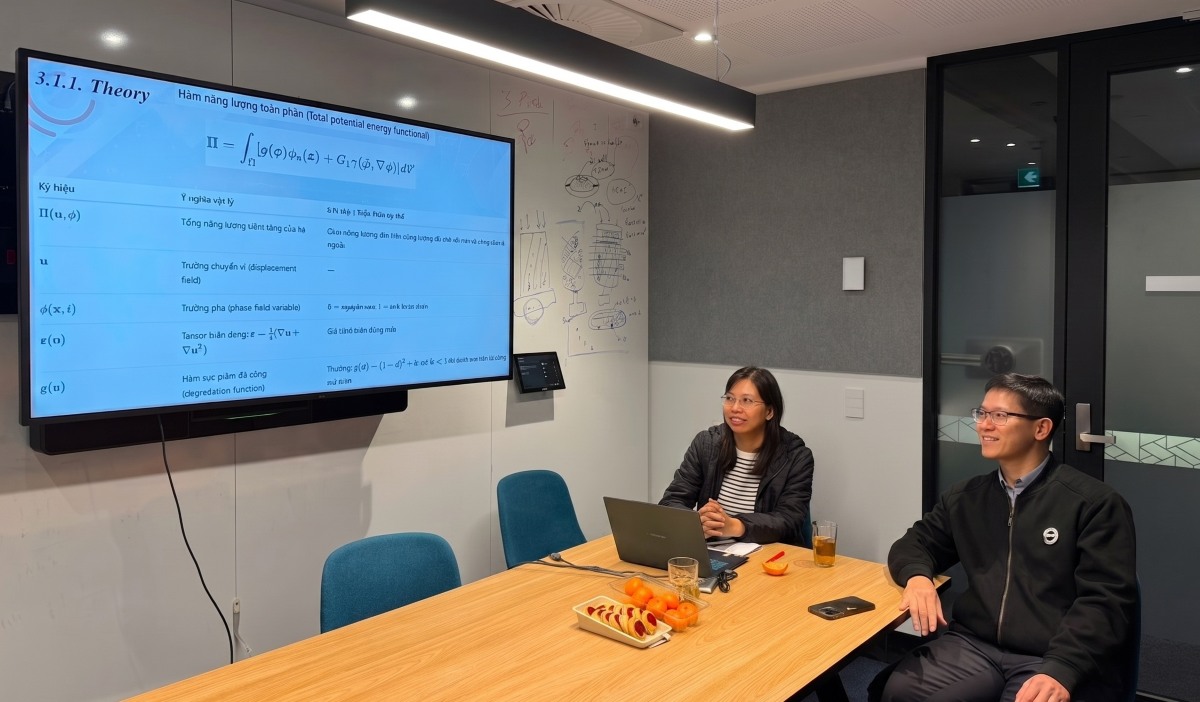
Two people in a meeting roomDr Thuy Anh and Associate Professor Tran during a work meeting at RMIT’s campus in Melbourne. (Photo courtesy of Jonathan Tran)

Speaking of their collaboration, Associate Professor Tran said, “Vietnam is home to an incredible pool of talented researchers, and I am deeply committed to supporting them, particularly female engineers who often navigate unique challenges in their research journeys.

“This generous grant allowed Dr Thuy Anh to visit RMIT University’s state-of-the-art facilities, collaborate directly with my research group on practical engineering applications, and focus intensively on advancing this vital work using our specialised research facility.”

With their first joint paper now published, Dr Thuy Anh and Associate Professor Tran expect to continue their collaboration, with further work already being explored to bring AI-driven modelling to the world of 3D-printed engineering materials.

The team's next step is to use their robust simulation method to decode the complex ways 3D-printed components crack and degrade. By merging advanced structural physics with predictive machine learning, they aim to build a reliable blueprint for verifying the strength and durability of next-generation, printed infrastructure.

Across its three rounds from June 2025 to April 2026, the IEIF ASEAN Research Collaboration Project supported 106 early-career researchers from seven ASEAN countries, working with 28 host institutions in Australia. RMIT University was one of the most engaged host institutions, with 13 recipients completing their fellowships at RMIT.

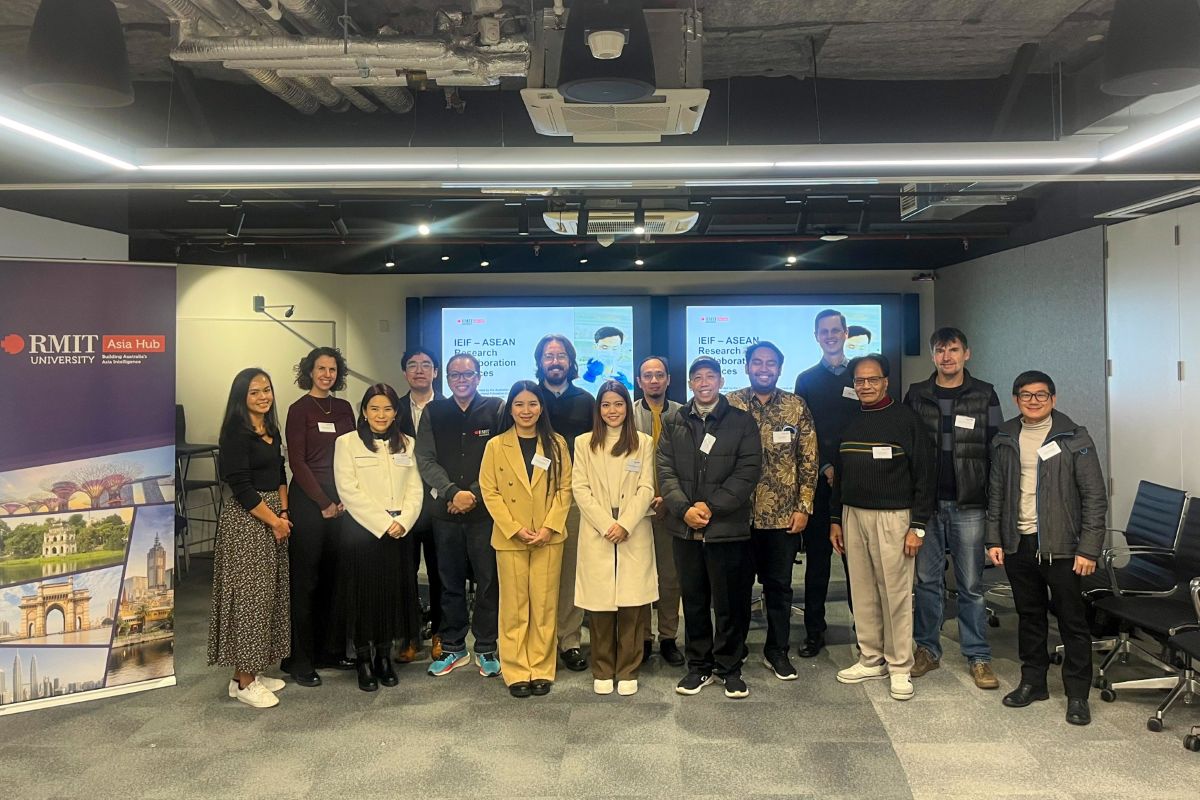
Group photoA get-together hosted by the RMIT Asia Hub for participants from the first round of the IEIF ASEAN Research Collaboration Project (Photo: RMIT Asia Hub)

The program focused on building connections between researchers and supporting projects in areas of shared priority between ASEAN and Australia, including infrastructure, the green economy, agriculture and food, and resources and energy.

Ms Bonnie Rivendell, Director of the RMIT Asia Hub, said the IEIF ASEAN fellowships are not only building a new generation of innovation leaders across ASEAN, but also deepening RMIT’s partnerships with governments, industry and universities to co‑design solutions for shared challenges.

"The fellows bring diverse perspectives, strong technical expertise and a passion for impact, and their projects are already contributing to more inclusive, sustainable growth in the region,” she said. “The ASEAN IEIF program embodies RMIT’s commitment to working with partners across Asia to create real-world change, and we are proud to support this vibrant community of emerging leaders.”

Story: Ngoc Hoang

Related news