

Vietnam’s path to sovereign AI lies in specialisation, not imitation

Vietnam’s path to sovereign AI lies in specialisation, not imitation

Vietnam's path to artificial intelligence (AI) sovereignty may not lie in competing head-to-head with global technology giants, but in developing specialised AI systems tailored to local needs, according to an RMIT expert.

As countries around the world race to build AI capabilities and secure semiconductor supply chains, Vietnam faces important strategic choices about how to develop its own AI ecosystem while navigating an increasingly fragmented global technology landscape. 

Dr James Kang, Senior Lecturer in Computer Science at RMIT University Vietnam, believes the country should focus less on building large, general-purpose AI models and more on developing specialised AI systems supported by high-quality Vietnamese data. 

“The biggest mistake Vietnam could make is trying to build a generic, all-purpose AI from scratch to compete with global tech giants. Chasing that path requires billions of dollars, massive energy resources, and hardware access that we simply do not have.” Dr Kang said. 

Rather than attempting to replicate the strategies of the United States or China, Dr Kang said Vietnam should pursue a more targeted approach that plays to its own advantages. 

“Vietnam should not enter a race it cannot win by trying to copy what big tech does or by following China's path of chasing from behind. Instead of wasting resources on broad, expensive models, our priority must be strict specialisation. Vietnam must focus its resources entirely on building niche AI infrastructure tailored to our own high-quality, localised Vietnamese datasets. This may offer Vietnam's most practical path towards AI sovereignty.” 

According to Dr Kang, specialised AI systems could support sectors where Vietnam has unique expertise and data. “By feeding our specialised infrastructure localised data, we can build world-class, highly targeted AI tools designed specifically for Vietnamese agriculture, localised regional healthcare, or our specific legal and administrative systems,” he said. 

He highlighted this approach would allow Vietnam to build affordable, highly efficient AI tools while achieving “true, uncompromised technology independence.”

Vietnam should build sovereign AI through specialised systems tailored to the country's own strengths. (Image: Magnific)Vietnam should build sovereign AI through specialised systems tailored to the country's own strengths. (Image: Magnific)

The growing divide  

Dr Kang also cautioned against attempting to combine American AI hardware with Chinese software platforms or vice versa, arguing that geopolitical tensions have made such a strategy increasingly impractical. 

“Trying to stitch together American hardware and Chinese tech platforms to build Vietnam's AI industry is completely unrealistic. We have to look at the reality of the global 'AI war' between the US and China,” he said. 

He noted that US export restrictions on advanced AI chips including NVIDIA’s H200 have accelerated the technological decoupling between the world's two largest technology powers. 

“The technical and political divide between these two tech worlds is widening by the day,” he said. 

Even if Vietnam sought to build AI infrastructure using American hardware, Dr Kang said global supply constraints would make this extremely challenging. 

“NVIDIA is currently locked in a fierce battle to secure enough semiconductor parts from its key suppliers, like Samsung, just to keep up with skyrocketing global demand. With global giants locking up the supply chain, it is simply not practical or realistic for Vietnam to think it can easily buy enough raw hardware to build a massive, generalised AI infrastructure.” 

Beyond hardware shortages, Dr Kang said integrating American and Chinese technologies would also create compatibility and cybersecurity challenges. 

“Because of trade restrictions, the US and China are building separate technical walls; trying to mix them will cause constant compatibility issues, like forcing puzzle pieces together from two entirely different games.” 

He argued that some of China's recent AI advances have relied on “model distillation” by using advanced American AI systems to train its own models. 

“This saves them time, but it guarantees they will always be chasing from behind while American tech stays steps ahead. Another issue for China is the quality of data they can access compared to the US. It will make Chinese AI limited for global users.” 

“If Vietnam integrates these two hostile systems into our economy, we inherit all the cybersecurity vulnerabilities while being locked out of true, cutting-edge technology.”

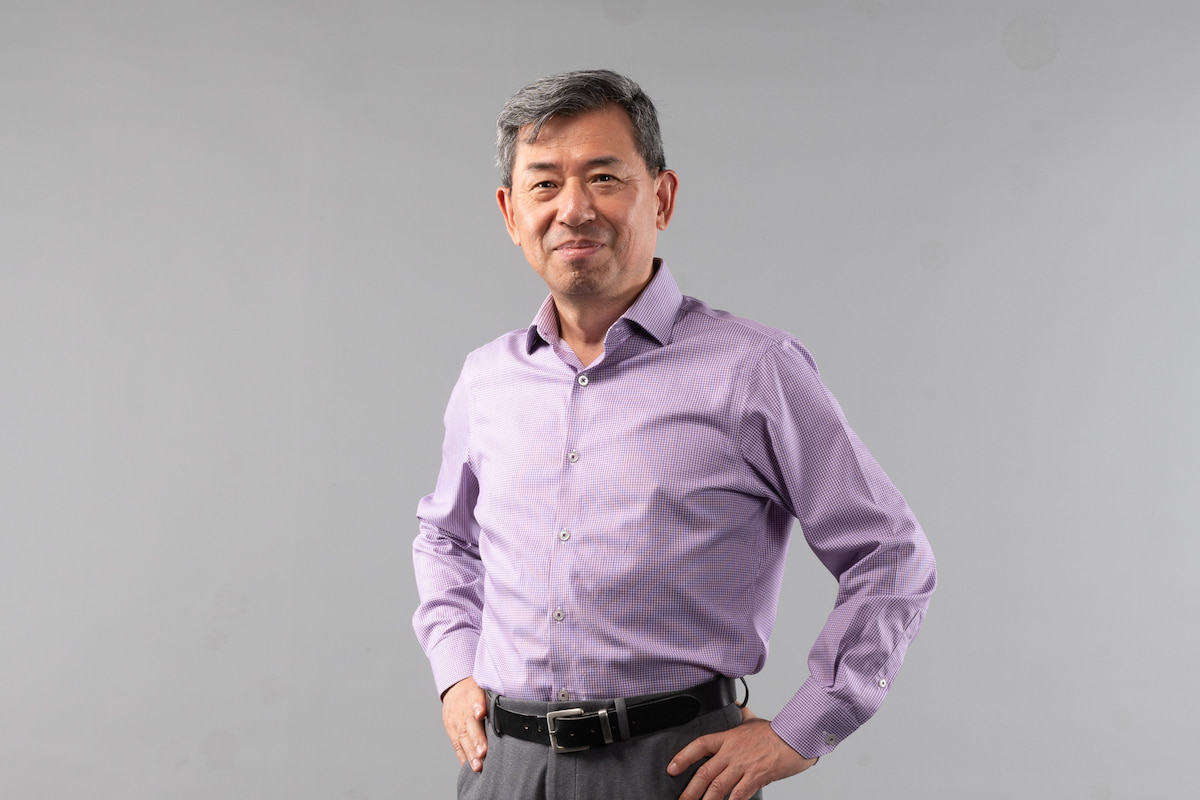
Dr James Kang, Senior Lecturer in Computer Science at RMIT University Vietnam (Image: RMIT)Dr James Kang, Senior Lecturer in Computer Science at RMIT University Vietnam (Image: RMIT)

Strong regulation needed 

While Dr Kang acknowledged concerns about balancing innovation with regulation, he argued Vietnam has unique institutional advantages in developing sovereign AI. 

“When it comes to protecting data while keeping the economy open for local businesses, Vietnam actually holds a massive structural advantage because, as a single-party nation, it can develop and implement long-term national AI policies with far greater consistency and speed," he said. 

Vietnam's recently enacted Personal Data Protection Law and AI Law provide an important foundation for safeguarding sensitive national information while supporting domestic innovation. 

“Together, these frameworks give the government immense power to strictly regulate data movement and sharing,” he said. 

At the same time, he believes policymakers can encourage innovation by creating regulatory sandboxes for local businesses. 

“For domestic entrepreneurs and small businesses, the government can instantly utilise its centralised authority to set up a flexible 'regulatory sandbox' - a relaxed testing ground with minimal red tape and 'safe-harbour' clauses.” 

“This means if a local startup accidentally makes a minor data mistake while trying to innovate, they won't be crushed by the heavy regulations meant for global monopolies. By using our unique political speed, Vietnam can enforce data sovereignty and fuel local tech growth much faster than complex Western economies can.” 

For Dr Kang, Vietnam's long-term AI competitiveness will depend less on competing in a global race for the largest AI models and more on developing specialised capabilities that address national priorities while maintaining technological independence. 

Looking ahead, Dr Kang believes Physical AI could become Vietnam's next major opportunity. By working closely with technology companies investing heavily in intelligent hardware and robotics, Vietnam could build on its existing technology partnerships to develop capabilities beyond manufacturing. As Physical AI requires both software and hardware expertise, it may provide Vietnam with a pathway to learn, innovate, and compete in the next phase of the global AI economy.

Story: June Pham

Related news